Shift Extension Requests are caregiver-initiated asks to extend an in-progress visit beyond its scheduled end. AveeCare surfaces every pending extension right on the Scheduling page, so a coordinator can approve or deny in one click. Approving pushes the visit end time forward and keeps the caregiver clocked in. Denying holds the original end time.
Quick answer
Open Scheduling. When pending extensions exist, a purple Extensions (N) badge appears next to Add Visit. Click it to open the Pending Shift Extensions panel. Each card shows the caregiver, patient, original end time, requested new end time, and reason. Use the green Approve or red Deny button on the card.
Where extensions live
AveeCare does not ship a separate Extensions page. Pending extension requests live on the Scheduling page itself, attached to the same toolbar as Add Visit. The badge only appears when at least one extension is pending, so an empty toolbar means there is nothing to review. A matching Visit Requests badge appears next to it for new-visit requests, in amber instead of purple.
1. Open Scheduling and find the purple Extensions badge
Open Scheduling from the left nav.
The Scheduled tab loads first. Pending extensions count toward the badge regardless of which tab you are on. The badge sits between Add Visit and the Day, Week, Month controls.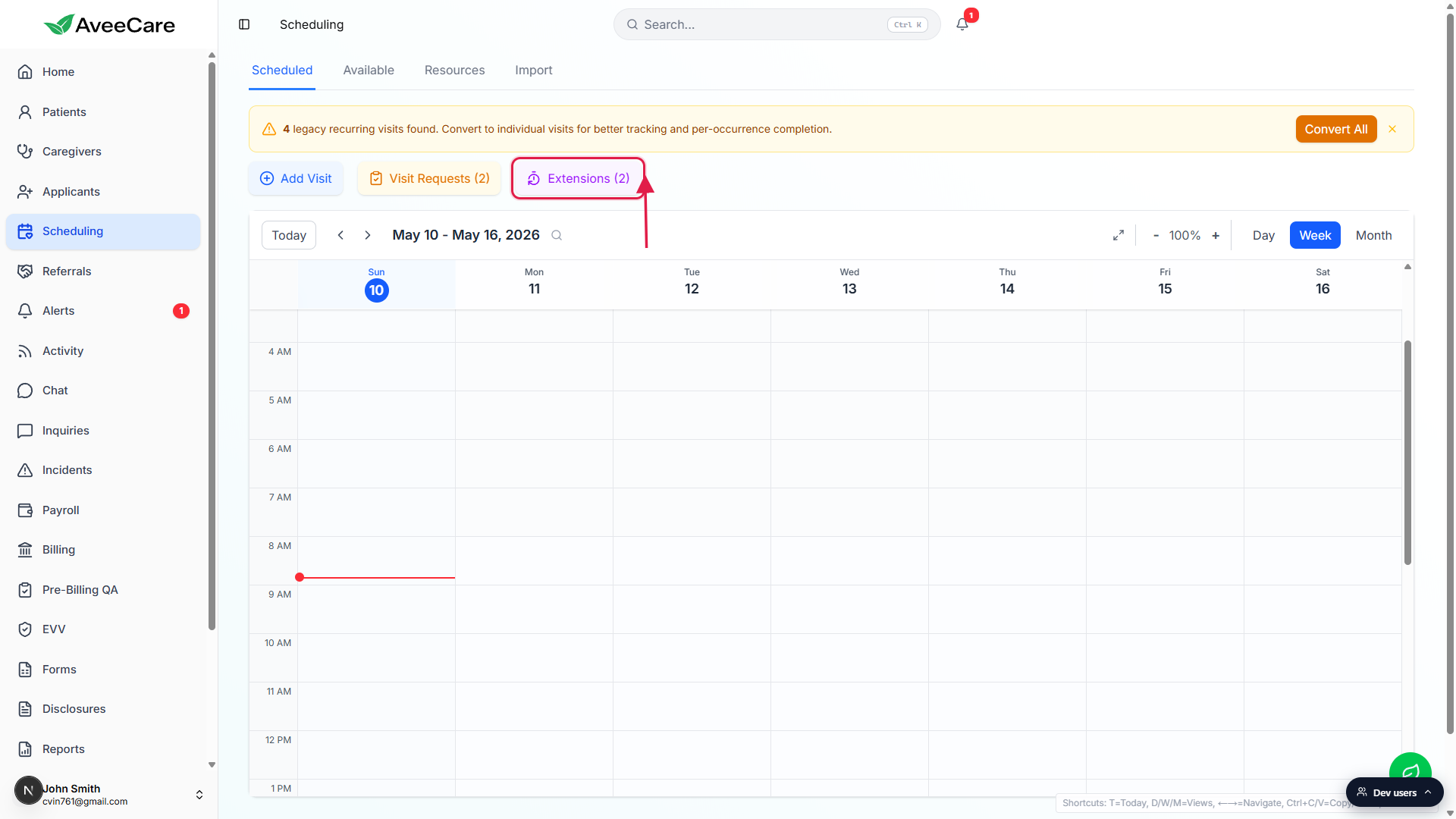
Look for the purple Extensions (N) button.
The number in parentheses is the count of pending extension requests across the whole agency. The badge stays soft purple until you open the panel; once open, it switches to a solid purple-600 background so you can see at a glance which queue is expanded.
2. Open the Pending Shift Extensions panel
Click the badge to expand the panel below the toolbar.
The panel slides open with a Pending Shift Extensions header, a count chip, and one card per request. Click the badge again or the small X on the panel header to collapse it.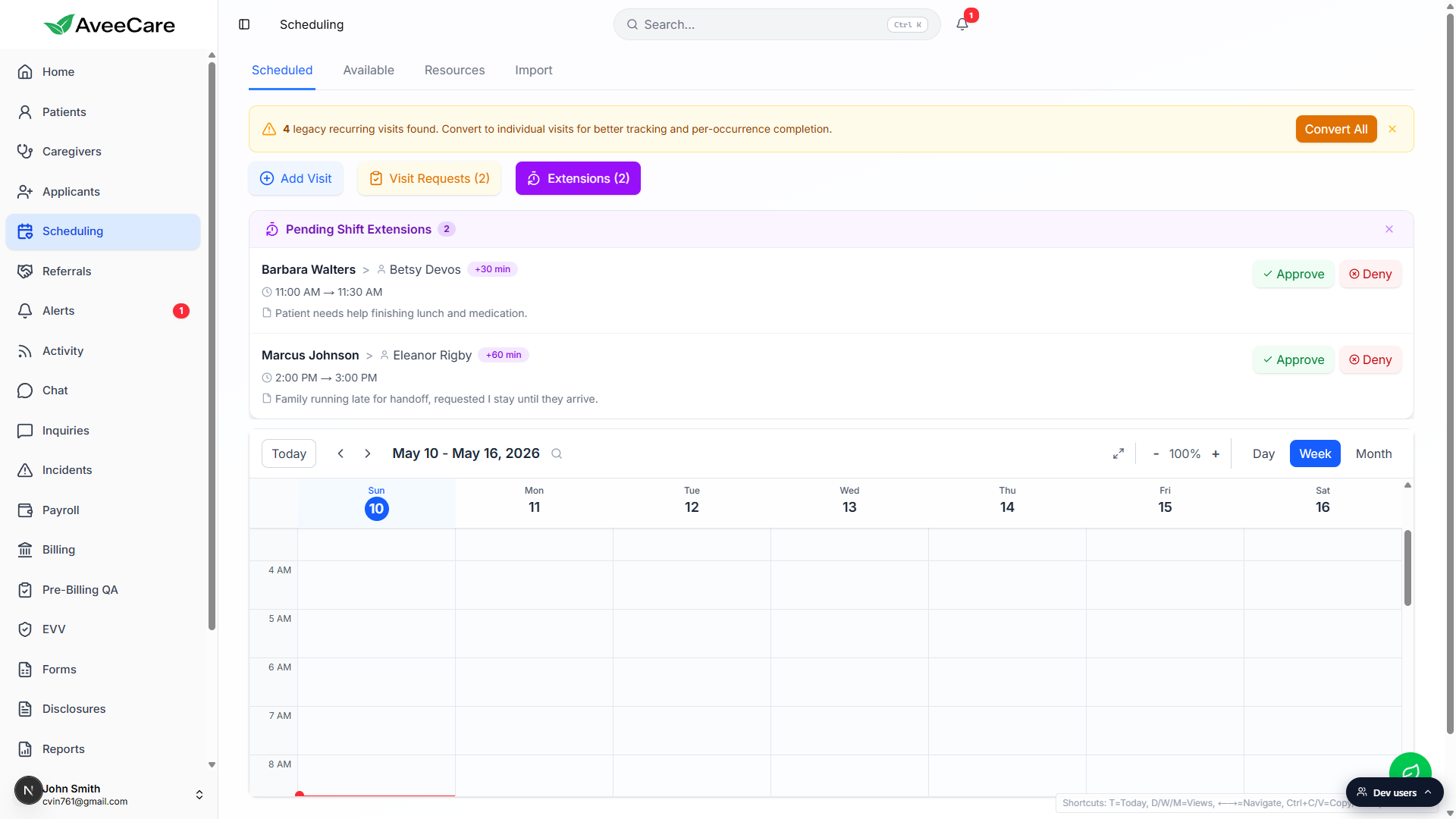
Read each card.
Each card lists the caregiver name, the patient name (with a small user icon), a purple chip with the requested extra minutes (for example +30 min), the original end time and the requested new end time joined by an arrow, and the caregiver's reason. If the caregiver did not type a reason, the card shows a quiet “No reason provided” placeholder instead.
3. Approve a request to push the visit end time
Click Approve on the card.
Approve pushes the visit's scheduled end to the requested new end time, the caregiver stays clocked in, and payroll accrues the extra minutes automatically. The card disappears from the panel as soon as the decision is recorded.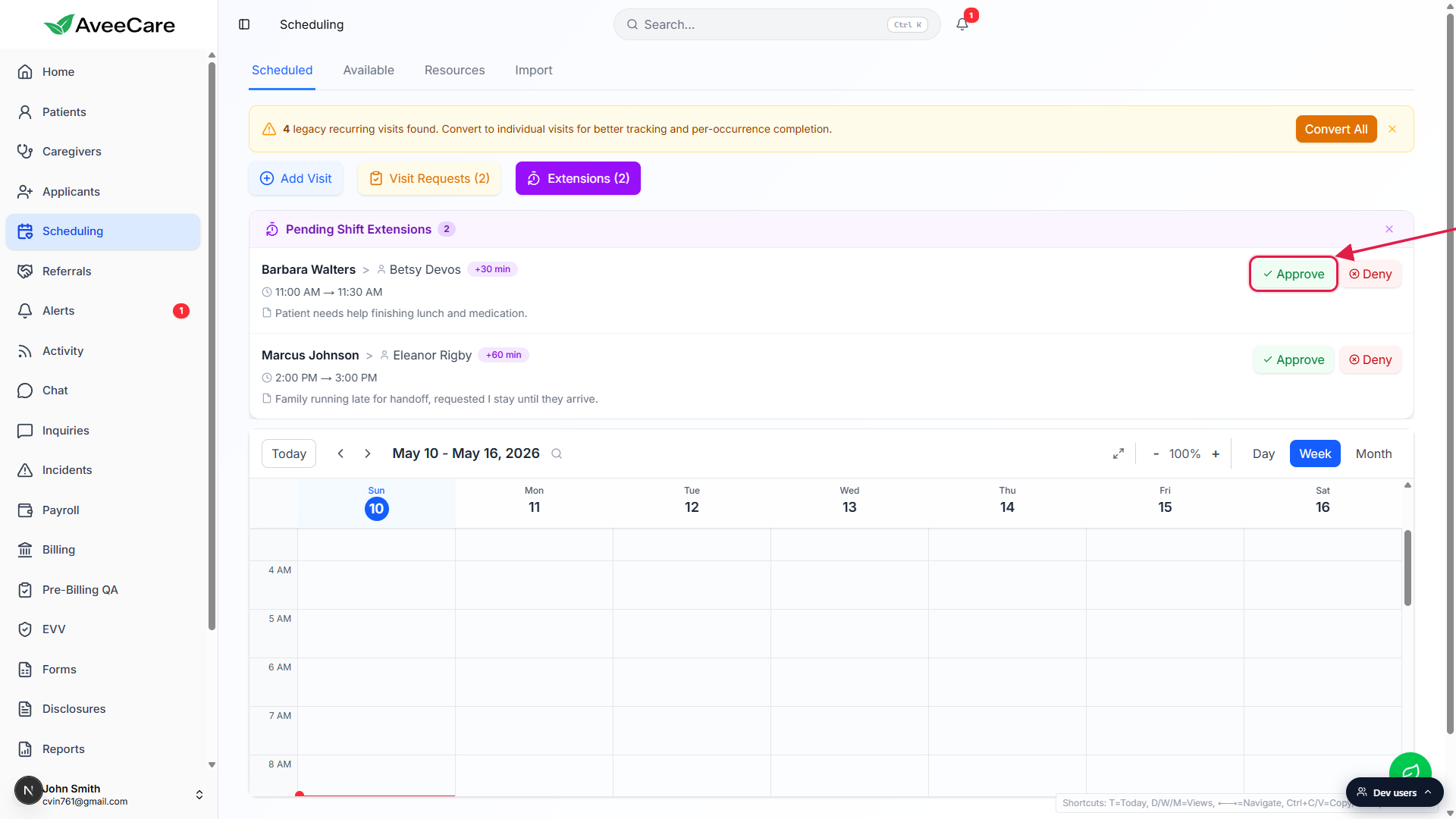
The caregiver gets a push notification.
Approved decisions notify the caregiver in their app and update the visit on the calendar. The new end time becomes the scheduled end for clock-out, EVV, and payroll, no manual edit needed.
4. Deny a request and capture a reason
Click Deny on the card.
The card swaps the Approve and Deny buttons for a single Confirm Deny button and a small textarea appears under the card's body for an optional reason. A small X button next to Confirm Deny cancels the deny without sending anything.Type a short reason and click Confirm Deny.
The reason is optional but worth filling in. The caregiver sees it in their app, so a short note like “Family arrived, please clock out at 3pm” saves a back-and-forth. Confirm Deny closes the request and removes the card from the panel.The caregiver clocks out at the original scheduled end.
The visit's scheduled end time does not change. The caregiver gets a push notification with the decision and any reason you typed. If the request would have exceeded your tenant's max-extension cap, AveeCare auto-denies it before it ever reaches this panel, so you do not have to.
Common pitfalls
- Treating shift extensions like visit requests. Extensions are time-sensitive. The caregiver is clocked in waiting for an answer, so decide quickly. New-visit requests in the amber Visit Requests panel are not.
- Looking on the Alerts page. Shift Extensions do not live on Alerts, they live on the Scheduling toolbar. The badge is only visible when at least one extension is pending.
- Denying without a reason. The reason is optional, but caregivers who get a silent deny tend to call in for context. A two-line note prevents the rebound.
- Forgetting overtime impact. Approved extra minutes go into payroll like any other visit time. If they cross overtime thresholds, your provider integration handles it just like a regular long shift.
- Missing the panel because the badge is hidden. If you do not see an Extensions badge, there are no pending extensions. The badge is conditionally rendered on the count.