Caregiver Self-Care & Wellness: A Practical Guide for Home Care Professionals
Up to 70% of professional caregivers experience symptoms of depression. This guide provides evidence-based caregiver self care strategies, an interactive wellness assessment, and a personalized self-care plan builder to help home care professionals protect their well-being.
In This Guide
Why Caregiver Self Care Is Not Optional
Caregiver self care is a professional necessity, not a luxury. Home care professionals pour emotional and physical energy into caring for others, often neglecting their own well-being in the process. The consequences of this imbalance are well-documented and significant.
Research published in the Journal of the American Medical Association found that 40-70% of professional caregivers exhibit clinically significant symptoms of depression. The National Alliance for Caregiving reports that caregivers are twice as likely to experience chronic health conditions compared to non-caregivers. Caregiver stress management is not just about feeling better - it directly affects the quality of care provided to clients and the long-term sustainability of a caregiving career.
For home care agencies, caregiver wellness has measurable business implications. Caregivers who practice regular self care report 35% higher job satisfaction and 28% lower turnover rates. They also have fewer unscheduled absences, provide higher-quality care, and are more likely to recommend their employer to others. Investing in caregiver mental health and wellness pays dividends for everyone in the care ecosystem. If you are noticing early warning signs of exhaustion in your team, our caregiver burnout prevention guide covers actionable intervention strategies.
Caregiver Wellness Self-Assessment
Rate yourself honestly on each statement below using a scale from 1 (strongly disagree) to 5 (strongly agree). This caregiver wellness assessment helps you identify areas of strength and areas that need attention.
Physical Health
I get at least 30 minutes of physical activity most days
I sleep 7-8 hours most nights and feel rested
I eat balanced meals regularly (not skipping meals)
Emotional Wellness
I can identify and express my feelings without judgment
I have at least one person I feel safe being vulnerable with
I feel generally hopeful about my life and career
Mental Health
I can concentrate and focus during my workday
I rarely feel overwhelmed by racing thoughts
I feel mentally sharp and can make decisions clearly
Social Connection
I maintain friendships and social activities outside of work
I feel connected to my colleagues and team
I do not feel isolated or lonely most of the time
Work-Life Balance
I have clear boundaries between work time and personal time
I use my days off for rest and activities I enjoy
I do not feel guilty taking time for myself
Stress Management
I have healthy coping strategies when stressed
I can recognize early signs of burnout in myself
I feel I have tools and resources to manage work stress
Purpose & Meaning
I find meaning and purpose in my caregiving work
I feel my work makes a positive difference in lives
I can see a future for myself in this career (or a clear path forward)
Financial Wellness
I feel my compensation is fair for the work I do
I am not constantly stressed about money
I have some savings or financial safety net
Physical Wellness for Caregivers
Caregiving is one of the most physically demanding professions. The Bureau of Labor Statistics reports that home health aides and personal care aides have injury rates above the national average, with back injuries, musculoskeletal disorders, and repetitive strain being the most common. Prioritizing physical caregiver wellness is essential for a sustainable career.
Exercise
- 30 minutes of moderate activity most days
- Focus on core strength for lifting and transfers
- Stretching before and after physically demanding shifts
- Walking is one of the most effective and accessible exercises
- Yoga or Pilates for flexibility and stress relief
Sleep
- Aim for 7-8 hours of quality sleep per night
- Maintain a consistent sleep schedule even on days off
- No screens for 1 hour before bed
- Create a cool, dark, quiet sleep environment
- Avoid caffeine after 2 PM
Nutrition
- Never skip meals during shifts - pack healthy snacks
- Meal prep on days off for easy workday meals
- Stay hydrated (aim for 64 oz of water daily)
- Limit processed food and excessive caffeine
- Eat a balanced breakfast to start each day
Emotional Wellness: Boundaries, Support & Processing
Emotional caregiver wellness requires intentional practices. Caregivers form genuine bonds with clients, witness illness and decline, and absorb family stress - all while maintaining professional composure. Without healthy emotional outlets, compassion fatigue and burnout are inevitable. Agencies that pair wellness programs with broader workforce initiatives see measurably lower attrition -- learn how in our caregiver retention strategies guide.
Setting Healthy Boundaries
Boundaries are not about caring less - they are about caring sustainably. This means being clear about your working hours, not taking on responsibilities beyond your scope, and learning to say no to extra shifts when you are depleted. Boundaries also apply to emotional boundaries: it is possible to care deeply about a client while maintaining enough distance to protect your own well-being.
Processing Difficult Emotions
Caregivers routinely experience grief, frustration, sadness, and helplessness. These feelings are normal and valid. The key is not to suppress them but to process them intentionally - through journaling, talking with a trusted person, therapy, or support groups. Unprocessed emotions accumulate and manifest as cynicism, detachment, or physical symptoms.
Building a Support Network
Every caregiver needs at least one person they can be fully honest with about their work experiences. This might be a colleague, friend, therapist, or support group member. Peer support groups specifically for caregivers are valuable because members understand the unique challenges without needing extensive explanation.
Recognizing Compassion Fatigue
Compassion fatigue is different from general burnout - it is the emotional exhaustion specifically from absorbing the suffering of others. Signs include feeling numb toward clients, dreading going to work (even when you love the work in principle), intrusive thoughts about client situations during off hours, and difficulty feeling empathy. Early recognition allows for early intervention.
Caregiver Mental Health Resources
If you are struggling, you are not alone - and help is available. These resources are free or low-cost and designed specifically for caregivers and healthcare workers.
If you are in crisis or having thoughts of self-harm, please call or text 988 (Suicide and Crisis Lifeline) immediately.
SAMHSA National Helpline
Crisis/Referral1-800-662-4357
Free, confidential, 24/7 treatment referral and information service
988 Suicide & Crisis Lifeline
CrisisCall or text 988
Free 24/7 crisis support for anyone in emotional distress
Caregiver Action Network
Support1-855-227-3640
Peer support, education, and resources specifically for caregivers
Crisis Text Line
CrisisText HOME to 741741
Free 24/7 crisis counseling via text message
NAMI Helpline
Referral1-800-950-6264
Free referral, information, and support for mental health concerns
Employee Assistance Program (EAP)
EmployerCheck with your employer
Many agencies provide free short-term counseling through EAPs
Caregiver Stress Management Techniques
Effective caregiver stress management combines quick in-the-moment techniques with longer-term habits. These evidence-based strategies help caregivers regulate their stress response throughout the workday.
In-the-Moment Techniques (1-5 minutes)
- Box breathing: Inhale 4 counts, hold 4, exhale 4, hold 4. Repeat 4 times.
- 5-4-3-2-1 grounding: Name 5 things you see, 4 you touch, 3 you hear, 2 you smell, 1 you taste.
- Progressive muscle relaxation: Tense and release muscle groups from toes to forehead.
- Positive self-talk: Replace "I can not handle this" with "I am doing my best and that is enough."
- Step outside for 60 seconds of fresh air and sunlight if possible.
Daily Habits (15-30 minutes)
- Morning routine: 10 min of quiet time before the first client (meditation, prayer, stretching).
- Transition ritual: A specific action between clients that signals mental reset (favorite song, breathing).
- Evening decompression: 15-minute wind-down ritual that separates work from personal time.
- Gratitude practice: Write 3 things you are grateful for before bed.
- Movement: 20-30 minutes of walking, dancing, or exercise you genuinely enjoy.
Build Your Personal Self-Care Plan
Select activities from each category below to create a personalized caregiver self care plan. Choose at least one activity from each category for a balanced approach.
Physical Self-Care
Emotional Self-Care
Mental Self-Care
Social Self-Care
Employer Responsibilities: Supporting Caregiver Wellness
While individual self-care practices are essential, agencies also bear responsibility for creating work environments that support caregiver wellness. The most effective approach combines personal self-care strategies with organizational support systems.
Access to Mental Health Support
- Provide Employee Assistance Programs (EAPs)
- Partner with therapists for discounted services
- Normalize mental health discussions in team culture
- Share resource lists for crisis support
Workload Management
- Maintain reasonable caseloads per caregiver
- Build travel time into schedules (not just visit time)
- Avoid excessive overtime and back-to-back shifts
- Provide adequate staffing to cover call-outs
Communication & Support
- Regular check-ins beyond performance reviews
- Open-door policy for concerns and feedback
- Peer mentorship and buddy programs
- Responsive management when issues arise
Technology to Reduce Friction
- Intuitive mobile apps (not frustrating ones)
- Clear schedules with adequate notice of changes
- Easy documentation tools that save time
- Direct messaging instead of phone tag
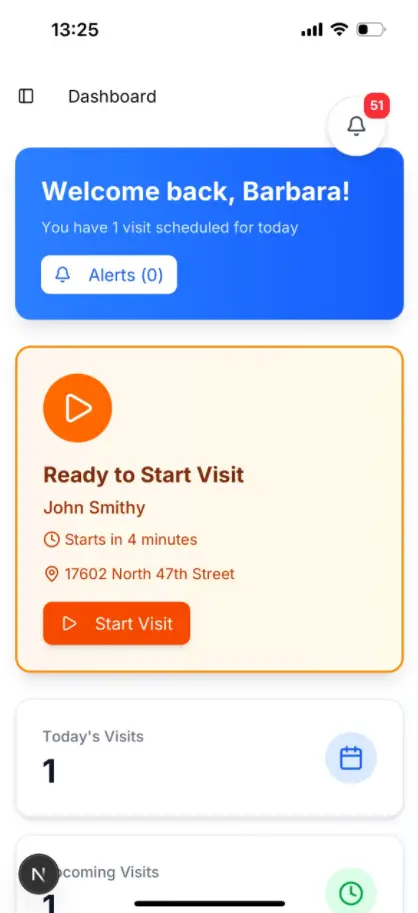
AveeCare's mobile dashboard gives caregivers simple, intuitive tools that reduce tech frustration and administrative stress.
Quick Daily Self-Care Practices for Busy Caregivers
You do not need an hour of free time to practice self-care. These micro-practices fit into even the busiest caregiver schedule and make a meaningful difference when practiced consistently.
Set one intention for the day. Example: "Today I will be patient with myself."
Three deep breaths. Scan your body for tension. Release your shoulders.
Step outside. Feel the air on your face. Drink water. Reset mentally.
Text or call someone who cares about you. Connection is fuel.
Hand on heart. "This is hard. I am doing my best. I am enough."
Listen to music or a podcast that makes you smile. Not the news.
Write down one thing you did well today. One thing you are grateful for.
Progressive muscle relaxation: tense and release from toes to forehead.
Do one thing purely for yourself. A bath, a walk, a chapter of a book.
Frequently Asked Questions About Caregiver Wellness
Professional caregivers who neglect self-care are significantly more likely to experience burnout, compassion fatigue, and physical health problems. Studies show that 40-70% of caregivers exhibit clinically significant symptoms of depression. Caregivers who practice regular self-care report 35% higher job satisfaction and 28% lower turnover rates. Self-care directly impacts care quality and client outcomes.
Common signs include persistent fatigue that does not improve with rest, feeling emotionally detached from clients, increased irritability, difficulty sleeping or appetite changes, frequent illness, withdrawing from friends and family, loss of interest in activities once enjoyed, feelings of hopelessness, and using food, alcohol, or other substances to cope.
Effective daily strategies include taking short breaks between clients (even 5-10 minutes of deep breathing), practicing mindfulness during routine tasks, maintaining 30 minutes of moderate exercise, setting clear work/personal boundaries, staying connected with supportive colleagues, keeping a gratitude journal, using progressive muscle relaxation before bed, and limiting negative news exposure.
Resources include the SAMHSA National Helpline (1-800-662-4357), the 988 Suicide and Crisis Lifeline, the Caregiver Action Network helpline (1-855-227-3640), Employee Assistance Programs, online therapy platforms, local caregiver support groups through Area Agencies on Aging, and the National Alliance for Caregiving online community.
Employers should provide EAP access, offer flexible scheduling, create peer support programs, provide adequate training, maintain manageable caseloads, conduct regular check-ins, offer wellness stipends, and use technology to reduce administrative burden that adds to caregiver stress.
Intuitive technology reduces stress by eliminating frustrating paperwork, providing clear schedules and navigation, enabling instant supervisor communication, automating documentation, reducing error anxiety through guided workflows, and giving caregivers a sense of control. The key is that the technology must be genuinely easy to use.
Less Tech Frustration Means Less Burnout
AveeCare's mobile app gives caregivers simple, intuitive tools that reduce administrative stress and put the focus back on what matters - providing great care.
Disclaimer: This guide is provided for informational and educational purposes only and does not constitute medical, psychological, or professional health advice. The wellness self-assessment is a self-reflection tool and is not a clinical diagnostic instrument. If you are experiencing a mental health crisis, please contact the 988 Suicide and Crisis Lifeline (call or text 988) or visit your nearest emergency department immediately. Always consult with licensed healthcare professionals for medical advice, mental health treatment, and personalized care plans. Individual results from self-care practices vary.