Caregiver Burnout Prevention: Signs, Solutions & Self-Care
Caregiver burnout affects up to 50% of professional home care workers. Learn to recognize the warning signs, assess your own risk with our interactive quiz, and build a sustainable self-care strategy that protects both you and your clients.
Published April 3, 2026

Warning Signs of Caregiver Burnout
Caregiver burnout does not happen overnight. It builds gradually through physical, emotional, and behavioral changes. Check the signs you recognize in yourself to track your awareness.
Physical Symptoms
Emotional Symptoms
Behavioral Symptoms
Burnout Risk Self-Assessment Quiz
Answer these 10 questions honestly to gauge your current burnout risk level. This is a screening tool, not a clinical diagnosis. Your responses are not stored or shared.
1.How often do you feel physically exhausted after work?
2.Do you dread going to work most days?
3.Have you withdrawn from friends or family recently?
4.How often do you feel emotionally numb or detached from clients?
5.Do you have trouble sleeping or sleep far more than usual?
6.Have you lost interest in hobbies or activities you used to enjoy?
7.Do you feel like your work makes no real difference?
8.How often do you feel irritable or impatient with clients or colleagues?
9.Have you experienced frequent headaches, back pain, or illness lately?
10.Do you feel like you have no control over your schedule or workload?
Physical, Emotional & Behavioral Symptoms
Caregiver burnout manifests in three interconnected dimensions. Understanding how these symptoms overlap helps you identify burnout earlier and respond more effectively.
Physical Symptoms
The body keeps score. Chronic caregiver stress triggers a sustained cortisol response that weakens immune function, disrupts sleep, and creates persistent pain cycles.
- Chronic fatigue and exhaustion
- Tension headaches and migraines
- Gastrointestinal issues
- Frequent colds and infections
- Muscle and joint pain
- Heart palpitations
Emotional Symptoms
Emotional exhaustion is the hallmark of caregiver burnout. It erodes empathy, the very quality that makes caregivers effective, and replaces it with numbness and resentment.
- Emotional exhaustion and numbness
- Increased irritability and anger
- Anxiety and worry
- Depression and hopelessness
- Loss of purpose and meaning
- Compassion fatigue
Behavioral Symptoms
Behavioral changes are often the most visible signs of caregiver burnout. These are the symptoms colleagues, supervisors, and family members notice first.
- Social withdrawal and isolation
- Increased absenteeism
- Decreased work quality
- Neglecting personal hygiene
- Substance use as coping
- Emotional outbursts at work
What Causes Caregiver Burnout in Home Care?
Caregiver burnout in home care has systemic roots. Understanding these causes helps agencies address problems at the organizational level rather than placing the burden solely on individual caregivers. Poor scheduling is one of the top contributors — learn how to fix it in our scheduling optimization guide.
Excessive Workloads
Back-to-back shifts, mandatory overtime, and too many clients per caregiver create unsustainable physical and emotional demands. The Bureau of Labor Statistics reports that home care aides work some of the most irregular schedules in healthcare.
Unpredictable Scheduling
Last-minute schedule changes, canceled shifts, and inability to plan personal time create chronic stress and instability. Caregivers who lack schedule predictability are twice as likely to experience burnout symptoms.
Emotional Demands
Caring for clients with dementia, terminal illness, or behavioral challenges takes a heavy emotional toll. Repeated exposure to suffering, decline, and death without adequate support leads to compassion fatigue.
Low Compensation
Home care aides earn a median of $16.77 per hour nationally. When pay does not reflect the physical and emotional demands of the work, caregivers feel undervalued and resentful, accelerating burnout.
Isolation
Unlike hospital or facility workers, home care caregivers work alone in client homes. This isolation means no peer support, no immediate backup, and no one to share the emotional weight of difficult situations.
Lack of Recognition
Caregivers who receive no acknowledgment, praise, or gratitude from management lose motivation. When the only feedback is complaints or corrections, burnout accelerates significantly.
Organizational Prevention Strategies
Caregiver burnout prevention is an organizational responsibility, not just an individual one. These strategies address the systemic causes of burnout and build a sustainable care culture. They also directly support your broader caregiver retention efforts.
1Balanced Scheduling & Workload Monitoring
- Cap weekly hours at 40 for full-time caregivers
- Use scheduling software that flags overtime and overwork automatically
- Distribute high-acuity clients evenly across the team
- Honor time-off requests and availability preferences consistently
- Build buffer shifts for coverage without relying on the same backup caregivers
2Structured Peer Support & Mentorship
- Pair new caregivers with experienced mentors during onboarding
- Host monthly peer support group meetings (virtual or in-person)
- Create a buddy system for caregivers on challenging assignments
- Encourage open discussion of emotional challenges without stigma
- Train supervisors to recognize burnout warning signs in their teams
3Recognition & Appreciation Programs
- Implement a monthly caregiver spotlight with tangible rewards
- Share positive client feedback directly with caregivers
- Celebrate tenure milestones: 90 days, 6 months, 1 year, and beyond
- Send handwritten thank-you notes from leadership quarterly
- Include caregivers in team celebrations and company events
4Wellness & Mental Health Resources
- Provide access to an Employee Assistance Program (EAP)
- Offer free or subsidized counseling sessions
- Host quarterly wellness workshops on stress management
- Create a resource library of self-care materials and hotlines
- Allow mental health days without penalty or excessive justification
5Communication & Feedback Channels
- Establish a real-time secure messaging platform for team communication
- Schedule regular one-on-one check-ins between caregivers and coordinators
- Conduct quarterly anonymous burnout surveys
- Act visibly on feedback and communicate changes back to the team
- Maintain an open-door policy for concerns and suggestions
Self-Care Toolkit for Caregiver Stress
These evidence-based caregiver self-care techniques can be practiced during breaks, between client visits, or at home. Small, consistent actions are more effective than occasional grand gestures. For a deeper dive, see our dedicated caregiver self-care and wellness guide.
Mindful Breathing
5 minPractice 4-7-8 breathing: inhale for 4 counts, hold for 7, exhale for 8. Do this between client visits or during breaks. Studies show this activates the parasympathetic nervous system and reduces cortisol levels within minutes.
Movement Breaks
10 minTake a short walk, stretch, or do light exercises between shifts. Even 10 minutes of movement boosts mood and energy. Caregivers who exercise regularly report 30% lower burnout scores.
Boundary Setting
OngoingLearn to say no to extra shifts when you are running on empty. Communicate your availability clearly to your agency. Boundaries are not selfish; they protect both you and your clients.
Social Connection
15 minReach out to a friend, family member, or fellow caregiver. Isolation amplifies burnout. A quick phone call or text to someone who understands your work can provide significant emotional relief.
Sleep Hygiene
NightlyMaintain a consistent sleep schedule, limit screen time before bed, and aim for 7-8 hours. Poor sleep is both a cause and symptom of burnout. Improving sleep quality alone can reduce burnout symptoms by 20%.
Gratitude Practice
5 minWrite down three positive moments from your day, no matter how small. This simple exercise rewires your brain to notice the positive impact of your work and combats the cynicism that accompanies burnout.
When to Seek Professional Help
Caregiver burnout can progress from stress to clinical depression or anxiety disorders. Knowing when to seek professional help is a sign of strength, not weakness.
Seek help immediately if you experience:
988 Suicide & Crisis Lifeline
Call or text 988, available 24/7
Free, confidential support for anyone in distress
Employee Assistance Program
Ask your employer about EAP benefits
Typically covers 3-6 free counseling sessions
Caregiver Support Groups
AARP and local Area Agencies on Aging
Connect with others who understand your experience
How Technology Helps Prevent Caregiver Burnout
Modern home care software reduces the systemic stressors that cause caregiver burnout. From balanced scheduling to streamlined documentation, technology addresses root causes rather than just symptoms.
Balanced Shift Distribution
Smart scheduling algorithms distribute shifts evenly, preventing the pattern of overworking top performers while others are underutilized.
Availability Tracking
Caregivers set their own availability windows, and the system respects those boundaries when building schedules. No more surprise shifts.
Overtime Alerts
Automatic alerts when a caregiver approaches overtime thresholds help managers intervene before overwork occurs.
Reduced Admin Burden
Mobile-friendly documentation, digital forms, and automated EVV eliminate hours of unpaid paperwork that drains energy and time.
Real-Time Communication
Built-in secure messaging connects caregivers with their team instantly, reducing the isolation of working alone in client homes.
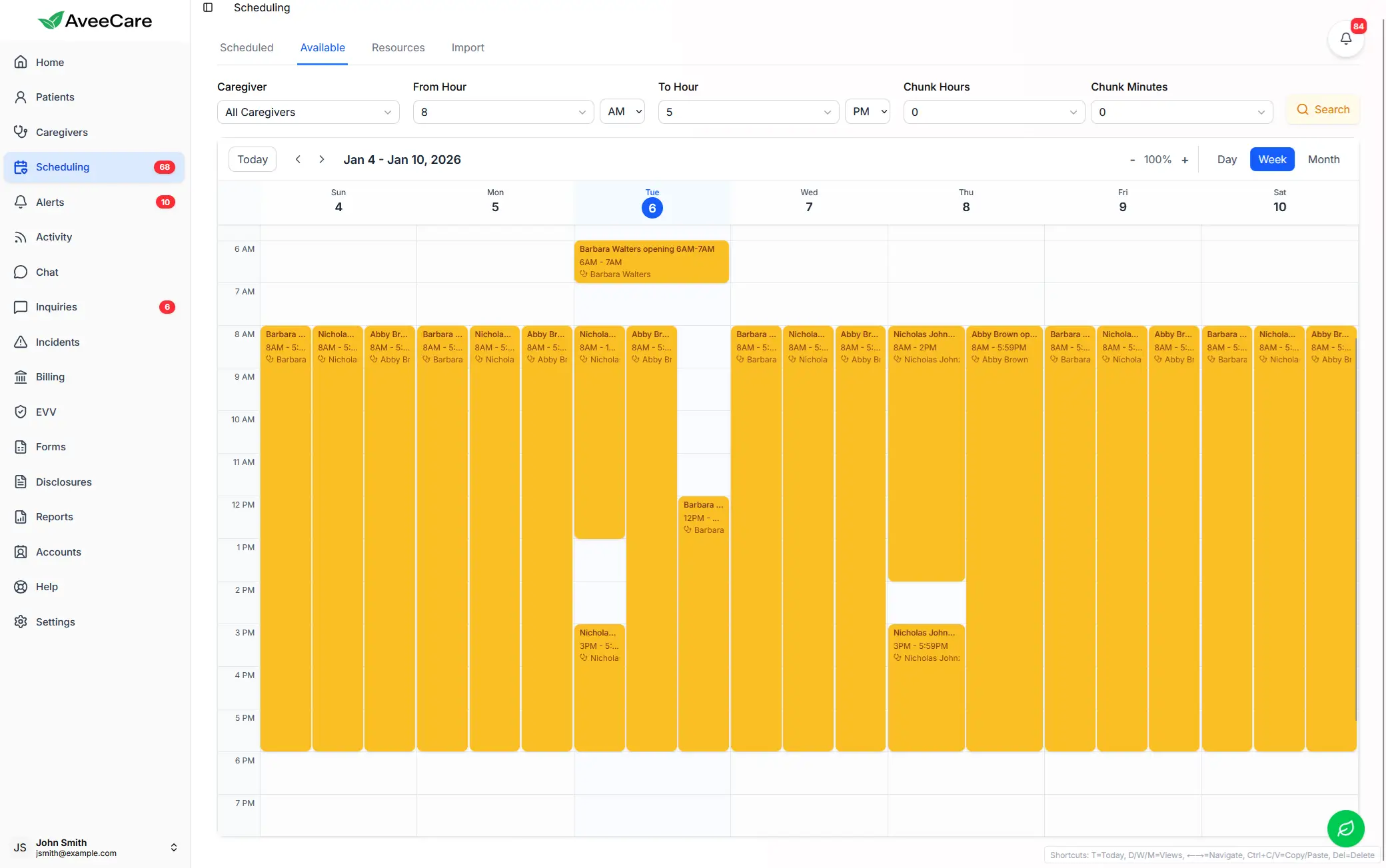
AveeCare's availability tracking helps prevent caregiver overwork
Frequently Asked Questions About Caregiver Burnout
Early warning signs include persistent fatigue that does not improve with rest, increased irritability or impatience with clients, withdrawal from social activities, difficulty sleeping, frequent headaches or body aches, feeling overwhelmed by routine tasks, loss of interest in hobbies, and a growing sense of resentment toward caregiving responsibilities. Recognizing these signs early allows caregivers and agencies to intervene before burnout becomes severe.
Burnout among home care workers is widespread. Studies indicate that approximately 40% of family caregivers and 30-50% of professional caregivers report high levels of emotional stress. In home care specifically, the combination of low wages, unpredictable schedules, physical demands, and emotional labor creates conditions where burnout rates can exceed 50% in some agencies.
The primary causes include excessive workloads and overtime, unpredictable or last-minute scheduling, emotional demands of caring for clients with dementia or terminal illness, physical strain from lifting and mobility assistance, insufficient training and support, low pay relative to job demands, lack of recognition, isolation from working alone in client homes, and inadequate communication with management.
Agencies can prevent burnout by implementing balanced scheduling that avoids overwork, providing adequate training and ongoing support, offering competitive compensation and benefits, creating open communication channels, establishing mentorship programs, using technology to reduce administrative burden, hosting regular check-ins and wellness programs, and fostering a culture of recognition.
Seek professional help when burnout symptoms persist for more than two weeks, when you experience feelings of hopelessness or depression, when you turn to alcohol or substances to cope, when you have thoughts of harming yourself or neglecting a client, when physical symptoms like chest pain or panic attacks occur, or when your work performance and client care quality noticeably decline.
Yes. Scheduling software reduces burnout by distributing shifts evenly across the care team, respecting caregiver availability and time-off requests, preventing excessive overtime, reducing last-minute schedule changes, and minimizing travel time between clients. Features like availability tracking and workload monitoring help agencies identify at-risk caregivers before burnout occurs.
Protect Your Caregivers from Burnout
AveeCare's smart scheduling helps prevent caregiver overwork with balanced shift distribution, availability tracking, and workload monitoring. Give your team the tools to thrive.
Disclaimer: This article is provided for informational and educational purposes only and does not constitute medical, psychological, or professional advice. The burnout risk self-assessment quiz is a screening tool and is not a substitute for a clinical evaluation by a licensed healthcare professional. If you or someone you know is experiencing a mental health crisis, please contact the 988 Suicide & Crisis Lifeline (call or text 988) or visit your nearest emergency room. AveeCare is a home care management software company and does not provide medical or mental health services. Always consult with a qualified professional for advice specific to your situation.