Caregiver Onboarding Best Practices: The Complete Agency Guide
Nearly 80% of caregivers who quit do so within their first 100 days. A structured caregiver onboarding program with clear milestones, mentorship, and support can improve 90-day retention by 25-40%. Use our interactive 90-day checklist to build yours.
Published April 3, 2026

Why Caregiver Onboarding Matters
The first 90 days of new caregiver orientation determine whether a hire becomes a long-term team member or another turnover statistic. The data is clear: structured caregiver onboarding programs pay for themselves within months. Onboarding is one of the most impactful caregiver retention strategies an agency can invest in.
80%
of caregivers who quit leave within 100 days
25-40%
retention improvement with structured onboarding
$2,600-$5,000
cost per caregiver departure
50%+
admin time saved with digital onboarding
The retention math
Consider a home care agency with 50 caregivers and a 77% annual turnover rate. That means approximately 38-39 departures per year. At $3,500 per departure (mid-range estimate), the agency spends roughly $136,000 annually just replacing caregivers.
If structured caregiver onboarding reduces that turnover rate to 50%, only 25 caregivers leave instead of 39. That saves approximately $49,000 per year, and the savings compound as experienced caregivers deliver better care and generate stronger client satisfaction.
90-Day Caregiver Onboarding Checklist
Use this interactive checklist to track your new caregiver orientation progress. Check off items as you complete them. Your progress is tracked in real-time below.
Pre-Arrival
Before Day 1
Onboarding Documentation Requirements
Every caregiver onboarding file needs these documents. Missing paperwork creates compliance risk and delays the caregiver's ability to begin client visits. For a full breakdown of state-by-state requirements, see our caregiver training requirements guide.
Employment & Legal
- Completed employment application
- Signed offer letter or employment agreement
- W-4 (Federal tax withholding)
- I-9 (Employment eligibility verification)
- State tax withholding form
- Direct deposit authorization
- Background check authorization and results
- Drug screening results (if required)
- Signed at-will employment acknowledgment
Clinical & Compliance
- CNA/HHA certification (copy on file)
- CPR/First Aid certification
- TB test results or health screening
- State-specific training completion records
- HIPAA confidentiality agreement (signed)
- Employee handbook acknowledgment (signed)
- Emergency contact form
- Driver license and auto insurance (if applicable)
- Professional references (verified)
Building a Mentorship Program
Agencies with formal mentorship programs during caregiver onboarding see 30% higher 90-day retention. Here is how to build one that works in a distributed home care environment.
Select the Right Mentors
- Choose caregivers with 1+ year tenure and strong client feedback
- Look for patience, communication skills, and willingness to teach
- Compensate mentors with a small per-mentee bonus or hourly premium
- Limit each mentor to 1-2 mentees at a time to avoid overload
Structure the Relationship
- Set clear expectations for both mentor and mentee
- Schedule weekly check-ins for the first 30 days
- Provide a mentor guide with discussion topics for each week
- Have the mentor shadow the mentee on at least one early visit
Measure and Improve
- Track 90-day retention rates for mentored vs. non-mentored hires
- Collect feedback from both mentors and mentees monthly
- Recognize top mentors publicly and reward their contribution
- Refine the program quarterly based on outcomes and feedback
Common Caregiver Onboarding Mistakes
One-day orientation only
Cramming everything into a single day overwhelms new hires and skips the supported ramp-up period that drives retention.
Fix: Design a 90-day onboarding journey with milestones at Day 1, 7, 14, 30, 60, and 90.
Assigning difficult clients immediately
Throwing a new caregiver into a high-acuity or behaviorally challenging case on their first week destroys confidence.
Fix: Start with compatible, low-acuity clients and gradually increase complexity over 30 days.
No mentor or buddy assigned
New caregivers working in client homes alone, with no experienced peer to call, feel isolated and unsupported.
Fix: Assign every new hire a mentor for their first 30 days with scheduled check-in touchpoints.
First paycheck errors
Getting the first paycheck wrong, whether late, short, or miscalculated, is the fastest way to lose a new hire.
Fix: Double-check payroll setup during pre-arrival. Verify hours, rates, and direct deposit before the first pay run.
No feedback collection
Never asking new hires about their onboarding experience means the same problems repeat with every cohort.
Fix: Send a brief onboarding feedback survey at Day 30 and use the data to refine your process each quarter.
Paper-heavy processes
Stacks of paper forms, binders, and manual signatures waste time, create errors, and feel outdated.
Fix: Digitize all onboarding forms and use software to track completion, signatures, and compliance deadlines.
Technology in Caregiver Onboarding
Digital onboarding tools reduce administrative time by 50% or more, eliminate paper-based errors, and ensure nothing falls through the cracks during the critical first 90 days of new caregiver orientation.
Digital Forms & E-Signatures
Eliminate paper stacks. Send all onboarding documents electronically for completion before Day 1, saving hours of orientation time.
Automated Compliance Tracking
Software tracks certification expiration dates, training completions, and document submissions automatically with deadline reminders.
Mobile Training Access
Caregivers complete training modules on their phone at their own pace, rather than sitting through hours of classroom sessions.
Built-In Secure Messaging
New hires can message their mentor, coordinator, or team directly through a HIPAA-compliant platform from day one.
Centralized Document Storage
All onboarding documents are stored securely in one place, accessible for audits, compliance reviews, or reference at any time.
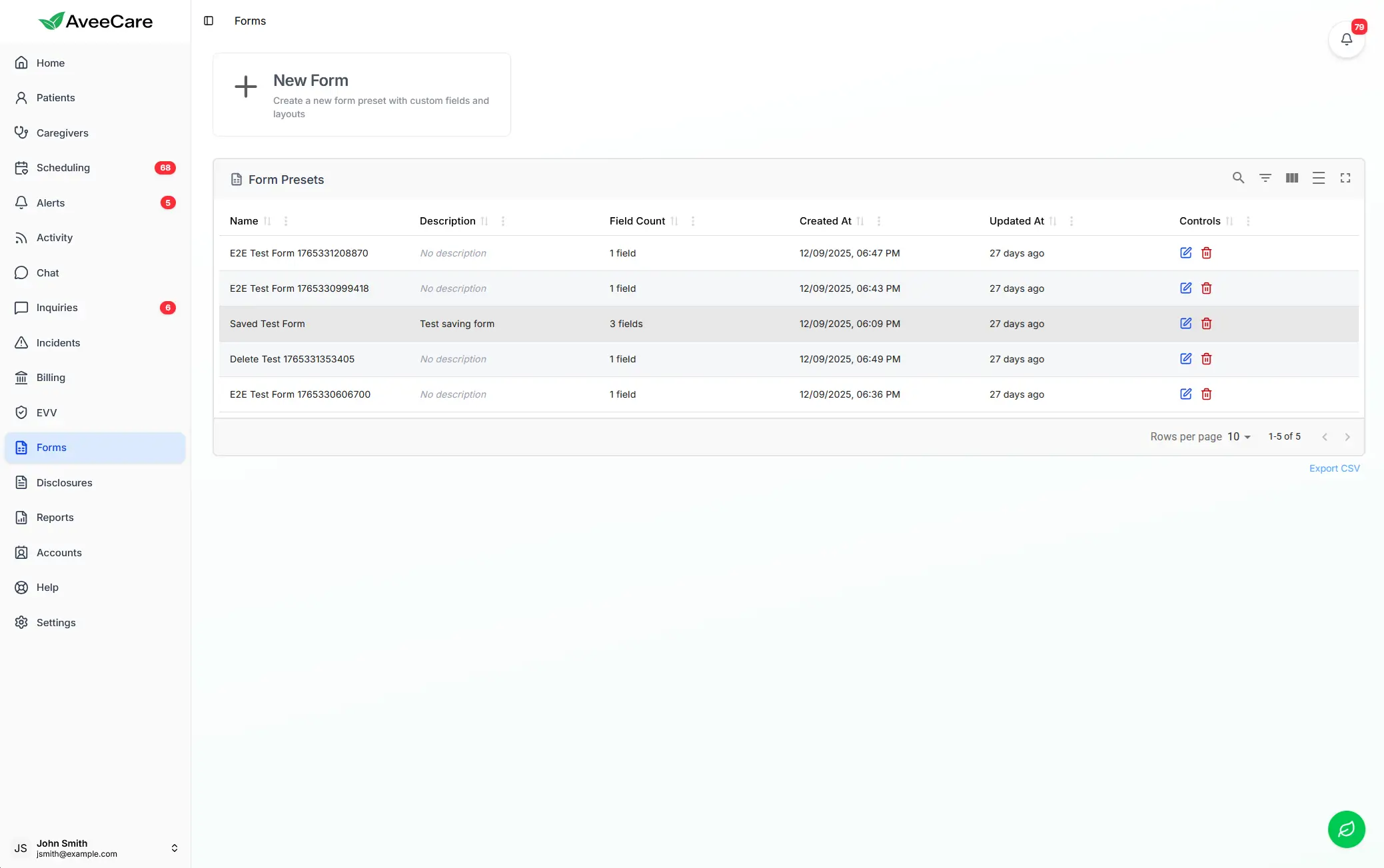
AveeCare's digital forms streamline caregiver onboarding paperwork
Frequently Asked Questions About Caregiver Onboarding
Effective caregiver onboarding should span at least 90 days, not just a single orientation session. Research shows that nearly 80% of caregivers who leave do so within their first 100 days. A structured 90-day program with milestones at Day 1, Week 1, Day 30, Day 60, and Day 90 significantly improves retention.
Essential documents include: employment application and offer letter, W-4 and I-9 forms, background check authorization, state-specific training certifications (CNA, HHA), TB test results, CPR/First Aid certification, driver license and auto insurance (if transporting clients), signed employee handbook acknowledgment, HIPAA confidentiality agreement, emergency contact forms, and direct deposit authorization.
The most common mistakes include treating onboarding as a single-day event, overwhelming new hires with paperwork without explaining procedures, assigning high-acuity clients immediately, neglecting first-week check-in calls, producing errors in the first paycheck, skipping mentorship assignments, and not collecting feedback from new hires.
Structured onboarding improves retention by 25-40% compared to informal orientations. New caregivers who receive mentorship, progressive client assignments, regular check-ins, and clear expectations during their first 90 days feel supported, competent, and valued.
Technology streamlines onboarding by digitizing paperwork for electronic signatures, automating compliance tracking, providing mobile-accessible training materials, enabling secure messaging between new hires and mentors, centralizing document storage, and sending automated reminders for upcoming deadlines. Digital onboarding reduces administrative time by 50% or more.
Streamline Your Caregiver Onboarding
AveeCare streamlines onboarding with digital forms, automated training tracking, and built-in messaging so your new caregivers feel supported from Day 1.
Disclaimer: This article is provided for informational and educational purposes only and does not constitute legal, HR, or employment advice. Caregiver onboarding requirements vary by state and may be subject to federal, state, and local regulations. Always consult with a qualified employment attorney or HR professional to ensure your onboarding processes comply with applicable laws. AveeCare is a home care management software company and does not provide legal or employment advisory services.