Wound Care at Home: Types, Treatment & Prevention for Caregivers
A comprehensive guide to home health wound care covering wound types, pressure ulcer prevention, the MEASURE assessment framework, infection recognition, and documentation requirements. Built for home care agencies and caregivers managing wound care at home. For foundational clinical skills, review our caregiver training requirements guide, and for structuring wound observations into actionable records, see our care plan documentation best practices.
Common Wound Types in Home Care
Understanding wound types is the foundation of effective wound management home care. Each wound type has distinct characteristics, causes, and treatment protocols. Click on each wound type to explore detailed care information.
Interactive Wound Type Identifier
Answer three quick questions about the wound to get a preliminary classification and recommended care protocol. This tool is for educational reference only and does not replace a clinical wound assessment.
Where is the wound located?
What is the most likely cause?
What does the wound look like?
Pressure Ulcer Staging Reference
The NPUAP/EPUAP staging system is the standard for classifying pressure ulcers. Accurate staging is essential for pressure ulcer prevention strategies and appropriate treatment selection in home health wound care.
Wound Assessment: The MEASURE Framework
The MEASURE framework provides a systematic approach to wound assessment documentation. Using a consistent framework ensures thorough evaluation and clear communication among care team members for effective wound care at home.
Measure
Length, width, depth in centimeters. Measure consistently using clock method (12 o'clock = head).
Exudate
Amount (none, scant, small, moderate, large), type (serous, sanguineous, serosanguineous, purulent), color, and odor.
Appearance
Wound bed tissue type and percentage: granulation (red), slough (yellow), eschar (black), epithelial (pink).
Suffering
Pain level on 0-10 scale. Assess at rest, during dressing change, and between changes. Note pain quality.
Undermining
Tissue destruction under intact skin at wound edges. Document location using clock positions and depth.
Re-evaluate
Reassess wound at each visit. Compare to baseline. Document progress or deterioration.
Edge
Wound edge characteristics: attached, unattached, rolled, callused, macerated. Periwound skin condition.
Recognizing Wound Infection
Early recognition of wound infection is critical in home health wound care. Caregivers should be trained to identify these warning signs and escalate to the supervising nurse immediately.
Local Signs of Infection
- Increasing redness (erythema) spreading beyond wound edges
- Warmth and swelling (induration) around the wound
- Increasing or purulent (yellow/green) drainage
- Foul or unusual odor from the wound
- Increased pain or tenderness at wound site
- Change in wound bed color (viable red to dull or dark)
- Wound deterioration or failure to heal as expected
- Red streaking from the wound (lymphangitis)
Systemic Signs of Infection
- Fever (temperature above 100.4 F / 38 C)
- Chills or rigors
- Elevated heart rate (tachycardia)
- Elevated white blood cell count (if labs available)
- General malaise, fatigue, or feeling unwell
- Confusion or altered mental status (especially in elderly)
- Nausea or loss of appetite
- Sepsis signs: rapid breathing, low blood pressure, confusion
Nutrition for Wound Healing
Adequate nutrition is essential for wound healing. Patients with wounds have increased caloric and protein needs. Malnutrition is a leading cause of delayed wound healing in home care patients.
Protein
1.25-1.5 g/kg body weight
Building blocks for new tissue, collagen synthesis, immune function
Sources: Eggs, poultry, fish, dairy, beans, nuts
Vitamin C
250-500 mg
Collagen synthesis, antioxidant protection, immune support
Sources: Citrus fruits, strawberries, bell peppers, broccoli
Zinc
15-30 mg
Cell division, protein synthesis, immune function
Sources: Red meat, shellfish, legumes, seeds, whole grains
Hydration
30 mL/kg body weight
Oxygen transport to wound, removal of waste products
Sources: Water, broth, juice, hydrating foods
Wound Assessment Documentation Checklist
Complete documentation is critical for continuity of care, regulatory compliance, and tracking wound healing progress. Use this interactive checklist to ensure thorough wound documentation for wound care at home.
Patient Information
- Patient name and date of birth
- Wound location documented with body map
- Wound etiology (cause) identified
- Date wound first observed or reported
Wound Assessment (MEASURE)
- Measurements recorded (L x W x D in cm)
- Exudate amount, type, color, odor documented
- Wound bed appearance described with tissue percentages
- Pain level assessed (0-10 scale)
- Undermining assessed and documented
- Wound edges and periwound skin described
Treatment & Plan
- Cleansing method documented
- Dressing type and application method recorded
- Next dressing change date scheduled
- Patient/caregiver education provided and documented
- Physician notified of any changes or concerns
- Photographs taken (with patient consent)
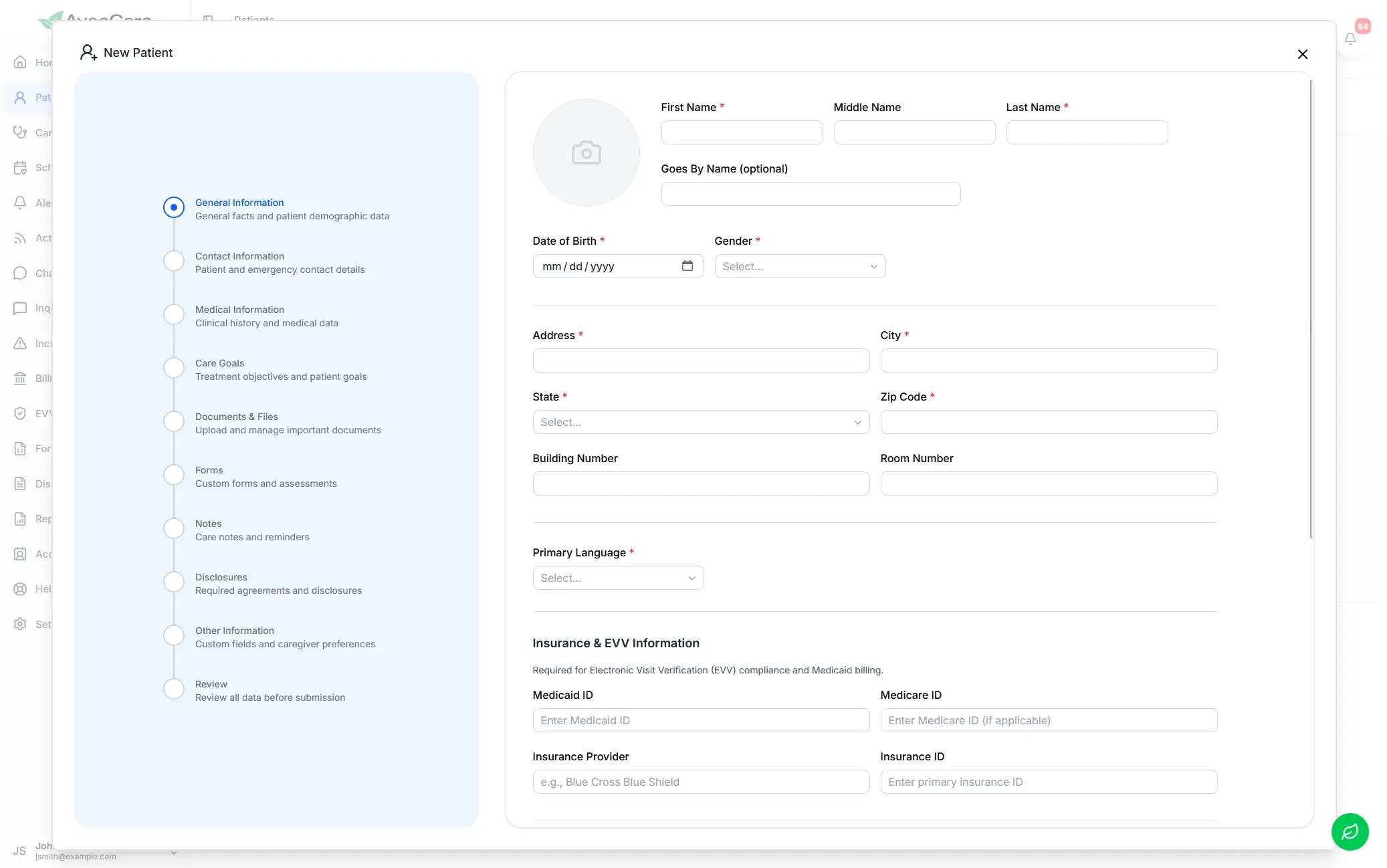
AveeCare's digital forms streamline wound assessment documentation for home care agencies
Frequently Asked Questions
Common questions about wound care at home, pressure ulcer prevention, and wound management home care.
The most common wound types in home care include pressure ulcers (bedsores) from prolonged immobility, diabetic foot ulcers, venous leg ulcers from poor circulation, surgical wounds, skin tears common in elderly patients with fragile skin, and moisture-associated skin damage from incontinence. Pressure ulcers are the most prevalent, affecting up to 2.5 million patients annually in the United States.
Pressure ulcers are staged using the NPUAP/EPUAP system: Stage 1 shows intact skin with non-blanchable redness; Stage 2 involves partial-thickness skin loss with a shallow open ulcer or blister; Stage 3 shows full-thickness skin loss with visible subcutaneous fat; Stage 4 involves full-thickness tissue loss with exposed bone, tendon, or muscle. Additionally, unstageable wounds have full-thickness loss covered by eschar, and deep tissue injuries show purple or maroon discoloration of intact skin.
Signs of wound infection include increasing redness spreading beyond the wound edges, warmth around the wound site, swelling or induration, increasing or foul-smelling drainage, wound bed color change to yellow or green, increased pain, delayed healing, fever or systemic signs of infection, and red streaking from the wound. Caregivers should report these signs to the supervising nurse immediately.
Dressing change frequency depends on wound type and drainage: gauze dressings every 1-2 days, foam dressings every 3-7 days, hydrocolloid dressings every 3-7 days, alginate dressings when saturated (1-3 days), and transparent film dressings every 5-7 days. Always change dressings if soiled, wet, or dislodged, and follow the specific wound care plan from the supervising nurse.
The Braden Scale predicts pressure ulcer risk by evaluating six factors: sensory perception, moisture exposure, activity level, mobility, nutrition, and friction/shear. Total scores range from 6-23, with lower scores indicating higher risk. Scores 15-18 indicate mild risk, 13-14 moderate risk, 10-12 high risk, and 9 or below very high risk. It should be completed on admission and reassessed regularly in home care settings.
Sources & References
This wound care at home guide is based on evidence-based clinical guidelines and authoritative resources.
Clinical practice guidelines for wound assessment, treatment, and prevention in home care.
International evidence-based guidelines for pressure ulcer prevention and treatment staging.
Infection prevention and control guidelines for wound management in healthcare settings.
Agency for Healthcare Research and Quality toolkit for implementing pressure ulcer prevention programs.
Streamline Wound Care Documentation with AveeCare
AveeCare's home care management software helps agencies document wound assessments, track healing progress, manage care plans, and ensure compliance, all from one intuitive platform built for wound management home care.
No credit card required. No sales call needed. Try it yourself in minutes.
Disclaimer: This guide is intended for informational and educational purposes only and does not constitute medical advice. Wound care decisions should be made under the supervision of qualified healthcare providers, including licensed nurses and wound care specialists. Individual patient needs vary, and all wound treatment plans should be tailored to the specific clinical situation. AveeCare provides home care management software and is not a healthcare provider. Information is current as of April 2026 and may be subject to change.