How to Start a Home Care Agency in Wisconsin
Your complete 2026 guide to launching a home care business in Wisconsin, from DHS licensing and business formation to Family Care MCOs, ADRCs, and your first clients.
Published April 4, 2026 · 28 min read
TLDR — Wisconsin at a Glance
Yes for both non-medical (Supportive Home Care, DHS 135) and Home Health agencies (DHS 133). Wisconsin DHS licenses both types.
Department of Health Services (DHS), Division of Quality Assurance (DQA)
$30,000 – $65,000 (Supportive Home Care)
$100,000 – $250,000+ (Home Health)
2 – 4 months (Supportive HC) | 4 – 6 months (Home Health)
Family Care managed long-term care program & Aging and Disability Resource Centers (ADRCs) instead of AAAs
1Wisconsin Market Overview
Understanding the opportunity for home care agencies in Wisconsin
Wisconsin has a population of approximately 5.9 million people and a growing demand for home care services driven by an aging population, rural communities, and culturally diverse urban centers. The state is home to one of the largest Hmong communities in the United States, concentrated in Milwaukee, Wausau, and Green Bay, along with significant Hispanic and African American populations in Milwaukee. Starting a home care agency in Wisconsin means serving a diverse population with unique cultural and linguistic care needs across a mix of urban and rural landscapes.
The Milwaukee metro area (1.6M residents) is the largest market, followed by Madison (state capital/UW), Green Bay/Fox Valley (Appleton, Oshkosh), and Kenosha/Racine on the Illinois border. Rural Wisconsin includes aging dairy farming communities where seniors need in-home support to age in place.
Wisconsin's cost of living is moderate. The state requires DHS licensure for both medical and non-medical home care agencies. Unique to Wisconsin are the Family Care managed long-term care program and Aging and Disability Resource Centers (ADRCs), which replace the AAAs used by most other states. Understanding these systems is essential for building a successful home care business in Wisconsin. For a national overview of the startup process with interactive tools, see our complete guide to starting a home care agency and our state-by-state licensing requirements.
2Supportive Home Care Agency vs. Home Health Agency in Wisconsin
Wisconsin DHS licenses both types through the Division of Quality Assurance
This is the most important decision you will make. Wisconsin requires DHS licensure for both types of agencies. A Supportive Home Care Agency is governed by Wisconsin Administrative Code DHS 135, while a Home Health Agency falls under DHS 133. Your choice determines the services you can provide, the staff you need, and your overall startup costs for your Wisconsin home care business.
Supportive Home Care Agency
Wisconsin Admin Code DHS 135
- Personal care (bathing, dressing, grooming)
- Homemaker services and light housekeeping
- Companion care and socialization
- Meal preparation and nutrition
- Medication reminders (not administration)
- Respite care for family caregivers
DHS license required (DHS 135)
Lower startup costs. Faster to launch.
Home Health Agency
Wisconsin Admin Code DHS 133
- Skilled nursing care
- Physical, occupational, and speech therapy
- Wound care and injections
- Medical social services
- Home health aide services
- Medication administration
DHS license required (DHS 133)
Plus Medicare certification for Medicare billing.
3Business Formation in Wisconsin
Register your home care business with the state

Choose Your Business Structure
Most Wisconsin home care agencies register as an LLC (Limited Liability Company) for liability protection and tax flexibility. Wisconsin LLC filing fees are $130 when filed online through the Department of Financial Institutions (DFI). You can also form a corporation or sole proprietorship.
Register with WI Dept. of Financial Institutions
File your formation documents with the Wisconsin Department of Financial Institutions (DFI) online. Processing typically takes 5 to 10 business days. Wisconsin requires an annual report filing to keep your entity in good standing.
WI DFIObtain Your EIN
Apply for a free Employer Identification Number (EIN) from the IRS at irs.gov. You need this for bank accounts, payroll, and tax filings. It takes minutes to obtain online.
Register for Wisconsin State Taxes
Register with the Wisconsin Department of Revenue (DOR) for state income tax withholding. Wisconsin has a progressive income tax ranging from 3.5% to 7.65%. Register online through the DOR business registration portal.
WI Dept. of RevenueGet Local Business Licenses
Contact your city and county government offices for any local business license requirements. Requirements vary by municipality. Milwaukee, Madison, Green Bay, Kenosha, and Racine each have their own local business registration processes.
Open a Business Bank Account
Open a dedicated business checking account to keep personal and business finances separate. Wisconsin-based banks and credit unions can help. You will need your EIN and formation documents.
4DHS Licensing Requirements
Wisconsin requires DHS licensure for both non-medical and skilled agencies
Important: Wisconsin requires DHS licensure for all home care agencies, including non-medical personal care. The Division of Quality Assurance (DQA)handles licensing. Non-medical agencies use the “Supportive Home Care Agency” designation under DHS 135.
Supportive Home Care Agency License
Wisconsin Admin Code DHS 135
For non-medical personal care, homemaker services, or supportive services, you need a Supportive Home Care Agency license from DHS DQA. This is the most common license for new home care businesses in Wisconsin.
- Submit application to DHS DQA
- Designate a qualified administrator/supervisor
- Develop policies/procedures per DHS 135 and complete DHS 12 background checks
- Pass DQA on-site survey/inspection
Home Health Agency License
Wisconsin Admin Code DHS 133
For skilled nursing, physical therapy, or other medical services, obtain a Home Health Agency license from DHS DQA under DHS 133. This has more rigorous staffing and documentation requirements.
- Submit application to DHS DQA
- Designate administrator with healthcare management experience
- Employ or contract with an RN; establish QA program per DHS 133
- Complete DHS 12 background checks and pass DQA inspection
Medicare Certification
Medicare certification is separate from DHS licensure. Apply through CMS, pass a federal survey, and meet Medicare Conditions of Participation. This adds 3 to 6 months beyond your state license. Wisconsin's growing elderly population makes Medicare certification especially valuable.
5Insurance Requirements
Protect your Wisconsin home care business
General Liability
$2,000 - $5,000/yrCovers bodily injury and property damage claims. Recommended minimum: $1M per occurrence / $2M aggregate. Required by most referral partners, Family Care MCOs, and contracts in Wisconsin.
Professional Liability (E&O)
$1,500 - $4,000/yrCovers errors, omissions, and negligence claims related to the care services your agency provides. Essential protection for any home care business in Wisconsin.
Workers' Compensation
$2,500 - $6,000/yrWisconsin requires workers' compensation insurance for employers with 3 or more employees (Wis. Stat. 102). This is mandatory before your team grows beyond two employees. Administered by the Wisconsin DWD Workers' Compensation Division.
Surety / Fidelity Bond
$300 - $1,000/yrProtects clients against employee theft or dishonesty. Not required by Wisconsin law, but strongly recommended. Many families and Family Care MCOs in Wisconsin expect it.
Wisconsin workers' comp note: Wisconsin requires workers' compensation insurance for employers with 3 or more employees (Wis. Stat. Chapter 102). Plan to have coverage in place before your team reaches this threshold. Many Wisconsin home care agencies obtain coverage from day one as a best practice, even before the legal requirement kicks in.
6Staffing and Hiring in Wisconsin
Finding and qualifying caregivers for your Wisconsin agency
Building a reliable caregiver team is a top challenge in Wisconsin, with workforce shortages across urban and rural areas. Wisconsin's diverse population, including one of the nation's largest Hmong communities, creates opportunities for agencies that recruit bilingual, culturally competent caregivers.
Training Requirements
Wisconsin requires home health aides to complete 75 hours of training including 16 hours of supervised clinical practice under federal requirements. For personal care workers under a Supportive Home Care license (DHS 135), agencies must provide competency-based training covering personal care techniques, safety, infection control, emergency procedures, and client communication. Wisconsin's technical colleges (WCTC, MATC, Fox Valley) offer excellent CNA programs that produce well-qualified candidates for home care agencies.
Caregiver Background Checks (DHS 12)
Wisconsin requires comprehensive Caregiver Background Checks under DHS 12 for all employees who provide direct care or have access to clients. Background checks are conducted through the Wisconsin Department of Justice (DOJ) Crime Information Bureau (CIB). You must also check the Wisconsin Caregiver Misconduct Registry, sex offender registry, and the federal OIG exclusion list before hiring any caregiver.
Wisconsin DOJWhere to Find Caregivers & Wages
Recruit through the Job Center of Wisconsin, technical college CNA programs (MATC, WCTC, Fox Valley, Chippewa Valley), Hmong and multicultural community organizationsfor bilingual caregivers, and online job boards like Indeed and ZipRecruiter. Employee referral bonuses are effective in tight-knit Wisconsin communities.
Wisconsin's minimum wage is $7.25/hour (federal), but most agencies pay $13-$17/hour for personal care aides and $16-$23/hour for HHAs and CNAs. Pay is higher in Milwaukee and Madison metros. In rural areas, competitive wages plus mileage reimbursement are important retention tools.
7Medicaid, Family Care, and Medicare in Wisconsin
Government payer programs, Family Care MCOs, BadgerCare Plus, and EVV compliance
Family Care — Wisconsin's Unique Managed Long-Term Care Program
Family Care is unique to Wisconsin and is the state's primary way of delivering long-term care services to elderly and disabled residents. Instead of traditional Medicaid fee-for-service, Family Care members receive care through Managed Care Organizations (MCOs) that coordinate and pay for services. Members are enrolled by their local ADRC, assigned to an MCO, and receive a care plan. To serve Family Care members, your home care agency must contract directly with one or more Family Care MCOs. Rates, documentation, and expectations vary by MCO. This is a critical revenue source for Wisconsin home care agencies.
WI Family Care ProgramWisconsin Medicaid & BadgerCare Plus
Wisconsin Medicaid is administered by the DHS Division of Medicaid Services (DMS). BadgerCare Plus provides healthcare coverage to low-income individuals and families. To bill Medicaid outside of Family Care, enroll as a Medicaid provider with DMS. WI Medicaid (DMS)
Electronic Visit Verification (EVV)
Under the 21st Century Cures Act, all states must implement EVV for Medicaid-funded personal care and home health services. Wisconsin uses Sandata as its statewide EVV system. Wisconsin operates under an open model, meaning providers can choose a third-party EVV vendor as long as it integrates with Sandata for data submission.
Wisconsin Medicaid Programs
- Family Care (managed long-term care)
- BadgerCare Plus (general Medicaid)
- IRIS (Include, Respect, I Self-Direct) self-directed program
- Family Care Partnership
- PACE (Program of All-Inclusive Care for the Elderly)
- Children's Long-Term Support (CLTS) Waiver
Medicare Certification
To bill Medicare, your Wisconsin home health agency must be certified by CMS. The process involves applying through CMS, passing a federal survey, demonstrating compliance with Medicare Conditions of Participation, and accepting Medicare reimbursement rates. Expect 3 to 6 months for the full certification process after obtaining your DHS license. Wisconsin's growing elderly population makes Medicare certification especially valuable.
8Startup Cost Estimator
Wisconsin-specific startup cost breakdown (moderate cost of living)
Business Formation
$655 – $2,805Online filing with WI Dept. of Financial Institutions
IRS EIN is free; registered agent optional
Required annually with DFI
Attorney review, CPA setup
DHS Licensing
$700 – $3,100Supportive Home Care or Home Health license
Compliance documentation per DHS 133/135
Insurance (Annual)
$6,300 – $16,000$1M per occurrence / $2M aggregate
Errors and omissions coverage
Required for 3+ employees in Wisconsin
Recommended for client trust
Office & Equipment
$2,600 – $8,000WI costs vary by metro vs rural
Laptops, smartphones for staff
Desk, chairs, printer, supplies
Marketing & Initial Growth
$2,700 – $9,000Professional site with local SEO
Google Ads, Facebook, community outreach
Brochures, flyers, cards
Working Capital (3-6 Months)
$11,000 – $33,000Cover payroll before revenue stabilizes
Rent, utilities, software, misc.
Estimated Total Startup Cost (Supportive Home Care)
$23,955 – $71,905
Costs are estimates based on typical Wisconsin home care agency startups and may vary by location, scope of services, and individual circumstances. Costs in Milwaukee and Madison metro areas tend to be higher than in rural Wisconsin.
9Compliance Checklist
Track your progress across all Wisconsin requirements
Business Formation
0/6Licensing
0/4Insurance
0/4Staffing
0/6Medicaid & Medicare
0/3Operations
0/3Marketing
0/410Building Your Referral Network
Key referral sources in Wisconsin for your home care agency
In Wisconsin, most home care clients come through referrals from healthcare providers, Aging and Disability Resource Centers (ADRCs), and Family Care MCOs rather than direct advertising. Building strong relationships with these organizations is critical for establishing a successful home care business in Wisconsin.
Aging and Disability Resource Centers (ADRCs)
Wisconsin uses ADRCs instead of Area Agencies on Aging (AAAs). ADRCs are the entry point for long-term care services in Wisconsin, including Family Care enrollment. Building relationships with your local ADRC is the single most important referral strategy for a Wisconsin home care agency.
WI Bureau of Aging and Disability ResourcesUW Health
UW Health, based in Madison, is Wisconsin's largest academic health system affiliated with the University of Wisconsin School of Medicine. Connect with their discharge planners, case managers, and social workers for referrals of patients transitioning from hospital to home care.
Froedtert & Medical College of Wisconsin
Froedtert Hospital and the Medical College of Wisconsin are the flagship academic medical centers in the Milwaukee area. Their extensive network of hospitals and clinics generates significant discharge-to-home-care referrals across southeastern Wisconsin.
Ascension Wisconsin
Ascension Wisconsin operates hospitals and clinics across the state, including in Milwaukee, Racine, Appleton, and numerous rural communities. Build relationships with their discharge planning teams and community health workers.
Marshfield Clinic Health System
Marshfield Clinic is a major healthcare system in central and northern Wisconsin, serving many rural communities. Their network of clinics and hospitals is a vital referral source for agencies serving Wisconsin's rural dairy farming regions.
Family Care MCOs
Family Care MCOs are both payers and referral sources. Once you contract with an MCO, they refer their members to your agency for services. Building strong relationships with MCO care managers leads to consistent client referrals.
11Marketing & Client Acquisition
How to grow your home care business in Wisconsin
Marketing a home care agency in Wisconsin requires understanding the state's mix of diverse urban centers, college towns, and rural dairy farming communities. Milwaukee needs multilingual, culturally competent outreach; Madison is a growth market; and rural areas require grassroots community engagement. A multi-channel approach is essential.
Milwaukee Metro: Diverse Community Marketing
Milwaukee is Wisconsin's largest and most diverse city, home to one of the nation's largest Hmong communities, significant Hispanic and African American populations, and a growing number of other immigrant communities. Marketing your home care agency in Milwaukee requires cultural competency and multilingual outreach.
Hmong Community Outreach
Partner with Hmong community organizations, mutual assistance associations, and cultural centers in Milwaukee, Wausau, and Green Bay. Recruit Hmong-speaking caregivers and develop marketing materials in Hmong. Hmong elders often prefer culturally matched caregivers.
Hispanic & African American Communities
Develop Spanish-language marketing for Milwaukee's south side Hispanic community. Build trust in the African American community by partnering with churches, community health centers, and neighborhood organizations. Hire caregivers who reflect the communities you serve.
Madison: University & Capital City Growth Market
Madison is Wisconsin's fastest-growing metro area, fueled by the University of Wisconsin, state government, and a thriving tech sector. Build strong relationships with UW Health discharge planners and geriatricians for a steady referral pipeline. As the state capital, Madison also has a large population of state government retirees with good insurance and long-term care coverage. Market to state employee retirement associations and benefit fairs.
Green Bay, Fox Valley & Rural Wisconsin
The Green Bay and Fox Valley region (Appleton, Oshkosh, Neenah) is a growing market with Wisconsin's second-largest Hmong community. Recruit Hmong-speaking caregivers and build relationships with Hmong cultural organizations and mutual assistance associations.
Rural Dairy Farming Communities
Wisconsin's dairy farming heritage means rural areas have aging populations who value trust, reliability, and personal relationships. Grassroots outreach through farm bureau meetings and community gatherings works better than digital advertising here.
Kenosha/Racine & WAHC Networking
Kenosha and Racine draw from both Wisconsin and Chicagoland demographics. Join the Wisconsin Association of Home Health Care (WAHC) for networking, advocacy updates, training, and connections with other Wisconsin home care providers.
ADRC Referral Pipeline & Family Care MCO Relationships
Unlike most states that use Area Agencies on Aging (AAAs), Wisconsin uses Aging and Disability Resource Centers (ADRCs). ADRCs are the front door to long-term care services in Wisconsin. When someone needs home care, they contact their county ADRC first, which assesses needs, determines Family Care eligibility, and connects people with providers. Building a strong ADRC relationship is the most important referral strategy for a Wisconsin home care agency.
ADRC Best Practices
Visit your county ADRC regularly, provide brochures, offer to present at ADRC events, and respond promptly to all referrals.
Family Care MCO Strategy
Identify MCOs in your region, complete credentialing, build relationships with care managers, and deliver reliable service to earn more referrals.
Digital Marketing for Wisconsin
Digital marketing helps you reach families across Wisconsin's 72 counties. Claim and optimize your Google Business Profile for every service area. Run targeted Google Ads for keywords like “home care agency Milwaukee” or “in-home caregiver Madison” with a modest budget of $500-1,500/month. Build city-specific landing pages for local SEO and use Facebook to reach adult children making care decisions in suburban and rural areas.
Physician Office & Hospital Marketing
Building relationships with physician practices and hospital discharge teams is one of the most effective ways to generate consistent referrals. Visit UW Health practices in Madison, Froedtert/MCW in Milwaukee, and Marshfield Clinic offices across central and northern Wisconsin. Connect with discharge planners at Ascension, Advocate Aurora, HSHS, and critical access hospitals in rural areas. Drop off brochures, introduce yourself personally, and demonstrate reliability. In Wisconsin's rural communities, the local physician is often the most trusted voice in healthcare decisions, making these relationships invaluable for your home care business.
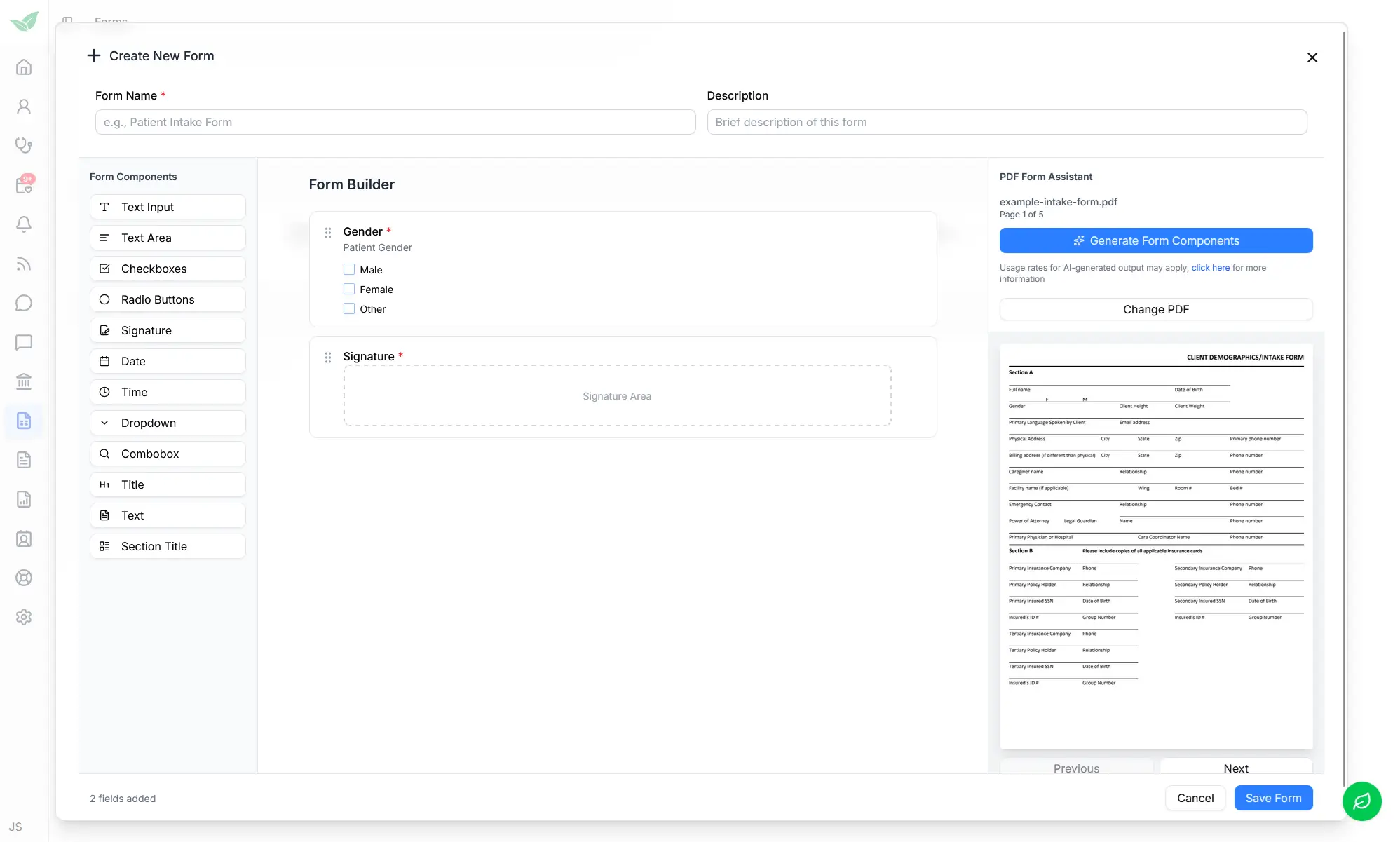
AveeCare's AI-assisted form builder simplifies intake and documentation for Wisconsin home care agencies
Online Reputation Management
Even in Wisconsin's smaller communities, families increasingly research home care options online. Ask satisfied families to leave Google Reviews and respond to every review professionally. Create profiles on Caring.com and maintain your BBBaccreditation. Wisconsin families value credentials and online transparency when choosing a provider.
Top Marketing Channels for Wisconsin
| Channel | Cost | Best For |
|---|---|---|
| ADRC Relationships | Free | Highest quality referrals statewide |
| Family Care MCO Contracts | Free | Steady Medicaid client volume |
| Google Ads | $$ | Quick lead generation in metro areas |
| Hospital / Physician Referrals | Free | High-intent medical referrals |
| Community & Faith Partnerships | Free | Diverse community trust (Milwaukee) |
| SEO / Website | $ | Long-term organic leads statewide |
Wisconsin marketing tip: Your ADRC relationships and Family Care MCO contracts are your most valuable marketing channels. Invest time in building genuine relationships with these organizations before spending heavily on advertising. In Milwaukee, culturally competent marketing in Hmong, Spanish, and English will set you apart. In rural dairy country, personal presence at community events and church gatherings builds the trust that leads to referrals.
12Frequently Asked Questions
Common questions about starting a home care agency in Wisconsin
Yes. Wisconsin requires state licensure for non-medical home care agencies. You must obtain a Supportive Home Care Agency license from the Wisconsin Department of Health Services (DHS), Division of Quality Assurance (DQA), under Wisconsin Administrative Code DHS 135. This license covers personal care, homemaker services, companion care, and related non-medical support. If you plan to provide skilled nursing or therapy services, you need a Home Health Agency license under DHS 133.
Starting a non-medical Supportive Home Care Agency in Wisconsin typically costs between $30,000 and $65,000, covering DFI business registration, DHS licensing, insurance, initial marketing, office setup, and 3 to 6 months of working capital. Wisconsin has a moderate cost of living, with costs varying between Milwaukee metro and rural areas. A licensed Home Health Agency with skilled services costs significantly more, typically $100,000 to $250,000 or higher due to Medicare certification requirements.
A Supportive Home Care Agency (DHS 135) provides non-medical personal care, companion care, homemaker services, meal preparation, and medication reminders. A Home Health Agency (DHS 133) provides skilled medical services including nursing, physical therapy, occupational therapy, and speech therapy. Both require licensure from the Wisconsin DHS Division of Quality Assurance (DQA), but the requirements, staffing levels, and costs differ significantly.
Yes. Wisconsin requires comprehensive Caregiver Background Checks under DHS 12 for all employees who provide direct care or have access to clients. Background checks are conducted through the Wisconsin Department of Justice (DOJ) Crime Information Bureau (CIB). Agencies must also check the Wisconsin Caregiver Misconduct Registry and the federal OIG exclusion list before hiring any caregiver.
Wisconsin uses Sandata as its statewide Electronic Visit Verification (EVV) system. All Medicaid-funded personal care and home health services in Wisconsin must comply with EVV requirements under the 21st Century Cures Act. Wisconsin operates under an open model, so providers can choose a third-party EVV vendor as long as it integrates with Sandata.
Family Care is Wisconsin's unique managed long-term care program. Rather than traditional Medicaid fee-for-service, Family Care members receive long-term care services through Managed Care Organizations (MCOs). To serve Family Care members, your home care agency must contract directly with one or more Family Care MCOs. Family Care covers personal care, supportive home care, and other services for elderly and disabled individuals. It is a significant revenue source for Wisconsin home care agencies and unique to the state.
Obtaining a Supportive Home Care Agency license from DHS typically takes 2 to 4 months, including application preparation, submission, and the DQA inspection process. A Home Health Agency license may take 4 to 6 months or longer, especially if pursuing Medicare certification. Building a client base and referral network in Wisconsin typically takes an additional 3 to 6 months after launch.
Yes, but you must first enroll as a Medicaid provider through the Wisconsin DHS Division of Medicaid Services (DMS). Wisconsin Medicaid includes multiple programs such as BadgerCare Plus for general Medicaid and Family Care for managed long-term care. You will also need to register with Sandata for EVV compliance and contract with Family Care MCOs if you want to serve their members.
13Sources and Resources
Official Wisconsin state agency links and resources
Ready to manage your Wisconsin home care agency?
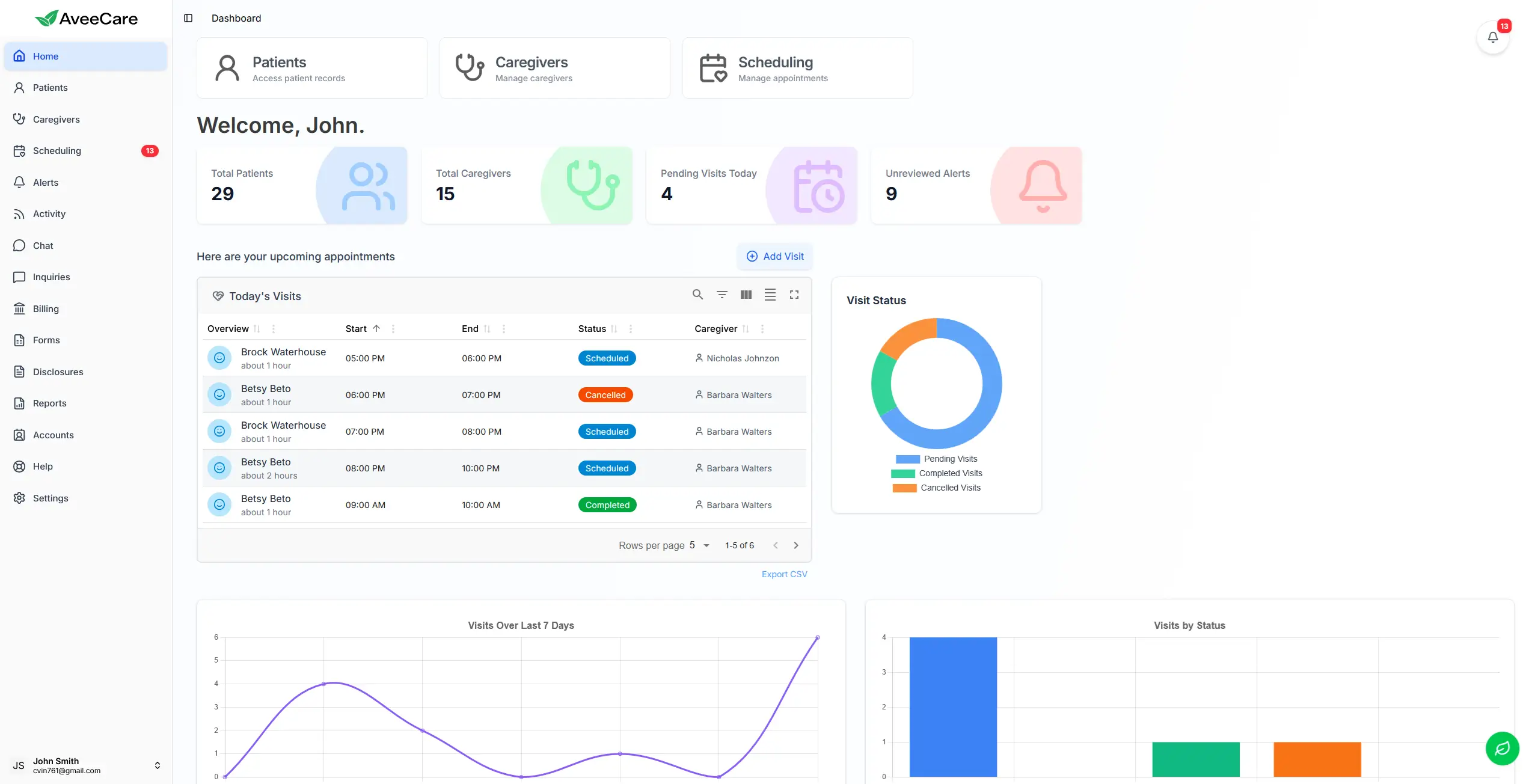
You do not need software on day one. But when you are ready, AveeCare starts at $6/client/month with no contracts, no mandatory demos, and a free trial. Scheduling, care plans, billing, caregiver management, and real-time alerts in one platform built for simplicity, whether you serve Milwaukee, Madison, or rural Wisconsin.
Disclaimer
This guide is for informational purposes only and does not constitute legal, financial, or professional advice. While we strive to keep this information accurate and up to date, Wisconsin laws, regulations, fees, and requirements may change. Always verify current requirements directly with the relevant Wisconsin state agencies, including DHS, DFI, and DOJ, before making business decisions. Consult with a qualified attorney and accountant in Wisconsin before starting your home care business. AveeCare is not affiliated with the Wisconsin Department of Health Services or any Wisconsin state agency. Published April 4, 2026.