How to Start a Home Care Agency in California
Your complete 2026 guide to launching a home care business in California, from CDSS HCO licensing to navigating the Golden State's complex regulations and the largest home care market in the United States.
Published April 3, 2026 · 30 min read
TLDR — California at a Glance
Yes — HCO license mandatory via CDSS for all non-medical home care.
CDSS (HCO license, HCA Registry) | CDPH (home health)
$50,000 – $120,000 (non-medical)
$150,000 – $350,000+ (home health)
3 – 6 months (non-medical) | 6 – 12 months (home health)
142.3 index (very high — 42% above national average)
1California Market Overview
The largest home care market in the United States
California is the largest home care market in the United States by volume, with a population of over 39 million people and a rapidly growing senior demographic. Starting a home care agency in California means entering the most expansive market in the country, but it also means navigating the most complex regulatory environment of any state. California's Home Care Services Consumer Protection Act (AB 1217) established mandatory licensing for all non-medical home care agencies, and the state imposes extensive labor protections that significantly impact how you operate and staff your agency.
California's home care demand is driven by its diverse and aging population. Over 5.8 million Californians are 65 or older, and that number is projected to grow substantially through the next decade as the baby boomer generation ages. The state's In-Home Supportive Services (IHSS) program is one of the largest publicly funded home care programs in the nation, serving hundreds of thousands of eligible recipients. Private pay demand is also exceptionally strong, particularly in affluent areas along the coast. For a national overview of the startup process, see our complete guide to starting a home care agency and our state-by-state licensing requirements.
Regional Market Breakdown
Los Angeles Metro
The largest metro area in the state with 10M+ residents. Extremely high demand, intense competition, diverse populations requiring multilingual services. Highest office rents but also the deepest client pool.
San Francisco Bay Area
High-income market with strong private pay demand. Silicon Valley tech wealth drives premium home care rates. Very high cost of living but equally high billing rates. Competitive for caregiver recruitment.
San Diego County
Large senior population, significant military/veteran community creating VA referral opportunities. More moderate costs than LA or SF while maintaining strong demand. Growing rapidly.
Central Valley (Fresno, Bakersfield, Sacramento)
Lower cost of living, less competition, and strong Medi-Cal demand. Sacramento as the state capital has a large government workforce aging into home care. The Central Valley offers the best startup cost-to-opportunity ratio in California.
Why Start a Home Care Agency in California
2Home Care vs. Home Health in California
Two different licensing agencies, two different paths
This is the most important decision you will make. In California, non-medical home care agencies are licensed as Home Care Organizations (HCOs) by the California Department of Social Services (CDSS), while home health agencies providing skilled nursing and therapy are licensed by the California Department of Public Health (CDPH). These are entirely different licensing agencies with different requirements, costs, and timelines.
Non-Medical Home Care (HCO)
- Personal care (bathing, dressing, grooming)
- Companion care and socialization
- Meal preparation and light housekeeping
- Medication reminders (not administration)
- Transportation and errands
- Respite care for family members
CDSS Home Care Organization (HCO) license required
Under the Home Care Services Consumer Protection Act (AB 1217).
Home Health (Skilled)
- Skilled nursing care
- Physical, occupational, and speech therapy
- Wound care and injections
- Medical social services
- Home health aide services
- Medication administration
CDPH Home Health Agency license required
Plus Medicare certification for Medicare billing.
3Business Formation in California
Register your home care business with the state

California cost warning: California has a cost of living index of 142.3, meaning your startup costs will be roughly 42% higher than the national average. The mandatory $800/year franchise tax, high office rents, expensive insurance premiums, and elevated wages all contribute. Budget accordingly and plan for significantly more working capital than you would need in other states.
Choose Your Business Structure
Most California home care agencies register as an LLC (Limited Liability Company) for liability protection and tax flexibility. A California LLC costs $70 to file (Form LLC-1), but you must also pay the state's mandatory $800 minimum annual franchise tax starting your first year. Corporations are also an option but face similar minimum tax requirements.
Register with the Secretary of State
File your Articles of Organization (LLC) or Articles of Incorporation with the California Secretary of State at sos.ca.gov. You must also file a Statement of Information within 90 days of formation ($20 fee). Processing times vary; expedited service is available for additional fees.
California Secretary of StateObtain Your EIN
Apply for a free Employer Identification Number (EIN) from the IRS at irs.gov. You need this for bank accounts, payroll, and tax filings. It takes minutes to obtain online.
Register with the Franchise Tax Board (FTB)
The California Franchise Tax Board administers state income tax and the minimum franchise tax. All California LLCs must pay at least $800/year in franchise tax regardless of income. Register at ftb.ca.gov to file and pay on time to avoid penalties.
CA Franchise Tax BoardRegister as an Employer with CA EDD
Register with the California Employment Development Department (EDD) within 20 days of your first employee's start date. EDD handles Unemployment Insurance (UI), State Disability Insurance (SDI), and Paid Family Leave (PFL) withholding. California requires employer contributions to these programs.
California EDDCalSavers Retirement Program
California employers with 5 or more employees who do not offer a qualified retirement plan must enroll in CalSavers, the state-mandated retirement savings program. Failure to comply can result in penalties. Register at calsavers.com.
CalSaversCity and County Permits
California cities and counties each have their own business license and permit requirements. Los Angeles, San Francisco, San Diego, Sacramento, and other municipalities may require separate business tax registrations. Contact your local city clerk's office for specifics.
Open a Business Bank Account
Open a dedicated business checking account to separate personal and business finances. You will need your EIN, Articles of Organization, and a California business license. Many California banks and credit unions specialize in small business accounts.
4Licensing Requirements
California has mandatory licensing for ALL non-medical home care agencies
Home Care Organization (HCO) License — CDSS
Under the Home Care Services Consumer Protection Act (AB 1217), all non-medical home care agencies operating in California must obtain a Home Care Organization (HCO) license from the California Department of Social Services (CDSS). This landmark legislation was enacted to protect consumers by ensuring that all home care organizations and their aides meet minimum standards for background screening and accountability. The HCO licensing process includes:
- Submit HCO license application to CDSS ($500 application fee)
- All owners, officers, and operators must pass DOJ Live Scan fingerprinting
- Provide proof of workers' compensation insurance coverage
- Register all home care aides on the CDSS HCA Registry
- Maintain compliance with ongoing CDSS reporting requirements
- Renew license annually and maintain good standing
Home Care Aide (HCA) Registry
The HCA Registry is a critical component of California's home care licensing framework. Every home care aide working for a licensed HCO must be registered on the CDSS HCA Registry before they can begin providing services. Registration requires:
- DOJ Live Scan fingerprinting (California DOJ and FBI criminal history check)
- Background check clearance through CDSS
- Listing on the public HCA Registry maintained by CDSS
- Aides must remain in good standing to continue working
Important: Employing a home care aide who is not registered on the HCA Registry can result in penalties, fines, and potential loss of your HCO license. Budget for the time it takes to process Live Scan background checks, which can take several weeks.
Home Health Agencies — CDPH
If you plan to provide skilled nursing, physical therapy, or other medical services, you must obtain a Home Health Agency license from the California Department of Public Health (CDPH). CDPH regulates all home health agencies under California's Health and Safety Code. This is a significantly more rigorous and costly process than obtaining an HCO license and involves:
- Submit Home Health Agency license application to CDPH
- Pass an on-site survey/inspection by CDPH surveyors
- Designate a qualified administrator and clinical director
- Employ or contract with RNs for clinical supervision
- Maintain comprehensive policies, quality assurance programs, and documentation
Medicare Certification
Medicare certification is a separate process from state licensure. To bill Medicare, you must apply through the Centers for Medicare & Medicaid Services (CMS), pass a federal survey, and meet all Medicare Conditions of Participation. In California, the survey process runs through CDPH, which serves as the state survey agency for CMS. Medicare certification is highly valuable in California given the state's enormous senior population and the high concentration of Medicare beneficiaries, particularly in Southern California and the Central Valley.
CA DOJ Live Scan fingerprinting: California uses the Live Scan system for electronic fingerprinting and background checks through the California Department of Justice (DOJ). Live Scan submissions go to both the CA DOJ and the FBI for comprehensive criminal history checks. Processing typically takes 3 to 7 business days but can take longer. Live Scan services are available at approved locations throughout the state, including many UPS stores, police departments, and dedicated Live Scan providers.
5Insurance Requirements
California requires workers' comp for ALL employers — no exceptions
General Liability
$3,000 - $8,000/yrCovers bodily injury and property damage claims. Recommended minimum: $1M per occurrence / $2M aggregate. California premiums are well above the national average due to the state's higher litigation rates and cost of living.
Professional Liability (E&O)
$2,500 - $6,000/yrCovers errors, omissions, and negligence claims related to care services. Essential for any home care business in California, where litigation is more common than in most states.
Workers' Compensation
$5,000 - $15,000/yrCalifornia requires workers' compensation for ALL employers with even one employee. There is no minimum employee threshold. This is a CDSS HCO license requirement. The California Department of Industrial Relations (DIR) enforces compliance.
State Disability Insurance (SDI)
Employee withholdingCalifornia requires SDI withholding for nearly all employees through EDD. SDI funds the Paid Family Leave (PFL) program. Employers must set up SDI withholding through their payroll system. This is an employee-paid benefit.
Workers' comp is mandatory for ALL employers. Unlike most states that set a minimum employee threshold, California requires workers' compensation insurance for every employer, even with just one employee. Operating without workers' comp in California is a criminal offense. The California Department of Industrial Relations (DIR) actively enforces this requirement, and CDSS requires proof of coverage for your HCO license. Penalties for non-compliance include fines up to $100,000 and potential imprisonment.
6Staffing and Hiring in California
Complex labor laws, high wages, and mandatory HCA Registry enrollment
Recruiting and retaining caregivers in California is one of the biggest challenges you will face. The state's $16.90/hour minimum wage (2026) is among the highest in the nation, and many California cities mandate even higher minimum wages. SB 525 established a healthcare worker minimum wage that may apply to certain home care roles. Combined with daily overtime requirements, paid sick leave, and paid family leave, California's labor costs for home care agencies are significantly higher than the national average. However, these higher costs are offset by the ability to charge premium billing rates, particularly for private pay clients in metro areas.
Background Checks & HCA Registry
California requires DOJ Live Scan fingerprinting for all home care aides before they can work. This includes both California Department of Justice and FBI criminal history checks. Once cleared, aides must be registered on the CDSS HCA Registry. Aides cannot begin providing services until their background check is cleared and they appear on the Registry. Budget 1 to 3 weeks for processing.
Training Requirements
For home health aides working under a CDPH-licensed agency, federal requirements mandate 75 hours of training including 16 hours of supervised clinical practice. Non-medical personal care aides under HCOs should receive thorough initial training covering ADLs, safety protocols, infection control, and California-specific regulations including the Domestic Worker Bill of Rights for live-in caregivers.
Where to Find Caregivers in California
UC system, CSU campuses, community colleges statewide
California Association for Health Services at Home
Indeed, multilingual community networks, social media
Wages and Labor Laws in California
California's minimum wage is $16.90/hour (2026), but many cities require higher wages. To attract quality caregivers, most agencies pay between $18 and $25 per hour for personal care aides and $22 to $35 per hour for home health aides and CNAs. Bay Area and LA rates skew toward the higher end. Additionally, SB 525 raised the healthcare worker minimum wage, which may apply to certain home care roles.
California overtime is different from federal rules: Daily overtime at 1.5x after 8 hours in a single day, AND weekly overtime after 40 hours. Double-time pay after 12 hours in a single day. California also mandates paid sick leave and employees may access Paid Family Leave (PFL) through the SDI program. The Domestic Worker Bill of Rights provides additional protections for live-in caregivers, including overtime and meal/rest break rights. Home care agencies must carefully track daily and weekly hours across all client shifts to ensure compliance.
7Medi-Cal and Medicare in California
Government payer programs, CalEVV, IHSS, and HCBS waivers
Medi-Cal (California Medicaid)
Medi-Cal is California's Medicaid program, administered by the Department of Health Care Services (DHCS). Medi-Cal serves over 14 million Californians, making it the largest state Medicaid program in the nation. California is a Medicaid expansion state, which significantly broadened eligibility. To bill Medi-Cal for home care services, you must enroll as a Medi-Cal provider through DHCS. California operates a complex managed care system, with most Medi-Cal beneficiaries enrolled in managed care plans. Understanding how to contract with managed care plans is critical for agencies seeking Medi-Cal revenue.
Department of Health Care Services (DHCS)CalEVV — Electronic Visit Verification
California uses CalEVV, the state-built Electronic Visit Verification system, to comply with the 21st Century Cures Act. CalEVV has been implemented in phases: Phase I covers In-Home Supportive Services (IHSS), and Phase II extends to CalEVV providers delivering personal care and home health services under Medi-Cal. Providers may use alternative EVV systems that meet state integration requirements and can exchange data with the CalEVV aggregator.
In-Home Supportive Services (IHSS)
In-Home Supportive Services (IHSS) is one of the largest publicly funded home care programs in the United States, administered by the California Department of Social Services. IHSS provides in-home assistance to eligible aged, blind, and disabled individuals to help them remain safely in their homes rather than enter institutional care. The program serves hundreds of thousands of recipients statewide. While IHSS primarily operates through individual providers (not agencies), understanding the IHSS landscape is important for positioning your agency in the California market, as IHSS recipients who need additional services or prefer agency-managed care represent a potential referral pipeline.
HCBS Waivers in California
- Home and Community-Based Services (HCBS) waivers through DHCS
- Multipurpose Senior Services Program (MSSP)
- Community-Based Adult Services (CBAS)
- Medi-Cal managed care plan home care benefits
Medicare Certification
To bill Medicare, your home health agency must be certified by CMS. California has one of the largest Medicare beneficiary populations in the nation. Expect 3 to 6 months for the certification process after obtaining your CDPH state license. CDPH serves as the state survey agency for CMS in California.
8Startup Cost Estimator
California-specific startup cost breakdown (significantly above national average)
California cost premium: All cost estimates below reflect California's 142.3 cost of living index. Expect to pay 40-50% more than the national average for insurance, office space, supplies, and payroll. Workers' compensation alone will be one of your largest expenses. The Bay Area and LA are the most expensive regions; the Central Valley and Inland Empire offer relatively lower costs.
Business Formation
$2,440 – $6,390Filing with Secretary of State (Form LLC-1)
Required within 90 days of LLC formation
Minimum $800/year CA franchise tax for LLCs
Varies widely by municipality; LA, SF, SD each different
Attorney review, CPA setup (higher CA rates)
Licensing
$13,550 – $30,700Home Care Organization license fee
Per person; each owner/operator must be fingerprinted
If offering skilled nursing/therapy services
Survey prep, policies, consulting (CA is competitive)
Insurance (Annual)
$11,000 – $31,000$1M per occurrence / $2M aggregate (higher CA premiums)
Errors and omissions coverage
Required for ALL employers in CA (no minimum employee count)
Recommended for client trust and protection
Office & Equipment
$6,500 – $21,000Very high CA rents; varies by region (LA/SF vs Central Valley)
Laptops, smartphones, scheduling software
Desk, chairs, printer, supplies
Marketing & Initial Growth
$4,700 – $15,800Professional site with local SEO for CA market
Google Ads, social media, community outreach (competitive CA market)
Brochures, flyers, multilingual materials
Working Capital (3-6 Months)
$21,000 – $58,000High CA wages ($17-$25/hr avg), daily OT, paid sick leave
Rent, utilities, software, fuel, SDI withholding
Estimated Total Startup Cost (All Categories)
$59,190 – $162,890
Costs are estimates based on typical California home care agency startups and vary significantly by region. Bay Area and LA are at the high end; Central Valley, Inland Empire, and Sacramento are more moderate. Workers' comp, payroll, and office space are the biggest cost drivers in California.
9Compliance Checklist
Track your progress across all California requirements (the most extensive in the nation)
Business Formation
0/8Licensing
0/6Insurance
0/5Staffing
0/7Medi-Cal & Medicare
0/3Operations
0/5Marketing
0/410Building Your Referral Network
Key referral sources in California for your home care agency
In California, the size and diversity of the healthcare market means referral networks are both abundant and competitive. Building relationships with major health systems, Area Agencies on Aging, managed care organizations, and community groups is essential for growing your client base in the Golden State's massive home care market.
Major California Health Systems
Kaiser Permanente, Sutter Health, Cedars-Sinai, Dignity Health, and UCLA Health have extensive discharge planning departments. Connect with their case managers and social workers for referrals of patients transitioning from hospital to home care.
Area Agencies on Aging (AAAs)
California has 33 Area Agencies on Aging that serve as local hubs connecting seniors with home care resources. AAAs manage aging services, provide information and referral, and can connect your agency with clients who need in-home assistance.
CAHSAH (Industry Association)
The California Association for Health Services at Home (CAHSAH) is the leading industry trade association for home care in California. Membership provides networking, advocacy, education, and referral opportunities throughout the state.
Medi-Cal Managed Care Plans
Most Medi-Cal beneficiaries are enrolled in managed care plans. Contracting with plans like L.A. Care, Health Plan of San Joaquin, CalOptima, and others gives you access to their member referral pipelines for home care services.
Physicians and Medical Groups
California has extensive physician networks, medical groups, and Federally Qualified Health Centers (FQHCs). Building referral relationships with geriatricians, family medicine physicians, and hospitalists creates a steady stream of private pay and Medicare referrals.
Community and Cultural Organizations
California's diverse population means cultural and community organizations (Hispanic, Asian-American, African-American, and others) are powerful referral sources. Multilingual services and cultural competency are major differentiators in the California market.
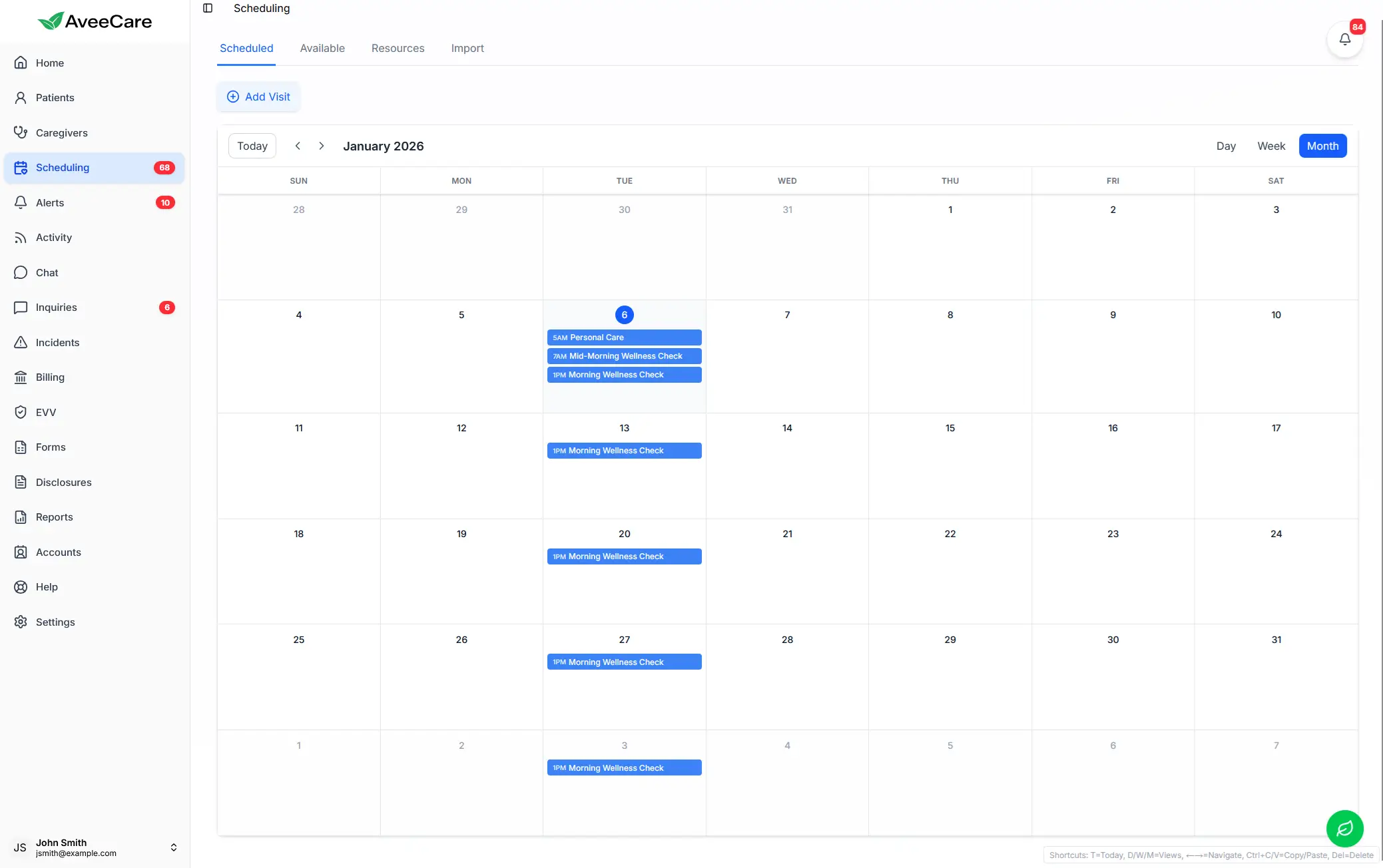
Efficient scheduling is critical for managing California's complex overtime rules
Differentiation tip: In California's competitive market, multilingual services, cultural competency, technology-driven scheduling with automatic overtime tracking, and reliable caregiver retention are your biggest differentiators. Agencies that can serve diverse populations in their preferred languages while maintaining strong compliance with California's extensive regulations will stand out.
11Marketing & Client Acquisition
How to advertise your home care business and attract clients in California
California is the largest and most competitive home care market in the United States. Standing out requires a sophisticated, multi-channel marketing approach with strong emphasis on multilingual outreach. With significant Spanish, Chinese, Korean, Vietnamese, and Tagalog-speaking populations, agencies that market in multiple languages have a decisive competitive advantage. Whether you are building a non-medical personal care agency or a skilled home health business, combining digital marketing, community engagement, and healthcare referral relationships is essential for growth.
Digital Marketing Strategies
Google Business Profile
Optimize your Google Business Profile for every city and region you serve. In California's competitive metro areas (LA, SF, San Diego, Sacramento), strong reviews and regular profile updates are essential. Create separate listings for each office location if you serve multiple regions.
Multilingual Google Ads
Run Google Ads campaigns in English, Spanish, Chinese, Korean, Vietnamese, and Tagalog depending on your service area demographics. Target keywords like "home care Los Angeles" and equivalent phrases in each language. California's high competition means CPCs will be higher ($15-40+), so track ROI carefully.
SEO & Content Marketing
Build a robust website with city-specific landing pages for major California markets. Create multilingual content and blog posts about California-specific topics like IHSS navigation, Medi-Cal eligibility, and California-specific caregiver rights under the Domestic Worker Bill of Rights.
Social Media (Multilingual)
Maintain Facebook, Instagram, and WeChat (for Chinese-speaking communities) profiles. Post content in multiple languages. Use targeted Facebook ads to reach adult children making care decisions for aging parents in specific California zip codes and demographic groups.
Community Outreach & Grassroots Marketing
CAHSAH Membership & Networking
Join the California Association for Health Services at Home (CAHSAH), the leading industry trade association. CAHSAH membership provides networking, advocacy, education, and industry connections. Their annual conference and regional events are prime opportunities to build relationships and raise your agency's profile.
Cultural Community Organizations
Partner with Hispanic community centers, Asian-American community organizations, Vietnamese cultural associations, Korean churches, and Filipino community groups. These organizations serve as trusted referral sources within their communities. Having bilingual and bicultural staff gives you credibility and access.
Senior Centers & Area Agencies on Aging
California has 33 Area Agencies on Aging and hundreds of senior centers. Attend events, host educational workshops, and build relationships with center directors. These organizations connect thousands of seniors with home care resources annually.
Medi-Cal Managed Care Plan Directories
If you serve Medi-Cal beneficiaries, ensure your agency is listed in the provider directories of managed care plans like L.A. Care, CalOptima, Health Plan of San Joaquin, and others. Many families and care coordinators search these directories when looking for home care providers.
Healthcare Referral Relationships
California's massive healthcare ecosystem offers abundant referral opportunities for both non-medical and skilled home care agencies. Key relationships to build:
Major Health System Discharge Planners
Kaiser Permanente, Sutter Health, Cedars-Sinai, UCLA Health, UCSF, and Dignity Health operate hundreds of facilities across California. Prioritize discharge planning relationships at the hospitals nearest your service areas.
Physician Networks & Medical Groups
California has extensive physician networks, IPAs, and medical groups. Build referral relationships with geriatricians, family medicine physicians, and hospitalists who treat elderly patients regularly.
Skilled Nursing & Rehab Facilities
California has over 1,200 skilled nursing facilities. Build relationships with social workers and discharge coordinators at facilities in your service area for a steady stream of post-acute care referrals.
Home Health & Hospice Partnerships
Partner with home health and hospice agencies for mutual referrals. California's large market supports many collaborative relationships between non-medical and skilled care providers.
Online Reputation Management
In California's hyper-competitive market, your online reputation directly impacts client acquisition. Families often compare multiple agencies online before making a decision. Actively manage these platforms:
Google Reviews
Aim for 100+ reviews with a 4.7+ rating in competitive metros like LA, SF, and San Diego. Respond to every review within 24 hours.
Caring.com & A Place for Mom
Maintain premium profiles on both platforms. These directories receive massive traffic from California families researching home care options.
Yelp (Critical in CA)
Yelp is more influential in California than most other states. Claim your listing, encourage reviews, and respond professionally to all feedback.
California Advertising Regulations
California has strict consumer protection laws that affect home care advertising. Ensure all marketing materials accurately represent your services and licensing status. Do not advertise services you are not licensed to provide. If you hold a Home Care Organization (HCO) license for non-medical care, do not imply you offer skilled nursing or therapy unless you also hold a Home Health Agency license. The California Department of Consumer Affairs monitors deceptive advertising practices.
Marketing Channel Comparison
| Channel | Cost | Time to Results | Best For |
|---|---|---|---|
| Google Ads (Multilingual) | $$$ | Immediate | Fast leads in competitive metros |
| SEO / Website | $-$$ | 4-8 months | Long-term organic visibility |
| Cultural Community Outreach | $ | 2-4 months | Building trust in diverse communities |
| CAHSAH Networking | $$ | 1-3 months | Industry connections & credibility |
| Hospital Referrals | Free | 2-4 months | High-intent medical referrals |
| Yelp / Caring.com Premium | $$-$$$ | 1-2 months | Families actively comparing agencies |
California marketing tip: Multilingual marketing is not optional in California -- it is a competitive necessity. Start with English and Spanish at minimum, then expand to Chinese, Korean, Vietnamese, or Tagalog based on your service area demographics. Invest heavily in online reputation management since California families are sophisticated comparison shoppers who read reviews carefully before choosing an agency.
12Frequently Asked Questions
Common questions about starting a home care agency in California
Yes. California requires a Home Care Organization (HCO) license from the California Department of Social Services (CDSS) for all non-medical home care agencies under the Home Care Services Consumer Protection Act (AB 1217). If you plan to offer skilled home health services (nursing, therapy), you must also obtain a separate Home Health Agency license from the California Department of Public Health (CDPH). Additionally, all home care aides must register with the CDSS Home Care Aide (HCA) Registry.
Starting a non-medical home care agency in California typically costs between $50,000 and $120,000, significantly above the national average due to the state's high cost of living (142.3 index). This covers the HCO license ($500), business formation, insurance (workers' comp is required for ALL employers), marketing, office setup, and 3 to 6 months of working capital. A licensed home health agency with skilled nursing services costs $150,000 to $350,000 or more.
The HCA Registry is maintained by the California Department of Social Services (CDSS). Under the Home Care Services Consumer Protection Act (AB 1217), all home care aides working for a licensed HCO must register with the HCA Registry. Registration requires passing a DOJ Live Scan background check (fingerprinting), including both California Department of Justice and FBI criminal history checks. Aides cannot begin working until their background check clears and they appear on the Registry.
California has some of the most protective labor laws in the nation. Home care workers receive daily overtime after 8 hours (1.5x rate) AND weekly overtime after 40 hours. Double-time pay kicks in after 12 hours in a single day. California also mandates paid sick leave and paid family leave through the State Disability Insurance (SDI/PFL) program. The state minimum wage is $16.90/hr as of 2026, with some cities requiring even higher wages.
California uses CalEVV, the state-built Electronic Visit Verification system. CalEVV has been implemented in phases: Phase I covers In-Home Supportive Services (IHSS), and Phase II extends to CalEVV providers delivering personal care and home health services under Medi-Cal. Under the 21st Century Cures Act, EVV is required for all Medicaid-funded personal care and home health services. Providers may use alternative EVV systems that meet state integration requirements.
A non-medical home care agency in California typically takes 3 to 6 months to become operational, factoring in the CDSS HCO license application, DOJ Live Scan background checks for all owners and aides, business formation with the Secretary of State, and insurance procurement. A licensed home health agency through CDPH takes 6 to 12 months or longer due to the extensive application review, on-site survey, and potential Medicare certification timeline. California's regulatory complexity makes thorough preparation essential.
13Sources and Resources
Official California state agency links and resources
Ready to manage your California home care agency?
You do not need software on day one. But when you are ready, AveeCare starts at $6/client/month with no contracts, no mandatory demos, and a free trial. Scheduling with automatic daily overtime tracking, care plans, billing, caregiver management, real-time tracking, and alerts in one platform built for simplicity, even across California's complex regulatory landscape.
Disclaimer
This guide is for informational purposes only and does not constitute legal, financial, or professional advice. While we strive to keep this information accurate and up to date, California laws, regulations, fees, and requirements may change. Always verify current requirements directly with the relevant California state agencies before making business decisions. Consult with a qualified attorney and accountant in California before starting your home care business. AveeCare is not affiliated with the California Department of Social Services, the California Department of Public Health, the Department of Health Care Services, or any California state agency. Published April 3, 2026.