How to Start a Home Care Agency in Vermont
Your complete 2026 guide to launching a home care business in the Green Mountain State, from navigating Vermont's non-medical exemption and DAIL home health licensing to serving one of America's oldest and most rural populations with high demand for in-home care.
Published April 4, 2026 · 28 min read
TLDR — Vermont at a Glance
No — non-medical care unregulated at the state level.
DAIL Division of Licensing and Protection
$30,000 – $70,000 (non-medical)
$85,000 – $210,000+ (home health)
4 – 8 weeks (non-medical) | 3 – 9 months (home health)
No non-medical license | Oldest median age | High demand | Strong FQHC network
1Vermont Market Overview
Small state, big demand: one of the oldest populations in the nation
Vermont is the second least populous state in the nation with approximately 650,000 residents, yet it presents a uniquely compelling opportunity for starting a home care agency in 2026. Vermont has one of the oldest median ages in the United States, with a large and growing population of seniors who overwhelmingly prefer to age in place in their homes and communities. The state's deeply rural character means that many older Vermonters live in small towns and remote areas far from institutional care facilities, making in-home care not just a preference but a necessity.
Vermont's home care market is shaped by several unique factors. The state's rural geography means no city exceeds 50,000 people, and many seniors live in isolated mountain communities where the nearest hospital may be 30 or more miles away. Vermont's progressive regulatory environment has fostered a strong community health infrastructure with one of the highest concentrations of Federally Qualified Health Centers (FQHCs) per capita in the country. The ski and tourism economy creates seasonal population swings with wealthy second-home owners who may need eldercare services for family members visiting or residing in their vacation properties. For a national overview of the startup process with interactive tools, see our complete guide to starting a home care agency and our state-by-state licensing requirements.
Regional Market Breakdown
Burlington Metro (Chittenden County)
The largest population center in Vermont with approximately 165,000 people in the greater Burlington area. This is the densest home care market in the state and the most competitive, with UVM Medical Center as the primary referral source. South Burlington, Essex, and Williston have growing senior populations. Higher cost of living but the strongest private pay potential in Vermont.
Rutland & Central Vermont
Rutland is Vermont's second-largest city (pop. ~16,000) and serves as a regional hub for central Vermont. Rutland Regional Medical Center is the key healthcare facility. The area has an aging population, lower cost of living than Burlington, and less agency competition. Killington and Okemo ski areas bring seasonal second-home populations who may need care services.
Barre-Montpelier (Washington County)
Montpelier is the smallest state capital in the U.S. (pop. ~8,000), and neighboring Barre adds another 8,500. Central Vermont Medical Center serves the area. State government employees and retirees create steady demand. Very tight-knit community where word-of-mouth referrals are essential for building a client base.
Rural & Northeast Kingdom
Vermont's most rural and economically challenged region covers Essex, Orleans, and Caledonia counties in the northeast corner. The aging population is significant, but the market is extremely dispersed. Long drive times between clients make route optimization critical. Fewer agencies serve this area, creating opportunity for providers willing to navigate the logistical challenges of rural care delivery.
Why Start a Home Care Agency in Vermont
2Home Care vs. Home Health in Vermont
No license for non-medical; DAIL license for skilled services
Vermont's key distinction: Vermont does not require a separate state license for non-medical personal care, companion, or homemaker agencies. If you provide only non-medical services, you need only your general business registration. However, if you want to provide skilled nursing, therapy, or other medical services, you must obtain a Home Health Agency license from the Department of Disabilities, Aging and Independent Living (DAIL), Division of Licensing and Protection. Medicaid-funded providers must enroll through the Department of Vermont Health Access (DVHA) regardless of service type.
Non-Medical Personal Care
- Personal care (bathing, dressing, grooming)
- Companion care and socialization
- Meal preparation and light housekeeping
- Medication reminders (not administration)
- Transportation and errands
- Respite care for family caregivers
No state license required
Fastest path to market. Business registration only.
Licensed Home Health Agency
- Skilled nursing care
- Physical, occupational, and speech therapy
- Wound care and injections
- Medical social services
- Home health aide services
- Medication administration
DAIL Home Health Agency license required
Must also obtain Medicare certification to bill Medicare.
Vermont Home Care License Comparison
| Type | Services | State License | Medicare |
|---|---|---|---|
| Non-Medical Personal Care | Companion, homemaker, personal care | Not required | No |
| Home Health Agency | Skilled nursing, therapy, aide services | DAIL license required | With CMS certification |
3Business Formation in Vermont
Register your home care business — progressive 3.35% to 8.75% income tax

Vermont tax considerations: Vermont has a progressive income tax ranging from 3.35% to 8.75%, one of the highest top rates in the nation. The top marginal rate applies to income above approximately $229,500. Vermont also imposes a corporate income tax of 6.0% to 8.5%. While taxes are high, Vermont's strong public services, excellent healthcare infrastructure, and high quality of life contribute to a stable business environment and an educated workforce.
Choose Your Business Structure
Most Vermont home care agencies register as an LLC (Limited Liability Company) for liability protection and tax flexibility. A Vermont LLC costs $125 to file with the Secretary of State. Vermont requires an annual report fee of $35, keeping ongoing costs manageable.
Register with Vermont Secretary of State
File your Articles of Organization (LLC) with the Vermont Secretary of State at sos.vermont.gov. Online filing is available and straightforward. Vermont also offers expedited processing for an additional fee.
Vermont Secretary of StateObtain Your EIN
Apply for a free Employer Identification Number (EIN) from the IRS at irs.gov. You need this for bank accounts, payroll, tax filings, and hiring employees. It takes minutes to obtain online.
Register with Vermont Department of Taxes
Register for Vermont state income tax withholding (3.35% - 8.75% progressive rates) with the Vermont Department of Taxes. Vermont requires employers to withhold state income tax from employee wages. You can register through myVTax, the state's online tax portal.
Vermont Department of TaxesRegister with Department of Labor
Register with the Vermont Department of Labor for unemployment insurance. Vermont requires employers to register and begin paying unemployment insurance tax. The Department of Labor also enforces Vermont's minimum wage ($14.01/hr, indexed to CPI) and labor standards.
Vermont Department of LaborTown and City Business Requirements
Vermont does not have a statewide business license, but individual towns and cities may have their own licensing, zoning, or registration requirements. Contact your local town clerk or city hall. Burlington, South Burlington, Rutland, and other municipalities may have specific requirements.
Open a Business Bank Account
Open a dedicated business checking account to separate personal and business finances. You will need your EIN, Articles of Organization, and operating agreement. Vermont has many local community banks and credit unions, which are widely used in the state.
4Licensing Requirements in Vermont
No license for non-medical; DAIL license for skilled home health
Non-Medical Personal Care: No State License Required
Vermont does not require a separate state license for non-medical personal care agencies. If your agency provides only companion care, homemaker services, personal care assistance, meal preparation, transportation, and similar non-medical services, you do not need to apply for a state license through DAIL. You only need your general business registration with the Vermont Secretary of State and applicable local permits.
- Register your business with Vermont Secretary of State
- Check local town/city business registration requirements
- Conduct VCIC background checks on all caregivers (best practice)
- Obtain required insurance coverage (general liability, workers' comp)
- Develop service agreements and care plan templates
Important: While no state license is required for non-medical care, you should still conduct thorough background checks, maintain proper insurance, and follow industry best practices. If you plan to accept Medicaid clients, you must enroll as a provider through the Department of Vermont Health Access (DVHA), which has its own requirements and compliance standards.
DAIL Home Health Agency License (Skilled Services)
If you plan to provide skilled nursing, therapy, or other medical services, you must obtain a Home Health Agency license from the Vermont Department of Disabilities, Aging and Independent Living (DAIL), specifically through the Division of Licensing and Protection. The licensing process includes:
- Submit Home Health Agency license application to DAIL
- Designate a qualified clinical director (typically RN)
- Establish a supervising physician relationship
- Develop comprehensive clinical policies and quality assurance programs
- Pass DAIL on-site survey and inspection
- If Medicare: apply for CMS certification through DAIL as the state survey agency
Background Checks (Vermont VCIC)
The Vermont Crime Information Center (VCIC) conducts fingerprint-based criminal background checks. While not universally mandated by state law for non-medical personal care agencies, background checks are strongly recommended as an industry best practice, required by most insurance carriers, and mandatory if you accept Medicaid clients or operate a licensed home health agency. VCIC checks screen Vermont criminal history, and you can also request FBI national background checks through VCIC.
Vermont VCIC Background Check
Fingerprint-based criminal history check through the Vermont Crime Information Center. Results typically return within 1 to 3 weeks. Available for both name-based and fingerprint-based searches. VCIC also provides access to the Vermont sex offender registry and the Child Protection Registry.
Vermont VCICBest Practice Screening
Even though state law may not require background checks for all non-medical caregivers, conducting VCIC checks on every employee is an industry best practice. Vermont's small communities mean your reputation depends on the trustworthiness of every caregiver. Consider adding OIG exclusion list checks, sex offender registry screening, and Vermont Child Protection Registry checks.
Medicare Certification
To bill Medicare, you must first obtain the DAIL Home Health Agency license, then apply for CMS Medicare certification. DAIL serves as the state survey agency for CMS in Vermont. You must meet all CMS Conditions of Participation and pass a federal survey conducted through DAIL. Vermont's high percentage of seniors on Medicare makes certification particularly valuable, especially in the Burlington metro area and central Vermont where Medicare enrollment is concentrated.
5Insurance Requirements
Workers' comp is REQUIRED in Vermont for all employers with 1+ employees
General Liability
$2,000 - $5,000/yrCovers bodily injury and property damage claims. Recommended minimum: $1M per occurrence / $2M aggregate. Vermont premiums are slightly above the national average due to the higher cost of living and smaller insurance market.
Professional Liability (E&O)
$1,400 - $4,000/yrCovers errors, omissions, and negligence claims related to care services. Essential for any home care business, and strongly recommended even for non-medical agencies that do not require a state license.
Workers' Compensation
$2,800 - $7,500/yrREQUIRED in Vermont for all employers with one or more employees. Enforced by the Vermont Department of Labor. You must obtain coverage before your first employee begins work. Vermont has no opt-out or non-subscriber option.
Surety / Fidelity Bond
$300 - $1,300/yrRecommended for client trust and protection against employee theft. Not legally required for non-medical agencies but builds credibility in Vermont's small, trust-based communities where reputation is everything.
Vermont Workers' Compensation Details
Vermont law requires all employers with one or more employees to carry workers' compensation insurance. The Vermont Department of Labor enforces this requirement. There is no opt-out or non-subscriber option in Vermont.
Coverage Options
- Purchase from a licensed private insurance carrier
- Vermont mutual insurance companies
- Self-insurance (requires Department of Labor approval)
Penalties for Non-Compliance
- Stop-work orders from the Vermont Department of Labor
- Fines and penalties for operating without coverage
- Personal liability for workplace injuries
6Staffing and Hiring in Vermont
Navigate Vermont's tight labor market in the nation's most rural state
Recruiting and retaining caregivers in Vermont is one of the biggest challenges for home care agencies. Vermont's minimum wage is $14.01 per hour (indexed to CPI, so it adjusts annually), but the competitive market rate for home care aides ranges from $16 to $22 per hour depending on the region and experience level. Vermont's very small labor pool, aging workforce, and competition from healthcare facilities, ski resorts, and other employers make caregiver recruitment an ongoing challenge. The state's rural geography means caregivers often face long drive times between clients, and you may need to factor mileage reimbursement into your compensation packages to attract and retain staff.
Background Checks
The Vermont Crime Information Center (VCIC) provides fingerprint-based criminal background checks. While not universally mandated for all non-medical caregivers, VCIC checks are required for licensed home health agency staff and Medicaid provider employees. Background checks are an essential best practice in Vermont's small communities where client trust is paramount.
Training Requirements
For home health aides working under a licensed Home Health Agency, federal requirements mandate 75 hours of training including 16 hours of supervised clinical practice. For non-medical personal care aides, Vermont has no state-mandated training hours, but thorough initial training covering ADLs, safety protocols, winter safety, infection control, emergency procedures, and rural driving safety is strongly recommended.
Where to Find Caregivers in Vermont
UVM, Vermont Technical College, community colleges
VT Association for Home Health and Hospice job connections
Front Porch Forum, Seven Days, local town newsletters
Wages and Labor Laws in Vermont
Vermont's minimum wage is $14.01/hour (2026, indexed to CPI), well above the federal minimum of $7.25. The competitive market rate for home care aides is $16 to $22 per hour depending on region and experience. Burlington and Chittenden County rates are at the higher end due to cost of living, while the Northeast Kingdom and rural areas may be closer to $16.
Vermont labor law notes: Vermont requires overtime after 40 hours per week at 1.5x rate (following federal FLSA). Vermont has mandatory paid sick leave (earned sick time law) requiring employers to provide up to 40 hours of earned sick time per year. Vermont is an at-will employment state. The progressive income tax means payroll withholding rates vary by employee income level (3.35% to 8.75%).
7Vermont Medicaid and Medicare
DVHA Medicaid, Green Mountain Care, Sandata EVV, and Medicare
Vermont Medicaid (DVHA)
Vermont Medicaid is administered by the Department of Vermont Health Access (DVHA). Vermont expanded Medicaid under the ACA and has one of the more generous Medicaid programs in the nation, consistent with the state's Green Mountain Care approach to healthcare. To serve Medicaid clients as a home care provider, you must enroll as a Medicaid provider through DVHA. Vermont's small population and progressive healthcare policies mean a significant portion of home care clients may be Medicaid-eligible, making DVHA enrollment important for revenue diversification.
DVHA (dvha.vermont.gov)Sandata EVV — Electronic Visit Verification
Vermont uses Sandata as its EVV (Electronic Visit Verification) system for Medicaid-funded personal care and home health services, as required by the 21st Century Cures Act. Providers delivering Medicaid-funded services must comply with EVV requirements through Sandata. EVV captures the type of service, individual receiving the service, individual providing the service, date, time, and location of each visit.
HCBS Waivers in Vermont
- Choices for Care (long-term care for elderly and disabled)
- Attendant Services Program (personal care assistance)
- Traumatic Brain Injury (TBI) Waiver
- Community Rehabilitation and Treatment (CRT)
Medicare in Vermont
Vermont's high percentage of seniors makes Medicare certification very valuable. To bill Medicare, your agency must hold a DAIL Home Health Agency license and obtain CMS certification. DAIL serves as the state survey agency for CMS. The Burlington metro area, Rutland, and Barre-Montpelier have the highest concentrations of Medicare beneficiaries. Vermont's aging population means Medicare enrollment will continue to grow significantly in the coming years.
8Startup Cost Estimator
Vermont-specific startup cost breakdown (no non-medical license fee, above-average COL)
Vermont cost considerations: Non-medical home care agencies in Vermont benefit from no state licensing fee, but the state's above-average cost of living (index ~107) and higher minimum wage ($14.01/hr) push overall startup costs above the national average. Burlington and Chittenden County are the most expensive areas, while rural Vermont and the Northeast Kingdom are more affordable but may have lower client density.
Business Formation
$1,375 – $4,175Filing with Vermont Secretary of State
If using a trade name different from LLC name
Attorney review, CPA setup, operating agreement
Licensing
$50 – $25,850$0 for non-medical (no license needed); fee for home health license
Per person fingerprint-based background check via Vermont VCIC
Survey prep, consulting if seeking Medicare certification
Insurance (Annual)
$6,500 – $17,800$1M per occurrence / $2M aggregate
Errors and omissions coverage
Required in Vermont for all employers with 1+ employees
Recommended for client trust and protection
Office & Equipment
$4,300 – $12,700Burlington area higher; rural Vermont more affordable
Laptops, smartphones, scheduling software
Desk, chairs, printer, supplies
Marketing & Initial Growth
$2,900 – $10,100Professional site with local SEO for Vermont markets
Google Ads, local newspapers, community outreach
Brochures, flyers, community bulletin board postings
Working Capital (3-6 Months)
$12,000 – $33,000Caregiver wages ($16-$22/hr market rate), payroll taxes
Rent, utilities, software, fuel, ongoing costs
Estimated Total Startup Cost (All Categories)
$27,125 – $103,625
Costs are estimates based on typical Vermont home care agency startups and vary by region. Burlington and Chittenden County are at the higher end; rural Vermont and the Northeast Kingdom are more affordable. Non-medical agencies save significantly on licensing fees since no state license is required.
9Compliance Checklist
Track your progress across all Vermont requirements
Business Formation
0/7Licensing
0/6Insurance
0/4Staffing
0/5Medicaid & Medicare
0/3Operations
0/5Marketing
0/510Building Your Referral Network
Key referral sources in Vermont for your home care agency
Vermont's healthcare landscape is anchored by a small number of regional hospitals, a strong network of Federally Qualified Health Centers (FQHCs), and community-based organizations. In a state this small, personal relationships are the foundation of every referral network. The DAIL Senior Services division and the VT Association for Home Health and Hospice (VAHHH) are essential partners for building your referral base.
UVM Medical Center
The University of Vermont Medical Center in Burlington is Vermont's largest hospital and the state's only academic medical center. It serves as the primary referral source for the Burlington metro area and much of northern Vermont. Connect with their discharge planning, care coordination, and social work departments for referrals of patients transitioning to home care after hospitalization.
Rutland Regional Medical Center
The primary hospital for central Vermont, serving Rutland and surrounding communities. Discharge planners here are key referral contacts for the central Vermont market. Rutland Regional also coordinates with community health agencies and social services across the region, making it a hub for care coordination referrals.
DAIL Senior Services
The Department of Disabilities, Aging and Independent Living (DAIL) coordinates aging services statewide through its Senior Services division. DAIL manages the Choices for Care waiver, Attendant Services Program, and elder care referrals. Building relationships with DAIL's Area Agencies on Aging is essential for accessing Medicaid and waiver-funded referrals across Vermont.
DAIL (dail.vermont.gov)Federally Qualified Health Centers (FQHCs)
Vermont has one of the highest concentrations of FQHCs per capita in the nation. These community health centers serve as primary care hubs in rural and underserved areas, making them critical referral partners. FQHCs like Community Health Centers of Burlington, Little Rivers Health Care, and Northern Counties Health Care have deep community roots and regularly identify patients who need home care services.
VAHHH (VT Association for Home Health & Hospice)
The Vermont Association for Home Health and Hospice is the leading industry trade association in the state. Membership provides networking, advocacy, education, regulatory updates, and referral opportunities. VAHHH conferences and meetings are essential networking venues in Vermont's small home care market.
Central Vermont Medical Center & Other Regional Hospitals
Central Vermont Medical Center in Berlin serves the Barre-Montpelier area. Southwestern Vermont Medical Center in Bennington, Northeastern Vermont Regional Hospital in St. Johnsbury, and other critical access hospitals serve their respective regions. Discharge planners at each facility are important referral contacts, especially in areas with limited agency competition.
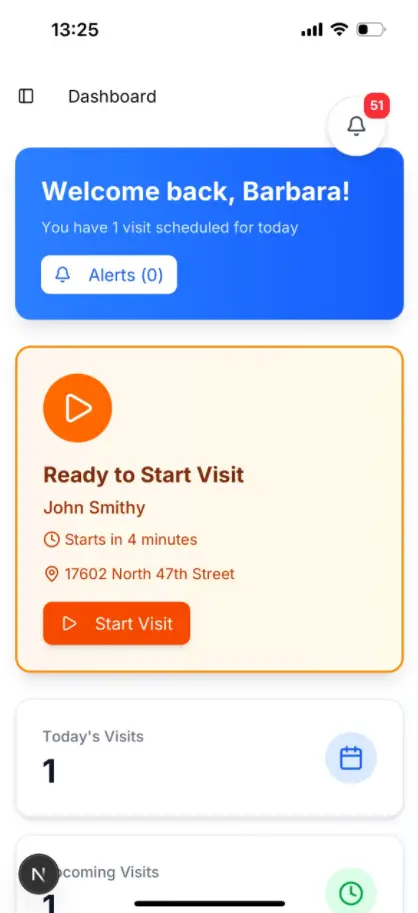
Manage caregivers across Vermont's rural communities from any mobile device
Differentiation tip: In Vermont's small market, agencies that build strong personal relationships with hospital discharge planners, FQHC primary care providers, DAIL case managers, and VAHHH members will dominate referrals. In a state where everyone knows everyone, your reputation and personal connections matter more than marketing spend.
11Marketing & Client Acquisition
How to advertise your home care business and attract clients across the Green Mountain State
Marketing a home care agency in Vermont requires a fundamentally different approach than marketing in larger states. With a total population of roughly 650,000, no city over 50,000, and a deeply rural character, Vermont rewards grassroots community engagement, personal relationships, and word-of-mouth far more than mass-market advertising. Traditional marketing channels like local newspapers, community bulletin boards, senior center partnerships, and faith community connections still work exceptionally well in Vermont, alongside modern digital marketing strategies.
Regional Marketing Strategies
Burlington Metro (Chittenden County)
Vermont's densest market with approximately 165,000 people in the greater Burlington area. This is the most competitive market in the state, but also the strongest for private pay clients. Focus on digital marketing, Google Ads targeting "home care Burlington VT," and partnerships with UVM Medical Center discharge planners. South Burlington, Essex, and Williston have growing senior populations. Burlington's diverse population compared to the rest of Vermont means multicultural marketing can differentiate your agency.
Rutland & Central Vermont
Rutland is Vermont's second-largest city and a regional hub. Lower competition than Burlington with a significant aging population. Partner with Rutland Regional Medical Center for discharge referrals. The Killington and Okemo ski areas create seasonal demand from second-home owners who may need eldercare for visiting family. Community bulletin boards, the Rutland Herald newspaper, and senior center partnerships are effective marketing channels.
Barre-Montpelier (Washington County)
The state capital region with a tight-knit community of state government employees and retirees. Central Vermont Medical Center is the key referral source. Montpelier is the smallest state capital in the U.S., so word-of-mouth is your most powerful marketing tool here. Front Porch Forum (Vermont's community listserv) is widely used and very effective for reaching families. Community events and senior center presentations work well.
Northeast Kingdom & Rural Vermont
Vermont's most rural and underserved region. Very few home care agencies serve this area, creating significant opportunity for providers willing to cover large geographic areas. Local newspapers like the Caledonian-Record, community bulletin boards at general stores and post offices, word-of-mouth through churches, and partnerships with local FQHCs like Northern Counties Health Care are the most effective marketing channels. Digital marketing is less impactful here.
Rural Community Outreach & Word-of-Mouth
In Vermont, personal relationships and community trust are the foundation of client acquisition. The state's small, tight-knit communities mean that word-of-mouth referrals are more powerful here than in virtually any other state. Invest heavily in community presence and relationship-building.
Senior Centers & Councils on Aging
Vermont's senior centers are community hubs where older residents gather for meals, activities, and socialization. Offer free educational presentations on topics like fall prevention, winter safety for seniors, and caregiver burnout. Many towns have local Councils on Aging that coordinate senior services and can refer families to home care agencies.
Faith Community Partnerships
Churches, synagogues, and other faith communities play an important role in Vermont's rural towns. Pastors, deacons, and parish nurses often identify parishioners who need help at home. Build respectful relationships with faith leaders who can refer families to your agency. Offer to present at church groups or volunteer at community suppers.
Front Porch Forum & Community Listservs
Front Porch Forum is a Vermont-specific community platform used widely across the state for neighborhood communication. It is one of the most trusted local communication channels in Vermont. Post about your services, share caregiver tips, and engage with your community. Local listservs and town Facebook groups are also effective.
Local Newspapers & Bulletin Boards
Traditional media still works in Vermont. Local newspapers like the Burlington Free Press, Rutland Herald, Times Argus, and weekly papers like Seven Days reach engaged audiences. Community bulletin boards at general stores, town halls, libraries, and post offices are still widely read in rural Vermont. Print advertising and flyers remain viable marketing channels.
Digital Marketing Strategies
Google Business Profile
Optimize your Google Business Profile for every town and city you serve. Vermont families increasingly research care options online even in rural areas. Respond to every review within 24 hours. In Vermont's small market, even a handful of positive reviews can establish your reputation quickly.
Google Ads
Run targeted Google Ads for "home care Burlington VT," "home care Rutland," "senior care Vermont," and similar local keywords. Vermont CPCs are relatively affordable ($8-15) due to less competition than neighboring Massachusetts and New York. Target specific needs like "respite care Vermont" and "elder care near me."
SEO & Content Marketing
Build town-specific landing pages for Burlington, South Burlington, Rutland, Barre, Montpelier, and surrounding communities. Create content about Vermont-specific topics like winter safety for seniors, preparing for mud season, navigating Vermont Medicaid waivers, and supporting family caregivers in rural areas.
Social Media
Facebook is the dominant social platform in Vermont, especially among the 40-65 age group making care decisions for aging parents. Join local community Facebook groups. Share stories about your caregivers, tips for family caregivers, and community involvement. Vermont's environmental values mean highlighting sustainable practices resonates well.
Ski Community & Second-Home Eldercare
Vermont's ski and tourism economy creates a unique niche for home care agencies. Wealthy second-home owners from New York, Boston, and Connecticut often have aging family members who visit or reside in their vacation properties and need care support.
Stowe & Smugglers' Notch Area
Premium ski community with affluent second-home owners. High private pay potential for seasonal eldercare services. Families from New York City and Boston often need care for elderly parents visiting ski homes during winter season and summer retreats. Position as a trusted local care provider for non-resident families.
Killington, Okemo & Southern VT Ski Areas
Southern Vermont ski communities attract second-home owners from the New York metro area and Connecticut. Manchester, Woodstock, and surrounding towns have year-round populations of affluent retirees and seasonal visitors. Partner with local real estate agents, property managers, and concierge services who interact with second-home families.
FQHC Partnerships & Healthcare Referrals
VAHHH Membership
Join the Vermont Association for Home Health and Hospice for networking, advocacy, education, and industry connections. VAHHH membership provides access to regulatory updates, training opportunities, and referral relationships across the state. In Vermont's small market, VAHHH connections are invaluable.
FQHC Referral Partnerships
Vermont's strong FQHC network is one of your most valuable referral channels. Community health centers like Community Health Centers of Burlington, Little Rivers Health Care (Bradford area), Northern Counties Health Care (Northeast Kingdom), and others serve as primary care hubs in underserved areas. Their care coordinators regularly identify patients who need home support services.
DAIL Senior Services & Area Agencies on Aging
DAIL's Senior Services division coordinates aging programs statewide. Area Agencies on Aging manage the Choices for Care waiver, senior nutrition programs, and caregiver support services. Being a known, trusted provider in the AAA network drives consistent referrals, particularly for Medicaid-funded and waiver-funded clients.
Physician Office & Hospital Referrals
Build referral relationships with geriatricians, family medicine physicians, and primary care providers. In Vermont's small market, a personal visit to a physician's office with your brochure and a handshake carries enormous weight. Connect with discharge planners at UVM Medical Center, Rutland Regional, Central Vermont Medical Center, and critical access hospitals.
Online Reputation Management
Even in Vermont's rural market, online reputation matters. Adult children living out of state (often in Boston, New York, or other cities) research Vermont home care options online when arranging care for aging parents. Your online presence is often the first touchpoint for these decision-makers.
Google Reviews
Even 10-15 positive reviews can dominate Vermont's small market. Ask satisfied families for reviews. Respond to every review within 24 hours. Out-of-state adult children rely heavily on Google reviews when choosing care for aging parents in Vermont.
Caring.com & A Place for Mom
Maintain profiles on care directory platforms. These sites drive traffic from out-of-state families researching Vermont home care options. Include detailed service descriptions and photos of your team.
Better Business Bureau (BBB)
BBB accreditation builds trust in Vermont's community-oriented culture. Maintain an A+ rating and resolve any complaints promptly. Small-town reputation carries enormous weight in Vermont.
Marketing Channel Comparison
| Channel | Cost | Time to Results | Best For |
|---|---|---|---|
| Word-of-Mouth | Free | 1-3 months | Most powerful channel in VT's small communities |
| FQHC & Hospital Referrals | Free | 1-3 months | High-intent medical and community referrals |
| Senior Centers & Faith Groups | Free-$ | 1-2 months | Trust-based community referrals |
| Front Porch Forum | Free-$ | Immediate | Reaching Vermont communities at the neighborhood level |
| Local Newspapers | $-$$ | 1-4 weeks | Reaching rural VT seniors who still read print |
| Google Ads | $$ | Immediate | Reaching out-of-state adult children researching care |
| VAHHH Membership | $$ | 1-3 months | Industry connections & credibility |
Vermont Advertising Considerations
Ensure all marketing materials accurately represent your services. If you are a non-medical personal care agency without a DAIL Home Health license, do not advertise skilled nursing or therapy services. All marketing should be truthful and not misleading about your qualifications, staffing, or service capabilities. Vermont's small communities mean that any misrepresentation will be discovered quickly and can permanently damage your reputation.
Vermont marketing tip: In a state this small, every interaction is marketing. Treat every client interaction, every community event appearance, and every phone call as an opportunity to build your reputation. One satisfied family in a small Vermont town can generate referrals for years. Combine traditional community outreach (senior centers, faith groups, local papers, bulletin boards) with targeted digital marketing to reach out-of-state adult children making care decisions for their Vermont parents.
12Frequently Asked Questions
Common questions about starting a home care agency in Vermont
No. Vermont does not require a separate state license for non-medical companion care, homemaker, or personal care agencies. However, if you plan to provide skilled services such as nursing or therapy, you must obtain a Home Health Agency license from the Vermont Department of Disabilities, Aging and Independent Living (DAIL), Division of Licensing and Protection. If you intend to serve Medicaid-funded clients, you must enroll as a provider through the Department of Vermont Health Access (DVHA) regardless of service type. All agencies still need a general business registration with the Vermont Secretary of State.
Starting a non-medical home care agency in Vermont typically costs between $30,000 and $70,000, which is somewhat above the national average due to Vermont's higher cost of living and higher minimum wage ($14.01/hr, indexed to CPI). This covers business formation with the Vermont Secretary of State, insurance, marketing, office setup, and 3 to 6 months of working capital. A licensed home health agency with skilled nursing services costs $85,000 to $210,000 or more due to DAIL licensing and potential Medicare certification requirements.
Yes. Vermont requires workers' compensation insurance for all employers with one or more employees. This is enforced by the Vermont Department of Labor. You must obtain coverage before your first employee begins work. Typical annual costs for a small home care agency range from $2,800 to $7,500 depending on payroll size and claims history. Vermont has no opt-out option for employers.
Vermont uses Sandata as its Electronic Visit Verification (EVV) system for Medicaid-funded personal care and home health services, as required by the 21st Century Cures Act. Providers delivering Medicaid-funded services must comply with EVV requirements through Sandata. Vermont Medicaid is administered by the Department of Vermont Health Access (DVHA).
Vermont has a progressive income tax with rates ranging from 3.35% to 8.75%. The top marginal rate of 8.75% is among the highest in the nation and applies to taxable income above approximately $229,500. This progressive structure means smaller agencies and pass-through income will be taxed at lower effective rates. Vermont also imposes a corporate income tax ranging from 6.0% to 8.5%. The high tax environment is offset by strong public services and quality of life.
A non-medical home care agency in Vermont can typically become operational within 4 to 8 weeks since no state license is required for personal care services. This covers business registration with the Vermont Secretary of State, obtaining insurance, setting up payroll, and recruiting caregivers. A licensed home health agency providing skilled services takes 3 to 9 months or longer due to the DAIL Home Health Agency licensing process, on-site survey, and potential Medicare certification timeline.
13Sources and Resources
Official Vermont state agency links and resources
Ready to manage your Vermont home care agency?
You do not need software on day one. But when you are ready, AveeCare starts at $6/client/month with no contracts, no mandatory demos, and a free trial. Scheduling, care plans, billing, caregiver management, real-time tracking, and alerts in one platform built for simplicity -- perfectly suited for managing care across Vermont's rural communities from Burlington to the Northeast Kingdom.
Disclaimer
This guide is for informational purposes only and does not constitute legal, financial, or professional advice. While we strive to keep this information accurate and up to date, Vermont laws, regulations, fees, and requirements may change. Always verify current requirements directly with the relevant Vermont state agencies before making business decisions. Consult with a qualified attorney and accountant in Vermont before starting your home care business. AveeCare is not affiliated with the Vermont Department of Disabilities, Aging and Independent Living (DAIL), the Vermont Secretary of State, the Vermont Crime Information Center (VCIC), the Department of Vermont Health Access (DVHA), or any Vermont state agency. Published April 4, 2026.