How to Start a Home Care Agency in Texas
Your complete 2026 guide to launching a home care business in Texas, from HHSC HCSSA licensing to navigating the Lone Star State's enormous and diverse market with no state income tax, optional workers' comp, and over 30 million residents.
Published April 4, 2026 · 30 min read
TLDR — Texas at a Glance
Yes — HCSSA license mandatory via HHSC for all home care agencies.
HHSC Regulatory Services Division (single HCSSA framework)
$35,000 – $85,000 (non-medical)
$100,000 – $250,000+ (home health)
2 – 4 months (non-medical) | 4 – 9 months (home health)
No state income tax | Workers' comp optional | Low cost of living
1Texas Market Overview
The 2nd largest home care market in the United States
Texas is the second largest home care market in the United States and one of the most attractive states for starting a home care agency in 2026. With a population exceeding 30.5 million people, no state income tax, optional workers' compensation insurance, and a cost of living below the national average, Texas offers a uniquely favorable business environment for home care entrepreneurs. The state's enormous geographic size and rapidly growing senior population create massive demand for home care services across diverse metro areas and rural communities alike.
Texas's home care demand is driven by explosive population growth, a rapidly aging demographic, and a deeply diverse population. Over 4 million Texans are 65 or older, and that number is projected to grow substantially through the next decade. The state's Hispanic and Latino population represents approximately 40% of the total, making bilingual services in English and Spanish not just a competitive advantage but a business necessity. Texas also has a massive military presence, creating significant demand for veteran-focused home care and TRICARE-covered services. For a national overview of the startup process with interactive tools, see our complete guide to starting a home care agency and our state-by-state licensing requirements.
Regional Market Breakdown
Houston Metro
The 4th largest US city and one of the most ethnically diverse cities in the nation. Massive medical infrastructure including the Texas Medical Center (the largest medical complex in the world). Strong demand across Vietnamese, Nigerian, Indian, Hispanic, and other communities. The deepest client pool in Texas.
Dallas-Fort Worth Metro
The 4th largest US metro area by population and one of the fastest growing regions in the country. Enormous suburban sprawl creates demand across dozens of cities. Strong private pay market in affluent suburbs (Plano, Frisco, Southlake) and significant Medicaid demand in urban cores. Fort Worth and Arlington offer lower-cost entry points.
San Antonio & Austin
San Antonio is a heavily military-influenced market with Joint Base San Antonio (JBSA), Fort Sam Houston, and a large veteran population creating TRICARE and VA referral opportunities. Austin is the fastest-growing major city in Texas with a booming tech economy and growing senior population. Both cities have large Hispanic populations.
Rio Grande Valley & El Paso
The Rio Grande Valley (McAllen, Brownsville, Harlingen) is a predominantly Hispanic, Medicaid-heavy market where bilingual Spanish services are essential. El Paso is a bilingual border city with a strong community-oriented culture. These markets have lower competition and lower startup costs, but require deep cultural competency and strong Medicaid knowledge.
Why Start a Home Care Agency in Texas
2Home Care vs. Home Health in Texas
Texas uses a single HCSSA license with different categories
This is the most important decision you will make. Unlike most states that have separate licensing pathways, Texas uses a single Home and Community Support Services Agency (HCSSA) license framework administered by the Texas Health and Human Services Commission (HHSC). You choose the appropriate license category based on the services you will provide. Understanding which category you need is essential before applying.
Personal Assistance Services (PAS)
- Personal care (bathing, dressing, grooming)
- Companion care and socialization
- Meal preparation and light housekeeping
- Medication reminders (not administration)
- Transportation and errands
- Respite care for family members
HCSSA license — Personal Assistance Services category
Lowest barrier to entry; fastest to obtain.
Licensed Home Health Services
- Skilled nursing care
- Physical, occupational, and speech therapy
- Wound care and injections
- Medical social services
- Home health aide services
- Medication administration
HCSSA license — Licensed (or Licensed & Certified) HHS category
Licensed & Certified required for Medicare billing.
HCSSA License Categories Compared
| Category | Services | Medicare | Complexity |
|---|---|---|---|
| Personal Assistance Services (PAS) | Non-medical personal care only | No | Lowest |
| Licensed Home Health Services | Skilled nursing, therapy, aide services | No | Moderate |
| Licensed & Certified Home Health Services | All skilled + Medicare participation | Yes | Highest |
3Business Formation in Texas
Register your home care business with the state — no state income tax

No state income tax: Texas has no personal or corporate income tax. This means more revenue stays in your business, your employees take home more pay (making recruitment easier), and your payroll administration is simpler since you do not need to withhold or remit state income taxes. Texas does impose a franchise tax (margin tax) on businesses with revenue exceeding approximately $2.47 million, but most startup agencies will be well below this threshold for years.
Choose Your Business Structure
Most Texas home care agencies register as an LLC (Limited Liability Company) for liability protection and tax flexibility. A Texas LLC costs $300 to file (Certificate of Formation, Form 205). Texas has no mandatory annual franchise tax for small businesses below the $2.47M revenue threshold, giving new agencies a significant cost advantage.
Register with the Texas Secretary of State
File your Certificate of Formation (LLC) or Certificate of Incorporation with the Texas Secretary of State at sos.texas.gov. Online filing is available through SOSDirect. Processing typically takes 2 to 5 business days for online filings.
Texas Secretary of StateObtain Your EIN
Apply for a free Employer Identification Number (EIN) from the IRS at irs.gov. You need this for bank accounts, payroll, and tax filings. It takes minutes to obtain online.
Register with the Texas Comptroller
File for a Texas franchise tax account with the Texas Comptroller of Public Accounts. Even though most new agencies will owe no franchise tax, you must file an annual franchise tax report. If you plan to sell taxable items, you also need a sales tax permit.
Texas ComptrollerRegister as an Employer with TWC
Register with the Texas Workforce Commission (TWC) within 20 days of your first employee's start date. TWC handles Unemployment Insurance (UI) tax. Since Texas has no state income tax, there is no state income tax withholding to set up, simplifying your payroll process significantly.
Texas Workforce CommissionCity and County Permits
Texas cities and counties may have their own business permit requirements. Houston, Dallas, San Antonio, Austin, El Paso, and Fort Worth each have different requirements. Contact your local city clerk's office for specifics. Some Texas cities have no additional local business license requirements.
Open a Business Bank Account
Open a dedicated business checking account to separate personal and business finances. You will need your EIN, Certificate of Formation, and any assumed name certificates. Texas has many bank and credit union options for small businesses.
4HCSSA Licensing Requirements
Texas requires the HCSSA license through HHSC for ALL home care agencies
Home and Community Support Services Agency (HCSSA) License
The Texas Health and Human Services Commission (HHSC) administers the Home and Community Support Services Agency (HCSSA) license through its Regulatory Services Division. Texas is unique in using a single HCSSA license framework for both non-medical and skilled home care agencies. You select the appropriate license category based on your service type. The HCSSA licensing process includes:
- Submit HCSSA license application to HHSC Regulatory Services Division
- Select license category: PAS, Licensed HHS, or Licensed & Certified HHS
- Designate a qualified agency administrator (and alternate administrator for PAS)
- Complete Texas DPS background checks for all owners and key personnel
- Clear Employee Misconduct Registry (EMR) checks for all staff
- Develop written policies and procedures meeting HHSC standards
- Pass HHSC on-site survey or inspection (for Licensed and Certified categories)
Background Checks & Employee Misconduct Registry
Texas requires two types of background screening for home care workers:
Texas DPS Criminal Background Check
The Texas Department of Public Safety (DPS) conducts fingerprint-based criminal background checks. All owners, administrators, and direct care staff must pass a DPS background check before providing services. Results typically return within 1 to 2 weeks.
Texas DPSEmployee Misconduct Registry (EMR)
HHSC maintains the Employee Misconduct Registry (EMR), which tracks individuals who have been found to have committed abuse, neglect, or exploitation of persons in care facilities. All potential employees must be checked against the EMR before they can begin work. This is a separate check from the DPS criminal background check.
Important: Employing someone who appears on the EMR or who has not passed a DPS background check can result in penalties, fines, and potential loss of your HCSSA license. Budget time for background check processing, especially during peak hiring periods.
Licensed Home Health Services
If you plan to provide skilled nursing, physical therapy, or other medical services, you must apply for the Licensed Home Health Services category of the HCSSA license. To also bill Medicare, you need the Licensed and Certified Home Health Servicescategory. Both require additional clinical leadership:
- Designate a qualified clinical director (typically RN)
- Establish a supervising physician relationship
- Develop comprehensive clinical policies and quality assurance programs
- Pass HHSC on-site survey and inspection
- If Medicare: apply for CMS certification through HHSC as the state survey agency
Medicare Certification
Medicare certification is embedded within the HCSSA framework as the Licensed and Certified Home Health Services category. HHSC serves as the state survey agency for CMS in Texas. To bill Medicare, you must meet all CMS Conditions of Participation and pass a federal survey conducted through HHSC. Texas's enormous Medicare beneficiary population (over 4 million Texans are enrolled in Medicare) makes certification highly valuable, particularly in the Houston, DFW, and San Antonio metro areas where Medicare enrollment is concentrated.
5Insurance Requirements
Workers' compensation is OPTIONAL in Texas — the only state where this is true
General Liability
$2,000 - $5,000/yrCovers bodily injury and property damage claims. Recommended minimum: $1M per occurrence / $2M aggregate. Texas premiums are generally below the national average.
Professional Liability (E&O)
$1,500 - $4,000/yrCovers errors, omissions, and negligence claims related to care services. Essential for any home care business, particularly if you plan to seek Medicaid or Medicare contracts.
Workers' Compensation
$0 - $8,000/yrOPTIONAL in Texas. Texas is the only state where workers' comp is truly optional for most private employers. You can choose to be a "non-subscriber" and carry $0 in workers' comp costs. However, non-subscribers lose important legal defenses against employee lawsuits.
Surety / Fidelity Bond
$300 - $1,500/yrRecommended for client trust and protection against employee theft. Not legally required but strongly recommended for building credibility with referral sources and clients.
Texas Workers' Comp: Subscriber vs. Non-Subscriber
Texas is unique in allowing employers to opt out of workers' compensation entirely. This decision has significant implications for your agency:
Subscriber (Carry Workers' Comp)
- Employees file claims through TDI; limited lawsuit exposure
- Can use contributory negligence defense
- Greater credibility with Medicaid and Medicare programs
- Annual cost: $3,000 to $8,000+ depending on payroll
Non-Subscriber (No Workers' Comp)
- Must file DWC Form-005 with TDI Division of Workers' Comp
- Must notify all employees in writing of non-subscriber status
- Cannot use contributory negligence or assumed risk defenses
- Employees can sue directly; higher lawsuit exposure
6Staffing and Hiring in Texas
Bilingual recruitment is critical in the Lone Star State
Recruiting and retaining caregivers in Texas requires a strategy that accounts for the state's enormous size, diverse demographics, and competitive labor market. The federal minimum wage of $7.25/hour technically applies in Texas (the state has no higher minimum), but the market rate for home care aides typically ranges from $10 to $16 per hour depending on metro area and experience level. With approximately 40% of the Texas population being Hispanic or Latino, bilingual English-Spanish caregivers are in extremely high demand and command premium rates.
Background Checks
Texas requires DPS fingerprint-based criminal background checks and Employee Misconduct Registry (EMR) checks for all direct care workers. The DPS check screens state criminal history, while the EMR check ensures the applicant has no history of abuse, neglect, or exploitation in care settings. Both must be completed before a new hire can begin providing services.
Training Requirements
For home health aides working under a Licensed HCSSA, federal requirements mandate 75 hours of training including 16 hours of supervised clinical practice. Personal Assistance Services (PAS) attendants should receive thorough initial training covering ADLs, safety protocols, infection control, emergency procedures, and culturally competent care practices.
Bilingual Hiring — A Texas Necessity
With approximately 40% of the Texas population being Hispanic or Latino, bilingual English-Spanish caregivers are not a luxury but a necessity. In Houston, San Antonio, El Paso, and the Rio Grande Valley, many clients and their families prefer or require services in Spanish. Houston's exceptional diversity also creates demand for Vietnamese, Mandarin, Hindi, Nigerian languages, and other languages.
Spanish
Essential statewide
~30% of TX population
Vietnamese
Houston metro
Large community in Midtown/SW
Mandarin/Cantonese
Houston, DFW
Growing communities
Where to Find Caregivers in Texas
UT System, Texas A&M, community colleges statewide
Texas Association for Home Care & Hospice
Hispanic community centers, faith-based groups, veteran orgs
Wages and Labor Laws in Texas
Texas follows the federal minimum wage of $7.25/hour, but the competitive market rate for home care aides is $10 to $16 per hour depending on metro area and experience. Houston and DFW rates tend toward the higher end, while rural areas and smaller cities may be lower. Bilingual caregivers often command a $1 to $3 premium over monolingual rates.
Texas labor law advantage: Texas follows federal FLSA overtime rules (overtime after 40 hours per week at 1.5x rate). There is no daily overtime requirement like California, and no state income tax withholdingis needed, simplifying your payroll significantly. Texas is also an at-will employment state with no mandatory paid sick leave at the state level (though some cities like Austin, Dallas, and San Antonio have attempted local ordinances).
7Texas Medicaid and Medicare
STAR+PLUS managed care, HHAeXchange EVV, and Medicare in the Lone Star State
Texas Medicaid (HHSC)
Texas Medicaid is administered by the Texas Health and Human Services Commission (HHSC). Texas is not a Medicaid expansion state, which means eligibility criteria are more restrictive than in expansion states. However, the STAR+PLUS managed care program is the primary vehicle for delivering home and community-based services to aged and disabled Texans. STAR+PLUS operates through managed care organizations (MCOs) that contract with home care providers across the state. To serve Medicaid clients, you must contract with one or more STAR+PLUS MCOs in your service area.
Texas Medicaid & CHIP (HHSC)STAR+PLUS Managed Care
STAR+PLUS is Texas's Medicaid managed care program specifically designed for aged and disabled populations. It integrates acute care and long-term services and supports (LTSS), including home care, into a single managed care delivery system. STAR+PLUS MCOs manage the benefit package and contract with home care agencies to deliver personal attendant services, home health, and other community-based services. Contracting with STAR+PLUS MCOs is essential if you want to serve the Medicaid population in Texas.
Key STAR+PLUS Services for Home Care
- Personal Attendant Services (PAS)
- Community Attendant Services (CAS)
- Home health nursing and therapy services
- Respite care and day activity services
HHAeXchange EVV — Electronic Visit Verification
Texas was an early adopter of Electronic Visit Verification (EVV), implementing it well before the 21st Century Cures Act deadline. Texas uses HHAeXchange as its state-designated EVV vendor under an open model. Under the open model, providers can either use HHAeXchange directly (the basic system is available at no cost for Medicaid providers) or choose an alternative EVV vendor that integrates with HHAeXchange as the state aggregator. All Medicaid-funded personal care and home health visits must be verified through EVV.
HCBS Waivers in Texas
- Community Living Assistance and Support Services (CLASS)
- Home and Community-based Services (HCS) waiver
- STAR+PLUS HCBS (Community First Choice)
- Deaf Blind with Multiple Disabilities (DBMD)
Medicare in Texas
Over 4 million Texans are enrolled in Medicare. To bill Medicare, your agency must hold the Licensed and Certified Home Health Services HCSSA category. HHSC serves as the state survey agency for CMS. Expect 3 to 6 months for the certification process after obtaining your state license. Houston, DFW, and San Antonio have the highest concentration of Medicare beneficiaries.
8Startup Cost Estimator
Texas-specific startup cost breakdown (below national average, no state income tax)
Texas cost advantage: All cost estimates below reflect Texas's 91.5 cost of living index, which is 8.5% below the national average. Combined with no state income tax and optional workers' compensation, Texas offers one of the lowest total startup cost environments for home care agencies in the nation. Houston and DFW are more expensive than rural Texas, but still well below coastal state metros like Los Angeles, New York, or San Francisco.
Business Formation
$1,325 – $4,350Filing with Texas Secretary of State (Form 205)
County clerk filing if using a trade name
Attorney review, CPA setup, operating agreement
Licensing
$12,675 – $30,550Application fee varies by license category and service type
Per person fingerprint-based background check
If seeking Licensed and Certified HHS category (survey prep, consulting)
Insurance (Annual)
$3,800 – $18,500$1M per occurrence / $2M aggregate
Errors and omissions coverage
Optional in Texas; $0 if non-subscriber
Recommended for client trust and protection
Office & Equipment
$4,300 – $14,500Texas rents are below national average; varies by metro
Laptops, smartphones, scheduling software
Desk, chairs, printer, supplies
Marketing & Initial Growth
$3,700 – $13,800Professional site with English/Spanish content and local SEO
Google Ads (bilingual), social media, community outreach
Bilingual brochures, flyers, presentation materials
Working Capital (3-6 Months)
$12,000 – $37,000Lower TX wages ($10-$16/hr market rate); no state income tax withholding
Rent, utilities, software, fuel, ongoing costs
Estimated Total Startup Cost (All Categories)
$37,800 – $118,700
Costs are estimates based on typical Texas home care agency startups and vary by region. Houston and DFW are at the higher end; smaller cities, rural areas, and the Rio Grande Valley are more affordable. Workers' comp is shown as optional ($0 for non-subscribers). No state income tax reduces ongoing costs.
9Compliance Checklist
Track your progress across all Texas requirements
Business Formation
0/7Licensing
0/8Insurance
0/5Staffing
0/7Medicaid & Medicare
0/3Operations
0/5Marketing
0/510Building Your Referral Network
Key referral sources in Texas for your home care agency
Texas's massive healthcare infrastructure offers abundant referral opportunities. The state is home to world-renowned medical centers, extensive hospital systems, a large network of Area Agencies on Aging, STAR+PLUS managed care organizations, and a strong military healthcare presence. Building relationships across these networks is essential for growing your client base in the Lone Star State.
Major Texas Health Systems
Houston Methodist, Baylor Scott & White, MD Anderson Cancer Center, UT Southwestern Medical Center, University Health (San Antonio), and Memorial Hermann have extensive discharge planning departments. Connect with their case managers and social workers for referrals of patients transitioning from hospital to home care.
Area Agencies on Aging (AAAs)
Texas has 28 Area Agencies on Aging that serve as local hubs connecting seniors with home care resources. AAAs manage aging services, provide information and referral, and can connect your agency with clients who need in-home assistance. These are managed through HHSC Long-Term Services and Supports (LTSS).
TAHCH (Industry Association)
The Texas Association for Home Care & Hospice (TAHCH) is the leading industry trade association for home care in Texas. Membership provides networking, advocacy, education, regulatory updates, and referral opportunities throughout the state. Their annual convention and regional events are prime networking opportunities.
STAR+PLUS Managed Care Organizations
STAR+PLUS MCOs manage Medicaid benefits for aged and disabled Texans. Contracting with MCOs in your service area gives you access to their member referral pipelines. Service coordinators at MCOs regularly refer members to contracted home care providers.
Military and VA Referrals
Texas has one of the largest military populations in the nation. Fort Cavazos (formerly Fort Hood), Fort Bliss (El Paso), and Joint Base San Antonio (JBSA) create large veteran and military family communities. VA hospitals, TRICARE referrals, and veteran service organizations are significant referral sources in these areas.
Faith Communities and Cultural Organizations
Texas has strong faith-based communities across all demographics. Hispanic Catholic parishes, African-American Baptist churches, Vietnamese Buddhist temples, and other faith communities serve as trusted referral sources. Building relationships with pastors, community leaders, and social service ministries opens doors to clients who prefer referrals from trusted sources.
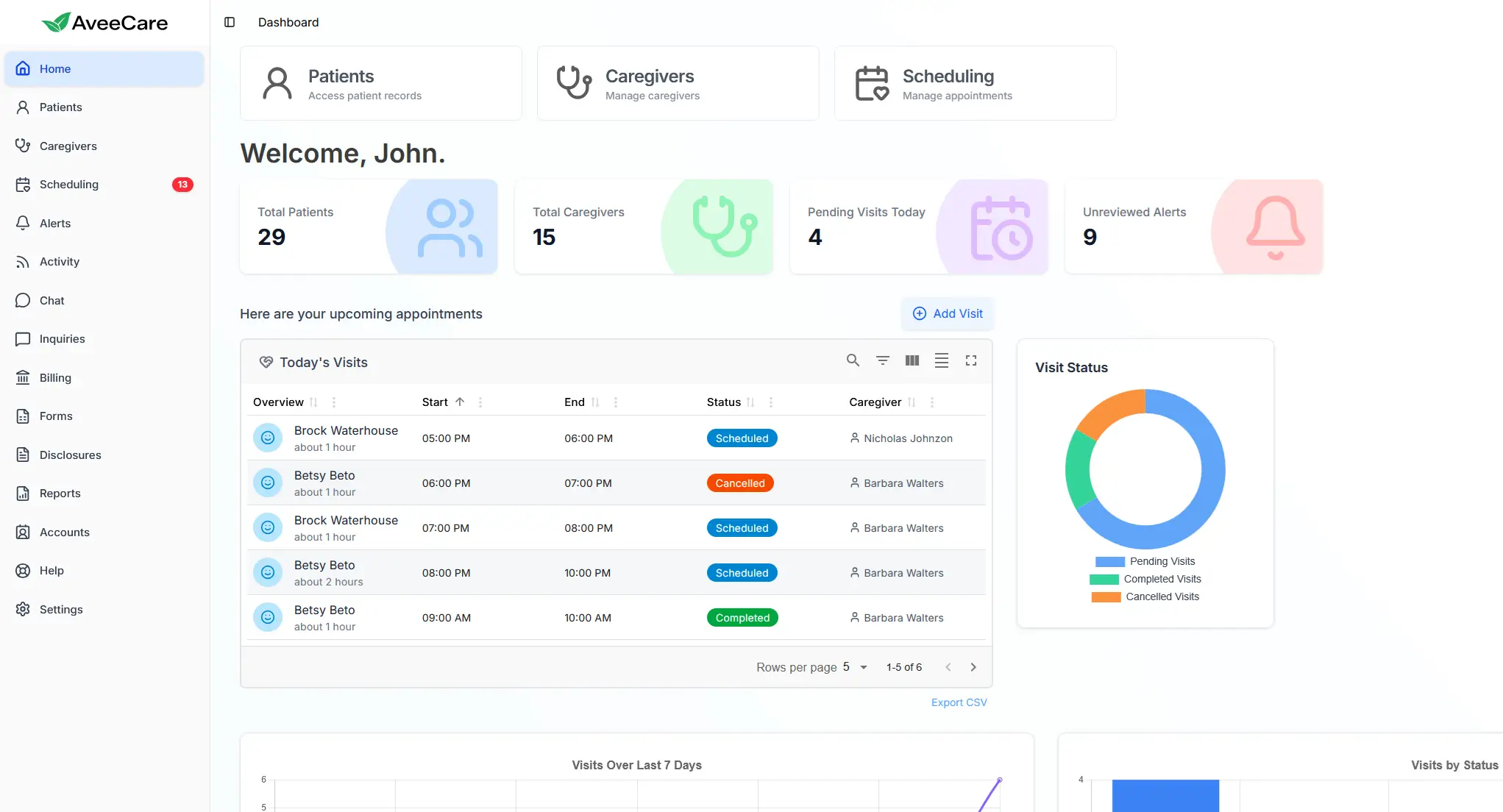
Track referrals, scheduling, and billing across Texas's vast service areas
Differentiation tip: In Texas's enormous and diverse market, bilingual English-Spanish services, culturally competent care, strong STAR+PLUS MCO relationships, military/veteran-focused programs, and technology-driven scheduling are your biggest differentiators. Agencies that can serve diverse populations across large geographic areas while maintaining strong HHSC compliance will stand out.
11Marketing & Client Acquisition
How to advertise your home care business and attract clients across the Lone Star State
Marketing a home care agency in Texas requires a multi-channel, bilingual approach that accounts for the state's enormous geographic size, incredible demographic diversity, and strong military presence. With major metros like Houston (the most ethnically diverse major city in America), Dallas-Fort Worth (one of the fastest growing metros), San Antonio (deeply military-influenced), Austin (tech-driven growth), and the heavily Hispanic Rio Grande Valley and El Paso, your marketing strategy must be tailored to each region's unique demographics and referral landscape.
Regional Marketing Strategies
Houston Metro
Houston is the 4th largest US city and incredibly diverse. Market in English, Spanish, Vietnamese, Mandarin, and Nigerian languages depending on your target neighborhoods. Partner with the Texas Medical Center hospitals (the largest medical complex in the world) for discharge referrals. Target the massive Nigerian, Indian, Vietnamese, and Hispanic communities with culturally specific outreach. Houston Methodist, Memorial Hermann, and MD Anderson are key referral relationships.
Dallas-Fort Worth Metro
DFW is one of the fastest growing metros in the US. Target affluent suburbs (Plano, Frisco, Southlake, Highland Park) for high-margin private pay clients while building Medicaid volume in urban Dallas and Fort Worth. Partner with Baylor Scott & White, UT Southwestern, and Parkland Hospital for referrals. Spanish-language marketing is essential in the Dallas-area Hispanic communities.
San Antonio & Austin
San Antonio is heavily military-influenced with Joint Base San Antonio, Fort Sam Houston, and the Brooke Army Medical Center. Market to military families, veterans, and TRICARE beneficiaries. Partner with University Health and the South Texas VA. Austin's tech-driven growth means a growing senior population with high private pay potential. Both cities have large Hispanic populations requiring bilingual marketing.
Rio Grande Valley & El Paso
The Rio Grande Valley (McAllen, Brownsville, Harlingen, Edinburg) is predominantly Hispanic and Medicaid-heavy. All marketing should be bilingual or Spanish-primary. Build strong STAR+PLUS MCO relationships. El Paso is a bilingual border city where Spanish-language marketing is essential. Fort Bliss creates military referral opportunities. Lower competition and lower costs make these markets attractive for startups.
Digital Marketing Strategies
Google Business Profile
Optimize your Google Business Profile for every city and region you serve. In Texas's sprawling metro areas, create separate listings for each office location. Respond to every review within 24 hours. Ensure your profile includes bilingual service descriptions.
Bilingual Google Ads
Run Google Ads in both English and Spanish across all Texas metros. Target keywords like "home care Houston," "cuidado en el hogar San Antonio," and equivalent phrases. Texas CPCs are moderate ($8-25) compared to coastal states. In Houston, consider Vietnamese-language campaigns for the large Vietnamese community.
SEO & Content Marketing
Build a bilingual website with city-specific landing pages for major Texas markets. Create content about Texas-specific topics like STAR+PLUS benefits, HCSSA requirements, EVV compliance, and military/veteran care options. Target long-tail keywords for each metro area.
Social Media (Bilingual)
Maintain bilingual Facebook and Instagram profiles. Use targeted Facebook Ads to reach adult children making care decisions for aging parents in specific Texas zip codes. Post in English and Spanish. For Houston, consider community-specific social media platforms and groups (Vietnamese, Nigerian, Indian communities).
Military & Veteran Marketing
Texas has one of the largest military and veteran populations in the nation. Actively marketing to this community opens up TRICARE referrals, VA contracts, and a population that values reliable, structured care services.
Fort Cavazos (formerly Fort Hood)
Killeen/Temple area
One of the largest active-duty military posts in the world. Large population of military families and veterans. Partner with Carl R. Darnall Army Medical Center.
Fort Bliss
El Paso
Major Army installation in the bilingual El Paso market. William Beaumont Army Medical Center is a key referral source. Combine military and Hispanic community marketing.
Joint Base San Antonio (JBSA)
San Antonio
Includes Fort Sam Houston, Lackland AFB, and Randolph AFB. Brooke Army Medical Center (BAMC) is the DOD's largest medical facility. Huge veteran retirement community.
Naval Air Station Corpus Christi & Others
Statewide
Additional installations across Texas create pockets of military demand. Partner with local VA clinics, veteran service organizations (VFW, American Legion), and military family support groups.
Community Outreach & Grassroots Marketing
TAHCH Membership & Networking
Join the Texas Association for Home Care & Hospice (TAHCH). TAHCH membership provides networking, advocacy, education, regulatory updates, and industry connections across Texas. Their annual convention and regional events are prime opportunities to build referral relationships.
Faith Community Partnerships
Texas has deep faith-based community networks. Partner with Hispanic Catholic parishes, African-American Baptist churches, Vietnamese Buddhist temples, and megachurches across all demographics. Many churches have health ministries and senior care programs that can refer congregants to your agency.
Physician Office Marketing
Build referral relationships with geriatricians, family medicine physicians, and internal medicine doctors who treat elderly patients. Leave bilingual brochures, business cards, and referral pads at physician offices in your service area. In-person visits to medical offices remain one of the most effective marketing strategies in Texas.
Hospital Discharge Planning
Connect with discharge planners and social workers at major Texas hospitals: Houston Methodist, Baylor Scott & White, MD Anderson, UT Southwestern, University Health (SA), Parkland, and others. Being a preferred referral source for hospital discharge planners creates a reliable stream of new clients.
Online Reputation Management
In Texas's competitive metro markets, your online reputation directly impacts client acquisition. Families compare agencies online before making a decision, especially in Houston, DFW, and Austin where tech-savvy adult children research options carefully.
Google Reviews
Aim for 50+ reviews with a 4.7+ rating in your primary metro. Respond to every review within 24 hours. Ask satisfied families for reviews in both English and Spanish.
Caring.com & A Place for Mom
Maintain premium profiles on both platforms. These directories drive significant traffic from Texas families researching home care. Include bilingual descriptions.
Better Business Bureau (BBB)
BBB accreditation carries significant weight in Texas. Texans value trust indicators and business credibility. Maintain an A+ rating and respond to any complaints promptly.
Marketing Channel Comparison
| Channel | Cost | Time to Results | Best For |
|---|---|---|---|
| Bilingual Google Ads | $$ | Immediate | Fast leads in Houston, DFW, SA, Austin |
| SEO / Bilingual Website | $-$$ | 4-8 months | Long-term organic visibility |
| Faith Community Outreach | $ | 2-4 months | Building trust in Hispanic & diverse communities |
| TAHCH Networking | $$ | 1-3 months | Industry connections & credibility |
| Hospital/Physician Referrals | Free | 2-4 months | High-intent medical referrals |
| Military/Veteran Marketing | $ | 1-3 months | TRICARE, VA, military family referrals |
| Caring.com / BBB Premium | $$ | 1-2 months | Families actively comparing agencies |
Texas Advertising Considerations
Ensure all marketing materials accurately represent your services and HCSSA license category. If you hold a Personal Assistance Services (PAS) license, do not advertise skilled nursing or therapy services. All bilingual marketing materials should be professionally translated. HHSC monitors advertising for accuracy, and misleading claims can result in enforcement actions.
Texas marketing tip: Bilingual marketing is not optional in Texas -- it is a competitive necessity. Start with English and Spanish at minimum for all marketing channels. In Houston, expand to Vietnamese, Mandarin, and other languages based on your target neighborhoods. Military marketing near bases is a unique Texas advantage most states cannot match. Invest in BBB accreditation as it carries significant weight with Texas families.
12Frequently Asked Questions
Common questions about starting a home care agency in Texas
Yes. Texas requires a Home and Community Support Services Agency (HCSSA) license from the Texas Health and Human Services Commission (HHSC) for all home care agencies, both non-medical and skilled. Texas uses a single HCSSA license framework with multiple categories: Personal Assistance Services (PAS) for non-medical care, Licensed Home Health Services for skilled care, and Licensed and Certified Home Health Services for agencies billing Medicare. You must choose the appropriate license category based on the services you intend to provide.
Starting a non-medical home care agency in Texas typically costs between $35,000 and $85,000, which is below the national average thanks to Texas's lower cost of living and no state income tax. This covers the HCSSA license application, business formation, insurance, marketing, office setup, and 3 to 6 months of working capital. A licensed home health agency with skilled nursing services costs $100,000 to $250,000 or more due to Medicare certification requirements.
No. Texas is the only state where workers' compensation insurance is truly optional for most private employers. If you choose not to carry workers' comp, you become a "non-subscriber" and must file DWC Form-005 with the Texas Department of Insurance Division of Workers' Compensation and notify all employees in writing. As a non-subscriber, you lose certain legal defenses against employee injury lawsuits (contributory negligence, assumed risk, fellow employee negligence). Many agencies still carry workers' comp for risk management.
Texas uses HHAeXchange as its state-designated EVV vendor under an open model. Texas was an early EVV adopter, well ahead of the 21st Century Cures Act deadline. Under the open model, providers can use HHAeXchange directly (basic system at no cost) or choose an alternative EVV vendor that integrates with HHAeXchange as the state aggregator. All Medicaid-funded personal care and home health visits must be verified through EVV.
No. Texas has no state personal income tax, which is a significant financial advantage for both agency owners and employees. However, Texas imposes a franchise tax (margin tax) on businesses with revenue exceeding approximately $2.47 million. The rate is 0.375% for wholesale and retail businesses or 0.75% for other businesses including home care agencies. Most startup agencies will be well below this threshold for their first several years.
A non-medical home care agency (Personal Assistance Services category) in Texas typically takes 2 to 4 months to become operational, including HHSC HCSSA license application, DPS background checks, business formation with the Texas Secretary of State, and insurance procurement. A licensed home health agency takes 4 to 9 months or longer due to the more extensive HHSC review, on-site survey, and potential Medicare certification timeline.
13Sources and Resources
Official Texas state agency links and resources
Ready to manage your Texas home care agency?
You do not need software on day one. But when you are ready, AveeCare starts at $6/client/month with no contracts, no mandatory demos, and a free trial. Scheduling, care plans, billing, caregiver management, real-time tracking, and alerts in one platform built for simplicity -- perfectly suited for Texas's vast service areas and diverse client populations.
Disclaimer
This guide is for informational purposes only and does not constitute legal, financial, or professional advice. While we strive to keep this information accurate and up to date, Texas laws, regulations, fees, and requirements may change. Always verify current requirements directly with the relevant Texas state agencies before making business decisions. Consult with a qualified attorney and accountant in Texas before starting your home care business. AveeCare is not affiliated with the Texas Health and Human Services Commission, the Texas Secretary of State, the Texas Department of Public Safety, or any Texas state agency. Published April 4, 2026.