How to Start a Home Care Agency in Tennessee
Your complete 2026 guide to launching a home care business in Tennessee -- from TDH Home Care Organization licensing, no state income tax, Nashville as Healthcare City, to TennCare managed care in the Volunteer State.
Published April 4, 2026 · 25 min read
TLDR -- Tennessee at a Glance
Yes -- HCO license required for BOTH types under Tennessee's single Home Care Organization licensing framework through TDH.
TN Department of Health (TDH), Board for Licensing Health Care Facilities
HCA headquarters, massive healthcare ecosystem, unparalleled referral network in a fast-growing state (~7.1M population).
$25,000 – $65,000 (Non-Medical HCO)
$80,000 – $200,000+ (Skilled + Medicare)
3 – 6 months (HCO License) | 6 – 12 months (+ Medicare)
No state income tax! Franchise & Excise Tax applies. Workers' comp required for 5+ employees.
1Tennessee Market Overview
Understanding the opportunity for home care agencies in the Volunteer State
Tennessee has a population of approximately 7.1 million people, making it one of the most populous states in the Southeast and a massive market for home care services. For entrepreneurs looking to start a home care agency in Tennessee, the state offers an extraordinary combination: a booming population, no state income tax (the Hall Tax on investment income was fully repealed), a cost of living below the national average, and Nashville's unmatched healthcare industry ecosystem. Tennessee is one of the fastest-growing states in the country, with Nashville consistently ranking among the top destinations for both businesses and new residents.
Tennessee's major population centers span the entire state from west to east: Memphis (~650,000 city, ~1.3M metro) anchors the western end as the state's largest metro area with a diverse population and deep cultural roots. Nashville (~700,000 city, ~2M metro) is the booming capital and undisputed Healthcare City of America -- headquarters of HCA Healthcare, Community Health Systems, Acadia Healthcare, Brookdale Senior Living, and dozens of other major healthcare companies. Knoxville (~190,000 city, ~870,000 metro) serves East Tennessee and the Great Smoky Mountains retiree population. Chattanooga (~185,000 city, ~560,000 metro) is a fast-growing tech and healthcare hub at the junction of Tennessee, Georgia, and Alabama. Clarksville (~170,000), adjacent to Fort Campbell, is one of the fastest-growing cities in the state with a large military population.
The state's geographic diversity creates distinct regional markets: West Tennessee (Memphis, Jackson) with its Delta heritage and large African American community; Middle Tennessee (Nashville, Clarksville, Murfreesboro) with its explosive growth and healthcare industry concentration; and East Tennessee (Knoxville, Chattanooga, Johnson City) with its Appalachian culture, Smoky Mountains retirees, and university medical centers. Tennessee's cost of living is below the national average across all regions, and the no state income tax advantage makes it one of the most attractive states for starting a home care business. For a national overview of the startup process with interactive tools, see our complete guide to starting a home care agency and our state-by-state licensing requirements.
2Home Care vs. Home Health in Tennessee
Both require TDH Home Care Organization (HCO) license under a single framework
Key distinction in Tennessee: Unlike many states that only license skilled home health agencies, Tennessee requires a Home Care Organization (HCO) license from the Tennessee Department of Health (TDH) through the Board for Licensing Health Care Facilities for BOTH non-medical personal care agencies and skilled home health agencies. This single HCO licensing framework means every home care agency in Tennessee -- regardless of whether it provides non-medical or medical services -- must be licensed by TDH. This ensures quality standards but adds startup time and cost compared to states with no licensure requirement for non-medical agencies.
Non-Medical Personal Care
TDH HCO license required
- Companion care and socialization
- Homemaker services and housekeeping
- Meal preparation and nutrition
- Personal care (bathing, dressing)
- Transportation and errands
- Respite care for family caregivers
TDH HCO license required
Both non-medical and skilled agencies need HCO license in TN.
Skilled Home Health
TDH HCO license + Medicare certification
- Skilled nursing care
- Physical and occupational therapy
- Speech therapy
- Medical social services
- Home health aide services
- Wound care and IV therapy
HCO license + Medicare cert
Same HCO license plus CMS Medicare certification for skilled billing.
Background checks for ALL HCO-licensed agencies: The Tennessee Department of Health requires all HCO-licensed agencies to conduct criminal background checks through the Tennessee Bureau of Investigation (TBI) for all direct care staff. This applies to both non-medical and skilled agencies. You must also check the Tennessee Abuse Registry and, for TennCare providers, the OIG exclusion list.
3Business Formation in Tennessee
Register with TN SOS -- no state income tax, but Franchise & Excise Tax applies

Choose Your Business Structure
Most Tennessee home care agencies register as an LLC (Limited Liability Company) for liability protection and tax flexibility. Tennessee offers strong LLC protections and the no state income tax advantage makes pass-through entities particularly attractive. An LLC is the most common and recommended structure for new home care agencies in Tennessee.
Register with TN Secretary of State
File your Articles of Organization with the Tennessee Secretary of State online or by mail. Tennessee LLC registration costs approximately $300 for online filing plus a $50 per-member fee. The TN SOS portal at sos.tn.gov handles all entity formation, name reservations, and annual report renewals.
TN Secretary of StateObtain Your EIN
Apply for a free Employer Identification Number (EIN) from the IRS at irs.gov. You need this for bank accounts, payroll, TDH HCO license application, and tax filings. You can get it instantly online.
No State Income Tax + Franchise & Excise Tax
Tennessee has no state income tax -- the Hall Tax on investment income was fully repealed. This is a major advantage for your home care business and a recruiting tool for caregivers. However, Tennessee does impose a Franchise and Excise Tax on businesses: the Excise Tax is 6.5% on net earnings, and the Franchise Tax is 0.25% on net worth (or tangible property). Register with the TN Department of Revenue.
City/County Business License
Tennessee counties and cities typically require a business license (also called a business tax license). Nashville/Davidson County, Memphis/Shelby County, Knoxville/Knox County, Chattanooga/Hamilton County, and Clarksville/Montgomery County all have local business license requirements. Contact your county clerk for specific fees and requirements.
Open a Business Bank Account
Open a dedicated business checking account to keep personal and business finances separate. Tennessee has strong regional banks and credit unions including First Horizon, Pinnacle Financial Partners, and Avenue Bank. You will need your EIN and formation documents.
No state income tax: Tennessee's lack of a state income tax is a genuine competitive advantage compared to neighboring states like North Carolina and Georgia. Your employees keep more of their paycheck, making it easier to recruit and retain caregivers. The Franchise and Excise Tax does apply to business entities, so plan accordingly with a Tennessee CPA.
4HCO Licensing Requirements (TDH)
Home Care Organization license required for both non-medical and skilled agencies under the Home Care Organization Licensing Act
Home Care Organization (HCO) License
Tennessee licenses home care organizations under the Home Care Organization Licensing Act. The Board for Licensing Health Care Facilities under the Tennessee Department of Health (TDH) oversees HCO licensing. This single licensing framework covers both non-medical personal care and skilled home health services, making Tennessee unique among states. Every agency providing home care services in Tennessee must obtain an HCO license before operating.
- Submit HCO license application to TDH Board for Licensing Health Care Facilities
- Develop comprehensive policies and procedures manual
- Designate a qualified administrator/director
- Conduct TBI background checks on all direct care staff
- Check Tennessee Abuse Registry for all employees
- Pass TDH initial survey/inspection
- Maintain ongoing compliance with annual renewal
TennCare Provider Enrollment
If you want to provide Medicaid-funded services in Tennessee, you must first hold a valid TDH HCO license and then enroll as a provider with TennCare, Tennessee's Medicaid managed care program. TennCare is one of the largest managed care Medicaid programs in the United States. You will also need to contract with the individual managed care organizations (MCOs) that administer TennCare benefits: BlueCare Tennessee, Amerigroup, and UnitedHealthcare Community Plan.
- Obtain TDH HCO license first
- Submit TennCare provider enrollment application
- Contract individually with each MCO
- Register for HHAeXchange EVV system
Medicare Certification (Skilled Services)
If you plan to provide skilled nursing, physical therapy, or other medical services and bill Medicare, you need the TDH HCO license plus CMS Medicare certification. This is a more rigorous process requiring clinical staffing (RN director), comprehensive clinical policies, and a federal survey. Tennessee's large healthcare workforce in Nashville and Memphis makes recruiting clinical staff more feasible than in many other states.
- Hold valid TDH HCO license
- Hire qualified clinical staff (RN director required)
- Develop clinical policies meeting CMS Conditions of Participation
- Apply for and pass CMS Medicare certification survey
5Insurance & Workers' Compensation
Workers' comp required for employers with 5 or more employees in Tennessee
Tennessee requires workers' compensation insurance for employers with 5 or more employees, purchased from private carriers. Given that home care agencies quickly exceed this threshold, you should plan for workers' comp from the start. Tennessee's cost of living advantage extends to insurance premiums, which are generally competitive compared to coastal states.
General Liability Insurance
Protects your Tennessee home care agency from claims of bodily injury, property damage, and personal injury. A standard policy of $1 million per occurrence and $2 million aggregate is the industry baseline. Tennessee premiums typically range from $1,500 to $3,500 per year for a new agency, moderate compared to national averages.
Professional Liability (E&O)
Covers claims arising from errors, omissions, or negligence in the care services your agency provides. This is critical for protecting against lawsuits related to caregiver actions or inactions. Typical Tennessee costs range from $1,000 to $3,000 annually depending on services offered and staff count.
Workers' Compensation (5+ Employees)
Tennessee law requires workers' compensation insurance for employers with 5 or more employees. Coverage is purchased from private insurance carriers, and the Tennessee Bureau of Workers' Compensation under the Department of Labor and Workforce Development oversees compliance. Given the physical nature of home care work, this coverage is essential even below the threshold.
Surety and Fidelity Bonds
While not legally required for HCO-licensed agencies, surety and fidelity bonds protect clients against theft or dishonesty by caregivers. In Tennessee's competitive market, being bonded demonstrates professionalism and builds trust with families and referral sources. Costs are typically $200 to $600 annually.
Commercial Auto Insurance
Important for covering caregivers who travel between clients across Tennessee's urban and rural areas. If caregivers use personal vehicles, non-owned auto liability coverage is essential. Nashville, Memphis, and Knoxville traffic patterns and interstate driving add risk. Budget $500 to $2,000 annually for appropriate coverage.
Cyber Liability Insurance
As a HIPAA-covered entity handling protected health information, cyber liability insurance covers data breach expenses, notification costs, and legal liability from cybersecurity incidents. Tennessee agencies handling electronic health records, TennCare billing data, and EVV information should strongly consider this coverage.
Workers' comp threshold: Tennessee requires workers' compensation for employers with 5 or more employees. Home care agencies typically reach this threshold quickly. Operating without required coverage can result in penalties and personal liability for the business owner. Even if you start with fewer than 5 employees, plan for coverage from day one.
6Staffing Your Tennessee Agency
Federal minimum wage $7.25/hr applies (no TN state minimum wage law), TBI background checks, large healthcare workforce pool
Tennessee does not have its own state minimum wage law, so the federal minimum wage of $7.25/hour applies. However, to attract and retain quality caregivers in Tennessee's competitive healthcare market, expect to pay $12 to $17+/hour depending on region and experience. Nashville's booming economy and healthcare industry concentration create intense competition for healthcare workers, while rural areas may have smaller labor pools but less wage competition.
Nashville healthcare workforce advantage: Nashville is home to HCA Healthcare, Community Health Systems, Brookdale Senior Living, and dozens of other healthcare companies. This creates an unusually deep pool of healthcare-trained workers, including many with home care experience. Nashville's healthcare training programs at Vanderbilt, Belmont, and Tennessee State University produce a steady pipeline of qualified candidates.
TBI Background Checks
Submit fingerprint-based criminal history checks through the Tennessee Bureau of Investigation (TBI). Checks include both state and federal (FBI) databases. For HCO-licensed agencies, background screening is mandatory for all direct care staff before they can provide services. Also check the Tennessee Abuse Registry. For TennCare providers, screen against the OIG exclusion list. Processing typically takes 1 to 4 weeks.
Tennessee Bureau of InvestigationRecruitment Strategies
Leverage Tennessee's deep healthcare workforce: nursing programs at Vanderbilt, UTHSC Memphis, UT Knoxville, ETSU, Belmont, and community colleges statewide. Post on TN Department of Labor jobs.tn.gov, Indeed, local Facebook groups, and healthcare-specific job boards. Nashville healthcare networking events offer access to experienced healthcare professionals. The no-income-tax advantage is a strong recruiting message vs. neighboring states.
Training Requirements
Tennessee's HCO licensing requires that direct care workers receive appropriate orientation and training. For TennCare-funded services, specific training requirements may apply. Home health aides providing skilled services must complete 75+ hours of training and pass a competency evaluation. Invest in comprehensive training -- Tennessee's healthcare-savvy referral partners expect quality care.
Retention in a Competitive Market
With Nashville booming and Memphis, Knoxville, and Chattanooga all growing, retaining caregivers is critical. Offer competitive wages above the federal minimum, flexible scheduling, health benefits when possible, mileage reimbursement, meaningful recognition, and career advancement paths. Use the no-income-tax advantage in your employer value proposition. A positive workplace culture spreads quickly in Tennessee's close-knit healthcare community.
Regional wage variation: Nashville's booming economy means caregivers in the metro area may command $15 to $18+/hour. Memphis offers a lower cost of living but intense competition from hospitals like Methodist Le Bonheur. Knoxville and Chattanooga fall in between. Rural Tennessee communities may accept lower wages but have smaller labor pools. Build regional pay scales that reflect local market conditions.
7TennCare & Medicare in Tennessee
TennCare managed care, CHOICES HCBS waiver, MCO contracting, HHAeXchange EVV
TennCare is Tennessee's Medicaid managed care program, administered by the Division of TennCare under the Tennessee Department of Finance and Administration. TennCare is one of the largest managed care Medicaid programs in the United States, serving over 1.5 million Tennesseans. Unlike traditional Medicaid programs, TennCare contracts with managed care organizations (MCOs) to administer benefits, which means home care agencies must contract with each MCO individually to receive reimbursement.
CHOICES Program (HCBS Waiver)
The CHOICES program is Tennessee's primary Home and Community-Based Services (HCBS) waiver for elderly and disabled individuals. CHOICES provides personal care, homemaker, attendant care, adult day services, and other supports that allow individuals to remain in their homes rather than entering nursing facilities. CHOICES is administered through TennCare's MCOs. Providers must hold a TDH HCO license and contract with the MCOs.
MCO Contracting
TennCare contracts with three MCOs: BlueCare Tennessee, Amerigroup, and UnitedHealthcare Community Plan. To receive TennCare reimbursement for home care services, your HCO-licensed agency must enroll with TennCare and then contract individually with each MCO. Each MCO has its own credentialing process, rates, and requirements. Contracting with all three MCOs maximizes your eligible client base.
HHAeXchange EVV
Tennessee uses HHAeXchange as its Electronic Visit Verification (EVV) system for TennCare-funded personal care and home health services, as required by the 21st Century Cures Act. Agencies providing TennCare-funded services must implement HHAeXchange to capture visit start/end times, location, services provided, and caregiver identity. AveeCare integrates with EVV platforms to simplify compliance.
Medicare (Home Health)
If your agency holds a TDH HCO license and obtains CMS Medicare certification, you can bill Medicare for skilled nursing, therapy, and home health aide services. Tennessee's large elderly population and robust healthcare infrastructure make Medicare home health a significant revenue opportunity, particularly in Nashville, Memphis, and Knoxville metros.
TennCare managed care complexity: Because TennCare uses managed care, reimbursement rates and requirements vary by MCO. Some MCOs may have waitlists for new provider contracts. Start the MCO contracting process early -- it can take 2 to 4 months or longer after you receive your TDH HCO license. Build relationships with MCO provider relations representatives in your region.
8Tennessee Startup Cost Estimator
Interactive calculator -- toggle Medicare certification to see skilled services costs
Business Formation
TDH Home Care Organization (HCO) Licensing
Insurance (Annual)
Office & Equipment
Marketing & Initial Growth
Working Capital (3-6 Months)
Estimated Total
HCO-licensed non-medical agency
9Tennessee Compliance Checklist
Interactive checklist -- track your progress as you launch
Business Formation
Licensing
Insurance
Staffing
TennCare & Medicare
Operations
Marketing
10Building Your Referral Network
Vanderbilt, HCA hospitals, Methodist Le Bonheur, UT Medical Center, Erlanger, TCAD, AAAs
Tennessee's healthcare-rich environment -- especially Nashville's Healthcare City ecosystem -- offers some of the strongest referral network opportunities in the entire country. Building relationships with discharge planners, social workers, and case managers at major health systems is your primary growth engine. Tennessee's three grand divisions (West, Middle, East) each have distinct referral landscapes.
Vanderbilt University Medical Center
Nashville's premier academic medical center and one of the top hospitals in the Southeast. Vanderbilt's discharge planning team, social workers, and case managers handle thousands of patients who need post-acute home care. Building relationships with Vanderbilt discharge planners is one of the highest-value referral strategies in Tennessee.
HCA-Affiliated Hospitals
HCA Healthcare is headquartered in Nashville and operates numerous hospitals across Tennessee, including TriStar Centennial, TriStar Summit, Parkridge in Chattanooga, and others. HCA's massive Tennessee footprint means one strong corporate relationship can open doors to multiple facilities. Connect with discharge planners at each local HCA hospital.
Methodist Le Bonheur Health (Memphis)
The dominant health system in the Memphis metro area, serving West Tennessee and the greater Mid-South. Methodist Le Bonheur operates multiple hospitals and clinics throughout the Memphis region. Their discharge planning teams are essential referral partners for agencies serving Memphis's large and diverse population.
UT Medical Center & Erlanger
The University of Tennessee Medical Center in Knoxville serves East Tennessee and the Great Smoky Mountains region. Erlanger Health System in Chattanooga is the primary referral center for southeastern Tennessee and parts of north Georgia. Both systems have active discharge planning programs for patients returning home.
TCAD & Area Agencies on Aging
The Tennessee Commission on Aging and Disability (TCAD) oversees aging services statewide. Tennessee's 9 Area Agencies on Aging (AAAs) and the Aging and Disability Resource Center (ADRC) network are trusted gateways to elderly Tennesseans who need home care. Build strong relationships with TCAD staff and local AAA case managers across all three grand divisions.
TN Commission on Aging & DisabilityVA Tennessee Valley Healthcare System
The VA Tennessee Valley Healthcare System (Nashville campus and Murfreesboro campus) serves Middle Tennessee veterans. The Memphis VA Medical Center covers West Tennessee. Connect with VA social workers, VFW/American Legion posts, Fort Campbell Family Readiness programs, and the TN Department of Veterans Services. TRICARE and VA benefits may cover home care for eligible veterans.
11Marketing & Client Acquisition
Nashville healthcare hub, Memphis diverse market, East TN retirees, military (Fort Campbell), faith communities, digital marketing, TAHC networking, TCAD referrals
Marketing a home care agency in Tennessee means developing distinct strategies for the state's three grand divisions, each with unique demographics, culture, and healthcare landscapes. Nashville's Healthcare City ecosystem offers unparalleled industry networking. Memphis has a large, diverse population with significant healthcare needs. East Tennessee attracts retirees to the Smoky Mountains. And the entire state is deeply rooted in faith communities that can be powerful referral channels.
Nashville Metro -- Healthcare City Advantage
Nashville is the undisputed healthcare capital of America -- home to HCA Healthcare, Community Health Systems, Acadia Healthcare, Brookdale Senior Living, and many other major companies. The Nashville Health Care Council hosts industry events that offer unparalleled networking opportunities. Leverage these industry connections to build referral relationships that simply do not exist in other cities. Nashville's explosive growth (the metro area has surpassed 2 million) means a constantly expanding client base. Connect with HCA-affiliated hospitals, Vanderbilt discharge planners, and healthcare company employees whose aging parents may need care. The Nashville entertainment and country music industry creates a private-pay market segment of high-net-worth individuals who want premium home care services.
Memphis -- Diverse Market with Deep Community Ties
Memphis (~1.3 million metro) has a large and diverse population with significant home care needs. The city has a majority African American population, and culturally competent outreach is essential for building trust and serving this community effectively. Partner with African American churches (particularly Baptist and Church of God in Christ), community organizations, and neighborhood leaders. Methodist Le Bonheur Health System is the dominant referral source. Memphis also has a significant Hispanic/Latino community in areas like Summer Avenue and Hickory Hill. The Memphis medical district around UTHSC and St. Jude creates healthcare worker density. Market through community radio, local publications like the Tri-State Defender, and grassroots outreach.
Knoxville & East Tennessee -- Smoky Mountain Retirees
East Tennessee -- anchored by Knoxville (~870,000 metro) -- attracts retirees drawn to the Great Smoky Mountains, low cost of living, no state income tax, and quality of life. Communities like Maryville, Sevierville, Pigeon Forge, Gatlinburg, and Oak Ridge have significant retiree populations. Many are private-pay clients with stable retirement incomes. UT Medical Center and Covenant Health are the dominant referral sources. Johnson City, the Tri-Cities area (with East Tennessee State University and Quillen College of Medicine), and Crossville (a popular retirement destination) expand the East Tennessee market. Market through senior centers, retirement communities, church groups, and Appalachian community organizations.
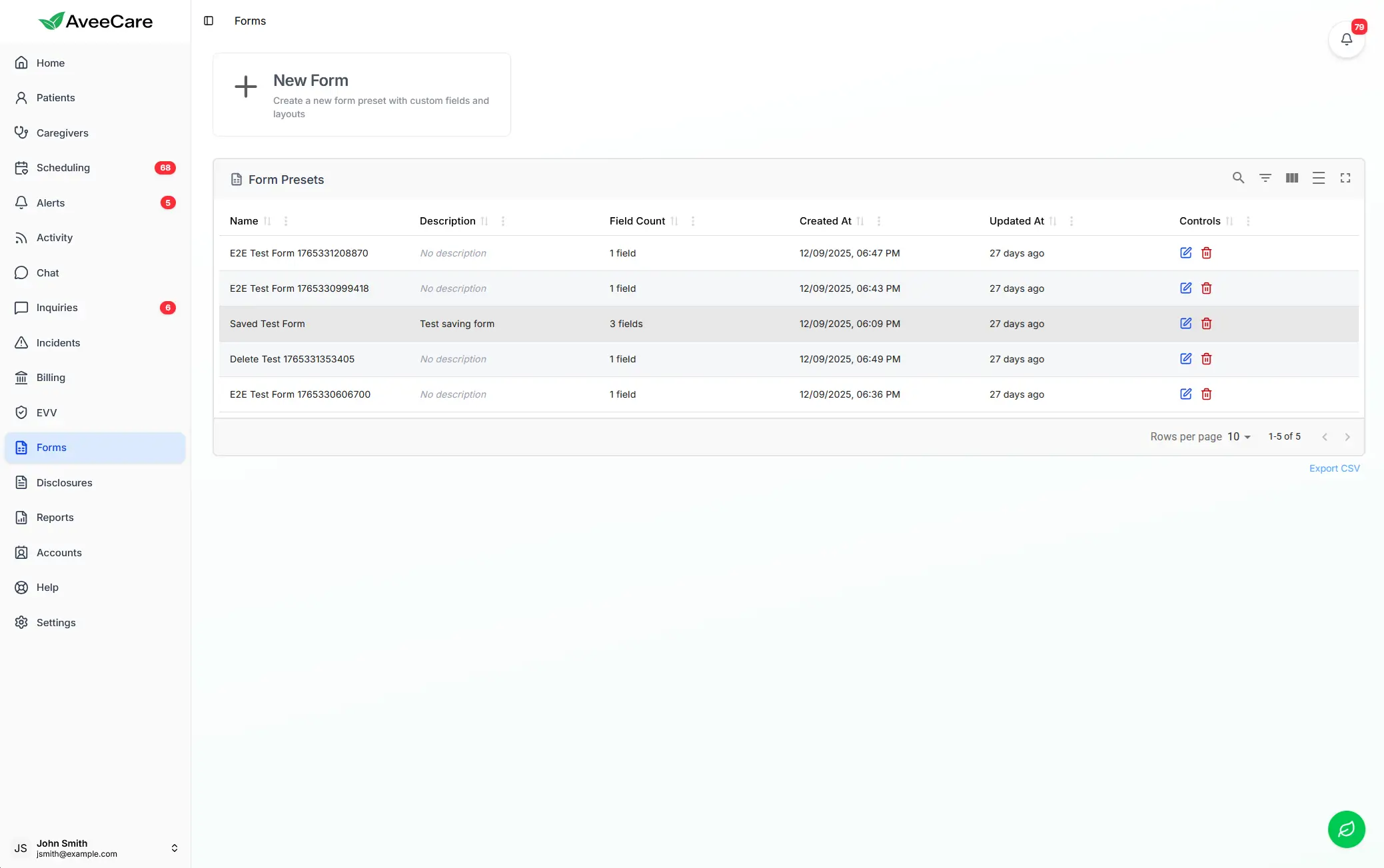
AveeCare's company-wide forms management -- streamline HCO compliance documentation for Tennessee agencies
Chattanooga -- Fast-Growing Tri-State Hub
Chattanooga (~560,000 metro) is one of Tennessee's fastest-growing cities, positioned at the junction of Tennessee, Georgia, and Alabama. Erlanger Health System is the primary referral source. CHI Memorial and Parkridge Medical Center (HCA) add referral opportunities. Chattanooga's tech industry growth and outdoor recreation appeal attract both retirees and working professionals whose aging parents may need home care. The city's tri-state location means potential clients may come from north Georgia and northeast Alabama.
Military: Fort Campbell & Arnold AFB
Fort Campbell (shared with Kentucky, near Clarksville) is one of the largest military installations in the US, home to the 101st Airborne Division. Clarksville is one of Tennessee's fastest-growing cities with a large military family population. Arnold AFB near Tullahoma adds military families. Connect with Military OneSource, Family Readiness programs, and local veterans organizations. TRICARE and VA benefits may cover home care for eligible military families.
Faith Communities (Bible Belt)
Tennessee is in the heart of the Bible Belt. Baptist, Church of Christ, Methodist, Pentecostal, and Catholic churches are the social hub of most Tennessee communities. Many churches have active senior ministries, benevolence committees, and parish nurses. Offer to speak at church groups about aging-in-place and caregiver support. A pastor's recommendation carries immense weight in Tennessee. In Memphis, African American churches are particularly influential community institutions.
African American Community Outreach
Memphis has a majority African American population, and Nashville has a significant and historic African American community centered around North Nashville, Jefferson Street, and Tennessee State University. Culturally competent marketing is essential. Partner with African American churches, community organizations like the Urban League, HBCUs (TSU, LeMoyne-Owen), and culturally specific media. Hire diverse caregivers who reflect the communities you serve.
TAHC Networking
The Tennessee Association for Home Care (TAHC) is the state's primary industry association for home care agencies. TAHC hosts conferences, advocacy events, and networking opportunities that connect you with other agency owners, regulators, and industry vendors. Membership provides access to regulatory updates, training resources, and a professional community. Joining TAHC early builds credibility and industry relationships.
Digital Marketing & Local SEO
Adult children across the country search online for Tennessee home care agencies for aging parents. Invest in local SEO targeting city and county names -- "home care Nashville," "home care Memphis," "home care Knoxville." Google Ads geo-targeted to Tennessee metros, Facebook community groups, and a professional website are essential. Tennessee's large metro areas justify meaningful digital marketing investment.
Country Music & Entertainment (Private Pay)
Nashville's entertainment industry creates a unique private-pay market segment. Country music artists, songwriters, entertainment executives, and their families may need premium home care services for aging relatives. These high-net-worth individuals often prefer private-pay arrangements with personalized, discreet service. Network through Nashville entertainment circles, luxury senior communities, and concierge care referral services.
12Frequently Asked Questions
Common questions about starting a home care agency in Tennessee
Yes. Tennessee requires a Home Care Organization (HCO) license from the Tennessee Department of Health (TDH) through the Board for Licensing Health Care Facilities for BOTH non-medical and skilled home care agencies. Unlike many states that only license skilled agencies, Tennessee uses a single HCO licensing framework that covers both non-medical personal care and skilled home health services. You must apply to TDH, meet staffing and policy requirements, pass an initial survey, and maintain ongoing compliance. You also need to register your business with the Tennessee Secretary of State and obtain an EIN from the IRS.
Tennessee requires criminal background checks for home care workers through the Tennessee Bureau of Investigation (TBI). Employers submit fingerprint-based criminal history checks through TBI, which includes both state and federal (FBI) criminal databases. Tennessee also requires checking the Tennessee Abuse Registry and the Office of Inspector General (OIG) exclusion list for Medicaid-enrolled providers. The Tennessee Department of Health requires HCO-licensed agencies to verify that all direct care staff have cleared background screening before providing services. Background check processing typically takes 1 to 4 weeks.
Starting a home care agency in Tennessee typically costs between $25,000 and $65,000 for a non-medical HCO-licensed agency, including TDH HCO license application, business formation with the Secretary of State, TBI background checks, insurance, initial staffing, marketing, and working capital. Tennessee has no state income tax (the Hall Tax on investment income was fully repealed), which reduces ongoing operating costs. However, Tennessee does impose a Franchise and Excise Tax on businesses. A Home Health Agency providing skilled services costs significantly more, typically $80,000 to $200,000 or higher due to clinical staffing requirements and Medicare certification costs.
TennCare is Tennessee's Medicaid managed care program, one of the largest managed care Medicaid programs in the United States. TennCare contracts with managed care organizations (MCOs) including BlueCare Tennessee, Amerigroup, and UnitedHealthcare Community Plan to administer benefits. Home care agencies seeking TennCare reimbursement must hold a valid TDH HCO license and then enroll as a provider with TennCare and contract with the individual MCOs. Tennessee uses HHAeXchange for Electronic Visit Verification (EVV) for Medicaid-funded personal care and home health services. The CHOICES program (a TennCare HCBS waiver) is the primary pathway for home and community-based services for elderly and disabled Tennesseans.
Nashville is often called "Healthcare City" because it is the headquarters of HCA Healthcare (the largest for-profit hospital operator in the US), Community Health Systems, Acadia Healthcare, Brookdale Senior Living, and many other major healthcare companies. This concentration creates a massive healthcare ecosystem with extensive referral networks, discharge planners, social workers, and healthcare professionals who understand home care needs. For home care agency owners, Nashville offers unparalleled access to healthcare industry connections, professional networking events through organizations like the Nashville Health Care Council, and a deep pool of healthcare-trained workers.
Starting a home care agency in Tennessee typically takes 3 to 6 months due to the TDH HCO licensing process. The timeline includes business registration with the Tennessee Secretary of State (1 to 2 weeks), developing policies and procedures for the HCO application, submitting the application to TDH Board for Licensing Health Care Facilities, TDH review and initial survey (2 to 4 months), obtaining insurance, setting up TBI background check processes, and initial hiring. Enrolling as a TennCare provider and contracting with MCOs adds 2 to 4 months beyond licensure. If pursuing Medicare certification for skilled services, add another 3 to 6 months for the CMS survey process.
13Official Sources & Links
Verified Tennessee government resources for starting your home care agency
Ready to manage your Tennessee home care agency?
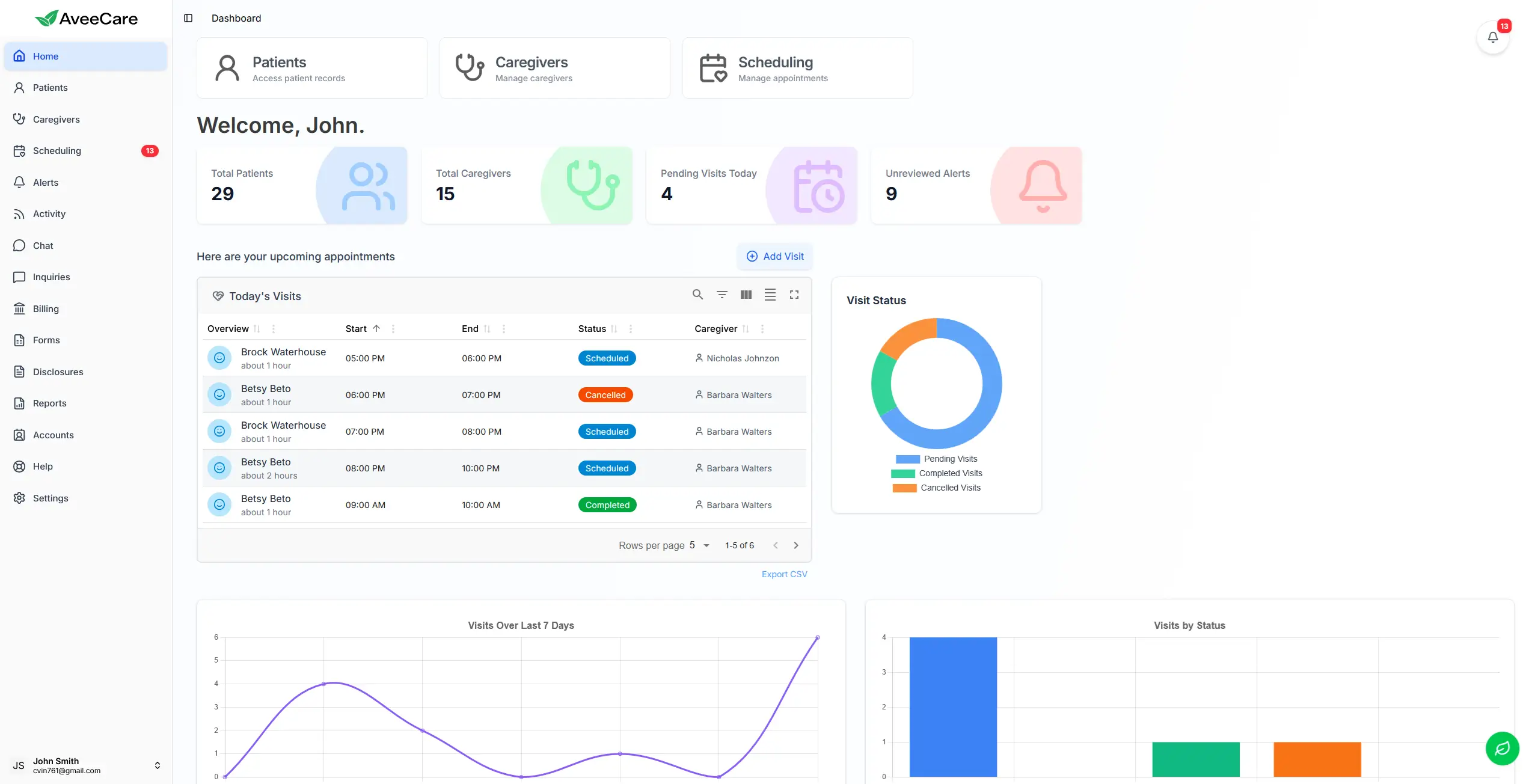
You do not need software on day one. But when you are ready, AveeCare starts at $6/client/month with no contracts, no mandatory demos, and a free trial. Scheduling, care plans, billing, caregiver management, and real-time alerts in one platform built for simplicity -- whether you serve Nashville, Memphis, Knoxville, Chattanooga, or communities across the Volunteer State.
Disclaimer
This guide is for informational purposes only and does not constitute legal, financial, or professional advice. While we strive to keep this information accurate and up to date, Tennessee laws, regulations, fees, and requirements may change. Always verify current requirements directly with the relevant Tennessee state agencies, including the Tennessee Department of Health (TDH), Board for Licensing Health Care Facilities, Tennessee Secretary of State, Tennessee Bureau of Investigation (TBI), TennCare (Division of TennCare), Tennessee Commission on Aging and Disability (TCAD), Tennessee Department of Revenue, and Tennessee Department of Labor and Workforce Development, before making business decisions. Consult with a qualified attorney and accountant in Tennessee before starting your home care business. AveeCare is not affiliated with the Tennessee Department of Health or any Tennessee state agency. Published April 4, 2026.