How to Start a Home Care Agency in South Carolina
Your complete 2026 guide to launching a home care business in South Carolina, from DHEC registration and licensing to capturing the Palmetto State's fast-growing retiree and military markets.
Published April 4, 2026 · 25 min read
TLDR — South Carolina at a Glance
Yes — registration mandatory (In-Home Care Provider for non-medical, Home Health Agency license for skilled).
SC Department of Health and Environmental Control (DHEC) — Bureau of Health Facilities Licensing
$30,000 – $70,000 (non-medical)
$120,000 – $280,000+ (home health)
2 – 4 months (non-medical) | 6 – 12 months (home health)
Federal $7.25/hr (no state minimum wage law)
HHAeXchange (state-designated EVV)
Fast-growing retiree state; major military presence; no state minimum wage; below-average cost of living
1South Carolina Market Overview
A fast-growing state with booming retiree communities, military bases, and a below-average cost of living
South Carolina presents one of the most attractive home care markets in the southeastern United States. With approximately 5.3 million residents and one of the nation's fastest population growth rates, the Palmetto State is a magnet for retirees seeking warm weather, affordable living, and coastal lifestyle. Starting a home care agency in South Carolina means entering a market fueled by rapidly growing coastal retiree communities in Hilton Head, Kiawah Island, and Myrtle Beach, a significant military presence at Fort Jackson, Shaw AFB, Charleston AFB and Naval Base, Parris Island, and Beaufort, and a below-average cost of living that keeps startup expenses and operating costs manageable. South Carolina requires DHEC registration for non-medical in-home care providers and DHEC licensure for home health agencies, creating a regulated framework that protects consumers and quality-focused operators.
South Carolina's home care demand is driven by its booming retiree population, growing metro areas, and the presence of major health systems including MUSC Health (Medical University of South Carolina), Prisma Health, Bon Secours Mercy Health, and Roper St. Francis Healthcare. The state's demographic diversity includes a significant African American population (approximately 27%), creating demand for culturally competent home care services. The Lieutenant Governor's Office on Aging (LGOA) serves as the state's primary aging services agency, coordinating resources for older South Carolinians and connecting families with home care providers. For a national overview of the startup process with interactive tools, see our complete guide to starting a home care agency and our state-by-state licensing requirements.

Regional Market Breakdown
Charleston Metro
Charleston is South Carolina's largest metro area and a booming economic hub with a rapidly growing population. The city is home to MUSC Health, Roper St. Francis Healthcare, and Charleston AFB/Naval Base (Joint Base Charleston). The affluent coastal communities of Mount Pleasant, Daniel Island, and Kiawah Island create strong private pay demand. Charleston's military families and growing retiree population make this the state's premier home care market.
Columbia Metro (Midlands)
Columbia is the state capital and home to Fort Jackson, the Army's largest basic training installation. The Midlands region is anchored by Prisma Health (Richland and Baptist hospitals) and the University of South Carolina. Columbia's central location makes it a natural hub for serving the state's interior. Government employees, military families (TRICARE), and a growing senior population drive home care demand.
Greenville-Spartanburg (Upstate)
The Upstate region is South Carolina's fastest-growing metro area, led by Greenville's economic boom. Prisma Health and Bon Secours St. Francis Health System are the major health systems. The region's manufacturing economy attracts younger families while retirees are drawn to the Blue Ridge Mountain foothills. The growing population and relatively lower cost of living compared to Charleston create opportunities for new home care agencies.
Myrtle Beach / Grand Strand & Hilton Head / Lowcountry
Myrtle Beach and the Grand Strand area attract both seasonal visitors and permanent retirees, creating year-round home care demand with seasonal spikes. Hilton Head, Bluffton, and Beaufort form the Lowcountry's affluent retiree corridor, with strong private pay capacity and proximity to Parris Island Marine Corps Recruit Depot and the Beaufort Naval Hospital. These coastal communities represent premium home care markets with above-average reimbursement potential.
Why Start a Home Care Agency in South Carolina
2Home Care vs. Home Health in South Carolina
In-Home Care Provider (non-medical registration) vs. Home Health Agency (DHEC license) pathways
This is the most important decision you will make. In South Carolina, DHEC (Department of Health and Environmental Control) oversees both pathways. In-Home Care Providers offering non-medical services must register under the SC In-Home Care Provider Registration Act. Home Health Agencies offering skilled nursing and therapy services must obtain a full DHEC license through the Bureau of Health Facilities Licensing, which is significantly more complex and expensive.
In-Home Care Provider
- Personal care (bathing, dressing, grooming)
- Homemaker services (cleaning, laundry, meal prep)
- Companion care and socialization
- Medication reminders (not administration)
- Transportation and errands
- Light housekeeping and nutrition support
DHEC In-Home Care Provider registration required
Under the SC In-Home Care Provider Registration Act.
Home Health Agency
- Skilled nursing care
- Physical, occupational, and speech therapy
- Wound care and injections
- Medical social services
- Home health aide services
- Medication administration
DHEC Home Health Agency license required
Through the Bureau of Health Facilities Licensing. Plus Medicare certification for Medicare billing.
3Business Formation in South Carolina
Register your home care business with the Palmetto State
Choose Your Business Structure
Most South Carolina home care agencies register as an LLC (Limited Liability Company) for liability protection and tax flexibility. South Carolina charges $110 for LLC formation, one of the more affordable filing fees in the nation. The state does not require annual reports for LLCs, reducing ongoing administrative costs. Corporations are an alternative but involve more complex filing requirements.
Register with the SC Secretary of State
File your Articles of Organization (LLC) or Articles of Incorporation with the South Carolina Secretary of State at sos.sc.gov. Filing can be completed online through the state's business portal. South Carolina does not require annual LLC reports, but corporations must file annual reports to maintain good standing.
SC Secretary of StateObtain Your EIN
Apply for a free Employer Identification Number (EIN) from the IRS at irs.gov. You need this for bank accounts, payroll, and tax filings. It takes minutes to obtain online.
Register with SC Department of Revenue
Register your business with the South Carolina Department of Revenue (SCDOR) for state income tax withholding. South Carolina uses a progressive income tax ranging from 0% to 6.4%, with ongoing reform efforts potentially lowering rates further. There is no franchise tax in South Carolina. Register online through the SCDOR MyDORWAY portal.
SC Dept. of RevenueRegister with SC Dept. of Employment and Workforce (DEW)
Register with the South Carolina Department of Employment and Workforce for unemployment insurance. DEW also operates SC Works centers throughout the state that can help you find qualified caregivers. Register online through the DEW employer portal for streamlined tax registration and compliance.
SC Dept. of Employment and WorkforceCounty and City Business Licenses
South Carolina counties and cities typically require business licenses. Charleston, Columbia, Greenville, Myrtle Beach, and most other municipalities charge business license fees based on your gross revenue. Check with your local county or city clerk's office for specific requirements and fees. Some counties require a zoning approval before issuing a business license.
Open a Business Bank Account
Open a dedicated business checking account to separate personal and business finances. You will need your EIN, Articles of Organization, and any applicable business permits. South Carolina has strong community banks and credit unions throughout the state, with many focused on small business lending and support.
South Carolina business formation note: South Carolina's $110 LLC filing fee with no annual report requirement makes formation costs among the lowest in the nation. The state's progressive income tax (0% to 6.4%) is undergoing reform, with rates potentially decreasing in coming years. There is no franchise tax in South Carolina, and the state's below-average cost of living extends to commercial real estate and professional services, making business setup affordable. County business license fees are typically modest and based on gross revenue.
4Licensing and Registration Requirements
DHEC registration for non-medical providers, DHEC licensure for home health agencies
In-Home Care Provider — DHEC Registration
South Carolina requires all non-medical home care agencies to register as In-Home Care Providers under the SC In-Home Care Provider Registration Act, administered by DHEC (Department of Health and Environmental Control). This registration ensures consumer protection and establishes minimum standards for non-medical agencies operating in South Carolina. The registration process includes:
- Submit In-Home Care Provider registration application to DHEC
- Complete SLED background checks for all owners and operators
- Provide proof of liability insurance coverage
- Develop and submit required policies and procedures
- Designate a qualified administrator for the agency
- Maintain ongoing compliance with DHEC regulations and reporting
Home Health Agency — DHEC License
If you plan to provide skilled nursing, physical therapy, or other medical services, you must obtain a Home Health Agency license from DHEC through the Bureau of Health Facilities Licensing. This licensure pathway is significantly more rigorous than the In-Home Care Provider registration and involves:
- Submit Home Health Agency license application to DHEC Bureau of Health Facilities Licensing
- Pass an on-site survey/inspection by DHEC surveyors
- Designate a qualified clinical director (RN or qualified healthcare professional)
- Employ or contract with licensed nursing and therapy staff
- Maintain comprehensive quality assurance programs
- Comply with all DHEC regulations and South Carolina health code
Medicare Certification
Medicare certification is a separate process from state licensure. To bill Medicare, you must apply through the Centers for Medicare & Medicaid Services (CMS), pass a federal survey, and meet all Medicare Conditions of Participation. In South Carolina, the survey process runs through DHEC, which serves as the state survey agency for CMS. South Carolina's growing senior population, with approximately 18% of residents aged 65 or older and rising due to retiree migration, makes Medicare certification increasingly valuable for agencies in the Palmetto State.
SLED background checks: South Carolina uses the State Law Enforcement Division (SLED) for criminal background checks. Background checks are required for home care agency owners, operators, and caregivers under both the In-Home Care Provider Registration Act and the Home Health Agency licensure pathway. SLED offers both name-based and fingerprint-based checks. Federal (FBI) background checks may also be required, particularly for Medicare-certified agencies. Processing typically takes 3 to 10 business days depending on the type of check.
5Insurance Requirements
Workers' comp required for 4+ employees, plus essential liability coverage
General Liability
$2,000 - $5,500/yrCovers bodily injury and property damage claims. Recommended minimum: $1M per occurrence / $2M aggregate. South Carolina premiums are generally below the national average due to the state's lower cost of living and favorable insurance market.
Professional Liability (E&O)
$1,500 - $4,000/yrCovers errors, omissions, and negligence claims related to care services. Essential for any home care business in South Carolina. This coverage protects your agency in the event of lawsuits related to care quality, missed visits, or documentation errors.
Workers' Compensation
$2,500 - $8,000/yrSouth Carolina requires workers' compensation for employers with 4 or more employees. The SC Workers' Compensation Commission administers the program. Even if you start with fewer than 4 employees, obtaining coverage early protects your business. Rates in South Carolina are competitive compared to northeastern states.
Surety / Fidelity Bond
$300 - $1,000/yrProtects clients against theft or dishonesty by employees. While not always required by law, many clients and referral sources in South Carolina expect bonded agencies. Having a surety bond increases trust and can be a competitive differentiator in the market.
Workers' comp is required for employers with 4 or more employees. South Carolina's workers' compensation threshold is 4 employees, meaning you must carry coverage once you hire your fourth worker. The SC Workers' Compensation Commission oversees the program. Home care agencies should obtain workers' comp coverage from the start, even before reaching the 4-employee threshold, as most home care agencies will quickly exceed this number. Failure to carry required workers' comp can result in fines, penalties, and personal liability for workplace injuries. DHEC may also require proof of workers' comp coverage as part of the registration or licensing process.
6Staffing and Hiring in South Carolina
Federal $7.25/hr minimum wage applies, SLED background checks, SC Works centers
South Carolina's labor market for home care workers varies significantly by region. The Charleston and Greenville-Spartanburg metros are the most competitive for caregiver recruitment, while rural areas and smaller cities offer a more accessible workforce. South Carolina does not have a state minimum wage law, so the federal minimum wage of $7.25/hour applies. However, market wages for home care workers are considerably higher than the minimum, with most agencies paying between $11 and $16 per hour for personal care aides. The state's growing economy and expanding healthcare sector create competition for qualified workers, especially in metro areas and coastal communities where cost of living has risen. South Carolina's military installations provide a potential source of experienced caregivers, as military spouses and veterans often seek flexible healthcare employment.
SLED Background Checks
South Carolina requires State Law Enforcement Division (SLED) background checks for home care workers. SLED offers both name-based criminal record checks and fingerprint-based checks. The In-Home Care Provider Registration Act mandates background checks for all employees who provide direct care. Processing for name-based checks typically takes 3 to 5 business days, while fingerprint-based checks may take 5 to 10 business days. Both state (SLED) and national (FBI) checks are recommended.
SC Law Enforcement Division (SLED)Training Requirements
For home health aides working under a licensed Home Health Agency, federal requirements mandate 75 hours of training including 16 hours of supervised clinical practice. Non-medical personal care aides under In-Home Care Provider agencies should receive thorough initial training covering ADLs, safety protocols, infection control, emergency procedures, and South Carolina-specific requirements. Cultural competency training is important given the state's diverse population, including its significant African American community.
Where to Find Caregivers in South Carolina
State-funded career centers throughout SC, operated by DEW, in Charleston, Columbia, Greenville, and more
SC Technical College System, USC, MUSC, Clemson, Greenville Tech, Trident Tech
Fort Jackson, Shaw AFB, Joint Base Charleston, Parris Island, Beaufort - military family employment programs
South Carolina's strong church culture provides community-based recruitment opportunities
Wages and Labor Laws in South Carolina
South Carolina does not have a state minimum wage, so the federal minimum wage of $7.25/hour applies. To attract quality caregivers, most agencies pay between $11 and $16 per hour for personal care aides and $14 to $22 per hour for home health aides and CNAs. Charleston and Greenville-Spartanburg rates tend toward the higher end, while rural Midlands and Pee Dee regions are more moderate.
South Carolina labor law essentials: Weekly overtime at 1.5x after 40 hours per week (federal FLSA applies). South Carolina is an at-will employment state, meaning employers can terminate employees for any lawful reason. There is no state-mandated paid sick leave, paid family leave, or disability insurance program. Workers' compensation is required for employers with 4 or more employees. Home care agencies must carefully track weekly hours across all client shifts to ensure overtime compliance under federal law.
7Medicaid and Medicare in South Carolina
SCDHHS Healthy Connections Medicaid, HHAeXchange EVV, HCBS waivers
South Carolina Medicaid (Healthy Connections)
South Carolina's Medicaid program, known as Healthy Connections, is administered by the SC Department of Health and Human Services (SCDHHS). SCDHHS manages Medicaid enrollment, provider credentialing, and reimbursement for home care services across the state. South Carolina operates Home and Community-Based Services (HCBS) waiver programs that fund home care services for elderly and disabled residents as an alternative to institutional placement. To bill Medicaid for home care services in South Carolina, you must enroll as a Medicaid provider through SCDHHS.
SC Department of Health and Human Services (SCDHHS)HHAeXchange EVV
South Carolina uses HHAeXchange as the state-designated Electronic Visit Verification (EVV) system. Under the 21st Century Cures Act, EVV is required for all Medicaid-funded personal care and home health services. South Carolina agencies providing Medicaid-funded services must use HHAeXchange to record visit start and end times, location, and services provided. SCDHHS oversees EVV implementation and compliance in South Carolina.
HHAeXchange is the state-designated EVV system. Agencies providing Medicaid-funded home care services in South Carolina must use HHAeXchange for EVV compliance. Plan your technology stack and workflows accordingly.
SC Medicaid Programs for Home Care
- Healthy Connections Medicaid (SCDHHS)
- HCBS waivers for elderly and adults with disabilities
- Community Long Term Care (CLTC) waiver
- LGOA-coordinated aging programs and services
Medicare Certification
To bill Medicare, your Home Health Agency must be certified by CMS. South Carolina's rapidly growing senior population, fueled by retiree migration to coastal and upstate communities, makes Medicare certification increasingly valuable. Expect 3 to 6 months for the certification process after obtaining your DHEC Home Health Agency state license. DHEC serves as the state survey agency for CMS in South Carolina.
8Startup Cost Estimator
South Carolina-specific startup cost breakdown (below-average cost of living)
South Carolina is a below-average cost state. The Palmetto State's cost of living is approximately 10-15% below the national average, making startup costs more manageable than many other states. No state minimum wage law (federal $7.25/hr applies), no franchise tax, and affordable commercial real estate keep operating costs competitive. However, Charleston and Hilton Head are notably more expensive than the state average. Workers' comp rates are competitive, and the 4-employee threshold means very small agencies may initially operate without this expense.
Business Formation
$1,660 – $4,410Filing with SC Secretary of State (Articles of Organization)
South Carolina does not require annual reports for LLCs
Varies by county; most SC counties require a business license
Attorney review, CPA setup, operating agreement
Licensing & Registration
$10,125 – $27,400Non-medical in-home care provider registration through DHEC
Per person; through SC Law Enforcement Division
If offering skilled nursing/therapy services
Survey prep, policies, consulting (if pursuing Medicare)
Insurance (Annual)
$6,300 – $18,500$1M per occurrence / $2M aggregate
Errors and omissions coverage
Required for employers with 4+ employees in SC
Recommended for client trust and protection
Office & Equipment
$3,300 – $10,500Charleston most expensive; Columbia and upstate more affordable
Laptops, smartphones, scheduling software
Desk, chairs, printer, supplies
Marketing & Initial Growth
$2,550 – $8,900Professional site with local SEO for SC markets
Google Ads, social media, community outreach
Brochures, flyers, referral materials
Working Capital (3-6 Months)
$11,000 – $35,000SC wages ($11-$16/hr avg for PCAs), OT after 40 hrs
Rent, utilities, software, fuel, insurance
Estimated Total Startup Cost (All Categories)
$34,935 – $104,710
Costs are estimates based on typical South Carolina home care agency startups and vary by location. Charleston and Hilton Head are at the high end; Columbia, the Upstate, and rural areas are more affordable. Workers' comp (required at 4+ employees), payroll, and office space are the biggest ongoing cost drivers. South Carolina's below-average cost of living makes it one of the more affordable states to start a home care agency.
9Compliance Checklist
Track your progress across all South Carolina requirements
Business Formation
0/7Licensing
0/6Insurance
0/4Staffing
0/5Medicaid & Medicare
0/3Operations
0/5Marketing
0/510Building Your Referral Network
Key referral sources in South Carolina for your home care agency
In South Carolina, building strong relationships with the state's major health systems, the Lieutenant Governor's Office on Aging (LGOA), Area Agencies on Aging (AAAs), military installations, and faith-based organizations is essential for growing your client base. South Carolina's diverse healthcare landscape offers multiple referral pathways across the state's distinct regions, from the Lowcountry to the Upstate.
MUSC Health (Medical University of South Carolina)
MUSC Health is South Carolina's only academic health center, based in Charleston with a growing statewide footprint. MUSC operates hospitals, clinics, and telehealth services across the state. Their discharge planning and case management teams are critical referral sources, especially in the Lowcountry and Midlands. Building relationships with MUSC social workers and care coordinators creates a robust patient pipeline from the state's leading academic medical center.
Prisma Health
Prisma Health is South Carolina's largest health system, with major campuses in both Greenville (Upstate) and Columbia (Midlands). Prisma Health operates Greenville Memorial Hospital, Richland Hospital, Baptist Hospital, and numerous clinics across the state. Their discharge planners and care coordinators handle thousands of transitions annually, making Prisma Health relationships the highest-volume referral source for agencies serving the Upstate and Midlands regions.
Bon Secours Mercy Health & Roper St. Francis
Bon Secours St. Francis Health System serves the Greenville-Spartanburg area, while Roper St. Francis Healthcare is a major provider in the Charleston metro area. Both health systems have active discharge planning programs that connect patients with home care agencies. Roper St. Francis is particularly important for the Charleston market, where affluent retirees and coastal communities create strong private pay demand for post-acute home care services.
Lieutenant Governor's Office on Aging (LGOA)
The LGOA is South Carolina's primary aging services agency, coordinating resources for older residents through 10 regional Area Agencies on Aging (AAAs). LGOA administers Older Americans Act programs, coordinates aging services, and connects seniors with home care resources statewide. Building a relationship with LGOA and your regional AAA is essential for agencies seeking state-coordinated referrals and participation in aging-related programs across South Carolina.
SC Lt. Governor's Office on AgingArea Agencies on Aging (AAAs)
South Carolina's 10 regional Area Agencies on Aging serve as local hubs connecting seniors with home care resources. AAAs administer Older Americans Act programs, provide information and referral services, coordinate nutrition programs (Meals on Wheels), and manage community-based aging services. Each AAA covers a defined region and can direct seniors and families to registered in-home care providers in their community.
Military Installation Family Services
South Carolina's military installations (Fort Jackson, Shaw AFB, Joint Base Charleston, Parris Island, Beaufort) have family support programs that connect service members, veterans, and military families with community resources including home care. Military treatment facilities and VA clinics across the state also generate referrals for TRICARE-eligible patients. Building relationships with military family support coordinators creates a steady referral pipeline.
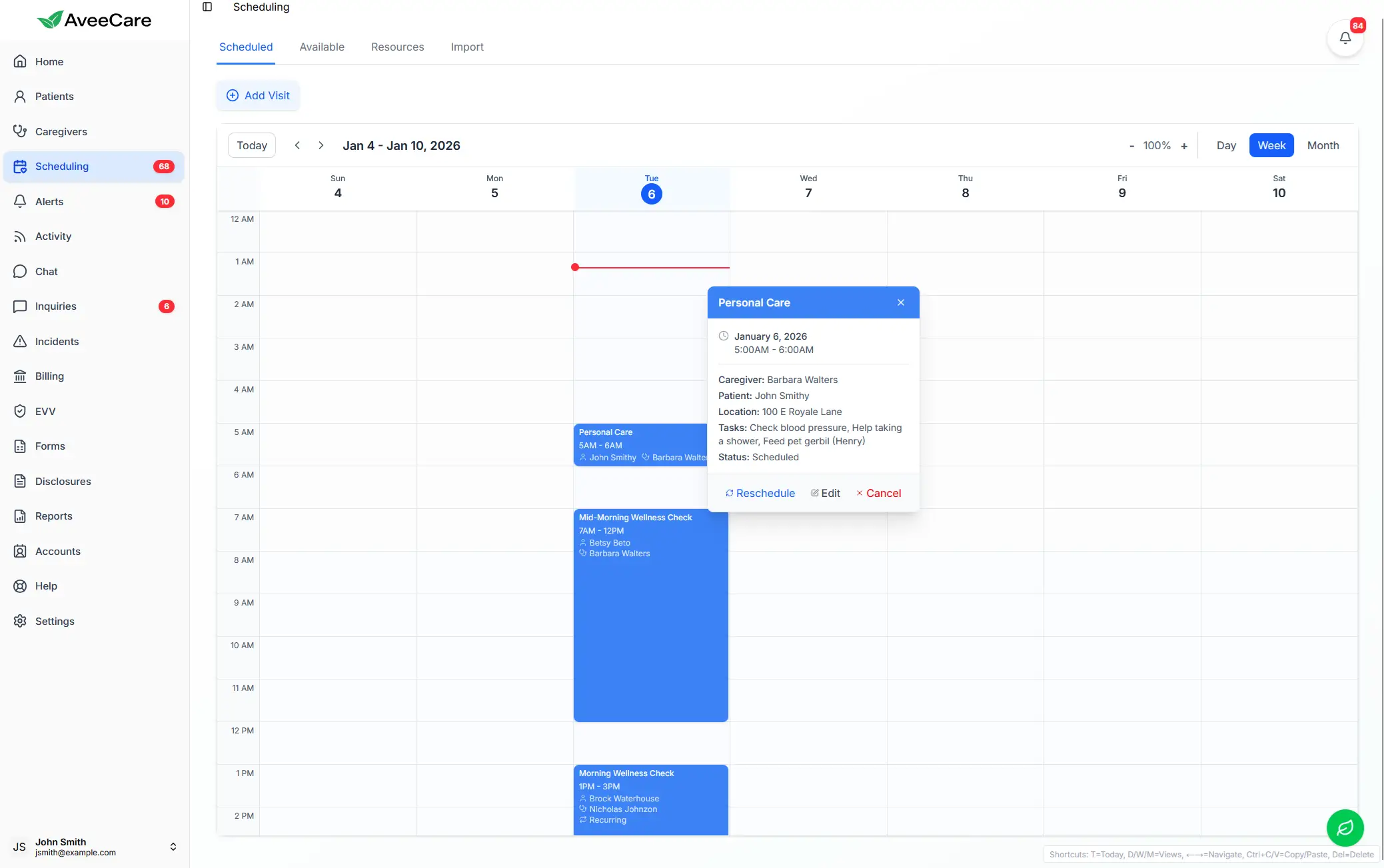
Manage caregiver schedules across South Carolina with AveeCare
Differentiation tip: South Carolina's diverse market rewards agencies that specialize. Consider focusing on military family care (TRICARE, veterans), affluent coastal retirees (Hilton Head, Charleston), or African American community outreach with culturally competent caregivers. Agencies that can serve multiple regions through technology-forward scheduling and real-time caregiver management have a significant edge in this geographically spread state.
11Marketing & Client Acquisition
How to advertise your home care business and attract clients across South Carolina
South Carolina's home care market is defined by distinct regional opportunities that each require tailored marketing approaches. The Charleston and Hilton Head coastal corridor attracts affluent retirees with strong private pay capacity. The Columbia Midlands anchored by Fort Jackson and the state capital offers military family and government employee demand. The Greenville-Spartanburg Upstate is the fastest-growing region with expanding retiree migration. And the Myrtle Beach Grand Strand combines seasonal tourism with permanent retiree communities. South Carolina's strong church culture, significant African American community, and growing military family networks create unique grassroots marketing channels not available in every state.
Regional Market Strategies
Charleston / Hilton Head (Affluent Coastal Retirees)
Target affluent retirees in Mount Pleasant, Daniel Island, Kiawah, Hilton Head, and Bluffton with premium positioning. These communities have strong private pay capacity and expect high-quality, personalized care. Invest in upscale marketing materials, sponsor country club and golf community events, and build relationships with luxury senior living communities. Google Ads targeting "home care Charleston SC" and "home care Hilton Head" command competitive CPCs but deliver high-value leads.
Myrtle Beach / Grand Strand (Seasonal & Retiree)
Myrtle Beach's market combines year-round retirees with seasonal visitors and snowbirds who may need temporary home care. Market to both permanent residents through local channels and seasonal visitors through digital advertising. Partner with Grand Strand health providers and senior communities. The area's lower cost of living compared to Hilton Head creates a different client profile with strong demand for affordable home care options.
Columbia / Midlands (State Capital & Military)
Columbia is the state capital and home to Fort Jackson, the Army's largest basic training installation. Market to military families seeking TRICARE-covered home care services, state government employees, and the University of South Carolina community. Build relationships with Fort Jackson family support programs and VA clinics in the Midlands. Digital marketing targeting "home care Columbia SC" is affordable compared to Charleston.
Greenville-Spartanburg / Upstate (Fastest-Growing)
The Upstate is South Carolina's fastest-growing region, attracting retirees from the Northeast who seek Blue Ridge Mountain foothills living at southern prices. Market to transplant retirees who are accustomed to higher service expectations. Partner with Prisma Health and Bon Secours St. Francis discharge planners. The region's manufacturing economy also creates workforce families who need elder care support.
Digital Marketing Strategies
Google Business Profile
Create separate Google Business Profiles for each metro area you serve (Charleston, Columbia, Greenville, Myrtle Beach). South Carolina's distinct regional markets mean local search optimization for each area is more effective than a single statewide profile. Optimize each profile with region-specific reviews, photos, and service descriptions.
Google Ads (Regional Targeting)
Run separate Google Ads campaigns for each South Carolina metro. Keywords like "home care Charleston SC," "in home care Columbia SC," and "home care Greenville SC" have moderate CPCs due to the state's lower market costs. Budget $600-1,500/month per metro area for competitive coverage. Coastal markets (Charleston, Hilton Head) will have higher CPCs than Columbia or the Upstate.
SEO & Local Content
Build city-specific landing pages for Charleston, Columbia, Greenville, Spartanburg, Myrtle Beach, Hilton Head, Rock Hill, and Beaufort. Create content about South Carolina-specific topics like DHEC registration requirements, SLED background checks, SCDHHS Medicaid programs, military family home care resources, and aging-in-place in the Lowcountry. Target long-tail keywords for each region.
Social Media (Facebook & Instagram)
Facebook is particularly effective in South Carolina for reaching adult children making care decisions for aging parents. Target by metro area and demographics. South Carolina's strong community orientation means Facebook groups for local neighborhoods, churches, and military installations can be valuable organic reach channels. Instagram works for showcasing your agency culture and caregiver quality.
Community Outreach & Grassroots Marketing
Military Family Outreach (Fort Jackson, Parris Island, Shaw AFB)
South Carolina's military installations create a concentrated population of families who need home care for aging relatives, injured veterans, and TRICARE-eligible dependents. Partner with base family support centers, military spouse employment programs, and veteran service organizations. Attend military community events, sponsor military appreciation activities, and ensure your marketing reaches military-adjacent communities in Columbia (Fort Jackson), Charleston (Joint Base), Sumter (Shaw AFB), and Beaufort (Parris Island).
African American Community Outreach
South Carolina has a significant African American population (approximately 27%), and culturally competent outreach is essential for serving this community effectively. Partner with historically Black churches, community organizations, the NAACP, fraternity and sorority alumni chapters, and cultural centers. Hire caregivers who reflect the communities you serve and provide cultural competency training. Health disparities in the African American community often mean higher demand for home care services, particularly for chronic condition management.
Faith Communities (Strong Church Culture)
South Carolina has one of the strongest church cultures in the nation, with churches serving as community centers for social support, health education, and eldercare coordination. Build relationships with senior ministries, church health fairs, and pastoral care programs across denominations. Present at church-based senior programs, sponsor church community events, and create referral partnerships with pastoral counselors who often guide families through care decisions. Both historically Black churches and established mainline congregations are important channels.
LGOA & AAA Relationships
Build relationships with the Lieutenant Governor's Office on Aging (LGOA) and your regional Area Agency on Aging (AAA). South Carolina has 10 AAA regions that coordinate aging services, Meals on Wheels, senior centers, and information and referral programs. Being known to your local AAA creates a steady flow of referrals from families searching for home care through official state channels. Participate in LGOA-coordinated events and SC Home Care Association activities.
Coastal Lifestyle Marketing
For agencies serving Hilton Head, Kiawah, Myrtle Beach, and other coastal communities, align your marketing with the coastal lifestyle that attracted retirees to South Carolina. Sponsor community events at beach clubs, retirement communities, and wellness centers. Emphasize how your home care services help retirees maintain their active coastal lifestyle while receiving the support they need. Use imagery and messaging that reflects the Lowcountry and Grand Strand aesthetic.
Healthcare Referral Relationships
South Carolina's health system landscape is dominated by a few major players across distinct regions. Building relationships with discharge planners at the right health systems for your target market is the highest-impact referral strategy available.
MUSC Health (Charleston & Statewide)
MUSC is South Carolina's academic medical center with a growing statewide network. Building relationships with MUSC discharge planners gives you access to the Charleston metro's most complex patient population, including post-surgical, chronic condition, and elderly patients transitioning to home care.
Prisma Health (Greenville & Columbia)
Prisma Health is the state's largest health system, covering both the Upstate (Greenville) and Midlands (Columbia). Their discharge planning teams handle the highest volume of home care referrals in the state. Build relationships at both their Greenville and Columbia campuses to maximize coverage across South Carolina's two largest inland metros.
Physician Offices & Geriatric Practices
Build referral relationships with geriatric practices, family medicine physicians, and internal medicine offices throughout your target South Carolina metros. In-person visits to local practices build trust quickly, especially in smaller communities and rural areas where personal relationships drive referrals. Military base physicians also refer TRICARE-eligible patients to community home care agencies.
Skilled Nursing & Rehab Facilities
South Carolina has numerous skilled nursing and rehabilitation facilities concentrated in metro areas. Build relationships with social workers and discharge coordinators for ongoing home care referrals from patients transitioning back to their homes. Focus on facilities near the military bases and coastal communities where the greatest concentration of home care demand exists.
Online Reputation Management
In South Carolina's community-oriented market, word-of-mouth and online reviews are closely connected. A strong online reputation in your target metro reinforces the trust built through church networks, community outreach, and professional referrals.
Google Reviews
Focus on building reviews in each metro you serve. Charleston, Columbia, and Greenville are distinct markets. Aim for 4.8+ ratings with detailed, authentic reviews from satisfied client families.
Caring.com & A Place for Mom
Directory profiles are valuable for South Carolina families researching home care. Premium profiles help you stand out in competitive coastal and metro markets.
BBB & Yelp
South Carolinians value trust and accountability. Maintain active BBB accreditation and Yelp profiles with professional responses to all feedback. BBB is particularly valued in traditional southern communities.
Marketing Channel Comparison
| Channel | Cost | Time to Results | Best For |
|---|---|---|---|
| Google Ads (Regional) | $$ | Immediate | Private pay leads in Charleston, Greenville, Columbia |
| SEO / Website | $ | 3-6 months | Long-term organic visibility per metro |
| Church & Faith Community Outreach | $ | 1-3 months | Trust-based private pay & community referrals |
| Military Family Programs | Free | 1-3 months | TRICARE-eligible & veteran referrals |
| LGOA & AAA Relationships | Free | 2-4 months | State-coordinated aging referrals |
| Hospital Referrals (MUSC/Prisma) | Free | 1-3 months | Post-acute & discharge referrals |
| SC Home Care Association | $ | Ongoing | Industry networking & credibility |
South Carolina marketing tip: The Palmetto State's distinct regional markets require tailored approaches. Coastal markets (Charleston, Hilton Head) respond to premium positioning and lifestyle-aligned messaging. Military communities (Fort Jackson, Beaufort, Shaw AFB) respond to TRICARE-specific messaging and veteran support. Faith-based outreach is uniquely effective in South Carolina due to the state's strong church culture. African American community engagement through historically Black churches and community organizations reaches a significant portion of the population. Join the SC Home Care Association for industry credibility, networking, and regulatory updates.
12Frequently Asked Questions
Common questions about starting a home care agency in South Carolina
It depends on the type of services you offer. Non-medical home care agencies in South Carolina must register as In-Home Care Providers under the SC In-Home Care Provider Registration Act, administered by DHEC (Department of Health and Environmental Control). Agencies offering skilled nursing or therapy services must obtain a Home Health Agency license from DHEC through the Bureau of Health Facilities Licensing. Both pathways require SLED (State Law Enforcement Division) background checks for owners and employees.
Starting a non-medical in-home care agency in South Carolina typically costs between $30,000 and $70,000. This covers the DHEC In-Home Care Provider registration, business formation with the SC Secretary of State, SLED background checks, insurance (workers' comp required for 4+ employees), marketing, office space, and 3 to 6 months of working capital. South Carolina's below-average cost of living keeps startup expenses lower than many states. A licensed Home Health Agency with skilled services costs $120,000 to $280,000 or more.
An In-Home Care Provider offers non-medical personal care services such as bathing, dressing, meal preparation, companionship, housekeeping, and transportation. These providers register under the SC In-Home Care Provider Registration Act through DHEC. A Home Health Agency offers skilled services including nursing care, physical therapy, occupational therapy, and speech therapy. Home Health Agencies must obtain a full DHEC license through the Bureau of Health Facilities Licensing, which involves a more rigorous application, on-site survey, a qualified clinical director, and compliance with extensive state and federal regulations.
South Carolina uses HHAeXchange as the state-designated Electronic Visit Verification (EVV) system. Under the 21st Century Cures Act, EVV is required for all Medicaid-funded personal care and home health services. South Carolina agencies providing Medicaid-funded services must use HHAeXchange to record visit start and end times, location, and services provided. The SC Department of Health and Human Services (SCDHHS) oversees EVV implementation in South Carolina.
South Carolina does not have a state minimum wage law, so the federal minimum wage of $7.25 per hour applies. However, to attract and retain quality caregivers, most home care agencies pay between $11 and $16 per hour for personal care aides and $14 to $22 per hour for home health aides and CNAs. Wages vary by region, with Charleston and Greenville-Spartanburg commanding higher rates due to stronger competition and higher cost of living. Workers' compensation is required for employers with 4 or more employees.
A non-medical in-home care agency in South Carolina typically takes 2 to 4 months to become operational, accounting for the DHEC In-Home Care Provider registration, SLED background checks, business formation with the SC Secretary of State, and insurance procurement. A licensed Home Health Agency takes 6 to 12 months or longer due to the more extensive DHEC application review, on-site survey, clinical staffing requirements, and potential Medicare certification timeline. South Carolina's business-friendly environment and growing population make it an attractive market for new home care agencies.
13Sources and Resources
Official South Carolina state agency links and resources
Ready to manage your South Carolina home care agency?
You do not need software on day one. But when you are ready, AveeCare starts at $6/client/month with no contracts, no mandatory demos, and a free trial. Scheduling, care plans, billing, caregiver management, real-time tracking, and alerts in one platform built for simplicity, designed to help South Carolina agencies manage multi-region operations from Charleston to Greenville and everywhere in between.
Disclaimer
This guide is for informational purposes only and does not constitute legal, financial, or professional advice. While we strive to keep this information accurate and up to date, South Carolina laws, regulations, fees, and requirements may change. Always verify current requirements directly with the relevant South Carolina state agencies before making business decisions. Consult with a qualified attorney and accountant in South Carolina before starting your home care business. AveeCare is not affiliated with DHEC, SCDHHS, the Lieutenant Governor's Office on Aging, or any South Carolina state agency. Published April 4, 2026.