How to Start a Home Care Agency in Pennsylvania
Your complete 2026 guide to launching a home care business in the Keystone State. Act 69 DOH licensure, three required background checks, Community HealthChoices Medicaid managed care, Sandata EVV, and two major metros with massive senior demand.
Published April 4, 2026 · 25 min read
TLDR — Pennsylvania at a Glance
Yes — DOH Home Health Agency license for skilled services (28 Pa. Code Ch. 601).
Yes — DOH Home Care Agency (HCA) license or Home Care Registry (HCR) registration for non-medical care (Act 69 of 2007).
PA Department of Health (DOH) — Division of Home Health
$35,000 – $80,000 (non-medical)
$100,000 – $250,000+ (home health)
12 – 24 weeks (non-medical) | 6 – 12 months (home health)
THREE required — Act 34 (PSP), Act 33 (ChildLine), Act 73 (FBI fingerprinting)
1Pennsylvania Market Overview
The 5th most populous state with two major metros, a large aging population, and 52 Area Agencies on Aging
Starting a home care agency in Pennsylvania means entering one of the largest and most diverse healthcare markets in the United States. With a population of approximately 13 million, Pennsylvania is the 5th most populous state and has one of the oldest populations in the country. The Keystone State features two major metropolitan areas on opposite ends — Philadelphia in the east and Pittsburgh in the west — connected by a vast rural center. This unique geography creates distinct market opportunities for a home care business in Pennsylvania, from dense urban markets to underserved rural communities. Pennsylvania's 52 Area Agencies on Aging form one of the largest AAA networks in the nation, creating an extensive referral infrastructure for home care agencies.
Pennsylvania home care demand is driven by exceptional demographics. Approximately 19% of residents are aged 65 or older, representing over 2.4 million potential clients — one of the highest concentrations in the country. The state has a flat income tax of just 3.07%, one of the lowest flat rates in the nation, making it attractive for business owners. However, Pennsylvania's local Earned Income Tax (EIT)varies by municipality from 1% to over 3%, and Philadelphia imposes a separate Wage Tax of approximately 3.75% on all wages earned in the city. Workers' compensation is required for all Pennsylvania employers. The state's Community HealthChoices (CHC) Medicaid managed care program provides structured LTSS services through three managed care organizations, creating clear pathways for Medicaid-funded home care. For a national overview of the startup process with interactive tools, see our complete guide to starting a home care agency and our state-by-state licensing requirements.
Regional Market Breakdown
Philadelphia Metro (Bucks, Chester, Delaware, Montgomery, Philadelphia Counties)
The Philadelphia metro is the largest market in Pennsylvania with over 4 million residents across the five-county region. Philadelphia itself has 1.6 million residents with extraordinary ethnic and cultural diversity including large African American, Hispanic, Asian, Russian, and Ukrainian communities. The city's neighborhoods from North Philadelphia to South Philadelphia to West Philadelphia each have distinct demographics and care needs. The Philadelphia suburbs of the Main Line, Bucks County, and Chester County have strong private-pay demographics. The Philadelphia Wage Tax (approximately 3.75%) adds a unique cost consideration. Competition is intense but demand is enormous.
Pittsburgh Metro (Allegheny, Westmoreland, Washington, Butler Counties)
The Pittsburgh metro is Pennsylvania's second-largest market with approximately 2.3 million residents. Pittsburgh is a major healthcare hub anchored by UPMC (University of Pittsburgh Medical Center) and Allegheny Health Network (AHN), two of the largest health systems in the nation. The Pittsburgh population skews older due to decades of out-migration of younger residents. Affluent suburbs like Mt. Lebanon, Fox Chapel, and Upper St. Clair have strong private-pay potential. Pittsburgh has a lower cost of living than Philadelphia. The healthcare ecosystem creates extensive referral opportunities through UPMC and AHN discharge departments.
Lehigh Valley & Central PA (Lehigh, Northampton, Berks, Dauphin, Lancaster Counties)
The Lehigh Valley (Allentown, Bethlehem, Easton) is one of Pennsylvania's fastest-growing regions with over 850,000 residents and an increasingly diverse population. Harrisburg, the state capital, anchors the central PA market. Lancaster County has a large senior population and strong community ties. This corridor offers moderate costs, less competition than Philadelphia or Pittsburgh, and growing demand as residents age. Tower Health, Lehigh Valley Health Network, and Penn State Health are key referral sources. The Hispanic population in Allentown exceeds 50%, creating significant demand for Spanish-language care services.
Northeast PA & Rural Central PA (Lackawanna, Luzerne, Erie, Centre Counties)
The Scranton/Wilkes-Barre market in northeastern PA has approximately 560,000 residents with an aging population and lower cost of living. Erie in the northwest has approximately 270,000 metro residents. Rural central PA, spanning counties from Clinton to Tioga to Potter, has some of the oldest demographics in the state with limited healthcare access. These markets offer less competition, lower operating costs, and significant unmet demand for home care services. Geisinger Health System is the dominant referral source across much of central and northeast PA. Faith communities and local organizations are critical referral channels in rural areas.
Why Pennsylvania for Home Care?

Planning your Pennsylvania home care agency startup
2Home Care Agency vs. Home Health Agency in Pennsylvania
Understanding Act 69 HCA/HCR licensing versus 28 Pa. Code Chapter 601 Home Health Agency licensing
Pennsylvania distinguishes between non-medical home care (personal care, companion care, homemaker services) and home health care (skilled nursing, physical therapy, occupational therapy, medical social work). Under Act 69 of 2007(35 P.S. 448.809.2), Pennsylvania requires DOH licensure for non-medical providers through two models: Home Care Agencies (HCA) that employ caregivers directly, and Home Care Registries (HCR) that refer independent contractors to clients. Skilled agencies are licensed as Home Health Agencies under 28 Pa. Code Chapter 601. Understanding these Pennsylvania home care licensing distinctions is critical when starting a home care agency in Pennsylvania.
Non-Medical Home Care (Act 69)
- Personal care (bathing, dressing, grooming, toileting)
- Companion care and social interaction
- Homemaker services (light housekeeping, laundry, meal prep)
- Transportation and errand assistance
- Medication reminders (non-administration)
- Activities of daily living (ADL) assistance
Pennsylvania requirement: Must obtain DOH Home Care Agency (HCA) license or Home Care Registry (HCR) registration under Act 69 of 2007. Three background checks (Act 34/33/73) required. HCA employs caregivers; HCR refers independent contractors. Faster to launch (12-24 weeks).
Home Health Care
- Skilled nursing (wound care, injections, IV therapy)
- Physical, occupational, and speech therapy
- Medical social work
- Home health aide services (under clinical supervision)
- Medication management and administration
- Chronic disease management
Pennsylvania requirement: Full DOH Home Health Agency license under 28 Pa. Code Chapter 601. Must have qualified administrator and director of nursing. CMS certification required for Medicare. Takes 6-12+ months.
Pennsylvania distinction — HCA vs. HCR: Act 69 creates two models for non-medical home care. A Home Care Agency (HCA) employs caregivers as W-2 employees and has greater control over care delivery, scheduling, and quality. A Home Care Registry (HCR) refers independent contractors to clients who then hire the workers directly. The HCA model is more common for agencies focused on quality control and building a brand. The HCR model has lower payroll obligations but less control over care delivery. Most new entrepreneurs starting a home care agency in Pennsylvania choose the HCA model.
3Pennsylvania Business Formation
Register with the PA Department of State, navigate the 3.07% flat tax plus local EIT, and understand Philadelphia Wage Tax
Forming a business entity in Pennsylvania is handled through the PA Department of State. An LLC (Limited Liability Company) is the recommended structure for most new home care agencies in Pennsylvania due to liability protection, tax flexibility, and simplicity. Pennsylvania has a flat personal income tax of 3.07%, one of the lowest flat rates in the nation. However, the local Earned Income Tax (EIT)varies by municipality from 1% to over 3%, and Philadelphia imposes a Wage Tax of approximately 3.75% on all wages earned in the city, making location planning critical for your home care business in Pennsylvania.
PA Department of State (DOS)
File a Certificate of Organization for your LLC with the PA Department of State online at dos.pa.gov. The filing fee is $125. Pennsylvania requires a registered office (not a registered agent like most states) with a PA street address where legal documents can be served. You can use your business address. Foreign (out-of-state) LLCs must file a Foreign Registration Statement. Pennsylvania requires an annual report for LLCs filed with the Department of State. Operating agreements are recommended but not required to be filed with the state.
PA Department of StatePA Tax Structure (3.07% Flat + Local EIT)
Pennsylvania has a flat personal income tax rate of 3.07%, which is one of the lowest in the nation and significantly lower than neighboring states like New York (up to 10.9%) and New Jersey (up to 10.75%). However, every municipality in PA levies a local Earned Income Tax (EIT) ranging from 1% to over 3%, collected by local tax collectors. Corporate Net Income Tax for C-corps is 8.99% (being phased down). Pass-through entities like LLCs report income on individual returns at the 3.07% flat rate. No sales tax applies to most home care services. PA does have a 6% sales tax on goods, with an additional 2% in Philadelphia (8% total) and 1% in Allegheny County (7% total).
Philadelphia Wage Tax & Business Taxes
If you operate in Philadelphia, be aware of the Philadelphia Wage Tax of approximately 3.75% on all wages earned in the city (lower rate for non-residents who work in the city). The Business Income & Receipts Tax (BIRT) applies to businesses operating in Philadelphia. The Net Profits Tax (NPT) applies to net income from businesses operating in Philadelphia. These Philadelphia-specific taxes add significant payroll costs compared to operating in the suburbs or other PA regions. Many agencies strategically locate just outside Philadelphia city limits to avoid the Wage Tax while still serving Philadelphia clients.
EIN, Department of Revenue & UC Registration
After forming your LLC, obtain a federal Employer Identification Number (EIN) from the IRS. Register with the PA Department of Revenue for state income tax withholding. Register with the PA Department of Labor & Industry for unemployment compensation (UC) tax. Register with your local municipality for EIT withholding and reporting. If in Philadelphia, register for the Wage Tax, BIRT, and NPT with the Philadelphia Department of Revenue. Open a dedicated business bank account. Pennsylvania's multi-layered tax structure (state + local EIT + potential Philadelphia taxes) requires careful payroll setup from day one.
PA Department of Revenue4Pennsylvania Home Care Licensing
Act 69 HCA/HCR licensing, 28 Pa. Code Ch. 601 Home Health Agency licensing, and three required background checks
Pennsylvania home care licensing is managed by the PA Department of Health (DOH)through its Division of Home Health. Under Act 69 of 2007, Pennsylvania requires licensure for non-medical Home Care Agencies (HCA) and registration for Home Care Registries (HCR). Home Health Agencies providing skilled services are licensed under 28 Pa. Code Chapter 601. A critical Pennsylvania requirement is the three separate background checks mandated by Acts 34, 33, and 73 for all direct care workers, which is more extensive than most states.
DOH Home Care Agency (HCA) License (Act 69)
Non-medical Home Care Agencies that employ caregivers directly must obtain an HCA license from PA DOH under Act 69 of 2007 (35 P.S. 448.809.2). The application involves submitting a comprehensive application to the Division of Home Health, demonstrating compliance with Act 69 requirements, passing an initial inspection/survey, meeting staffing and operational requirements, and establishing required policies and procedures including a consumer complaint process. The HCA license must be renewed annually. This is the most common model for new home care agencies in Pennsylvania.
PA Department of HealthDOH Home Care Registry (HCR) Registration (Act 69)
Home Care Registries refer independent contractors to clients rather than employing caregivers directly. HCRs must register with PA DOH under Act 69. The HCR model means the client technically employs the caregiver, and the registry acts as a referral service. HCRs still must ensure all referred workers complete the three required background checks (Acts 34, 33, 73). The HCR model has lower payroll overhead but provides less control over care quality and scheduling. Some agencies operate both an HCA and HCR to serve different client segments.
Three Required Background Checks (Acts 34, 33, 73)
Pennsylvania mandates THREE separate background checks, making it one of the most stringent states for caregiver screening. Act 34 requires a PA State Police (PSP) criminal background check (approximately $22, available online at epatch.pa.gov). Act 33 requires a ChildLine child abuse clearance through the PA Department of Human Services (approximately $13, available at compass.state.pa.us). Act 73 requires an FBI fingerprint-based federal criminal background check (approximately $22.60, processed through an approved vendor). All three must be completed before a worker can provide direct care. Clearances are valid for 60 months and must be renewed.
Home Health Agency License (28 Pa. Code Ch. 601)
Home Health Agencies providing skilled nursing, therapy, or other medical services must obtain a DOH license under 28 Pa. Code Chapter 601. This is a more extensive licensing process requiring a qualified administrator, a supervising physician, a director of nursing with appropriate clinical credentials, clinical policies and procedures, a quality assurance program, and clinical record-keeping systems. CMS certification is required for Medicare. The full process typically takes 6 to 12 months.
Important — all three background checks required: Pennsylvania is one of few states requiring three separate background checks for all direct care workers. Do not confuse this with states that only require one or two checks. You must obtain Act 34 (PSP criminal), Act 33 (ChildLine child abuse), and Act 73 (FBI fingerprint) clearances for every caregiver before they can provide care. Operating without complete clearances is a violation of Act 69 and can result in fines, license revocation, and criminal liability. Budget approximately $58 per worker for all three checks.
5Insurance & Workers' Compensation
Workers' comp required for all PA employers, liability coverage, bonding, and seasonal considerations
Insurance is essential when starting a home care agency in Pennsylvania. Workers' compensation is required for all employers in Pennsylvania with no exemptions for small businesses. Pennsylvania allows employers to obtain workers' comp through private insurance carriers or the State Workers' Insurance Fund (SWIF), which serves as the insurer of last resort for employers who cannot obtain coverage in the private market. Pennsylvania's seasonal weather creates specific risks: winter ice storms and snow can make caregiver travel hazardous, and summer heat waves are dangerous for elderly clients, requiring robust emergency preparedness.
Workers' Compensation (Required)
Pennsylvania requires workers' compensation coverage for all employers with virtually no small business exceptions. You can purchase workers' comp from any licensed private insurance carrier or through SWIF (State Workers' Insurance Fund) if unable to obtain private coverage. Premiums are based on your industry classification, payroll, and claims experience. Home care workers are classified under specific codes with rates reflecting in-home care risk profiles. The PA Workers' Compensation Act provides wage replacement and medical benefits for work-related injuries. Good safety programs and claims management can significantly reduce premiums.
General Liability Insurance
General liability insurance protects your agency against third-party claims of bodily injury, property damage, and personal/advertising injury. The standard coverage for Pennsylvania home care agencies is $1 million per occurrence and $2 million aggregate. Annual premiums typically range from $2,000 to $5,000 depending on agency size, service area, and carrier. Philadelphia agencies may pay slightly higher premiums due to higher claim costs and the litigation environment in Philadelphia County courts. Most referral sources and CHC-MCOs require proof of general liability coverage.
Professional Liability (E&O) Insurance
Professional liability insurance (errors and omissions) covers claims arising from negligence, errors, or omissions in care services. Claims can arise from missed visits, medication reminder errors, fall injuries, or improper care delivery. Annual premiums range from $1,500 to $4,000 for a new Pennsylvania agency. Many carriers bundle general and professional liability for home care agencies. Pennsylvania has no cap on non-economic damages in medical liability cases (though home care is not subject to the MCARE Act caps), making adequate coverage important.
Fidelity Bond, Auto & Weather Preparedness
A surety/fidelity bond protects clients against employee theft or dishonesty ($200 to $700 annually). Commercial auto insurance is needed if caregivers transport clients. Pennsylvania faces seasonal weather challenges: winter ice storms and heavy snow in the northern and western regions can make caregiver travel dangerous; summer heat waves create health risks for elderly clients. Your emergency plan should include winter driving safety protocols, heat emergency procedures, power outage contingencies (especially in rural areas), and backup communication systems. Business interruption insurance should cover weather-related disruptions.
6Staffing & Pennsylvania Workforce
Federal minimum wage, three background checks, local EIT considerations, and building your caregiver team
Building a reliable caregiver workforce is one of the most critical challenges for Pennsylvania home care agencies. Pennsylvania follows the federal minimum wage of $7.25 per hour, but no competitive agency pays this rate — market rates are substantially higher. The three required background checks (Acts 34, 33, 73) add both cost and time to the hiring process. Pennsylvania has a strong community college system and PA CareerLink workforce centers that provide recruitment assistance. The state's diverse population, particularly in Philadelphia and the Lehigh Valley, requires culturally competent staffing strategies for your home care agency in Pennsylvania.
Pennsylvania Home Care Wage Landscape (2026)
Despite the $7.25/hr state minimum, competitive home care agencies pay market rates well above this level. Competitive wages are essential for recruitment and retention in PA's tight labor market.
Wages & Compensation Strategy
Competitive market rates for home care aides vary significantly by region in Pennsylvania. In the Philadelphia metro, experienced caregivers earn $14 to $20 per hour, but the Philadelphia Wage Tax reduces take-home pay. Pittsburgh metro rates range from $13 to $18 per hour. Lehigh Valley and Harrisburg range from $12 to $16 per hour. Scranton/Wilkes-Barre and rural central PA range from $11 to $15 per hour. Benefits including flexible scheduling, paid training, health insurance contributions, mileage reimbursement, and referral bonuses help attract and retain quality caregivers. Consider geographic pay differentials across your service area.
Three Background Checks (Act 34/33/73)
Every direct care worker must complete all three Pennsylvania background checks before providing care. Act 34 (PSP criminal) is available online at epatch.pa.gov with results typically in minutes. Act 33 (ChildLine child abuse) is available online at compass.state.pa.us with results in 2 to 4 weeks. Act 73 (FBI fingerprint) requires visiting an approved fingerprinting vendor with results in 2 to 4 weeks. Total cost is approximately $58 per worker. All three clearances are valid for 60 months. Establish a streamlined onboarding process that initiates all three checks simultaneously to minimize hiring delays.
PA CareerLink & Community Colleges
Pennsylvania has over 60 PA CareerLink workforce centers providing free recruitment assistance, job posting services, and workforce development grants. The state has 14 community colleges offering CNA training and healthcare workforce programs, including Community College of Philadelphia, CCAC (Pittsburgh), Lehigh Carbon Community College, and HACC (Harrisburg). Partner with local community colleges to create caregiver recruitment pipelines. Attend career fairs, offer placement opportunities, and consider sponsoring CNA training for promising candidates. Penn State and Temple University also feed the healthcare workforce pipeline.
Local EIT & Payroll Complexity
Pennsylvania payroll is uniquely complex due to the multi-layered tax structure. State income tax is a flat 3.07%. Every municipality levies a local Earned Income Tax (EIT) ranging from 1% to over 3%. Philadelphia has its own Wage Tax (approximately 3.75%). If you have caregivers working in multiple municipalities, you must withhold the correct local EIT for each location. Some municipalities have reciprocal tax agreements. Use payroll software that handles PA local taxes properly. Consider a payroll service provider experienced with PA tax requirements. Factor in workers compensation premiums, unemployment compensation (UC) tax, and federal taxes.
Multicultural Workforce Recruitment
Pennsylvania has significant diversity, particularly in Philadelphia (large African American, Hispanic, Asian, Russian, and Ukrainian communities), the Lehigh Valley (Hispanic population exceeding 50% in Allentown), and Pittsburgh (growing African American and immigrant communities). Recruiting bilingual caregivers opens substantial market segments. Partner with cultural organizations, immigrant service agencies, churches, and community leaders. Create recruitment materials in Spanish, Russian, and other languages. Many immigrant community members have caregiving experience and are eager for stable employment with benefits.
Employee Classification & Handbook
Pennsylvania follows strict guidelines for classifying workers as employees versus independent contractors. Home Care Agencies (HCAs) must classify caregivers as W-2 employees. Home Care Registries (HCRs) refer independent contractors, but the classification must meet IRS and PA tests. Misclassification can result in back taxes, penalties, and significant legal liability. Your employee handbook should cover PA-specific requirements including workers compensation rights, EIT withholding, overtime rules, anti-discrimination protections, and the three background check requirements. Pennsylvania does not have a state-mandated paid family leave program.
7PA Medicaid (HealthChoices & CHC) & Medicare
DHS Medicaid enrollment, Community HealthChoices (CHC) MLTSS, HealthChoices managed care, Sandata EVV, and Medicare
Pennsylvania Medicaid is administered by the PA Department of Human Services (DHS). Pennsylvania's Medicaid program includes HealthChoices for general managed care and Community HealthChoices (CHC) for long-term services and supports (LTSS). CHC is Pennsylvania's MLTSS managed care program that serves individuals who are dually eligible for Medicare and Medicaid, as well as those who need LTSS. CHC is administered through three managed care organizations across five zones covering the entire state. Pennsylvania uses Sandata for Electronic Visit Verification (EVV). Understanding DHS enrollment, CHC-MCO contracting, and the 52 AAA network is critical for building a diversified payer mix for your Pennsylvania home care agency.
PA Department of Human Services (DHS)
To accept Pennsylvania Medicaid, enroll as a provider through the PA Department of Human Services (DHS). DHS administers all Medicaid programs in Pennsylvania, including HealthChoices (general managed care) and Community HealthChoices (LTSS managed care). The enrollment process involves submitting a provider application through DHS, meeting applicable DOH licensing requirements under Act 69 or 28 Pa. Code Ch. 601, and completing credentialing with the CHC managed care organizations serving your geographic zone. DHS oversees EVV compliance, waiver programs, and overall Medicaid policy in Pennsylvania.
PA Department of Human ServicesCommunity HealthChoices (CHC) MLTSS
Community HealthChoices (CHC) is Pennsylvania's managed long-term services and supports (MLTSS) program. CHC covers individuals who are dually eligible for Medicare and Medicaid, those receiving LTSS, and those in nursing facilities who may be appropriate for community-based care. CHC is delivered through three managed care organizations across five geographic zones covering the entire state. To serve CHC participants, you must join the provider network of the CHC-MCOs in your service area. Each MCO has its own credentialing process and provider directory. CHC replaced the older fee-for-service waiver model.
PA Department of Aging (PDA) & 52 AAAs
The PA Department of Aging (PDA) oversees aging services and coordinates with Pennsylvania's 52 Area Agencies on Aging (AAAs), one of the largest AAA networks in the nation. AAAs assess eligibility for LTSS, develop service plans, administer the PACE/PACENET pharmaceutical assistance programs, and connect seniors with home care, nutrition, transportation, and support services. Building strong relationships with your local AAA is one of the most effective ways to access publicly funded clients. AAA staff are key gatekeepers who connect seniors with home care providers. Each AAA covers a specific county or multi-county region.
PA Department of AgingPA HCBS Waiver Programs
Pennsylvania operates several HCBS waiver programs serving different populations. The Aging Waiver provides home and community-based services for adults aged 60+ as an alternative to nursing facility care. The Independence Waiver (formerly Attendant Care) serves adults aged 18-59 with physical disabilities. The OBRA Waiver serves individuals with intellectual disabilities. The COMMCARE Waiver serves individuals with traumatic brain injuries. These waivers are now coordinated through the CHC-MCO structure. Understanding which waivers your target population qualifies for helps you position your services and contract with the right MCOs.
Sandata EVV System
Pennsylvania uses Sandata for its Electronic Visit Verification (EVV) system. The PA Department of Human Services oversees EVV compliance for Medicaid personal care and home health services under the 21st Century Cures Act. Providers delivering Medicaid-funded services through Community HealthChoices (CHC) managed care organizations must use Sandata or a compatible third-party EVV vendor that integrates with the state aggregator. EVV captures visit start/end times, location, services provided, and caregiver identity. AveeCare supports EVV integration for Pennsylvania agencies.
Medicare in Pennsylvania
With over 2.4 million Pennsylvania residents aged 65+, the Medicare-eligible population is one of the largest in the nation. Medicare home health agencies must hold a DOH Home Health Agency license under 28 Pa. Code Ch. 601 and CMS certification. Rural central PA and many smaller communities are significantly underserved for Medicare home health services, creating opportunity for certified agencies. Medicare reimbursement under PDGM provides meaningful revenue. The Philadelphia and Pittsburgh metros have the highest concentration of Medicare-eligible residents, but competition is also greatest in these markets.
Payer mix strategy: Pennsylvania offers a highly diversified payer mix. Private pay is strong in affluent Philadelphia suburbs (Main Line, Bucks County), Pittsburgh suburbs (Mt. Lebanon, Fox Chapel), and Lehigh Valley communities. CHC through the three MCOs provides structured Medicaid LTSS volume. The 52 AAAs are powerful referral pipelines for publicly funded services. Medicare certification opens access to 2.4 million+ eligible residents. Long-term care insurance is common among PA's older professional population. A balanced Pennsylvania payer portfolio across private pay, CHC-MCOs, AAA referrals, and potentially Medicare is critical for long-term stability of your home care agency.
8Startup Cost Estimator
Estimated costs with interactive Philadelphia/Pittsburgh metro vs. rest of PA comparison
Select Your Region
Philadelphia and Pittsburgh metro costs are approximately 15% above base estimates due to higher rent, wages, competition, and Philadelphia Wage Tax.
Business Formation
Filing Certificate of Organization with PA DOS online
PA requires a registered office (not agent); you can use your business address
Free registration for state income tax withholding and sales tax exemption
Philadelphia Business Income & Receipts Tax or local municipality permits
Attorney review, CPA setup for PA tax compliance (3.07% flat + local EIT) and business planning
Licensing & Compliance
Required for non-medical home care agencies through PA DOH Division of Home Health
Required for agencies providing skilled nursing/therapy under 28 Pa. Code Ch. 601
PSP criminal ($22), ChildLine child abuse ($13), FBI fingerprint ($22.60) per person
Survey prep, policies, consulting (if applicable)
Insurance (Annual)
$1M per occurrence / $2M aggregate
Errors and omissions coverage for home care services
Required for all PA employers; private carriers or State Workers' Insurance Fund (SWIF)
Employee dishonesty coverage; builds client trust
Office & Equipment
Philadelphia and Pittsburgh metros higher; Lehigh Valley, Harrisburg moderate; rural PA affordable
Laptops, smartphones, scheduling software, internet
Desk, chairs, printer, supplies
Marketing & Initial Growth
Professional site with local SEO for Philadelphia, Pittsburgh, and PA markets
Google Ads, social media, multicultural outreach, community events, faith community engagement
Brochures, flyers, community event materials
Working Capital (3-6 Months)
Competitive wages ($12-$20/hr market rate), payroll taxes, workers comp
Rent, utilities, software, fuel, insurance premiums
Estimated Total (Philly/Pittsburgh Metro)
Non-medical Home Care Agency under Act 69 (add $15K-$40K for DOH Home Health Agency licensing)
These estimates are for a non-medical Home Care Agency (HCA) licensed under Act 69 through PA DOH. Philadelphia metro costs include the Wage Tax (approximately 3.75%), higher rent, and marketing expenses. Pittsburgh metro costs are moderate. Lehigh Valley, Harrisburg, Scranton/Wilkes-Barre, Erie, and rural central PA are more affordable across most categories. Pennsylvania's flat 3.07% income tax keeps business taxes competitive compared to neighboring states. The three required background checks (approximately $58 per worker) are a unique PA cost to budget for all new hires. All estimates include initial setup and the first 3 to 6 months of operations.
9Compliance Checklist
Track your progress across all Pennsylvania requirements
Business Formation
0/8Licensing
0/9Insurance
0/4Staffing
0/6Medicaid & Medicare
0/4Operations
0/5Marketing
0/710Building Your Referral Network
Key referral sources including Penn Medicine, UPMC, Jefferson Health, Geisinger, AHN, Tower Health, PDA, and 52 AAAs
Pennsylvania's healthcare landscape is anchored by some of the largest and most prestigious health systems in the nation. Building strong relationships with hospital discharge planners, physicians, PA Department of Aging (PDA) representatives, local Area Agencies on Aging (52 AAAs), CHC-MCO care coordinators, and the Pennsylvania Homecare Association (PHA) is essential for sustained growth when starting a home care agency in Pennsylvania.
Penn Medicine (University of Pennsylvania Health System)
Penn Medicine is one of the nation's premier academic health systems, operating the Hospital of the University of Pennsylvania, Penn Presbyterian Medical Center, Pennsylvania Hospital, and multiple community hospitals across the Philadelphia region. Penn Medicine's patient discharges from complex medical, surgical, oncology, and geriatric care create consistent demand for home care follow-up. Building relationships with Penn Medicine discharge planners, social workers, and specialty clinic staff opens high-volume referral channels in the Philadelphia metro.
UPMC (University of Pittsburgh Medical Center)
UPMC is one of the largest integrated health systems in the United States, operating over 40 hospitals across western PA including UPMC Presbyterian, UPMC Shadyside, UPMC Magee-Womens Hospital, and UPMC Hamot (Erie). UPMC also operates its own health insurance plan. The UPMC system generates enormous volumes of patient discharges needing home care services across western PA. Connect with their care coordination teams, discharge planners, and post-acute care managers. UPMC is also a CHC-MCO through UPMC Community HealthChoices, making provider network participation essential.
Jefferson Health (Thomas Jefferson University Hospitals)
Jefferson Health is a major Philadelphia-area health system operating Thomas Jefferson University Hospital, Jefferson Abington Hospital, Jefferson Einstein (formerly Einstein Healthcare Network), and multiple community hospitals. Jefferson's extensive network across the Philadelphia metro and into the surrounding counties generates high volumes of discharges needing home care. Jefferson Einstein serves diverse North Philadelphia and northeast Philadelphia communities. Building relationships with Jefferson discharge planners provides a steady stream of referrals from one of Philadelphia's largest health systems.
Geisinger Health System
Geisinger is the dominant health system across central and northeast Pennsylvania, operating Geisinger Medical Center (Danville), Geisinger Wyoming Valley Medical Center, Geisinger Community Medical Center (Scranton), and multiple community hospitals. Geisinger also operates the Geisinger Health Plan, an integrated insurance product. In rural central PA, Geisinger is often the only major healthcare provider, making discharge planner relationships critical for home care referrals. Geisinger serves some of the oldest and most underserved populations in PA.
PA Department of Aging (PDA) & 52 AAAs
The PA Department of Aging (PDA) coordinates with Pennsylvania's 52 Area Agencies on Aging (AAAs), one of the largest AAA networks in the nation. Each AAA covers a specific county or multi-county region and serves as a critical gateway for publicly funded home care services. AAA staff assess eligibility for LTSS, develop service plans, and connect seniors with home care providers. Building strong relationships with your local AAA is one of the most effective strategies for sustained client acquisition. The 52 AAAs collectively serve over 2.4 million Pennsylvanians aged 60+. PDA also administers the PACE/PACENET pharmaceutical assistance programs.
PA Department of AgingPennsylvania Homecare Association (PHA)
The Pennsylvania Homecare Association (PHA) is the professional association for home care and hospice providers in Pennsylvania. Membership provides networking opportunities, legislative advocacy in Harrisburg, education programs, regulatory updates, and industry connections. PHA conferences and events bring together providers, referral sources, CHC-MCO representatives, vendors, and state regulators. Active PHA membership signals professionalism and commitment to the Pennsylvania home care industry. PHA also provides guidance on Act 69 compliance, CHC-MCO contracting, and PA home care best practices.
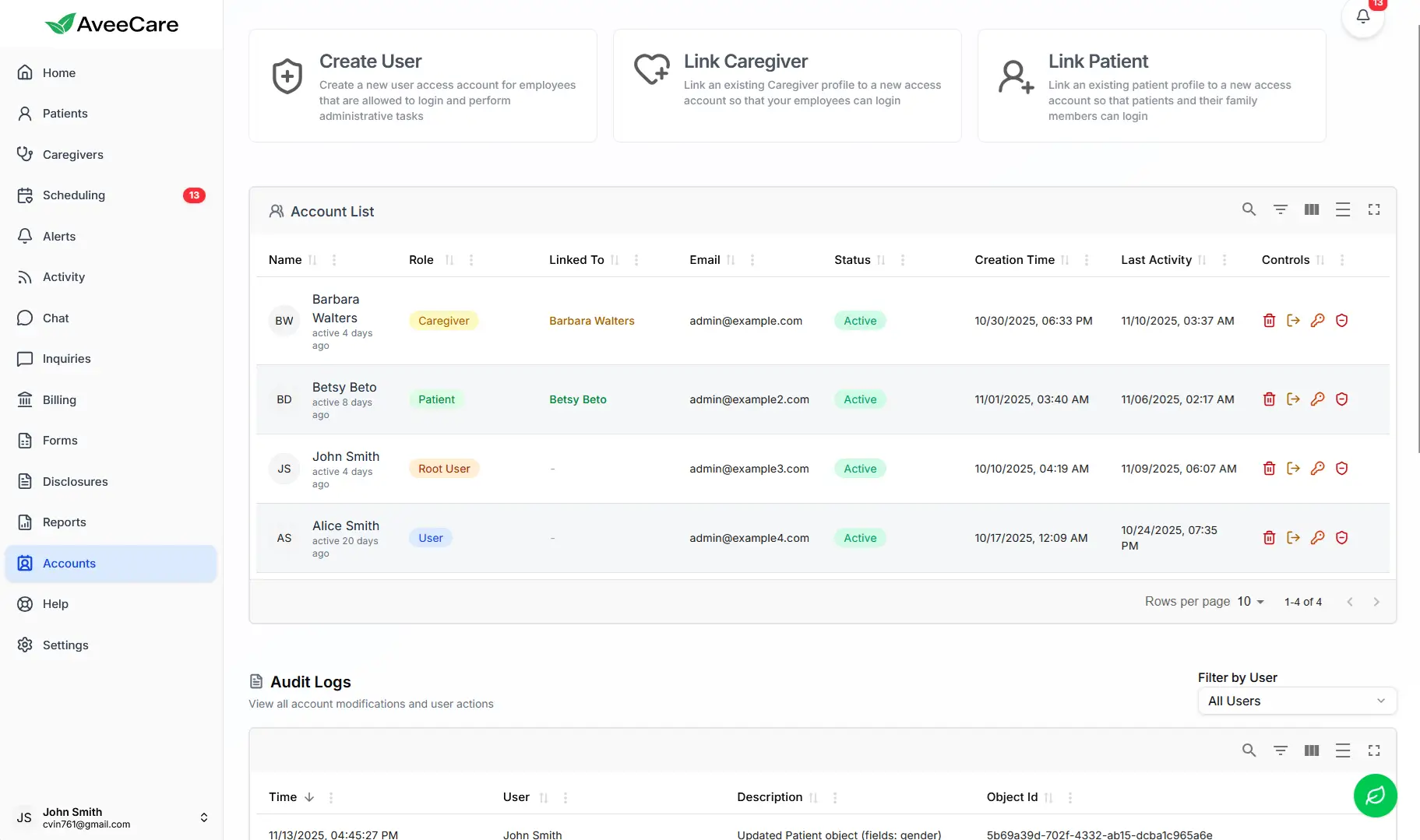
Manage caregiver and patient access securely across your Pennsylvania home care agency with AveeCare
Referral tip: Pennsylvania's 52 AAAs are your most powerful referral pipeline. Unlike states with fewer AAAs, PA's extensive network means there is a local AAA office close to every community in the state. Invest time visiting your local AAA, attending their community events, and building personal relationships with case managers and intake coordinators. AAA referrals are especially valuable because they often come with pre-authorized service plans and funding through CHC-MCOs. Additionally, getting listed in CHC-MCO provider directories gives your agency visibility to care coordinators who actively match participants with home care providers.
11Marketing & Client Acquisition
Philadelphia diversity, Pittsburgh healthcare hub, Lehigh Valley growth, rural PA community outreach, faith communities, PHA networking, 52 AAAs, CHC-MCO directories, and digital strategies
Marketing a home care agency in Pennsylvania requires understanding the distinct dynamics of Philadelphia, Pittsburgh, the Lehigh Valley, and rural central PA. Philadelphiais the largest and most diverse market with significant African American, Hispanic, Asian, Russian, and Ukrainian communities requiring multicultural outreach. Pittsburghis a major healthcare hub where UPMC referrals are essential. Lehigh Valleyis rapidly growing with a majority-Hispanic population in Allentown. Rural central PA relies on community networks, faith communities, and Geisinger relationships. Pennsylvania's 52 AAAs and CHC-MCO provider directoriesare unique marketing channels not available in most states.
Philadelphia Metro Diverse Marketing
Philadelphia is one of the most diverse cities in the nation. The African American community represents approximately 42% of the city's population and is the largest demographic group. The Hispanic community is growing rapidly, concentrated in North Philadelphia and the northeast. Asian communities (Chinese, Vietnamese, Korean, Indian) are concentrated in South Philadelphia and the northeast. Russian and Ukrainian communities are established in the northeast and suburbs. Recruit bilingual caregivers and create marketing materials in Spanish, Mandarin, Vietnamese, and Russian. Partner with cultural organizations, community health centers, and ethnic media outlets. Each community has distinct trust-building requirements.
Pittsburgh Healthcare Hub & UPMC Referrals
Pittsburgh is defined by its massive healthcare industry. UPMC alone employs over 90,000 people and operates the largest integrated delivery and financing system in western PA. Allegheny Health Network (AHN) is the second major system. Marketing in Pittsburgh means positioning your agency as a reliable post-acute care partner for these health systems. Develop structured referral programs with UPMC and AHN discharge planners. Track referral sources meticulously. Pittsburgh's neighborhoods (Squirrel Hill, Shadyside, Mt. Lebanon) have distinct demographics. The African American community in the Hill District, East Liberty, and Homewood needs culturally competent outreach.
Lehigh Valley Growth Market
The Lehigh Valley (Allentown, Bethlehem, Easton) is one of PA's fastest-growing regions. Allentown's Hispanic population exceeds 50%, making Spanish-language marketing essential. Bethlehem has a mix of older industrial-era residents and younger families. Lehigh Valley Health Network and Tower Health (formerly St. Luke's) are key referral sources. The region offers less competition than Philadelphia or Pittsburgh with strong demographic growth. Partner with Latino community organizations, local churches, and the Hispanic Chamber of Commerce. Google Ads with Spanish-language campaigns and bilingual Google Business Profiles capture significant search demand in this market.
Rural Central PA Community Outreach
Rural central Pennsylvania, from the northern tier (Tioga, Potter counties) through the coal regions (Schuylkill, Luzerne) and into the agricultural heartland (Clinton, Centre, Union counties), has some of the oldest demographics and greatest unmet home care needs in the state. Marketing here is fundamentally different from urban areas. Community trust, word-of-mouth, and personal relationships drive client acquisition. Partner with Geisinger (the dominant health system), local churches, volunteer fire companies, community centers, Grange halls, and senior centers. Local newspaper advertising remains effective. The low competition and minimal operating costs offset lower billing rates.
Faith Communities & Church Networks
Pennsylvania has deep religious roots across all denominations. Catholic parishes, Protestant churches, Jewish congregations, Orthodox churches (Russian, Ukrainian, Greek), and mosques all serve aging congregants who may need home care. Faith-based referrals carry inherent trust. Offer to present at church groups, senior ministry meetings, and parish nurse programs. Many churches have bulletin boards, newsletters, and announcement slots where you can share information. Catholic Charities, Lutheran Social Ministries, and Jewish Family Service agencies are formal referral sources. Pittsburgh's strong Catholic tradition and Philadelphia's diverse faith communities each offer unique opportunities.
Pennsylvania Homecare Association (PHA) Networking
The Pennsylvania Homecare Association hosts conferences, educational events, and networking opportunities throughout the year. These events bring together home care providers, referral sources, CHC-MCO representatives, vendors, state legislators, and regulators. Attend PHA events to build professional reputation, receive continuing education, and create referral relationships. PHA also provides legislative advocacy in Harrisburg and keeps members informed about DOH regulatory changes, Act 69 updates, and CHC-MCO policy developments. Active PHA membership demonstrates professionalism and commitment to the Pennsylvania home care industry.
52 AAAs as Referral Pipeline
Pennsylvania's 52 Area Agencies on Aging are your single most powerful marketing channel. Each AAA serves a specific county or multi-county region and acts as the gateway for publicly funded aging services. AAA intake coordinators and case managers connect hundreds of seniors with home care providers every month. To maximize AAA referrals, visit your local AAA office regularly, attend their community events and health fairs, participate in their provider fairs, and ensure your agency is listed in their provider directories. Many AAAs host monthly or quarterly provider meetings where you can present your services. Consistent presence and reliability build the trust that generates ongoing referrals.
CHC-MCO Provider Directories
Community HealthChoices (CHC) managed care organizations maintain provider directories that care coordinators use to match participants with home care agencies. The three CHC-MCOs (AmeriHealth Caritas, PA Health & Wellness, and UPMC Community HealthChoices) each have online directories. Getting listed and maintaining an active presence in these directories is essential for Medicaid-funded client acquisition. Complete the credentialing process for all CHC-MCOs in your service zone. Respond quickly to referrals from CHC care coordinators, as responsiveness directly impacts future referral volume.
Digital Marketing for Pennsylvania
Digital marketing should be tailored to your Pennsylvania market. For Philadelphia, invest in Google Ads with neighborhood-level targeting, Google Business Profile optimization, and aggressive review collection. For Pittsburgh, target UPMC and AHN service areas. For the Lehigh Valley, add Spanish-language Google Ads and bilingual content. For rural PA, Facebook is the dominant platform. Pennsylvania's older population uses Google and Facebook heavily. Invest in quality website content, client testimonials, and transparent pricing. Nextdoor is effective in suburban communities. LinkedIn connects you with professional families seeking care for aging parents.
Hospital Referral Development Strategy
Develop a structured hospital referral program targeting Pennsylvania's major health systems. Create professional leave-behind materials specific to each system. Schedule introductory meetings with discharge planners at Penn Medicine, Jefferson Health, UPMC, AHN, Geisinger, Tower Health, Lehigh Valley Health Network, and WellSpan Health. Follow up on every referral with a care report back to the referring provider. Focus on high-volume departments: orthopedics, cardiology, pulmonology, oncology, and geriatrics. Track referral sources in your software to identify which relationships generate the most clients and focus your efforts accordingly.
12Frequently Asked Questions
Common questions about starting a home care agency in Pennsylvania
Yes, Pennsylvania requires licensure for both medical and non-medical home care providers through the PA Department of Health (DOH). Non-medical agencies must obtain a Home Care Agency (HCA) license or register as a Home Care Registry (HCR) under Act 69 of 2007 (35 P.S. 448.809.2). A Home Care Agency (HCA) employs caregivers directly, while a Home Care Registry (HCR) refers independent contractors. Home Health Agencies providing skilled nursing and therapy services are licensed under 28 Pa. Code Chapter 601. Pennsylvania licenses non-medical home care, so you cannot operate without DOH approval. Begin the DOH application process early as review can take several months.
Starting a non-medical Home Care Agency (HCA) in Pennsylvania typically costs between $35,000 and $80,000. This includes business registration with the PA Department of State, DOH Home Care Agency licensing under Act 69, insurance including workers compensation, three required background checks (Act 34, Act 33, Act 73) for all staff, marketing, office space, and 3 to 6 months of working capital. Philadelphia costs are higher due to the Philadelphia Wage Tax (approximately 3.75%), elevated rent, and intense competition. Pittsburgh metro costs are moderate. A Home Health Agency with skilled nursing costs $100,000 to $250,000 or more due to DOH licensing, clinical staffing, and Medicare certification.
Pennsylvania requires THREE separate background checks, which is more extensive than most states. Act 34 requires a Pennsylvania State Police (PSP) criminal background check. Act 33 requires a ChildLine child abuse clearance through the PA Department of Human Services. Act 73 requires an FBI fingerprint-based federal criminal background check processed through the PA Department of Human Services. All three must be completed before a worker can provide direct care. Costs are approximately $22 for the PSP check, $13 for the ChildLine check, and $22.60 for the FBI fingerprint check. Results are typically available within 2 to 4 weeks. These clearances must be renewed every 60 months.
Pennsylvania follows the federal minimum wage of $7.25 per hour, as the state minimum wage matches the federal level. However, no competitive home care agency pays the minimum wage. In the Philadelphia metro, experienced caregivers earn $14 to $20 per hour. Pittsburgh metro rates range from $13 to $18 per hour. Lehigh Valley (Allentown, Bethlehem, Easton) ranges from $12 to $16 per hour. Harrisburg and Scranton/Wilkes-Barre range from $12 to $15 per hour. Rural central PA may range from $11 to $15 per hour. Legislative efforts to raise the PA minimum wage are ongoing but have not passed as of 2026.
Pennsylvania uses Sandata for its Electronic Visit Verification (EVV) system. The PA Department of Human Services (DHS) oversees EVV compliance for Medicaid personal care and home health services under the 21st Century Cures Act. Providers delivering Medicaid-funded services through Community HealthChoices (CHC) managed care organizations must use Sandata or a compatible third-party EVV vendor that integrates with the state aggregator. AveeCare supports EVV integration for Pennsylvania agencies.
Starting a non-medical Home Care Agency (HCA) in Pennsylvania typically takes 12 to 24 weeks, accounting for business registration with the PA Department of State, DOH Home Care Agency license application and review under Act 69, completion of three background checks (Act 34, Act 33, Act 73) for all owners and initial staff, workers compensation enrollment, insurance procurement, and initial hiring. A Home Health Agency providing skilled services takes 6 to 12 months or longer due to the more extensive DOH licensing process under 28 Pa. Code Chapter 601 and potential Medicare certification through CMS.
13Sources and Resources
Official Pennsylvania state agency links and resources
Ready to manage your Pennsylvania home care agency?
You do not need software on day one. But when you are ready, AveeCare starts at $6/client/month with no contracts, no mandatory demos, and a free trial. Scheduling, care plans, billing, caregiver management, real-time tracking, and alerts in one platform built for simplicity. Manage your Pennsylvania home care agency from Philadelphia to Pittsburgh and every Keystone State community in between.
Disclaimer
This guide is for informational purposes only and does not constitute legal, financial, or professional advice. While we strive to keep this information accurate and up to date, Pennsylvania laws, regulations, fees, and requirements may change. Always verify current requirements directly with the relevant Pennsylvania state agencies before making business decisions. Consult with a qualified attorney and accountant in Pennsylvania before starting your home care business. AveeCare is not affiliated with the PA Department of Health, the PA Department of State, the PA Department of Human Services, the PA Department of Aging, or any Pennsylvania state agency. Published April 4, 2026.