How to Start a Home Care Agency in Oklahoma
Your complete 2026 guide to launching a home care business in the Sooner State. OSDH dual licensing, 39 tribal nation health partnerships, SoonerCare Medicaid, HHAeXchange EVV, and a low-cost market with enormous unmet demand.
Published April 4, 2026 · 25 min read
TLDR — Oklahoma at a Glance
Yes — OSDH Home Health Agency license for skilled services (OAC 310:660).
Yes — OSDH Home Care Agency license for non-medical care (OAC 310:662).
Oklahoma State Department of Health (OSDH) — Protective Health Services, Medical Facilities Division
$25,000 – $65,000 (non-medical)
$100,000 – $250,000+ (home health)
10 – 18 weeks (non-medical) | 4 – 8 months (home health)
39 tribal nations — cost of living well below national average, large military population, growing senior demographic, oil and gas economy
1Oklahoma Market Overview
A fast-growing market with tribal partnerships, military families, and a cost of living well below the national average
Starting a home care agency in Oklahoma means entering a rapidly growing and uniquely diverse healthcare market. With a population of approximately 4.0 million, Oklahoma offers a compelling combination of affordable startup costs, a large and growing senior population, 39 sovereign tribal nations with their own health programs, major military installations, and a cost of living well below the national average. Whether you are launching in Oklahoma City (the state capital and largest metro), the oil-capital Tulsa, the college town of Norman, the suburb of Broken Arrow, or the military hub of Lawton, the Sooner State provides a highly accessible market for a home care business in Oklahoma.
Oklahoma home care demand is driven by strong demographics and unique market dynamics. Approximately 16% of residents are aged 65 or older, representing over 640,000 potential clients, and this percentage is growing as the state ages. Oklahoma has a significant Native American population of approximately 13%, with 39 tribal nations headquartered in the state. Many tribes operate their own health programs and contract with outside home care providers to supplement services for tribal elders. Oklahoma's military installations at Tinker Air Force Base, Fort Sill, Altus AFB, and Vance AFB create demand from military families and TRICARE-covered retirees. The state has no franchise tax (repealed), a progressive income tax of 0.25% to 4.75%, and a cost of living well below average, keeping operating expenses manageable for home care agencies across Oklahoma. For a national overview of the startup process with interactive tools, see our complete guide to starting a home care agency and our state-by-state licensing requirements.
Regional Market Breakdown
Oklahoma City Metro (Oklahoma, Cleveland, Canadian, Comanche Counties)
The Oklahoma City metro is the largest in the state with over 1.4 million residents and growing rapidly. OKC anchors the central Oklahoma market with major health systems including OU Health (University of Oklahoma Medical Center), INTEGRIS (now SSM Health), Mercy, and Oklahoma City VA Medical Center. The north side has significant Hispanic and Vietnamese communities. Edmond, Norman, and Moore in the southern suburbs have strong private-pay demographics. Oklahoma City is the hub for state government employment and Tinker AFB, the largest single-site employer in Oklahoma.
Tulsa Metro (Tulsa, Rogers, Wagoner, Creek Counties)
The Tulsa metro is the second largest market with approximately 1.0 million residents. Tulsa is traditionally the oil capital and has a diverse economy anchored by energy, aerospace, and healthcare. Saint Francis Health System (now Ascension) and Hillcrest are the dominant health systems. Broken Arrow, the largest Tulsa suburb, is one of the fastest-growing cities in Oklahoma. Tulsa has a significant Native American population and is home to several tribal headquarters. The north Tulsa African American community and south Tulsa Hispanic communities require culturally competent care.
Lawton/Southwest Oklahoma (Comanche, Cotton, Tillman Counties)
Lawton is Oklahoma's fifth-largest city and home to Fort Sill, a major Army installation that drives the local economy. The military population creates demand for home care services for military families, retirees, and veterans with TRICARE coverage. Comanche County Memorial Hospital is the primary referral source. Southwest Oklahoma has significant Comanche, Kiowa, and Apache tribal populations. The region is rural outside of Lawton with limited home care providers, creating opportunity for agencies willing to serve wide geographic areas.
Rural & Western Oklahoma (77 Counties Beyond the Metros)
Rural Oklahoma encompasses vast areas of western, northwestern, and southeastern Oklahoma with sparse populations and limited healthcare access. Many rural counties have among the oldest populations and highest poverty rates in the state. Home care providers are scarce in these areas, creating enormous unmet demand. Cherokee Nation, Chickasaw Nation, Choctaw Nation, and Muscogee (Creek) Nation operate health facilities throughout eastern and southern Oklahoma that can be referral partners. Oil and gas industry families in the western Oklahoma panhandle also need home care services.
Why Oklahoma for Home Care?

Building community connections for your Oklahoma home care agency
2Non-Medical Home Care vs. Home Health in Oklahoma
Understanding the two OSDH license types and their distinct regulatory requirements
Oklahoma distinguishes between non-medical home care (personal care, companion care, homemaker services) and home health care (skilled nursing, physical therapy, occupational therapy, medical social work). Unlike some states that do not regulate non-medical home care at all, Oklahoma requires OSDH licensure for both types. Non-medical agencies are licensed as Home Care Agencies under OAC 310:662, while skilled agencies are licensed as Home Health Agencies under OAC 310:660. Understanding these licensing distinctions is critical for starting a home care agency in Oklahoma.
Non-Medical Home Care
- Personal care (bathing, dressing, grooming, toileting)
- Companion care and social interaction
- Homemaker services (light housekeeping, laundry, meal prep)
- Transportation and errand assistance
- Medication reminders (non-administration)
- Activities of daily living (ADL) assistance
Oklahoma requirement: Must obtain OSDH Home Care Agency license under OAC 310:662 through Protective Health Services. OSBI background checks required. Faster to launch (10-18 weeks) but still requires full state licensing.
Home Health Care
- Skilled nursing (wound care, injections, IV therapy)
- Physical, occupational, and speech therapy
- Medical social work
- Home health aide services (under clinical supervision)
- Medication management and administration
- Chronic disease management
Oklahoma requirement: Full OSDH Home Health Agency license under OAC 310:660 through Protective Health Services. Must have qualified administrator and director of nursing. CMS certification required for Medicare. Takes 4-8+ months.
Oklahoma distinction: Oklahoma licenses both non-medical home care agencies (OAC 310:662) and home health agencies (OAC 310:660) through OSDH. Unlike neighboring states like Texas where non-medical licensure requirements differ significantly, Oklahoma provides a clear dual-licensing framework. The Home Care Agency license under OAC 310:662 is less burdensome than the full Home Health Agency license, making it the recommended starting point for most new entrepreneurs entering the Oklahoma home care market.
3Oklahoma Business Formation
Register with the Oklahoma Secretary of State, understand tax structure, and set up your business entity
Forming a business entity in Oklahoma is straightforward and affordable. The Oklahoma Secretary of State handles business registrations. An LLC (Limited Liability Company) is the recommended structure for most new home care agencies in Oklahoma due to liability protection, tax flexibility, and simplicity. Oklahoma has a progressive income tax from 0.25% to 4.75%, no franchise tax (repealed in 2010), and a favorable business climate. Understanding Oklahoma's tax structure is important for financial planning when starting a home care business in Oklahoma.
Oklahoma Secretary of State (SOS)
File Articles of Organization for your LLC with the Oklahoma Secretary of State online at sos.ok.gov. The filing fee is approximately $100. You must designate a registered agent with an Oklahoma street address who can receive legal documents on behalf of your business. You can serve as your own registered agent if you have an Oklahoma address. Foreign (out-of-state) LLCs must file a Foreign LLC Registration. Oklahoma requires an operating agreement for LLCs, though it does not need to be filed with the state.
Oklahoma Secretary of StateOklahoma Tax Structure
Oklahoma has a progressive income tax with rates from 0.25% to 4.75%. The top rate of 4.75% applies to income above approximately $7,200 for single filers and $12,200 for joint filers. Oklahoma repealed its franchise tax in 2010, which is beneficial for home care agencies. The state sales tax rate is 4.5%, but services (including home care) are generally exempt from sales tax. Most Oklahoma cities and counties levy additional local sales taxes. There is no state-level business income tax separate from the individual income tax for pass-through entities like LLCs.
Oklahoma Tax Commission
Register with the Oklahoma Tax Commission (OTC) for state income tax withholding, sales tax (if applicable), and unemployment tax. Oklahoma requires employers to withhold state income tax from employee wages. The OTC administers all state tax programs and provides online filing and payment. Register online through the OTC website. Oklahoma does not have a separate corporate activity tax or gross receipts tax like some neighboring states, simplifying tax compliance for small businesses.
Oklahoma Tax CommissionEIN, OESC & Local Permits
After forming your LLC, obtain a federal Employer Identification Number (EIN) from the IRS. Register as an employer with the Oklahoma Employment Security Commission (OESC) for unemployment insurance. Both Oklahoma City and Tulsa require business licenses or permits for businesses operating within city limits. Check with your local city clerk for specific requirements. Open a dedicated business bank account to separate personal and business finances. Consider establishing a relationship with a local Oklahoma bank that understands small business lending.
4Oklahoma Home Care Licensing
OSDH dual licensing for home care agencies (OAC 310:662) and home health agencies (OAC 310:660)
Oklahoma home care licensing is managed by the Oklahoma State Department of Health (OSDH) through its Protective Health Services, Medical Facilities Division. Oklahoma requires licensing for both Home Health Agencies (skilled services, OAC 310:660) and Home Care Agencies (non-medical personal care, OAC 310:662). This dual licensing framework means that even non-medical agencies must obtain an Oklahoma home care license before operating. All home care workers in Oklahoma must pass background checks through the Oklahoma State Bureau of Investigation (OSBI).
OSDH Home Care Agency License (OAC 310:662)
Non-medical home care agencies in Oklahoma must obtain a Home Care Agency license from OSDH under Oklahoma Administrative Code 310:662. The application process involves submitting a comprehensive application to the Protective Health Services, Medical Facilities Division, demonstrating compliance with OAC 310:662 standards, passing an initial survey/inspection, meeting staffing and operational requirements, and establishing required policies and procedures. The license must be renewed annually. This license covers agencies providing personal care, companion care, homemaker, and respite services.
Oklahoma State Department of HealthOSDH Home Health Agency License (OAC 310:660)
Home Health Agencies providing skilled nursing, therapy, or other medical services must be licensed by OSDH under OAC 310:660. This is a more extensive licensing process requiring a qualified administrator, a director of nursing with appropriate clinical credentials, policies and procedures manual, quality assurance program, and clinical record-keeping systems. The application and survey process typically takes 4 to 8 months. This license is required before applying for Medicare certification through CMS.
OSBI Background Checks
Oklahoma requires background checks through the Oklahoma State Bureau of Investigation (OSBI). Home care workers must undergo a criminal background check which can be name-based or fingerprint-based depending on the license type and requirements. OSBI provides both options through their online portal and authorized submission locations. Check the Oklahoma Sex Offender Registry, the OIG exclusion list, the Oklahoma Nurse Aide Registry, and the DHS Community Services Worker Registry. Some OSDH requirements and SoonerCare enrollment may mandate fingerprint-based checks for enhanced screening.
Oklahoma State Bureau of InvestigationMedicare Certification (Optional)
If you plan to accept Medicare patients, your agency must hold an OSDH Home Health Agency license AND obtain CMS (Centers for Medicare & Medicaid Services) certification. CMS certification involves an additional survey process conducted by OSDH on behalf of CMS. This requires meeting all Medicare Conditions of Participation, including outcome-based quality improvement, patient rights protections, and clinical record requirements. Certification typically adds 2 to 4 months beyond the initial OSDH licensing process.
Important: Oklahoma requires OSDH licensure for both medical and non-medical home care agencies. Do not assume you can operate a non-medical personal care agency without a license. The Home Care Agency license under OAC 310:662 is mandatory. Operating without an OSDH license can result in fines, cease-and-desist orders, and potential criminal penalties. Begin the licensing process early, as OSDH survey scheduling can take several weeks.
5Insurance & Workers' Compensation
Oklahoma workers' comp options, liability coverage, bonding, and tornado risk considerations
Insurance is essential when starting a home care agency in Oklahoma. Unlike monopolistic workers' compensation states, Oklahoma allows employers to obtain workers' comp through CompSource Oklahoma (the state fund) or private insurance carriers, giving you flexibility to shop for competitive rates. Oklahoma's insurance costs are generally below the national average, helping keep startup costs manageable. However, Oklahoma's location in Tornado Alley means disaster preparedness and business interruption insurance deserve extra attention.
Workers' Compensation (CompSource or Private)
Oklahoma requires workers' compensation coverage for all employers. Unlike monopolistic states, Oklahoma allows you to purchase workers' comp from CompSource Oklahoma (the state fund) or any licensed private insurance carrier. Shop multiple carriers for competitive rates. Premiums are based on your industry classification, payroll, and claims experience. Home care workers are classified under specific codes with rates that reflect the risk profile of in-home care services. New employers receive base rates that adjust over time. Good safety programs can significantly reduce premiums.
General Liability Insurance
General liability insurance protects your agency against third-party claims of bodily injury, property damage, and personal/advertising injury. The standard coverage for Oklahoma home care agencies is $1 million per occurrence and $2 million aggregate. Annual premiums typically range from $1,800 to $4,500 depending on your agency size, service area, and carrier. Oklahoma's lower cost of living generally translates to below-average insurance premiums. Most referral sources and SoonerCare programs require proof of general liability coverage.
Professional Liability (E&O) Insurance
Professional liability insurance (errors and omissions) covers claims arising from negligence, errors, or omissions in the care services you provide. This is important for home care agencies because claims can arise from missed visits, medication reminder errors, fall injuries, or improper care delivery. Annual premiums range from $1,200 to $3,500 for a new Oklahoma agency. Many carriers bundle general and professional liability for home care agencies. Oklahoma's tort reform laws provide some protections but do not eliminate the need for coverage.
Fidelity Bond, Auto & Tornado Preparedness
A surety/fidelity bond protects clients against employee theft or dishonesty ($200 to $700 annually). Commercial auto insurance is needed if caregivers transport clients. Oklahoma sits in Tornado Alley, so business interruption insurance and a comprehensive disaster preparedness plan are critical. Your emergency plan should include tornado shelter procedures for office staff, caregiver safety protocols during severe weather, client welfare checks after storms, and communication procedures when power and cell service are disrupted. Insurance should cover business interruption from weather events.
Tornado Alley reality: Oklahoma is one of the most tornado-prone states in the nation. Your home care agency needs a robust severe weather and tornado preparedness plan. This should include protocols for caregiver safety during storms, procedures for checking on clients after severe weather events, backup communication methods when cell towers are down, data backup and cloud-based record access, and business continuity planning. Ensure your insurance covers weather-related business interruption. Consider this a non-negotiable part of your Oklahoma operations planning.
6Staffing & Oklahoma Workforce
Hiring, wages, OSBI background checks, tribal employment programs, and building your caregiver team
Building a reliable caregiver workforce is one of the most critical challenges for Oklahoma home care agencies. Oklahoma follows the federal minimum wage of $7.25 per hour, but competitive market wages are significantly higher at $11 to $16 per hour depending on the region. Oklahoma has 29 CareerTech centers (technology centers) and numerous community colleges that produce CNA and healthcare graduates. Oklahoma Works centers across the state provide free recruitment services. Oklahoma's tribal nations also operate their own employment and training programs that can be valuable recruitment partners for home care agencies serving Native American communities.
Wages & Compensation
Oklahoma's minimum wage of $7.25/hr matches the federal minimum, one of the lowest starting points in the nation. However, competitive market rates are substantially higher. In the OKC metro, experienced caregivers earn $13 to $16 per hour. Tulsa ranges from $12 to $15 per hour. Norman, Broken Arrow, and Lawton range from $11 to $14 per hour. Rural Oklahoma may range from $10 to $13 per hour. Benefits including flexible scheduling, paid training, health insurance contributions, transportation stipends, and referral bonuses help attract and retain quality caregivers. The low cost of living means wages go further in Oklahoma.
OSBI Background Screening
All home care workers in Oklahoma must undergo background checks through the Oklahoma State Bureau of Investigation (OSBI). OSBI offers both name-based and fingerprint-based checks depending on requirements. Check the Oklahoma Sex Offender Registry, OIG exclusion list, Oklahoma Nurse Aide Registry, and DHS Community Services Worker Registry for every hire. Cost is approximately $20 to $50 per check depending on the type. Processing times vary from a few days for name-based checks to 2 to 4 weeks for fingerprint-based checks. Maintain a consistent screening policy for all new hires.
OSBI Background ChecksOklahoma CareerTech & Community Colleges
Oklahoma has 29 CareerTech (technology) centers offering CNA training programs, plus community colleges like Tulsa Community College, Oklahoma City Community College, Rose State College, and others that produce healthcare graduates. Partner with local CareerTech centers to create a pipeline of trained caregivers. Attend career fairs, offer clinical placement opportunities, and consider sponsoring CNA training for promising candidates. The Oklahoma State System of Higher Education and tribal colleges also produce health science graduates. Oklahoma State University and the University of Oklahoma have nursing programs that feed the healthcare workforce.
Tribal Employment Programs
Oklahoma's 39 tribal nations operate employment and training programs that can be valuable recruitment partners. Many tribes prioritize healthcare employment for tribal members and provide training subsidies, job placement services, and workforce development programs. The Cherokee Nation, Chickasaw Nation, Choctaw Nation, and Muscogee (Creek) Nation all have extensive workforce programs. Building relationships with tribal employment offices can help you recruit caregivers who are culturally competent to serve Native American elders. Some tribes offer wage subsidies for employers who hire tribal members.
Military Spouse & Veteran Recruitment
Oklahoma's military installations -- Tinker AFB, Fort Sill, Altus AFB, and Vance AFB -- create a large pool of military spouses and veterans who are potential caregivers. Military spouses often seek flexible employment that accommodates frequent relocations and irregular schedules, making home care an excellent fit. Veterans bring discipline, reliability, and often healthcare training. Oklahoma Works centers near military bases specialize in military family employment. The DOD Spouse Education and Career Opportunities program can connect you with qualified military spouse candidates.
Employee Classification & Payroll
Oklahoma follows federal guidelines and state law for classifying workers as employees versus independent contractors. Home care workers must be classified as W-2 employees. Misclassification can result in back taxes, penalties, OESC fines, and legal liability. Oklahoma's payroll involves state income tax withholding (0.25% to 4.75% progressive), federal taxes, OESC unemployment insurance, and workers compensation premiums. Oklahoma does not have local income taxes levied by cities, simplifying payroll compared to states with municipal income taxes. Use payroll software that supports Oklahoma's tax structure.
7SoonerCare Medicaid & Medicare in Oklahoma
OHCA SoonerCare enrollment, ADvantage waiver, HCBS programs, HHAeXchange EVV, and Medicare
Oklahoma Medicaid, known as SoonerCare, is administered by the Oklahoma Health Care Authority (OHCA). SoonerCare covers personal care services and home health services for eligible Oklahomans. The ADvantage waiver is Oklahoma's primary HCBS program for seniors and adults with physical disabilities, providing home and community-based services as an alternative to nursing facility placement. Oklahoma uses HHAeXchange for Electronic Visit Verification (EVV) to comply with the 21st Century Cures Act. Understanding SoonerCare enrollment is critical for building a diversified payer mix for your home care agency in Oklahoma.
Oklahoma Health Care Authority (OHCA)
To accept SoonerCare (Oklahoma Medicaid), enroll as a provider through the Oklahoma Health Care Authority (OHCA). OHCA administers all Medicaid programs in Oklahoma including fee-for-service and managed care. The enrollment process involves submitting a provider application, meeting applicable OSDH licensing requirements, and completing credentialing. OHCA contracts with managed care organizations for certain populations, so credentialing with MCOs may also be necessary. OHCA oversees EVV compliance, waiver programs, and overall Medicaid policy in Oklahoma.
Oklahoma Health Care AuthorityADvantage Waiver (Primary HCBS Program)
The ADvantage waiver is Oklahoma's primary Home and Community-Based Services (HCBS) waiver for adults aged 65 and older and adults aged 21 and older with physical disabilities who meet a nursing facility level of care. ADvantage funds personal care, homemaker, respite, adult day health, environmental modifications, specialized medical equipment, and other support services. It is administered through OHCA with case management provided by contracted agencies. ADvantage represents significant revenue potential for Oklahoma home care agencies serving seniors.
Other Oklahoma HCBS Waivers
Beyond ADvantage, Oklahoma offers additional HCBS waiver programs. The Community Waiver serves individuals with intellectual disabilities. The In-Home Supports Waiver provides services for individuals with developmental disabilities in their own homes. The Medically Fragile Waiver serves technology-dependent individuals. Each waiver has unique eligibility criteria, service definitions, and provider enrollment processes. Review all programs to determine which align with your agency's services and target population.
Tribal Health Program Coordination
Oklahoma's 39 tribal nations operate their own health programs, many funded through the Indian Health Service (IHS) and tribal self-governance compacts. Tribes like Cherokee Nation Health Services, Chickasaw Nation Medical Center, and Choctaw Nation Health Care provide health services to tribal members. Some tribes contract with outside home care agencies to supplement their services, particularly for tribal elders. Building relationships with tribal health programs can provide a unique and meaningful referral source in Oklahoma that does not exist in most other states.
HHAeXchange EVV System
Oklahoma uses HHAeXchange for its Electronic Visit Verification (EVV) system. OHCA oversees EVV compliance for SoonerCare personal care and home health services under the 21st Century Cures Act. Providers delivering SoonerCare-funded personal care services must use HHAeXchange or a compatible third-party EVV vendor that integrates with the state aggregator. EVV captures visit start/end times, location, services provided, and caregiver identity. AveeCare supports EVV integration for Oklahoma agencies.
Medicare in Oklahoma
With over 640,000 Oklahoma residents aged 65+, the Medicare-eligible population is substantial. Medicare home health agencies must hold an OSDH Home Health Agency license (OAC 310:660) and CMS certification. Rural Oklahoma is significantly underserved for Medicare home health services, creating opportunity for certified agencies willing to cover wide geographic areas. Medicare reimbursement under PDGM provides meaningful revenue. The OKC and Tulsa metros have the highest concentration of Medicare-eligible residents, while western and southeastern Oklahoma have significant unmet demand.
Payer mix strategy: Oklahoma offers a diversified payer mix. Private pay is strong in affluent OKC suburbs (Edmond, Nichols Hills, Deer Creek) and south Tulsa. SoonerCare through the ADvantage waiver and other HCBS programs provides steady Medicaid volume. Tribal health program contracts add a unique revenue stream. TRICARE from military installations (Tinker AFB, Fort Sill) covers military families and retirees. Medicare certification opens access to the 640,000+ eligible population. Long-term care insurance rounds out the mix. A balanced Oklahoma payer portfolio across private pay, SoonerCare, tribal contracts, TRICARE, and potentially Medicare is critical for long-term stability.
8Startup Cost Estimator
Estimated costs with interactive OKC/Tulsa metro vs. rural Oklahoma comparison
Select Your Region
OKC and Tulsa metro costs are approximately 10% above base estimates due to slightly higher rent, wages, and competition.
Business Formation
Filing Articles of Organization with Oklahoma SOS online
You can serve as your own agent or use a registered agent service
Free registration for state income tax withholding
Varies by locality; OKC and Tulsa require business permits
Attorney review, CPA setup for Oklahoma tax compliance and business planning
Licensing & Compliance
Required for non-medical home care agencies through Protective Health Services
Required for agencies providing skilled nursing/therapy under OAC 310:660
Oklahoma State Bureau of Investigation criminal background checks
Survey prep, policies, consulting (if applicable)
Insurance (Annual)
$1M per occurrence / $2M aggregate (Oklahoma rates are below national average)
Errors and omissions coverage for home care services
CompSource Oklahoma (state fund) or private carriers; rates based on classification and payroll
Employee dishonesty coverage; builds client trust
Office & Equipment
OKC and Tulsa moderate; Norman, Broken Arrow affordable; rural Oklahoma very low cost
Laptops, smartphones, scheduling software, internet
Desk, chairs, printer, supplies
Marketing & Initial Growth
Professional site with local SEO for Oklahoma market
Google Ads, social media, tribal outreach, military family marketing, community events
Brochures, flyers, community event materials
Working Capital (3-6 Months)
Oklahoma wages ($11-$16/hr market rate), payroll taxes, workers comp premiums
Rent, utilities, software, fuel, insurance premiums
Estimated Total (OKC/Tulsa Metro)
Non-medical home care agency (add $15K-$35K for OSDH Home Health Agency licensing)
These estimates are for a non-medical home care agency licensed under OAC 310:662 through OSDH. OKC and Tulsa metro costs include slightly higher rent, wages, and marketing expenses. Rural and small-city Oklahoma (Norman, Lawton, Stillwater, Enid, Muskogee, and tribal communities) is significantly more affordable across all categories. Oklahoma's cost of living is well below the national average, making it one of the most affordable states to launch a home care agency. All estimates include initial setup and the first 3 to 6 months of operations.
9Compliance Checklist
Track your progress across all Oklahoma requirements
Business Formation
0/7Licensing
0/8Insurance
0/4Staffing
0/6Medicaid & Medicare
0/4Operations
0/5Marketing
0/710Building Your Referral Network
Key referral sources including OU Health, INTEGRIS/SSM, Saint Francis/Ascension, tribal health, Aging Services, and OAHCH
Oklahoma's healthcare landscape is anchored by major health systems in OKC and Tulsa, with tribal health programs providing a unique referral dimension not available in most other states. Building strong relationships with hospital discharge planners, physicians, the DHS Aging Services Division, local Area Agencies on Aging, tribal health programs, and the Oklahoma Association for Home Care & Hospice (OAHCH) is essential for sustained growth when starting a home care agency in Oklahoma.
OU Health (University of Oklahoma Medical Center)
OU Health is the state's premier academic medical center, located in Oklahoma City's Health Sciences Center district. It includes OU Medical Center, Children's Hospital, and the Stephenson Cancer Center. OU Health serves as a referral hub for complex cases from across the state, and its patient discharges create consistent demand for home care follow-up. Building relationships with OU Health discharge planners, social workers, and specialty clinic staff opens referral channels for both non-medical and skilled home care in the OKC metro.
INTEGRIS/SSM Health (Oklahoma City)
INTEGRIS Health (now part of SSM Health) is one of the largest health systems in Oklahoma, operating multiple hospitals and clinics across the OKC metro including INTEGRIS Baptist Medical Center and INTEGRIS Southwest Medical Center. SSM Health's extensive network generates high volumes of patient discharges needing home care services. Connect with their care coordination teams, discharge planners, and post-acute care managers. Their community health programs can also be valuable referral partners for your Oklahoma home care agency.
Saint Francis/Ascension (Tulsa)
Saint Francis Health System (now part of Ascension) is the dominant health system in the Tulsa metro, operating the largest hospital in the state by bed count. Saint Francis/Ascension serves as the primary referral hub for northeastern Oklahoma. Hillcrest Medical Center is the second major Tulsa health system. Together these systems cover the Tulsa market comprehensively. Building relationships with both creates a diversified referral base in the Tulsa metro. Focus on orthopedic, cardiac, and geriatric discharges for the highest home care referral volume.
Comanche County Memorial Hospital (Lawton)
Comanche County Memorial Hospital is the primary healthcare facility serving Lawton, Fort Sill, and southwest Oklahoma. Given the military population and the aging rural community, CCMH generates significant home care referral volume. The hospital's proximity to Fort Sill means many patients are military family members or retirees with TRICARE coverage. Building a strong relationship with CCMH discharge planners is essential for any agency serving the Lawton/southwest Oklahoma market.
DHS Aging Services Division & AAAs
The Oklahoma Department of Human Services (DHS) Aging Services Division oversees programs and services for older Oklahomans and coordinates with 11 Area Agencies on Aging (AAAs) serving all 77 counties. AAA staff connect seniors with home care, nutrition, transportation, and support services including ADvantage waiver enrollment. Building strong relationships with your local AAA is one of the most effective ways to access ADvantage referrals and publicly funded clients for your Oklahoma home care agency.
DHS Aging Services DivisionOklahoma Association for Home Care & Hospice (OAHCH)
OAHCH is the professional association for home care and hospice providers in Oklahoma. Membership provides networking opportunities, legislative advocacy, education programs, regulatory updates, and industry connections. OAHCH conferences and events are excellent for building referral relationships and connecting with other providers, referral sources, and industry vendors. OAHCH also provides guidance on OSDH licensing, SoonerCare compliance, and Oklahoma home care best practices. Joining OAHCH signals professionalism to referral sources.
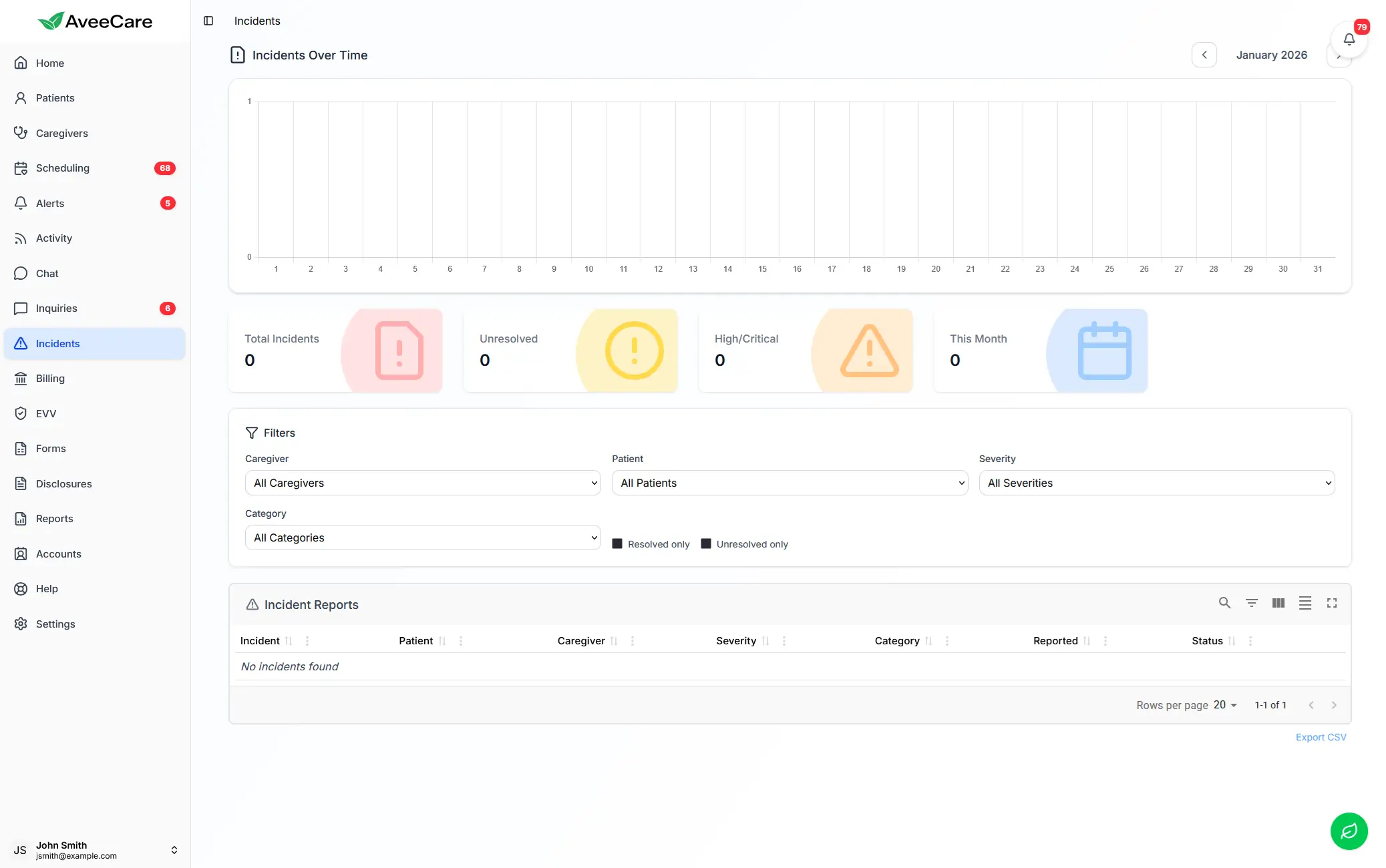
Track incidents, manage compliance, and maintain OSDH-ready documentation with AveeCare
Referral tip: Oklahoma's 39 tribal nations represent a referral dimension that is unique in the United States. Cherokee Nation Health Services alone serves over 400,000 tribal citizens across 14 northeastern Oklahoma counties. Chickasaw Nation, Choctaw Nation, and Muscogee (Creek) Nation operate extensive health facilities throughout southern and eastern Oklahoma. Building respectful, culturally informed relationships with tribal health programs can open referral channels that are unavailable to agencies that overlook this important segment of the Oklahoma healthcare landscape.
11Marketing & Client Acquisition
OKC/Tulsa competition, tribal nation outreach, military families, oil/gas worker families, faith communities, rural marketing, and digital strategies
Marketing a home care agency in Oklahoma requires understanding the distinct dynamics of the state's two major metros, military communities, 39 tribal nations, the Bible Belt culture, and vast rural areas. Oklahoma City is the largest market with increasing competition. Tulsa has strong oil-economy private-pay demographics. Lawton and Fort Sill offer military family and TRICARE marketing opportunities. Tribal nation partnerships provide a unique channel, and Oklahoma's deep faith community connections make church partnerships particularly effective across the Sooner State.
OKC Metro Competition & Positioning
Oklahoma City is the largest and most competitive market in the state with over 1.4 million metro residents. Differentiate through specialization: focus on a niche like dementia care, post-surgical recovery, or culturally competent care for specific communities. Target affluent suburbs like Edmond, Nichols Hills, and Deer Creek for private-pay clients. Use Google Ads with OKC suburb-specific targeting and optimize your Google Business Profile for local searches. Build hospital discharge planner relationships at OU Health, INTEGRIS/SSM, and Mercy. OKC's growth means continuously expanding demand for home care.
Tulsa Market & Oil Economy Families
Tulsa and its suburbs (Broken Arrow, Owasso, Jenks, Bixby) offer a strong market with deep-pocketed families from the oil and gas industry. Many oil executives, engineers, and industry professionals have aging parents who need quality home care and are willing to pay premium private-pay rates. Position your agency as a premium provider in south Tulsa and the southern suburbs. Partner with Saint Francis/Ascension and Hillcrest discharge planners. Attend Tulsa-area business and industry events to connect with families of oil and gas workers.
Tribal Nation Outreach (39 Nations)
Oklahoma is home to 39 tribal nations, more than any other state. Tribal elders often prefer to age in place within their communities, creating demand for culturally competent home care. Approach tribal health programs respectfully: attend tribal health fairs, present at tribal elder councils, partner with Indian Health Service (IHS) facilities, and recruit Native American caregivers. Cherokee Nation, Chickasaw Nation, Choctaw Nation, and Muscogee (Creek) Nation are the largest. Some tribes contract with outside agencies to supplement their health services. This market segment requires patience, relationship-building, and genuine cultural sensitivity.
Military Family Marketing (Tinker, Fort Sill, TRICARE)
Oklahoma's military installations create substantial demand for home care from military families and retirees. Tinker AFB in OKC is the state's largest single-site employer. Fort Sill near Lawton is a major Army installation. Altus AFB and Vance AFB add to the military population. Market to military families through TRICARE-accepted provider lists, military spouse Facebook groups, on-base publications, and partnerships with veteran service organizations. Military retirees with TRICARE for Life coverage are especially strong home care prospects. Attend military family events and connect with installation family support centers.
Faith Community Partnerships (Bible Belt)
Oklahoma sits firmly in the Bible Belt, where churches play a central role in community life. Baptist, Methodist, Church of Christ, Assembly of God, Catholic, and non-denominational churches are deeply embedded in both urban and rural Oklahoma communities. Partner with church health ministries, offer to speak at senior fellowship events, place information in church bulletins, and connect with parish nurses. Many Oklahoma churches have organized ministries caring for elderly members. Mosques serving the growing OKC Muslim community and Native American churches in tribal areas are also important faith-based connections.
Rural Oklahoma & Oil Patch Outreach
Rural Oklahoma, particularly the western panhandle and southeastern hill country, has sparse populations and very few home care providers. Oil and gas field workers in western Oklahoma often have aging family members who need care but have limited local options. Marketing in rural Oklahoma relies heavily on word-of-mouth, community trust, and local presence. Attend county fairs, partner with rural health clinics and Critical Access Hospitals, connect with rural churches, and establish satellite coordination hubs. Facebook and community social media are more effective than Google Ads in rural Oklahoma.
Senior Center & Community Partnerships
Oklahoma's network of senior centers and nutrition sites, coordinated through the DHS Aging Services Division and local AAAs, provides direct access to the elderly population. Offer free health education events, blood pressure screenings, or fall prevention workshops at senior centers. Leave marketing materials and build relationships with center directors and case managers. Many seniors who attend senior center programs are at the stage where home care services may be needed in the near future. These relationships build trust and generate warm referrals.
Digital Marketing for Oklahoma
Digital marketing should be tailored to your Oklahoma market. For OKC and Tulsa, use Google Ads with suburb targeting, invest in Google Business Profile optimization, and collect reviews aggressively. For mid-size cities like Norman, Lawton, and Stillwater, local SEO and Google Business Profile are critical. For rural Oklahoma, Facebook is the dominant platform. Maintain an active Facebook presence with community engagement, elder care tips, and local health information. Nextdoor is growing in Oklahoma suburban communities. Partner with local media for earned coverage of your community involvement.
Hospital Referral Development Strategy
Develop a structured hospital referral program targeting Oklahoma's major health systems. Create professional leave-behind materials tailored to each system. Schedule brief introductory meetings with discharge planners and social workers. Provide referral pads and quick-reference contact cards. Follow up on every referral with a care report back to the referring provider. Focus on high-volume departments: orthopedics, cardiology, pulmonology, oncology, and geriatrics. Track referral sources in your software to identify which relationships generate the most clients and invest more in those connections.
OAHCH Networking & Industry Events
The Oklahoma Association for Home Care & Hospice (OAHCH) hosts conferences, educational events, and networking opportunities throughout the year. These events bring together home care providers, referral sources, vendors, and state regulators. Attend OAHCH events to build professional reputation, receive continuing education, and create referral relationships. OAHCH also provides legislative advocacy and keeps members informed about OSDH regulatory changes and SoonerCare policy updates. Active OAHCH membership signals professionalism and commitment to the Oklahoma home care industry.
12Frequently Asked Questions
Common questions about starting a home care agency in Oklahoma
Yes, Oklahoma licenses both medical and non-medical home care agencies through the Oklahoma State Department of Health (OSDH). Home Health Agencies providing skilled nursing, therapy, or other medical services must be licensed under OAC 310:660. Non-medical agencies providing personal care, companionship, and homemaker services must be licensed as Home Care Agencies under OAC 310:662. Both license types are administered by the Protective Health Services, Medical Facilities Division. Oklahoma is one of the states that requires licensure for non-medical home care, so you cannot operate without OSDH approval.
Starting a non-medical home care agency in Oklahoma typically costs between $25,000 and $65,000. Oklahoma has a cost of living well below the national average, making it one of the more affordable states for launching a home care business. This includes business registration with the Oklahoma Secretary of State, OSDH Home Care Agency licensing fees, insurance including workers compensation, marketing, office space, and 3 to 6 months of working capital. A Home Health Agency with skilled nursing costs $100,000 to $250,000 or more due to OSDH licensing, clinical staffing, and Medicare certification.
Oklahoma requires background checks through the Oklahoma State Bureau of Investigation (OSBI). Home care workers must undergo a criminal background check through OSBI, which can be name-based or fingerprint-based depending on the license type and payer source. Providers should also check the Oklahoma Sex Offender Registry, the OIG exclusion list, the Oklahoma Nurse Aide Registry for CNAs, and the DHS Community Services Worker Registry. Some Medicaid enrollment and OSDH license requirements may require fingerprint-based background checks. Establish a consistent screening policy for all new hires.
Oklahoma follows the federal minimum wage of $7.25 per hour, as the state minimum is set at $7.25 per hour. However, competitive market rates for home care aides in Oklahoma are substantially higher. In the Oklahoma City metro, experienced caregivers earn $13 to $16 per hour. Tulsa ranges from $12 to $15 per hour. Norman and Broken Arrow range from $12 to $15 per hour. Rural Oklahoma may range from $10 to $13 per hour. To attract and retain quality caregivers, most Oklahoma agencies pay well above the minimum wage, and benefits like flexible scheduling and paid training are important differentiators.
Oklahoma uses HHAeXchange for its Electronic Visit Verification (EVV) system. The Oklahoma Health Care Authority (OHCA) oversees EVV compliance for SoonerCare (Oklahoma Medicaid) personal care and home health services under the 21st Century Cures Act. Providers delivering SoonerCare-funded personal care services must use HHAeXchange or a compatible third-party EVV vendor that integrates with the state aggregator. AveeCare supports EVV integration for Oklahoma agencies.
Starting a non-medical home care agency in Oklahoma typically takes 10 to 18 weeks, accounting for business registration with the Oklahoma Secretary of State, OSDH Home Care Agency license application and survey under OAC 310:662, OSBI background checks, workers compensation enrollment, insurance procurement, and initial hiring. A Home Health Agency providing skilled services takes 4 to 8 months or longer due to the more extensive OSDH licensing process under OAC 310:660, clinical staffing requirements, and potential Medicare certification through CMS.
13Sources and Resources
Official Oklahoma state agency links and resources
Ready to manage your Oklahoma home care agency?
You do not need software on day one. But when you are ready, AveeCare starts at $6/client/month with no contracts, no mandatory demos, and a free trial. Scheduling, care plans, billing, caregiver management, real-time tracking, and alerts in one platform built for simplicity. Manage your Oklahoma home care agency from Oklahoma City to Tulsa and every Sooner State community in between.
Disclaimer
This guide is for informational purposes only and does not constitute legal, financial, or professional advice. While we strive to keep this information accurate and up to date, Oklahoma laws, regulations, fees, and requirements may change. Always verify current requirements directly with the relevant Oklahoma state agencies before making business decisions. Consult with a qualified attorney and accountant in Oklahoma before starting your home care business. AveeCare is not affiliated with the Oklahoma State Department of Health, the Oklahoma Health Care Authority, the Oklahoma Secretary of State, the Oklahoma State Bureau of Investigation, or any Oklahoma state agency or tribal nation. Published April 4, 2026.