How to Start a Home Care Agency in North Dakota
Your complete 2026 guide to launching a home care business in North Dakota -- from DHHS home health licensing, no separate non-medical license, to navigating the unique challenges of the Peace Garden State.
Published April 4, 2026 · 25 min read
TLDR -- North Dakota at a Glance
No -- no separate state license required for non-medical companion/homemaker agencies. Home Health Agencies need a DHHS license for skilled services.
ND Department of Health and Human Services (DHHS), Division of Health Care
4th least populous state with ~780K residents. Oil industry (Bakken) drives up wages, extreme winters, aging farming communities.
$18,000 – $50,000 (Non-Medical)
$80,000 – $190,000+ (Home Health)
1 – 3 months (Non-Medical) | 4 – 8 months (Home Health)
No state income tax! Workers' comp through WSI (state-run, mandatory).
1North Dakota Market Overview
Understanding the opportunity for home care agencies in the Peace Garden State
North Dakota has a population of approximately 780,000 people, making it the 4th least populous state in the nation. For entrepreneurs looking to start a home care agency in North Dakota, this creates a distinctive market dynamic: genuine demand for home care services in aging rural farming communities combined with very limited competition from existing providers. The state's economy has been transformed by the Bakken oil formation in western North Dakota, which has brought rapid economic growth, population shifts, and elevated wages across all sectors. North Dakota offers a uniquely favorable tax environment with no state income tax -- recently eliminated -- making it one of the most business-friendly states in the country.
North Dakota's major population centers are Fargo (the largest city, ~130,000 metro), Bismarck (state capital, ~75,000 metro), Grand Forks (~57,000 metro), and Minot (~49,000 metro). These four cities account for the majority of North Dakota's population and healthcare infrastructure. Outside these hubs, North Dakota is characterized by small farming towns, Native American reservations, and vast stretches of prairie with limited services. The state has four major tribal nations -- Spirit Lake, Standing Rock, Turtle Mountain Band of Chippewa, and Three Affiliated Tribes (Fort Berthold) -- each with unique healthcare needs and tribal health services that present partnership opportunities for home care agencies.
The cost of living in North Dakota is moderate overall, though western oil-producing communities like Williston and Watford City saw dramatic cost-of-living increases during peak oil production periods. North Dakota's aging farming population, combined with adult children who have moved to larger cities, creates growing demand for professional home care services in communities that historically relied on family and neighbor networks. The state's very low unemployment rate (consistently among the lowest in the nation) is both a challenge for hiring caregivers and an indicator of economic strength. Winter weather in North Dakota is among the most extreme in the United States, with temperatures routinely dropping below -20°F and blizzards that can make travel impossible for days. For a broader look at the startup process with interactive tools, see our complete guide to starting a home care agency and our state-by-state licensing requirements.
2Home Care vs. Home Health in North Dakota
Non-medical personal care (no state license) vs. DHHS-licensed Home Health Agency
Key distinction in North Dakota: North Dakota does NOT require a separate state license for non-medical personal care, companion, or homemaker agencies. You only need standard business registration. However, if you plan to provide skilled nursing or therapy services, you must obtain a Home Health Agency license from the ND Department of Health and Human Services (DHHS), Division of Health Care. This is a significant advantage for entrepreneurs who want to start with non-medical services and add skilled services later.
Non-Medical Personal Care
No separate state license required
- Companion care and socialization
- Homemaker services and housekeeping
- Meal preparation and nutrition
- Personal care (bathing, dressing)
- Transportation and errands
- Respite care for family caregivers
Business registration only
No DHHS license required for non-medical services.
Home Health Agency (HHA)
DHHS Division of Health Care license required
- Skilled nursing care
- Physical and occupational therapy
- Speech therapy
- Medical social services
- Home health aide services
- Wound care and IV therapy
DHHS license required
Plus Medicare cert for Medicare billing.
Background checks for BOTH types: Regardless of whether you operate a non-medical agency or a licensed Home Health Agency in North Dakota, you should conduct criminal background checks through the ND Bureau of Criminal Investigation (BCI) for all caregivers. For Medicaid-enrolled providers, background checks are mandatory. For non-medical private-pay agencies, they are strongly recommended and expected by families.
3Business Formation in North Dakota
Register with ND SOS, Tax Commissioner -- enjoy no state income tax!
Choose Your Business Structure
Most North Dakota home care agencies register as an LLC (Limited Liability Company) for liability protection and tax flexibility. North Dakota also allows corporations, partnerships, and sole proprietorships. An LLC is the most common and recommended structure for new home care agencies in North Dakota.
Register with ND Secretary of State
File your Articles of Organization with the North Dakota Secretary of State online or by mail. North Dakota LLC registration costs approximately $135 for online filing. The ND SOS Business Services portal handles all entity formation, name reservations, and annual report renewals.
ND Secretary of StateObtain Your EIN
Apply for a free Employer Identification Number (EIN) from the IRS at irs.gov. You need this for bank accounts, payroll, and tax filings. You can get it instantly online.
Register with ND Tax Commissioner
North Dakota recently eliminated its state income tax, making it one of only a handful of states with no individual income tax. You still need to register with the ND Office of State Tax Commissioner for sales tax (if applicable) and employer withholding for federal purposes. This is a major advantage for recruiting caregivers who keep more of their earnings.
City/County Business License
North Dakota business license requirements vary by city and county. Cities like Fargo, Bismarck, Grand Forks, and Minot require a local business license or permit. Check with your city or county clerk for specific requirements. Many smaller farming communities have minimal local licensing requirements.
Open a Business Bank Account
Open a dedicated business checking account to keep personal and business finances separate. North Dakota has strong regional banks and credit unions including Bank of North Dakota (the only state-owned bank in the US), Gate City Bank, and Starion Bank. You will need your EIN and formation documents.
No state income tax advantage: North Dakota recently eliminated its state income tax entirely, joining Alaska, Florida, Nevada, South Dakota, Tennessee, Texas, Washington, and Wyoming as states with no individual income tax. This is a major advantage for your home care agency -- both for your business profits and for recruiting caregivers who keep more of their earnings compared to workers in neighboring states like Minnesota (which has one of the highest state income tax rates in the country). This tax advantage can be a genuine recruiting tool in a tight labor market.
Bank of North Dakota: North Dakota is home to the only state-owned bank in the United States -- the Bank of North Dakota (BND). While you cannot open a regular business checking account at BND, the bank offers business development loans, loan guarantees, and programs that support small businesses through partner banks. Explore BND's programs as a potential financing resource for your home care agency startup.
4Licensing Requirements (DHHS)
No state license for non-medical; DHHS license for home health; Medicaid enrollment for personal care
Non-Medical Personal Care -- No State License
North Dakota does not require a separate state license for agencies providing non-medical personal care, companion, homemaker, or respite services. This is a significant advantage for new entrepreneurs looking to start a home care agency in North Dakota, as it reduces startup time and cost compared to states that require licensure for non-medical agencies. You still need standard business registration with the ND Secretary of State, applicable local business licenses, and appropriate insurance coverage.
- Register business with ND Secretary of State
- Obtain city/county business license (if required locally)
- Conduct BCI background checks on all caregivers (strongly recommended)
- If Medicaid: enroll as a provider with DHHS Medical Services Division
- Maintain HIPAA compliance if handling health information
Medicaid In-Home Service Provider Enrollment
If you want to provide Medicaid-funded personal care services in North Dakota, you must enroll as a Medicaid provider with the DHHS Medical Services Division, even though no separate state license is needed for non-medical services. In-Home Service Providers providing Medicaid personal care must meet enrollment requirements including background screenings, compliance with program documentation standards, and EVV implementation.
- Submit Medicaid provider enrollment application to DHHS
- Complete BCI fingerprint-based background checks for all direct care workers
- Check OIG exclusion list for all employees
- Comply with EVV requirements for all Medicaid-funded visits
Home Health Agency License (DHHS)
If you plan to provide skilled nursing, physical therapy, or other medical services in North Dakota, you must obtain a Home Health Agency license from the ND Department of Health and Human Services (DHHS), Division of Health Care. This is a more rigorous licensing process with clinical documentation, staffing requirements, quality assurance standards, and ongoing survey compliance. A licensed RN must serve as the clinical supervisor.
- Submit Home Health Agency license application to DHHS Division of Health Care
- Develop clinical policies and procedures manual
- Hire qualified clinical staff (RN director required)
- Complete BCI background checks for all staff
- Pass DHHS initial survey inspection
- If Medicare: apply for CMS Medicare certification
5Insurance & WSI Workers' Comp
ND Workforce Safety & Insurance (WSI) -- state-run workers' comp system, mandatory for all employers
Insurance is essential for protecting your North Dakota home care agency, your clients, and your caregivers. A critical difference in North Dakota is that workers' compensation is provided through ND Workforce Safety & Insurance (WSI) -- a state-run system that is the exclusive provider of workers' comp coverage in North Dakota. Unlike most states where you shop for workers' comp from private insurers, in North Dakota you must obtain coverage directly through WSI. This is mandatory for all employers.
General Liability Insurance
Protects your North Dakota home care agency from claims of bodily injury, property damage, and personal injury. A standard policy of $1 million per occurrence and $2 million aggregate is the industry baseline. North Dakota premiums typically range from $1,500 to $3,500 per year for a new agency.
Professional Liability (E&O)
Covers claims arising from errors, omissions, or negligence in the care services your agency provides. This is critical for protecting against lawsuits related to caregiver actions or inactions. Typical North Dakota costs range from $1,000 to $3,000 annually depending on services offered and staff count.
WSI Workers' Compensation (Mandatory)
North Dakota's Workforce Safety & Insurance (WSI) is the state-run, exclusive provider of workers' compensation coverage. Unlike most states, you CANNOT purchase workers' comp from private insurers in North Dakota -- WSI is the sole option. Coverage is mandatory for all employers from the first employee. Register directly with WSI at wsi.nd.gov. Premiums are based on payroll and classification codes for home care workers.
Surety and Fidelity Bonds
While not legally required for non-medical agencies in North Dakota, surety and fidelity bonds protect clients against theft or dishonesty by your caregivers. In North Dakota's small communities where reputation is everything, being bonded demonstrates professionalism and trustworthiness. Costs are typically $200 to $600 annually.
Commercial Auto Insurance
Important in North Dakota given the distances caregivers travel between clients in rural farming communities. If caregivers use personal vehicles, non-owned auto liability coverage is essential. Winter driving in North Dakota adds significant risk with ice, blizzards, and extreme cold. Budget appropriately for auto insurance.
Cyber Liability Insurance
As a HIPAA-covered entity handling protected health information, cyber liability insurance is increasingly important. This covers data breach expenses, notification costs, and legal liability from cybersecurity incidents. North Dakota agencies handling electronic health records and billing data should strongly consider this coverage.
WSI is the ONLY option: North Dakota's Workforce Safety & Insurance (WSI) system is unique in that it is the exclusive, state-run workers' compensation provider. You cannot shop for workers' comp from private insurers. All employers must register with WSI and pay premiums based on payroll and risk classification. This is non-negotiable -- operating without WSI coverage is illegal in North Dakota. Register at wsi.nd.gov before hiring your first employee.
6Staffing Your North Dakota Agency
Federal $7.25/hr minimum wage applies, BCI background checks, extreme workforce competition from oil industry
Staffing is the single most critical challenge for home care agencies in North Dakota. The state's very small population, extremely low unemployment rate (consistently among the lowest in the nation), and competition from the oil industry (Bakken formation) make caregiver recruitment exceptionally difficult. While North Dakota's minimum wage follows the federal rate of $7.25/hour, the practical minimum you will need to pay caregivers is significantly higher -- typically $14 to $20/hour or more -- due to labor market competition. In western oil country (Williston, Watford City, Dickinson), even fast-food workers often earn $15 to $18/hour, so home care wages must be competitive with these alternatives.
Bakken oil country workforce challenge: The Bakken oil formation in western North Dakota has created an economic boom that dramatically increased wages across all industries. Oil field jobs offer $20 to $35+/hour with overtime, making it extremely difficult to recruit caregivers in communities like Williston, Watford City, Tioga, and Dickinson. Your home care agency must compete on total compensation -- not just wages, but benefits, flexibility, purpose-driven work, and the no-state-income-tax advantage. Creative scheduling (allowing oil worker spouses to work flexible part-time hours) can help tap into an underutilized workforce.
BCI Background Checks
Submit fingerprint-based criminal history checks through the North Dakota Bureau of Criminal Investigation (BCI) under the Attorney General's office. Checks include both state and federal (FBI) databases. For Medicaid providers, also screen against the OIG exclusion list. Factor in processing time when planning your hiring timeline.
ND BCIRecruitment Strategies
In North Dakota's ultra-tight labor market, diversify your recruitment: Job Service North Dakota (jobsnd.com), local college nursing programs (NDSU, UND, Minot State, BSC), tribal workforce programs, church bulletin boards, community Facebook groups, word-of-mouth in small towns, and oil worker spouse outreach. The no-state-income-tax advantage is a genuine recruiting talking point.
Training Requirements
North Dakota does not mandate specific training hours for non-medical personal care workers beyond basic competency. However, for Medicaid personal care services, caregivers must meet program-specific training requirements. For Home Health Agencies, home health aides must complete 75+ hours of training and pass a competency evaluation. Invest in training beyond minimums to improve care quality and retention.
Retention in a Tight Market
With North Dakota's extremely low unemployment, retaining caregivers is as important as recruiting them. Offer competitive wages ($14-$20+/hr), flexible scheduling around farming seasons and family needs, mileage reimbursement for rural travel, meaningful recognition, career advancement paths, and a supportive workplace culture. In small ND communities, your reputation as an employer spreads quickly.
Extreme winter staffing challenge: North Dakota winters are among the harshest in the nation, with temperatures regularly dropping below -20°F and blizzards that can strand entire communities. Your agency needs winter-specific policies: vehicle emergency kits (mandatory), block heaters, flexible cancellation policies for dangerous conditions, remote check-in protocols when in-person visits are impossible, and caregiver safety training for extreme cold. Building a reliable team that can operate through North Dakota winters is a genuine competitive advantage.
7Medicaid & Medicare in North Dakota
DHHS Medical Services Division, SPED program, HCBS waivers, EVV implementation
North Dakota's Medicaid program is administered by the DHHS Medical Services Division. The state offers several Home and Community-Based Services (HCBS) programs that home care agencies can participate in. North Dakota expanded Medicaid under the Affordable Care Act, increasing the number of eligible residents. Understanding the various Medicaid programs and enrollment requirements is essential for home care agencies seeking to serve publicly funded clients in North Dakota.
SPED Program
The Service Payments for Elderly and Disabled (SPED) program is North Dakota's primary home and community-based services program. SPED provides personal care, homemaker, respite, and other services to help individuals remain in their homes. The Expanded SPED program serves additional populations. Enrollment as a SPED provider requires application through DHHS.
HCBS Aged & Disabled Waiver
North Dakota's HCBS waiver for aged and disabled individuals provides personal care, respite care, adult day services, and other supports to prevent institutionalization. Providers must enroll with ND Medicaid and meet program-specific requirements. This waiver serves individuals who would otherwise require nursing facility care.
Personal Care Services
Personal Care Services are available as a Medicaid state plan benefit in North Dakota. This covers assistance with activities of daily living (ADLs) and instrumental activities of daily living (IADLs). In-Home Service Providers must be enrolled with Medicaid to deliver these services. Documentation and EVV compliance are required.
Medicare (Home Health)
If your agency is a licensed Home Health Agency with CMS Medicare certification, you can bill Medicare for skilled nursing, therapy, and home health aide services. Medicare enrollment requires a separate application to CMS, a state survey, and accreditation. Medicare home health agencies must meet federal Conditions of Participation.
EVV in North Dakota: North Dakota is implementing Electronic Visit Verification (EVV) for Medicaid-funded personal care and home health services as required by the 21st Century Cures Act. The state has been working with Therap and other EVV solutions. Agencies providing Medicaid-funded services must implement EVV to capture visit start/end times, location, services provided, and caregiver identity. AveeCare integrates with EVV platforms to simplify compliance for North Dakota agencies.
8North Dakota Startup Cost Estimator
Interactive calculator -- toggle Home Health to see DHHS licensing costs
Business Formation
Insurance (Annual)
Office & Equipment
Travel & Vehicle (North Dakota-Specific)
Marketing & Initial Growth
Working Capital (3-6 Months)
Estimated Total
Non-medical personal care agency only
9North Dakota Compliance Checklist
Interactive checklist -- track your progress as you launch
Business Formation
Licensing
Insurance
Staffing
Medicaid & Medicare
Operations
Marketing
10Building Your Referral Network
Sanford Health, CHI St. Alexius, Altru Health, ND Aging Services, tribal health programs, and veteran services
In North Dakota's small, relationship-driven market, your referral network will be the primary engine of client growth. North Dakota's healthcare landscape is dominated by a few major health systems, and personal relationships with discharge planners, social workers, and physicians in these systems are essential. The state's small-town culture means that a single strong referral relationship can generate a steady stream of clients. Conversely, a negative experience travels fast in communities where everyone knows everyone.
Sanford Health
Sanford Health is the largest health system in North Dakota with major facilities in Fargo, Bismarck, and numerous clinics across the state. Sanford's discharge planners and case managers are critical referral sources. Build relationships with social workers at Sanford Medical Center Fargo and Sanford Bismarck. Sanford also operates a large physician network throughout rural ND.
CHI St. Alexius Health
CHI St. Alexius Health (part of CommonSpirit Health) has hospitals in Bismarck, Williston, Dickinson, Devil's Lake, and Carrington. Their Bismarck facility is one of the largest hospitals in western North Dakota. Connect with their case management and discharge planning departments. CHI St. Alexius is especially important for agencies serving the western oil country region.
Altru Health System
Altru Health System is the major health system in the Grand Forks region, operating Altru Hospital and numerous clinics in northeastern North Dakota. Their discharge planners and social workers are key referral sources for agencies serving the Grand Forks, Devils Lake, and northeastern ND corridor.
ND Aging Services Division
The ND DHHS Aging Services Division oversees services for older adults across the state, including the Aging and Disability Resource Link (ADRL). Building a relationship with the Aging Services Division and local aging service providers connects you to families actively seeking home care options. They are a trusted resource for elderly North Dakotans and their families.
ND Aging ServicesTribal Health Programs
North Dakota's four major tribal nations -- Spirit Lake, Standing Rock, Turtle Mountain, and Three Affiliated Tribes (Fort Berthold) -- each operate tribal health programs, often in partnership with Indian Health Service (IHS). Building respectful partnerships with tribal health directors can open referral channels for serving Native American elders who need home care services.
Veteran Services & Minot AFB
North Dakota has a significant veteran population. The Fargo VA Health Care System serves veterans across the state with facilities in Fargo, Bismarck, Grand Forks, and Minot. Minot Air Force Base has active-duty families and retiring military. Connect with VA social workers, VFW and American Legion posts, and the ND Veterans Affairs department for referral opportunities.
11Marketing & Client Acquisition
Rural farming community outreach, tribal health partnerships, oil worker family outreach, faith partnerships, digital marketing, and winter safety positioning
Marketing a home care agency in North Dakota requires strategies tailored to the state's unique demographics and geography. North Dakota's very small market size (~780,000 people), tight-knit farming communities, tribal populations, oil country workforce dynamics, and extreme winter climate demand a fundamentally different approach than marketing in urban states. Word-of-mouth is extraordinarily powerful in North Dakota's small communities. In a state where everyone seems to know everyone, your reputation is your most valuable marketing asset. Building trust through personal relationships, community involvement, and genuine service quality is the foundation of effective home care marketing in North Dakota.
Rural Farming Community Outreach
North Dakota's identity is deeply rooted in agriculture -- wheat, sunflowers, cattle, and sugar beets. Aging farmers and their families often resist seeking outside help, viewing it as a loss of the independence that defines their way of life. Marketing your home care agency to farming communities requires understanding and respecting this culture. Framing your services as supporting independence rather than replacing it is critical for success in rural North Dakota.
ND Farm Bureau and Farmers Union
North Dakota Farm Bureau and the Farmers Union are deeply embedded in rural communities. Attend county Farm Bureau meetings, sponsor events at local grain elevators and implement dealers, and offer free informational sessions about aging-in-place services. A referral from the local Farm Bureau president carries enormous weight in farming communities where trust is earned over years, not weeks.
Small-Town Newspapers and Co-op Boards
Many North Dakota farming communities still rely on weekly newspapers, co-op bulletin boards, and grain elevator notice boards for local information. A simple ad in the local weekly paper or a flyer at the local co-op can reach families that digital marketing will never touch. In towns of 200 to 1,000 people, this hyper-local approach is often the most effective marketing strategy.
NDSU Extension Offices
North Dakota State University Extension offices exist in every county. They are the most trusted community resource for agricultural families. Partner with Extension agents to reach elderly farmers and their families who may need home care services but do not know where to look. Extension offices often host senior health and wellness events that provide natural opportunities for outreach.
Harvest Season & Farming Calendar
North Dakota farming follows a seasonal calendar that affects everything. During spring planting and fall harvest, farm families are consumed by their operations. Schedule outreach events during winter months when farmers have more free time. Offer flexible scheduling that accommodates farming families -- a caregiver who can adjust hours around livestock feeding schedules or harvest season will earn deep loyalty.
Tribal Health Partnerships
North Dakota's four major tribal nations -- Spirit Lake, Standing Rock, Turtle Mountain Band of Chippewa, and Three Affiliated Tribes (Fort Berthold/MHA Nation) -- represent communities with significant unmet home care needs. Indian Health Service (IHS) facilities provide some care but are often understaffed and geographically limited. Building respectful, culturally competent partnerships with tribal health programs can open referral channels and serve communities with genuine need.
Tribal Health Board Engagement
Each tribe has a tribal health department or health board. Request a meeting to present your services and discuss partnership opportunities. Approach with humility and a genuine desire to serve the community. Tribal communities value long-term relationships over transactional interactions. The Three Affiliated Tribes at Fort Berthold have additional resources from oil revenue that may fund enhanced elder care programs.
Cultural Competency Training
Invest in cultural competency training for all caregivers who will serve tribal communities. Understanding traditional values around elder care, family roles, and communication styles is essential. Consider hiring tribal community members as caregivers when possible -- they bring cultural knowledge that no training can replicate. Many tribal elders prefer caregivers who understand their traditions and language.
Oil Worker Family Outreach (Bakken Region)
The Bakken oil formation in western North Dakota brought an influx of workers and their families to communities like Williston, Watford City, Tioga, and Dickinson. Many oil workers have elderly parents who moved with them or spouses who need flexible employment. This creates a dual marketing opportunity: reaching families who need home care for aging relatives, and recruiting oil worker spouses as caregivers who want meaningful, flexible work while their partner works long shifts in the oil field.
Oil Worker Family Networks
Oil field families often form tight-knit support groups. Many workers brought aging parents from other states to be closer during the boom. These families need home care but may not know where to find it in their new community. Market through oil company HR departments, man camp community boards, and social groups for oil field families.
Spouse Recruitment Pipeline
Oil workers' spouses often seek flexible employment. Home care offers meaningful work with schedule flexibility -- a caregiver can work while their spouse is on their 14-day rotation and take time off during off-rotation periods. Position caregiving as purpose-driven work that fits the unique lifestyle of oil field families.
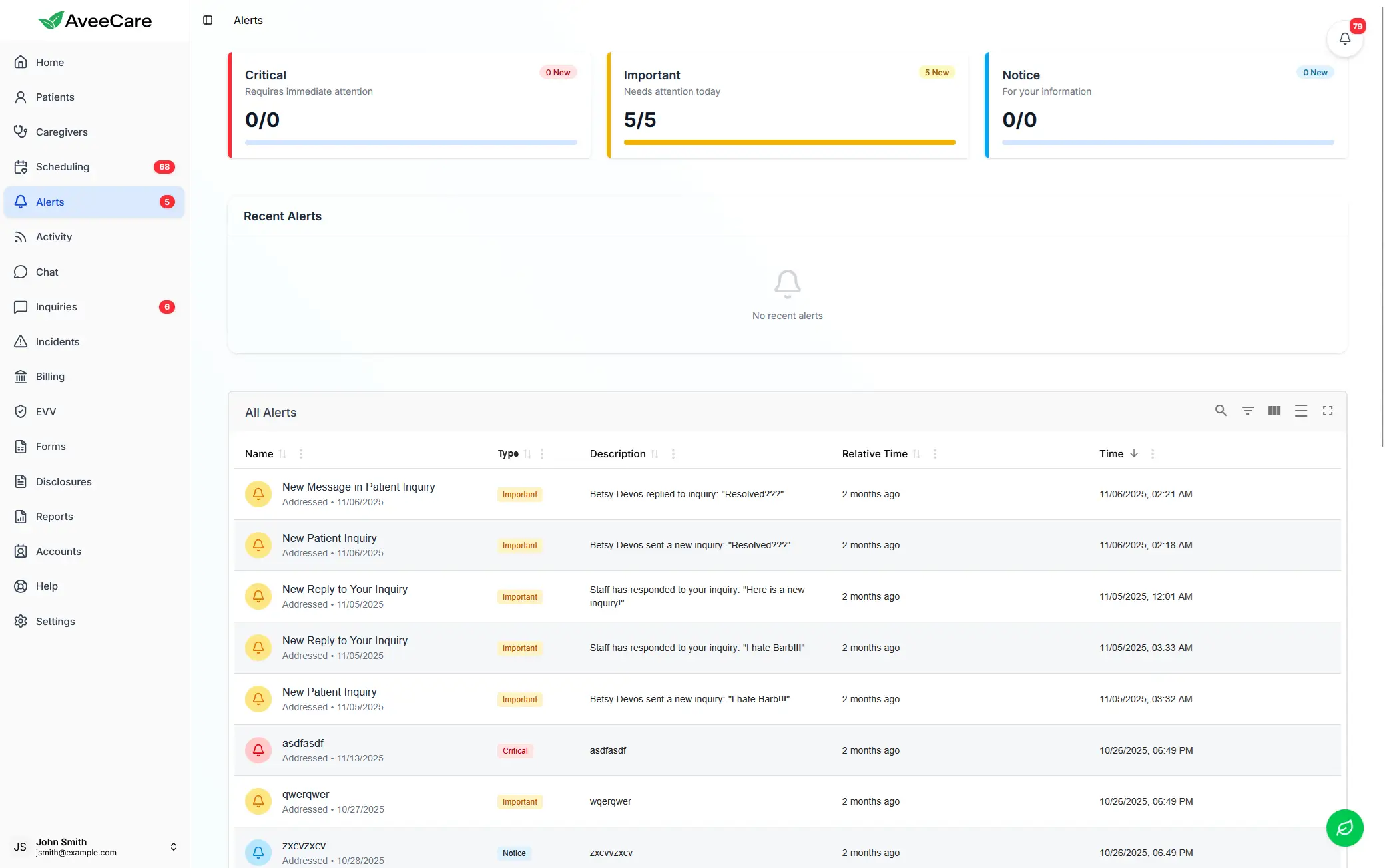
AveeCare's real-time alerts -- essential for monitoring caregivers across North Dakota's vast distances
Faith Community Partnerships
Churches are the social hub in most North Dakota communities, especially in rural areas. Lutheran (ELCA and LCMS) and Catholic parishes are the dominant faith traditions. Many congregations have active senior ministries, parish nurses, and care teams. Offer to speak at church groups about aging-in-place and home care options. Pastors and parish nurses are among the most trusted advisors to families making care decisions in North Dakota. A recommendation from the local pastor can generate more referrals than any advertising campaign.
Word-of-Mouth (Your #1 Channel)
In North Dakota's small communities, word-of-mouth is not just important -- it is the dominant marketing channel. When you serve a family well in a town of 500 people, the entire town will know. When you serve a family poorly, the entire town will know that even faster. Every client interaction is a marketing opportunity. Invest heavily in service quality, responsiveness, and genuine care. Ask satisfied families for referrals and testimonials. In North Dakota, reputation IS marketing.
Digital Marketing for Dispersed Populations
While in-person marketing is vital in North Dakota, digital marketing reaches the adult children who often make care decisions for aging parents from out of state. Many North Dakota farmers' children now live in Minneapolis, Denver, Seattle, or other cities and search for home care agencies in North Dakota online. Invest in local SEO targeting city and county names, Google Ads geo-targeted to North Dakota, and a website that clearly communicates which areas you serve and the distances you cover.
Winter Safety Positioning
North Dakota winters are brutal -- temperatures below -20°F, blizzards, ice storms, and dangerous wind chills. Position your agency as the solution to winter isolation and safety concerns. Many elderly North Dakotans become trapped in their homes during winter months, unable to drive, shovel, or safely walk on ice. Market your services as winter safety, companionship during long dark months, meal delivery when roads are impassable, and daily wellness checks that give distant family members peace of mind.
Aging Farmer Health Needs
North Dakota's aging farmer population has specific health challenges: decades of physical labor causing joint and mobility issues, hearing loss from farm equipment, isolation from living on remote farmsteads, and reluctance to seek help. Market your services with messaging that resonates: helping farmers stay on the land they love, supporting the independence they have built their lives around, and providing the practical assistance that lets them age in the home they have known for decades.
Community Event Sponsorships
County fairs, Norsk Hostfest (the largest Scandinavian festival in North America, held in Minot), church bazaars, and community fundraisers are major social events in North Dakota. Sponsoring a booth or event gets your agency name in front of multi-generational families. These events draw entire communities together, including the adult children who help aging parents make care decisions. Showing up consistently at community events builds the name recognition and trust that drives referrals.
12Frequently Asked Questions
Common questions about starting a home care agency in North Dakota
No. North Dakota does NOT require a separate state license for non-medical personal care, companion, or homemaker agencies. You need standard business registration with the North Dakota Secretary of State and applicable local business licenses, but there is no DHHS license requirement for non-medical services. However, if you plan to provide skilled nursing or therapy services (home health), you must obtain a Home Health Agency license from the ND Department of Health and Human Services (DHHS), Division of Health Care. If you plan to accept Medicaid clients for personal care services, you must enroll as a Medicaid provider with the DHHS Medical Services Division even for non-medical services.
North Dakota requires criminal background checks for home care workers through the North Dakota Bureau of Criminal Investigation (BCI) under the Attorney General's office. Employers must submit fingerprint-based criminal history checks through BCI. The check includes both state and federal (FBI) criminal databases. For Medicaid-enrolled providers, additional screening through the Office of Inspector General (OIG) exclusion list is required. North Dakota also maintains a nurse aide registry that must be checked for certified nursing assistants. Background check processing times can vary, so agencies should build this into their hiring timeline.
Starting a non-medical home care agency in North Dakota typically costs between $18,000 and $50,000, including business formation with the Secretary of State, insurance, BCI background checks, initial staffing, marketing, and working capital. North Dakota has no state income tax, which reduces ongoing operating costs. However, workforce recruitment costs may be higher than average due to North Dakota's very low unemployment rate and competition from the oil industry. A licensed Home Health Agency with skilled services costs significantly more, typically $80,000 to $190,000 or higher due to DHHS licensing, clinical staffing requirements, and Medicare certification costs.
North Dakota offers Home and Community-Based Services (HCBS) waiver programs through the DHHS Medical Services Division. Key programs include the HCBS Aged and Disabled Waiver, the SPED (Service Payments for Elderly and Disabled) program, Personal Care Services as a state plan benefit, and the Expanded SPED program. North Dakota expanded Medicaid under the Affordable Care Act. Providers must enroll with ND Medicaid through the DHHS Medical Services Division. North Dakota is implementing Electronic Visit Verification (EVV) for Medicaid-funded personal care and home health services as required by the 21st Century Cures Act.
North Dakota is the 4th least populous state with approximately 780,000 residents. The biggest challenges include competition for workers from the oil industry (Bakken formation) which drives up wages across all sectors, extreme winter weather with temperatures routinely dropping below negative 20 degrees Fahrenheit, vast travel distances between clients in farming communities, very low unemployment making caregiver recruitment exceptionally difficult, and the logistics of serving tribal reservation communities. However, these challenges also mean very limited competition from other home care agencies and genuine community need. The no state income tax advantage also helps attract workers.
Starting a non-medical home care agency in North Dakota typically takes 1 to 3 months since North Dakota does not require a separate state license for non-medical agencies. The timeline includes business registration with the Secretary of State, obtaining WSI workers' compensation coverage, obtaining insurance, setting up BCI background check processes, and initial hiring. Enrolling as a North Dakota Medicaid provider adds 2 to 4 months for application processing. A licensed Home Health Agency typically takes 4 to 8 months or more due to the DHHS licensing process, especially if pursuing Medicare certification. Allow extra time for recruiting caregivers given North Dakota's extremely tight labor market.
13Official Sources & Links
Verified North Dakota government resources for starting your home care agency
Ready to manage your North Dakota home care agency?
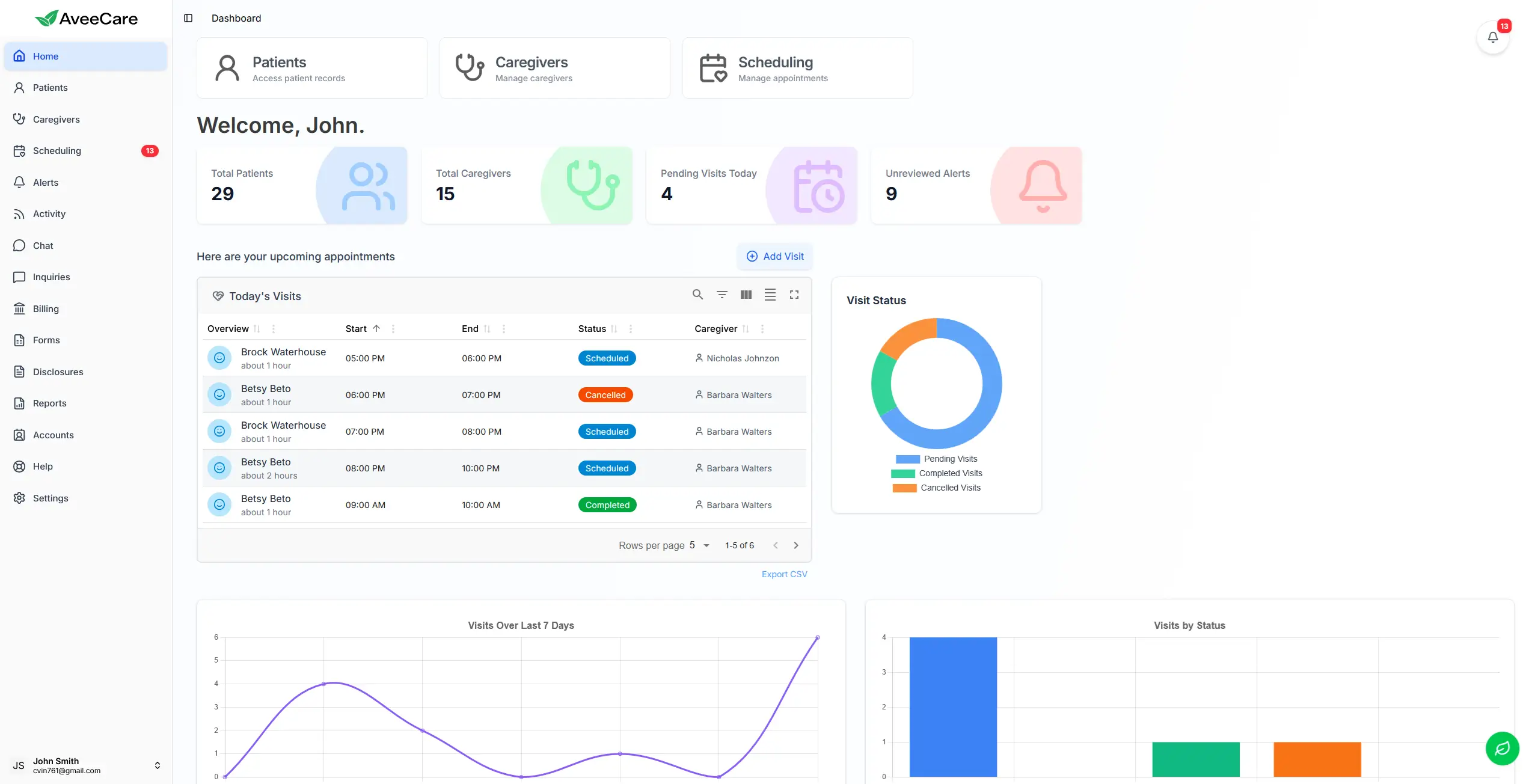
You do not need software on day one. But when you are ready, AveeCare starts at $6/client/month with no contracts, no mandatory demos, and a free trial. Scheduling, care plans, billing, caregiver management, and real-time alerts in one platform built for simplicity -- whether you serve Fargo, Bismarck, Grand Forks, Minot, Williston, or remote farming communities across the Peace Garden State.
Disclaimer
This guide is for informational purposes only and does not constitute legal, financial, or professional advice. While we strive to keep this information accurate and up to date, North Dakota laws, regulations, fees, and requirements may change. Always verify current requirements directly with the relevant North Dakota state agencies, including the ND Department of Health and Human Services (DHHS), Division of Health Care, ND Secretary of State, ND Office of State Tax Commissioner, ND Bureau of Criminal Investigation (BCI), ND Workforce Safety & Insurance (WSI), and the Aging Services Division, before making business decisions. Consult with a qualified attorney and accountant in North Dakota before starting your home care business. AveeCare is not affiliated with the North Dakota Department of Health and Human Services or any North Dakota state agency. Published April 4, 2026.