How to Start a Home Care Agency in North Carolina
Your complete 2026 guide to launching a home care business in the Tar Heel State. From DHSR Home Care Agency licensure to navigating North Carolina's fast-growing senior market across Charlotte, the Research Triangle, and beyond.
Published April 4, 2026 · 30 min read
TLDR — North Carolina at a Glance
Yes — DHSR Home Care Agency license required for both “Home Care Only” (non-medical) and “Home Health/Home Care” (skilled).
NC DHHS — Division of Health Service Regulation (DHSR)
$25,000 – $65,000 (Home Care Only)
$80,000 – $200,000+ (Home Health/Home Care)
2 – 4 months (Home Care Only) | 4 – 8 months (Home Health)
4.5% flat rate (2026, declining) — register with NC Department of Revenue
1North Carolina Market Overview
The 9th most populous state with rapid growth, military presence, and diverse regional markets
North Carolina is the 9th most populous state with approximately 10.7 million residents, making it one of the largest and fastest-growing home care markets in the Southeast. Starting a home care agency in North Carolina means entering a state with a rapidly expanding aging population, a booming Charlotte metro, the Research Triangle, significant military presence, and diverse communities from the Blue Ridge Mountains to the Outer Banks. NC's moderate cost of living and strong growth create excellent conditions for a home care business.
Approximately 1.8 million North Carolinians are aged 65 or older (about 17%), a figure climbing as the state attracts retirees and transplants. The Charlotte metro (2.7M+) and Research Triangle (2.3M+) are the economic engines, but the Piedmont Triad, Asheville, Wilmington, and Fayetteville each present distinct opportunities for home care agencies. For a national overview of the startup process with interactive tools, see our complete guide to starting a home care agency and our state-by-state licensing requirements.
Regional Market Breakdown
Charlotte Metro
Largest NC metro with 2.7M+ residents spanning Mecklenburg, Union, Cabarrus, and Gaston counties. Fastest-growing major city in the Southeast and a top transplant destination. Atrium Health and Novant Health dominate. High demand with moderate competition outside core Mecklenburg.
Research Triangle (Raleigh-Durham)
Home to Duke, UNC-Chapel Hill, NC State, and Research Triangle Park. 2.3M+ residents with a tech-oriented population. Transplant families need care for aging parents. Duke Health, UNC Health, and WakeMed are major systems. Strong growth and premium care demand.
Piedmont Triad (Greensboro/Winston-Salem)
Third major metro with 1.7M residents across Guilford, Forsyth, and surrounding counties. Older demographic profile with strong demand from aging manufacturing workforce. Cone Health and Atrium Health Wake Forest Baptist are major systems. Lower operating costs.
Fayetteville / Fort Liberty
Home to Fort Liberty (formerly Fort Bragg), the largest military installation by population in the US. Unique opportunities serving active-duty families, veterans, and retirees. TRICARE-eligible populations are significant. Cape Fear Valley Health System is the primary system.
Asheville / Western NC
Premier retirement destination in the Blue Ridge Mountains. Buncombe and Henderson counties have high proportions of retirees seeking aging-in-place services. Mission Health (HCA) is dominant. Lower competition in mountain communities.
Wilmington / Coastal NC
Coastal communities attract retirees along the Cape Fear coast, Outer Banks, and Crystal Coast. New Hanover, Brunswick, and Onslow (Camp Lejeune) counties have growing senior populations. Novant Health New Hanover is the major system.
Why Start a Home Care Agency in North Carolina
2Home Care vs. Home Health in North Carolina
Home Care Only vs. Home Health/Home Care — two license categories under the same act
NC licenses both types under one act. The Home Care Agency Licensure Act governs both through DHSR. Choose either “Home Care Only” (non-medical) or “Home Health/Home Care” (skilled + personal care). This is the most important decision when starting your NC home care business.
Home Care Only
Non-medical personal care under the Home Care Agency Licensure Act
- Activities of daily living (ADL) assistance
- Companionship and socialization
- Light housekeeping and meal preparation
- Medication reminders (not administration)
- Transportation and errands
- Respite care for family caregivers
DHSR Home Care Only license required
Lower startup costs, faster licensing, most common entry point for new NC agencies.
Home Health / Home Care
Skilled nursing and therapy plus personal care under physician orders
- Skilled nursing care
- Physical and occupational therapy
- Speech-language pathology
- Medication administration
- Wound care and medical procedures
- All Home Care Only services included
DHSR Home Health/Home Care license required
Higher startup costs, clinical staffing required. Medicare certification available.
3Business Formation in North Carolina
Register your home care business with the Tar Heel State

Choose Your Business Structure
Most NC home care agencies register as an LLC ($125 filing fee). North Carolina has a 4.5% flat income tax rate (2026), declining annually under recent legislation.
Register with NC Secretary of State
File Articles of Organization online at sosnc.gov. Designate a registered agent with an NC street address. Annual reports ($200 for LLCs) are required.
NC Secretary of StateObtain Your EIN
Apply for a free EIN from the IRS at irs.gov. Required for bank accounts, payroll, and tax filings. Takes minutes online.
NC State Tax Registration
Register with NCDOR for state income tax withholding (4.5% flat, declining). Also register for unemployment insurance with NC Division of Employment Security (DES).
NC Department of RevenueCounty/City Business License
NC counties and cities may require local business or privilege licenses. Mecklenburg (Charlotte), Wake (Raleigh), Guilford (Greensboro), and Durham each have unique processes.
Open a Business Bank Account
Open a dedicated business checking account. You need your EIN, Articles of Organization, and local licenses. NC has a strong banking sector headquartered in Charlotte.
4Licensing Requirements
DHSR licenses all home care agencies under the Home Care Agency Licensure Act
Home Care Only License — DHSR
DHSR issues the Home Care Only license under the Home Care Agency Licensure Act for agencies providing non-medical personal care in North Carolina:
- Submit Home Care Agency license application to DHSR
- Designate a qualified administrator for daily operations
- All owners, operators, and care staff must pass NC DOJ/SBI checks and Nurse Aide Registry check
- Develop written policies for service delivery and quality assurance
- Maintain individualized care plans and comply with DHSR inspections
Home Health / Home Care License — DHSR
For skilled nursing, therapy, or medical services, you need a Home Health/Home Care license from DHSR. This includes clinical staffing requirements and enables Medicare certification:
- Submit Home Health/Home Care license application to DHSR
- Designate a qualified administrator and director of nursing
- All staff must pass NC DOJ/SBI checks and Nurse Aide Registry check
- Maintain clinical policies, quality assurance, and pass DHSR on-site survey
NC DOJ / SBI Background Checks
NC requires criminal background checks through the NC DOJ/SBI plus Nurse Aide Registry checks for both license categories:
- State criminal history check through NC DOJ/SBI
- National FBI fingerprint check (Medicaid providers)
- NC Nurse Aide Registry check for abuse/neglect findings
- Checks must clear before employees begin providing services
Medicare Certification
Medicare certification is separate from DHSR state licensure. Home Health/Home Care agencies must first hold a DHSR license, then apply through CMS and pass a federal survey. DHSR serves as the state survey agency for CMS. With 1.8M+ seniors, NC's Medicare beneficiary population is a significant revenue opportunity.
5Insurance Requirements
Workers' comp required for 3+ employees in North Carolina
General Liability
$1,800 - $4,500/yrCovers bodily injury and property damage. Minimum: $1M per occurrence / $2M aggregate. NC premiums are moderate.
Professional Liability (E&O)
$1,200 - $3,500/yrCovers errors, omissions, and negligence claims. Protects against malpractice and duty-of-care claims.
Workers' Compensation
$2,500 - $8,000/yrRequired for employers with 3+ employees in NC. Covers medical expenses and lost wages for on-the-job injuries.
Surety / Fidelity Bond
$300 - $1,000/yrProtects clients against employee theft. Not always required but expected by many NC clients and referral partners.
Workers' comp: NC requires coverage for 3+ employees. Plan to obtain before hiring. The NC Industrial Commission (ic.nc.gov) oversees compliance.
6Staffing and Hiring in North Carolina
$7.25 federal minimum wage applies, NC DOJ/SBI checks, NCWorks, and community college CNA programs
NC's minimum wage matches the federal $7.25/hour, but most agencies pay $10 to $16/hour for personal care aides. Charlotte and the Triangle command higher wages; rural areas and smaller cities are closer to the lower end.
NC DOJ/SBI Background Checks
NC requires criminal background checks through the NC DOJ/SBI for all direct care workers, plus NC Nurse Aide Registry checks for abuse or neglect findings. For Medicaid providers, national FBI fingerprint checks are also required. Workers cannot begin providing care until checks clear. Budget 1 to 3 weeks.
Training & CNA Programs
The NC Community College System (58 institutions) provides affordable CNA certification statewide. Central Piedmont (Charlotte), Wake Tech (Raleigh), Guilford Tech (Greensboro), and Cape Fear (Wilmington) are direct caregiver recruitment pipelines. HHAs must complete 75 hours of training with supervised clinical hours.
Where to Find Caregivers
Wages and Labor Laws
Most agencies pay $13 to $22/hour for CNAs and HHAs (Charlotte/Triangle at the higher end). NC follows federal overtime rules (1.5x after 40 hours). NC is an at-will employment state with no state paid family leave law.
Recruitment tip: Military spouses at Fort Liberty and Camp Lejeune are experienced caregivers seeking flexible employment. Many have healthcare training and CNA certifications. Partner with military spouse employment programs for a motivated workforce.
7Medicaid and Medicare in North Carolina
NC DHHS Division of Health Benefits (DHB), NC Medicaid Managed Care, Netsmart EVV, and HCBS waivers (CAP/DA, CAP/C, Innovations)
NC Medicaid
NC Medicaid is administered by the DHHS Division of Health Benefits (DHB). NC recently transitioned to Medicaid Managed Care (Healthy Opportunities), moving beneficiaries to prepaid health plans (PHPs). Enroll through DHB and contract with PHPs in your region. HCBS are delivered through several waiver programs.
NC Medicaid (DHB)Netsmart — Electronic Visit Verification
NC uses Netsmart as its EVV system under an open model(free portal or alternative vendor integrating with Netsmart as aggregator). Required for all Medicaid-funded personal care and home health services under the 21st Century Cures Act.
HCBS Waivers in North Carolina
- Community Alternatives Program for Disabled Adults (CAP/DA) — personal care and home support for adults with disabilities
- Community Alternatives Program for Children (CAP/C) — home-based care for medically fragile children
- Innovations Waiver — services for individuals with intellectual/developmental disabilities
- NC Medicaid Managed Care PHPs (WellCare, AmeriHealth Caritas, Healthy Blue, UnitedHealthcare)
Medicare Certification
North Carolina has approximately 1.8 million seniors, making Medicare a significant revenue opportunity for home health agencies. To bill Medicare, your Home Health/Home Care agency must hold a DHSR license and then obtain CMS certification. DHSR serves as the state survey agency for CMS in North Carolina. Expect 3 to 6 months for the certification process after obtaining your state license.
8Startup Cost Estimator
North Carolina-specific startup cost breakdown with moderate cost of living
North Carolina cost advantage: NC's moderate cost of living keeps startup expenses manageable, especially outside the Charlotte and Raleigh-Durham metros. Office rents, insurance premiums, and labor costs in cities like Greensboro, Winston-Salem, Fayetteville, and Asheville are significantly lower than in the major metros. The $125 LLC filing fee is moderate, and the declining 4.5% flat income tax rate makes NC business-friendly.
Business Formation
$1,375 – $4,125Filing Articles of Organization with NC SOS online
Required annually for NC LLCs
Varies by county; Mecklenburg, Wake, Guilford, Durham each differ
Attorney review, CPA setup (moderate NC rates)
Licensing
$10,540 – $27,100Initial application and license fee through DHSR
If providing skilled nursing/therapy services
Per person; fingerprint-based state and national checks
Survey prep, policies, consulting (if applicable)
Insurance (Annual)
$5,800 – $17,000$1M per occurrence / $2M aggregate
Errors and omissions coverage
Required for 3+ employees in North Carolina
Employee dishonesty coverage; recommended for client trust
Office & Equipment
$3,700 – $12,200Charlotte/Raleigh metro higher; rural NC much lower
Laptops, smartphones, scheduling software
Desk, chairs, printer, supplies
Marketing & Initial Growth
$3,200 – $10,700Professional site with local SEO for NC market
Google Ads, social media, community outreach
Brochures, flyers, senior center materials
Working Capital (3-6 Months)
$11,000 – $35,000NC wages ($10-$16/hr avg), 4.5% state income tax withholding
Rent, utilities, software, fuel, insurance
Estimated Total Startup Cost (All Categories)
$35,615 – $106,125
Costs are estimates based on typical North Carolina home care agency startups and vary significantly by region. Charlotte (Mecklenburg) and Raleigh-Durham (Wake/Durham) are at the high end; the Piedmont Triad, Fayetteville, and rural NC are more affordable. NC's $125 LLC fee and moderate insurance premiums keep overall costs competitive.
9Compliance Checklist
Track your progress across all North Carolina requirements
Business Formation
0/7Licensing
0/8Insurance
0/4Staffing
0/6Medicaid & Medicare
0/4Operations
0/5Marketing
0/510Building Your Referral Network
Key referral sources in North Carolina for your home care agency
NC's large healthcare infrastructure, military communities, and aging services network create abundant referral opportunities. Build relationships with these key sources to grow your client base.
Atrium Health (Advocate Health)
NC's largest health system headquartered in Charlotte. Atrium Health Carolinas Medical Center and regional hospitals have extensive discharge planning departments. Connect with their case managers for home care referrals throughout the Charlotte metro and Piedmont.
Duke Health
Top academic health system based in Durham. Duke University Hospital, Duke Raleigh, and Duke Regional serve the Triangle. Their physician network and discharge planning teams are key referral sources for post-acute and complex home care needs.
UNC Health
Statewide system with UNC Medical Center (Chapel Hill) as flagship, plus UNC REX (Raleigh) and community hospitals. UNC Health's smaller-market hospitals are valuable referral sources for agencies serving semi-rural areas.
Novant Health
Major system with facilities in Charlotte, Winston-Salem, and Wilmington (New Hanover). Novant Health Presbyterian (Charlotte) and Forsyth Medical Center (Winston-Salem) are high-volume referral sources with coastal expansion opportunities.
WakeMed Health & Hospitals
Leading community health system in Wake County (Raleigh). WakeMed Raleigh Campus and Cary Hospital discharge planners are essential referral partners for home care agencies in the fast-growing Wake, Johnston, and surrounding counties.
NC Division of Aging & Adult Services (DAAS)
Part of NC DHHS, DAAS oversees senior services through 16 Area Agencies on Aging (AAAs), the ADRC, and HCCBG programs. Building relationships with your local AAA is critical for Medicaid referrals and reaching underserved communities.
Division of Aging and Adult Services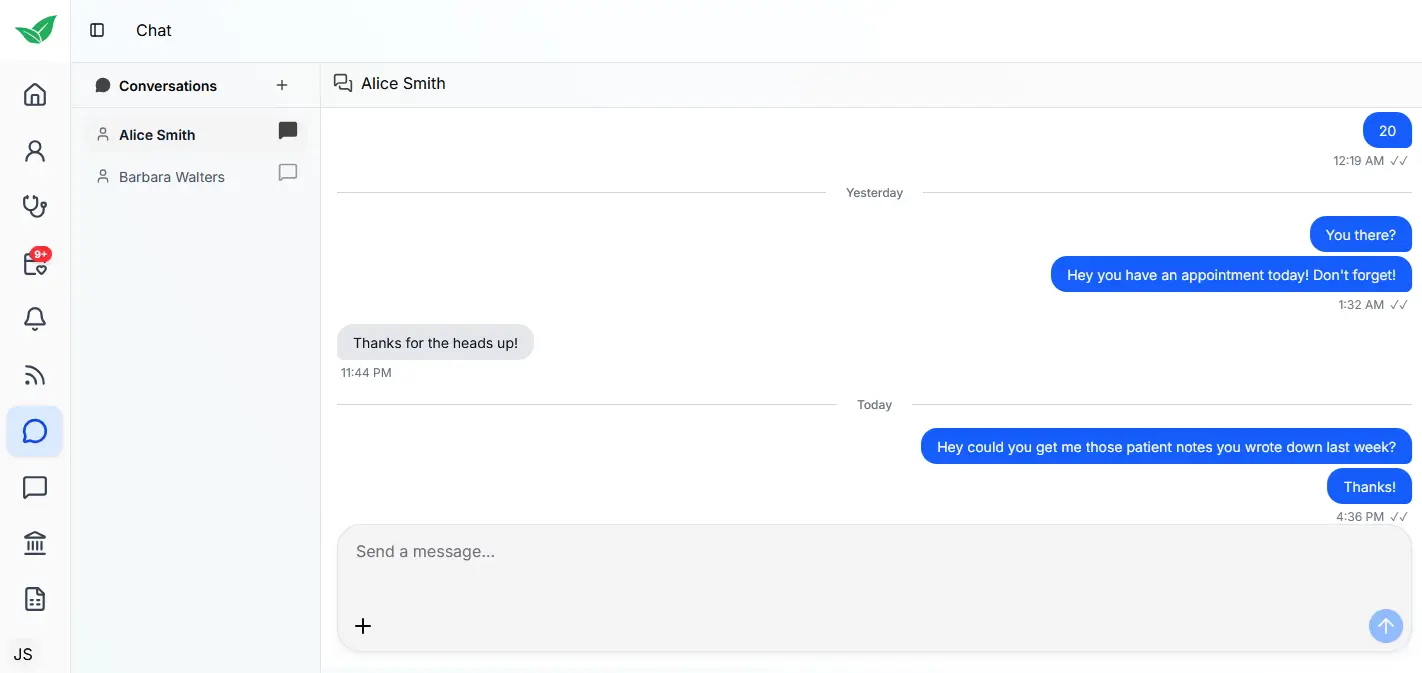
Coordinate your North Carolina caregiving team with HIPAA-compliant instant messaging
Differentiation tip: Specialize in military family care (TRICARE/VA), culturally competent care for diverse communities, mountain/coastal retiree services, or technology-driven documentation. Agencies serving rural NC build strong, defensible positions.
11Marketing & Client Acquisition
How to market your home care business and attract clients in the Tar Heel State
Marketing in North Carolina requires understanding its unique demographics: fast-growing transplant metros, a large military community, diverse populations, and mountain and coastal retirees. Combine community-based outreach with digital marketing and healthcare referral relationships to grow your NC home care agency.
Charlotte & Research Triangle Marketing
Charlotte Transplant Outreach
Charlotte draws tens of thousands of transplants annually from higher-cost states. Many bring aging parents or need care coordination. Market through relocation services, newcomer groups, HOA newsletters, and employer wellness programs at major corporations (Bank of America, Lowe's, Honeywell). Target growing suburban counties like Union, Cabarrus, Iredell, and Gaston where demand outpaces supply.
Triangle Tech-Family Positioning
The Research Triangle (Raleigh-Durham-Chapel Hill) attracts tech workers seeking quality home care for aging parents. Position with transparent pricing, technology-forward care management, and digital portals. Partner with HR departments and EAPs at Research Triangle Park companies and Duke/UNC faculty networks for steady referral pipelines.
Military Family Outreach
North Carolina has one of the largest military presences in the United States. Fort Liberty (formerly Fort Bragg) is the largest military installation by population. Camp Lejeune (Jacksonville) is a major Marine Corps base. These create substantial populations needing home care:
TRICARE & VA Referrals
Become a TRICARE-authorized provider for access to military families and retirees near Fort Liberty, Camp Lejeune, and Seymour Johnson AFB. Build relationships with VA social workers at the Fayetteville, Durham, and Salisbury VA Medical Centers for consistent government-funded referrals through the VA Home-Based Primary Care (HBPC) program.
Military Spouse Pipeline
Military spouses seek flexible employment and many have healthcare training. Partner with Military Spouse Employment Partnership (MSEP) programs and on-base career centers for motivated caregivers. Build relationships with Family Readiness Groups (FRGs) and chaplains to reach families needing deployment and PCS support for aging dependents.
Mountain & Coastal Retiree Communities
NC's Blue Ridge Mountains and coastal communities are major retirement destinations with high concentrations of aging residents needing care:
Asheville & Mountain Retirees
Asheville is a nationally recognized retirement destination. Mountain retirees tend to be active, independent-minded, and value quality of life. Market through local lifestyle publications, arts and culture organizations, hiking and outdoor groups, and the Asheville Area Chamber of Commerce. Many mountain retirees are from out-of-state and may have fewer family members nearby to help with care.
Coastal Community Partnerships
Wilmington, Southport, and the Brunswick County beaches attract retirees from across the East Coast. Oak Island, Sunset Beach, and other coastal communities have senior-heavy demographics. Partner with coastal senior centers, Novant Health New Hanover, and retirement community HOAs. Seasonal population changes mean summer demand can spike significantly.
Diverse Community Outreach
NC has large Hispanic and African American populations. Culturally competent marketing is essential:
African American Communities
North Carolina has the 5th largest African American population in the U.S., with significant concentrations in Charlotte, the Piedmont Triad, Fayetteville, and eastern NC. Marketing through churches (a central community institution), community events, HBCU alumni networks, and local radio reaches these communities effectively. Hire caregivers who reflect the communities you serve.
Hispanic/Latino Communities
NC's Hispanic population has grown dramatically, with concentrations in Charlotte (South Blvd corridor), the Triangle, Piedmont Triad, and agricultural communities in eastern NC. Bilingual (English/Spanish) marketing materials, Spanish-speaking staff, and outreach through Hispanic community organizations, Catholic parishes, and consulate events are essential for reaching this growing market.
Digital Marketing Strategies
Google Business Profile
Optimize your Google Business Profile for every city and region you serve. Charlotte and Raleigh are competitive for "home care" searches, but secondary markets like Greensboro, Winston-Salem, Fayetteville, Asheville, and Wilmington have less competition and lower cost-per-click. Create separate listings for each office location.
Google Ads & Local SEO
Run Google Ads targeting "home care" keywords for specific NC metros and zip codes. CPCs in Charlotte and Raleigh range from $12-25, while secondary markets may be $5-12. Build city-specific landing pages for major NC markets to improve organic search rankings for "home care agency in [city]" queries.
Social Media & Facebook Ads
Use Facebook and Instagram to reach adult children making care decisions for aging parents. Target NC zip codes near retirement communities, military bases, and senior-heavy neighborhoods. Share caregiver spotlights, client testimonials, educational content, and community involvement stories.
Physician Office & Senior Center Marketing
NC physicians, particularly geriatricians and primary care providers, are key referral sources. Visit physician offices with brochures and introduce your services. Partner with NC's extensive network of senior centers operated through the 16 Area Agencies on Aging for community education events and referrals.
Marketing tip: Tailor your strategy by region: military outreach in Fayetteville, tech-transplant marketing in the Triangle, growth marketing in Charlotte, retiree partnerships in Asheville and Wilmington. Layer digital marketing and healthcare referrals as your foundation, with community-specific outreach on top.
12Frequently Asked Questions
Common questions about starting a home care agency in North Carolina
Yes. North Carolina requires a Home Care Agency license from the Division of Health Service Regulation (DHSR) under the NC Department of Health and Human Services (DHHS). The Home Care Agency Licensure Act governs both non-medical ("Home Care Only") and skilled ("Home Health/Home Care") agencies. All direct care staff must pass criminal background checks through the NC Department of Justice (DOJ) and State Bureau of Investigation (SBI), along with a Nurse Aide Registry check.
Starting a non-medical Home Care Only agency in North Carolina typically costs between $25,000 and $65,000, covering NC Secretary of State registration, DHSR licensing, insurance, marketing, office setup, and 3 to 6 months of working capital. North Carolina has a moderate cost of living that keeps startup costs affordable, especially outside the Charlotte and Raleigh-Durham metros. A Home Health/Home Care agency with skilled nursing services costs $80,000 to $200,000 or more.
A Home Care Only license in North Carolina covers non-medical personal care services such as ADL assistance, companionship, homemaking, meal preparation, and respite care. A Home Health/Home Care license covers skilled nursing, physical therapy, occupational therapy, speech therapy, and other medical services in addition to personal care. Both are licensed through DHSR under the Home Care Agency Licensure Act but have different staffing, supervision, and regulatory requirements.
North Carolina requires criminal background checks for all direct care workers through the NC Department of Justice (DOJ) and State Bureau of Investigation (SBI). This includes a state criminal history check and, for Medicaid-participating agencies, a national fingerprint-based FBI check. NC also requires a check against the Nurse Aide Registry for any findings of abuse, neglect, or misappropriation. Workers with certain disqualifying criminal convictions cannot provide direct care services.
North Carolina uses Netsmart as its Electronic Visit Verification system under an open model. Providers can use the free Netsmart portal or choose an alternative EVV vendor that integrates with Netsmart as the state aggregator. EVV is required under the 21st Century Cures Act for all Medicaid-funded personal care and home health services. The NC DHHS Division of Health Benefits (DHB) administers the state Medicaid program.
A Home Care Only agency in North Carolina typically takes 2 to 4 months to launch, covering business registration with the NC Secretary of State, DHSR license application, NC DOJ/SBI background checks, insurance, and initial hiring. A Home Health/Home Care agency takes 4 to 8 months or longer due to the more extensive DHSR application review and potential Medicare certification. North Carolina has a 4.5% flat state income tax (declining under recent legislation), so register with the NC Department of Revenue.
13Sources and Resources
Official North Carolina state agency links and resources
Ready to manage your North Carolina home care agency?
You do not need software on day one. But when you are ready, AveeCare starts at $6/client/month with no contracts, no mandatory demos, and a free trial. Scheduling, care plans, billing, caregiver management, real-time tracking, and alerts in one platform built for simplicity. Manage your North Carolina home care agency from Charlotte to Asheville and everywhere in between.
Disclaimer
This guide is for informational purposes only and does not constitute legal, financial, or professional advice. While we strive to keep this information accurate and up to date, North Carolina laws, regulations, fees, and requirements may change. Always verify current requirements directly with the relevant NC state agencies before making business decisions. Consult with a qualified attorney and accountant in North Carolina before starting your home care business. AveeCare is not affiliated with the NC Department of Health and Human Services, the Division of Health Service Regulation, the NC Department of Justice, the NC Secretary of State, or any North Carolina state agency. Published April 4, 2026.