How to Start a Home Care Agency in New Hampshire
Your complete 2026 guide to launching a home care business in the Granite State, from DHHS licensing and tax-free advantages to Medicaid enrollment and your first clients.
Published April 4, 2026 · 28 min read
TLDR — New Hampshire at a Glance
Yes for both non-medical (Home Care Service Provider) and skilled (Home Health Care Provider) through DHHS.
NH DHHS, Bureau of Health Facilities Administration
$40,000 – $85,000 (non-medical)
$130,000 – $300,000+ (home health)
2 – 4 months (non-medical) | 4 – 8 months (home health)
No state income tax on wages · No state sales tax
1New Hampshire Market Overview
Understanding the opportunity for home care agencies in the Granite State
New Hampshire has a population of approximately 1.4 million people and is one of the oldest states in the nation by median age. Over 20% of New Hampshire residents are aged 65 or older, creating substantial and growing demand for home care services across the state. Starting a home care agency in New Hampshire positions you in a market with strong demographic tailwinds, a business-friendly tax environment, and proximity to the greater Boston metropolitan area.
The southern tier of New Hampshire, including Manchester, Nashua, and the Seacoast region around Portsmouth, is the most densely populated area and benefits from significant economic spillover from the greater Boston metro. Many professionals commute to Massachusetts for work but live in New Hampshire to take advantage of the no state income tax on wages and no state sales tax. This proximity creates a well-educated, higher-income population that increasingly needs home care services as it ages.
Beyond the southern corridor, New Hampshire offers distinct market opportunities. The Lakes Region around Laconia and Wolfeboro attracts retirees seeking lakefront living, while the White Mountains and Upper Valley near Dartmouth-Hitchcock Medical Center have growing senior populations with limited home care options. Concord, the state capital, serves as a hub for government services and healthcare. The “Live Free or Die” ethos means minimal business regulation, and starting a home care business in New Hampshire is more straightforward than in neighboring Massachusetts or Vermont. For a national overview of the startup process with interactive tools, see our complete guide to starting a home care agency and our state-by-state licensing requirements.
2Home Care vs. Home Health in New Hampshire
Two licensing paths through NH DHHS
Both types require DHHS licensure in New Hampshire. Unlike some states that do not regulate non-medical personal care agencies, New Hampshire requires all home care agencies to be licensed through the Department of Health and Human Services, regardless of whether they provide medical or non-medical services.
Home Care Service Provider
- Personal care (bathing, dressing, grooming)
- Companion care and socialization
- Meal preparation and light housekeeping
- Medication reminders (not administration)
- Transportation and errands
- Respite care for family members
DHHS registration/licensure required
Home Care Service Provider designation from DHHS.
Home Health Care Provider
- Skilled nursing care
- Physical, occupational, and speech therapy
- Wound care and injections
- Medical social services
- Home health aide services
- Medication administration
DHHS license required (He-P 809)
Plus Medicare certification for Medicare billing.
3Business Formation in New Hampshire
Register your home care business in a tax-friendly environment

Choose Your Business Structure
Most home care agencies in New Hampshire register as an LLC (Limited Liability Company) for liability protection and tax flexibility. New Hampshire LLC filing costs approximately $100 online through the Secretary of State. You can also form a corporation or sole proprietorship.
Register with NH Secretary of State
File your formation documents with the New Hampshire Secretary of State online at sos.nh.gov. Processing is typically fast. Annual reports are required to maintain your business registration in good standing.
NH Secretary of StateObtain Your EIN
Apply for a free Employer Identification Number (EIN) from the IRS at irs.gov. You need this for bank accounts, payroll, and tax filings. It takes minutes to obtain online.
Register for BPT and BET
Register with the New Hampshire Department of Revenue Administration (DRA) for the Business Profits Tax and Business Enterprise Tax. There is no sales tax registration needed since NH has no sales tax. File Form BT-Summary annually.
NH Department of RevenueObtain Town or City Permits
New Hampshire operates largely at the town/city level for business permits. Contact your local town clerk or city hall to determine if a business permit or home occupation permit is required. Requirements vary significantly between municipalities.
Open a Business Bank Account
Open a dedicated business checking account to keep personal and business finances separate. New Hampshire-based banks and credit unions including Mascoma Bank, Lake Sunapee Bank, and Primary Bank can help. You will need your EIN and formation documents.
4Licensing Requirements
DHHS Bureau of Health Facilities Administration oversees all home care licensing
Home Care Service Providers (Non-Medical)
New Hampshire does require DHHS registration and licensure for non-medical home care agencies. The Bureau of Health Facilities Administration within DHHS oversees the licensing process. As a Home Care Service Provider, you must demonstrate compliance with state regulations covering:
- Completed application to DHHS Bureau of Health Facilities Administration
- Written policies and procedures for service delivery
- Criminal background checks for all direct care staff
- Client rights and grievance procedures
- Supervision and training requirements for caregivers
- Service agreements and care plan documentation
Application timeline: DHHS typically processes Home Care Service Provider applications within 4 to 8 weeks. Ensure your policies, background checks, and documentation are complete before submitting to avoid delays.
Home Health Care Providers (Skilled Services — He-P 809)
If you plan to provide skilled nursing, physical therapy, or other medical services, you must obtain a Home Health Care Provider license from NH DHHS under the He-P 809 administrative rules. These rules establish comprehensive standards for home health agencies including:
- Detailed application to DHHS Bureau of Health Facilities Administration
- Qualified administrator with healthcare management experience
- Clinical director (RN) for clinical supervision and oversight
- Comprehensive policies, procedures, and quality assurance program
- On-site survey and inspection by DHHS
- Ongoing compliance with He-P 809 rules including incident reporting
Medicare Certification
Medicare certification is a separate process from DHHS state licensure. To bill Medicare, your home health agency must apply through the Centers for Medicare & Medicaid Services (CMS), pass a federal survey, and meet all Medicare Conditions of Participation. This process typically adds 3 to 6 months beyond your state license and requires significant preparation, including detailed policies, quality assurance programs, and an initial patient load. The New Hampshire home health market has a relatively high concentration of Medicare-eligible seniors, making certification a valuable investment for skilled service providers.
5Insurance Requirements
Protect your New Hampshire home care business
General Liability
$2,500 - $6,000/yrCovers bodily injury and property damage claims. Recommended minimum: $1M per occurrence / $2M aggregate. Required by most referral partners and healthcare systems in New Hampshire.
Professional Liability (E&O)
$1,500 - $4,500/yrCovers errors, omissions, and negligence claims related to the care services your agency provides. Essential for any home care business operating in New Hampshire.
Workers' Compensation
$2,500 - $7,000/yrNew Hampshire law requires workers' compensation insurance for all employers. Administered by the NH Department of Labor. Sole proprietors and partners may exempt themselves but must cover all employees.
Surety / Fidelity Bond
$300 - $1,000/yrProtects clients against employee theft or dishonesty. Not required by New Hampshire law, but strongly recommended. Many families and referral partners expect it.
NH workers' comp note: New Hampshire requires workers' compensation insurance for all employers (RSA 281-A). Sole proprietors and LLC members can elect to exclude themselves from coverage, but all employees must be covered. The NH Department of Labor oversees compliance, and penalties for non-compliance include fines and potential criminal charges. Obtain coverage before hiring your first caregiver.
6Staffing and Hiring in New Hampshire
Finding and qualifying caregivers in the Granite State
Building a reliable team of caregivers is one of the most challenging aspects of starting a home care agency in New Hampshire. The state has a tight labor market, compounded by its proximity to the greater Boston area, which draws workers across the border with higher wages. Although the federal minimum wage of $7.25 per hour technically applies in New Hampshire (the state repealed its own minimum wage law), the practical reality is that home care agencies must pay significantly more to attract and retain quality caregivers in this competitive market.
Background Checks
New Hampshire requires criminal background checks for caregivers through the NH Department of Safety, Division of State Police, Criminal Records unit. This includes a state criminal records check. FBI fingerprint-based checks may be required for certain positions and Medicaid-funded services. Additionally, always check the BEAS (Bureau of Elderly and Adult Services) abuse registry and the OIG exclusion list before hiring any caregiver.
NH State Police Criminal RecordsTraining Requirements
New Hampshire requires training for caregivers as part of the DHHS licensing requirements, though specific hour mandates depend on the service type. Best practices include providing at least 40 hours of initial training covering personal care techniques, safety protocols, fall prevention (critical for New Hampshire's elderly population), infection control, and client communication. For home health aides under a DHHS-licensed Home Health Care Provider, federal requirements mandate 75 hours of training including 16 hours of supervised clinical practice.
Where to Find Caregivers in New Hampshire
NHTI, Manchester CC, White Mountains CC, Great Bay CC
Indeed, ZipRecruiter, local Facebook groups
Employee referral bonuses are highly effective in NH's tight labor market
Wages and Compensation in New Hampshire
While the federal minimum wage of $7.25 per hour technically applies in New Hampshire, no home care agency can practically hire at that rate. The Boston labor market directly competes for New Hampshire caregivers, especially in the southern tier. Most agencies pay between $15 and $20 per hour for personal care aides and $18 to $26 per hour for home health aides and CNAs. Pay rates are typically highest in southern NH (Nashua, Manchester, Portsmouth) due to Boston proximity.
No state income tax advantage: Highlight this when recruiting. Caregivers living in New Hampshire keep more of their paycheck compared to those working in Massachusetts, where the state income tax is 5%. This is a meaningful recruitment tool, especially for workers living near the border who can choose between NH and MA employers.
7NH Medicaid and Medicare
Government payer programs and EVV compliance in the Granite State
NH Medicaid Program
New Hampshire Medicaid is administered by the NH Department of Health and Human Services. The program covers home care services for eligible residents through a managed care model. NH Medicaid contracts with managed care organizations (MCOs) to deliver services, and home care agencies must enroll as Medicaid providers and contract with the appropriate MCOs to bill for covered services including personal care, homemaker services, and skilled home health.
NH Medicaid ProgramChoices for Independence (CFI) Waiver
The Choices for Independence (CFI) waiver is New Hampshire's primary Home and Community-Based Services (HCBS) waiver program. CFI provides home care services to elderly and adults with disabilities who would otherwise require nursing facility care. Covered services include personal care, homemaker services, adult day programs, respite care, and care management. Enrolling as a CFI provider gives your agency access to a significant pool of Medicaid-eligible clients who prefer to receive care at home rather than in institutional settings. Contact DHHS to learn about the CFI provider enrollment process.
Electronic Visit Verification (EVV)
Under the 21st Century Cures Act, all states must implement EVV for Medicaid-funded personal care and home health services. New Hampshire uses Sandata as its EVV solution. Agencies billing NH Medicaid must ensure their EVV system integrates with the state Sandata platform. EVV captures visit start and end times, location, services delivered, and caregiver identification for all applicable Medicaid-funded visits.
AveeCare + NH Medicaid: AveeCare supports private pay, Medicare, long-term care insurance, and Medicaid billing across all 50 states, including New Hampshire. For EVV, we generate Sandata-compatible exports that your agency or biller submits to the NH Sandata aggregator. If you would prefer a direct integration with the state aggregator instead of the export workflow, please contact us to coordinate setup.
NH Medicaid Managed Care
- Choices for Independence (CFI) waiver
- NH Medicaid managed care organizations
- In & Out home care waiver services
- ServiceLink referral coordination
Medicare Certification
To bill Medicare, your home health agency must be certified by CMS. The process involves applying through CMS, passing a federal survey, demonstrating compliance with Medicare Conditions of Participation, and accepting Medicare reimbursement rates. New Hampshire's high proportion of Medicare-eligible seniors makes certification particularly valuable. Expect 3 to 6 months for the full certification process after obtaining your DHHS license.
8Startup Cost Estimator
New Hampshire-specific startup cost breakdown
Business Formation
$600 – $3,552Filing with NH Secretary of State
IRS EIN is free; registered agent optional
Free to register with NH DRA
Varies by municipality; some towns have no permit requirement
Attorney review, CPA setup
Licensing (All Agencies)
$800 – $2,750Bureau of Health Facilities Administration
Required for DHHS application
Insurance (Annual)
$6,800 – $18,500$1M per occurrence / $2M aggregate
Errors and omissions coverage
Required for all NH employers
Recommended for client trust
Office & Equipment
$3,800 – $11,200Small office (southern NH rates higher near Boston)
Laptops, smartphones for staff
Desk, chairs, printer, supplies
Marketing & Initial Growth
$3,200 – $10,100Professional site with local SEO
Google Ads, Facebook, local outreach
Brochures, flyers, cards
Working Capital (3-6 Months)
$16,000 – $45,000Cover payroll before revenue stabilizes
Rent, utilities, software, misc.
Estimated Total Startup Cost (Non-Medical)
$31,200 – $91,102
Costs are estimates based on typical New Hampshire home care agency startups and may vary by location, scope of services, and individual circumstances. Southern NH costs near the Boston market tend to be higher than northern and rural areas.
9Compliance Checklist
Track your progress across all New Hampshire requirements
Business Formation
0/6Licensing
0/5Insurance
0/4Staffing
0/6Medicaid & Medicare
0/3Operations
0/3Marketing
0/410Building Your Referral Network
Key referral sources in New Hampshire for your home care agency
In New Hampshire, most home care clients come through referrals from healthcare providers, community organizations, and state agencies. Building strong relationships with hospitals, physicians, and the state's ServiceLink Resource Centers is critical for a successful home care business in the Granite State. New Hampshire is a small state where personal relationships and reputation carry significant weight.
Dartmouth-Hitchcock Medical Center
Dartmouth-Hitchcock (now Dartmouth Health) is New Hampshire's largest and most prestigious health system, based in Lebanon in the Upper Valley. Connect with their discharge planners and care coordination teams. They serve patients from across northern NH and Vermont, making them a critical referral source for agencies serving the Upper Valley and beyond.
Elliot Health System
Elliot Hospital in Manchester is the largest hospital in southern NH and a key referral source for home care agencies in the Manchester, Bedford, and Goffstown areas. Build relationships with their discharge planning team and social workers who coordinate post-acute care for patients returning home.
Catholic Medical Center
Catholic Medical Center (CMC) in Manchester serves a large patient population in southern NH. Their rehabilitation and geriatric programs frequently need home care referrals. Connect with their care management team for a steady pipeline of post-discharge home care clients.
Bureau of Elderly and Adult Services (BEAS)
BEAS within DHHS oversees services for elderly and disabled adults in New Hampshire. They manage the Choices for Independence waiver and connect families with home care resources. Building a relationship with BEAS case managers is essential for agencies serving Medicaid clients.
NH BEASServiceLink Resource Centers
ServiceLink is New Hampshire's aging and disability resource network, with offices across the state. They serve as the front door for connecting seniors and families with home care services, Medicaid waivers, and community resources. Register your agency with ServiceLink to receive referrals.
Area Agencies on Aging (AAAs)
New Hampshire has multiple Area Agencies on Aging that serve different regions of the state. These organizations coordinate senior services, run caregiver support programs, and are trusted referral sources for families seeking home care in their communities.
11Marketing & Client Acquisition
How to advertise your home care business and attract clients in New Hampshire
New Hampshire's small-state character, aging population, and proximity to the greater Boston market create unique marketing opportunities for home care agencies. The southern NH corridor (Manchester, Nashua, Portsmouth) overlaps with the Boston metro, while the Lakes Region and White Mountains attract retirees seeking a quieter lifestyle. The “Live Free or Die” mentality means many NH residents value independence and prefer to age in place, making home care a natural fit. A combination of community-based marketing, digital outreach, and healthcare referral relationships will help you build a client pipeline in the Granite State.
Digital Marketing Strategies
Google Business Profile
Optimize your Google Business Profile for Manchester, Nashua, Concord, Portsmouth, and every city you serve. New Hampshire is a small market, so strong reviews and a complete profile can quickly establish your agency as a top result in local search.
Southern NH / Boston Spillover
Many families in southern NH search for home care using Boston-area search terms. Run Google Ads campaigns targeting both NH-specific keywords ("home care Nashua NH") and broader terms that capture families searching from the Massachusetts side of the border.
SEO for Retirement Destinations
Create city-specific landing pages targeting the Lakes Region (Laconia, Wolfeboro, Meredith), Seacoast (Portsmouth, Exeter, Hampton), and Upper Valley (Lebanon, Hanover). These retirement-heavy areas have less online competition than the southern corridor.
Social Media for Community Trust
Use Facebook to connect with local community groups in New Hampshire towns. In a small state, word-of-mouth reputation travels fast on social media. Share client testimonials (with permission), caregiver spotlights, and educational content about aging in place.
Community Outreach & Grassroots Marketing
Small-Town Community Engagement
New Hampshire is a state of small towns where personal relationships matter enormously. Attend town meetings, sponsor local events, and participate in community organizations like the Rotary Club, Lions Club, and church groups. In NH, your reputation in the community will be your most powerful marketing tool.
Senior Centers and Community Events
Attend health fairs, senior expos, and events at senior centers in Manchester, Nashua, Concord, and smaller towns. Offer free educational seminars on topics like fall prevention, aging in place, and navigating Medicare. These events build trust and generate leads.
Lakes Region and White Mountains Retirees
The Lakes Region around Laconia and the White Mountains attract retirees seeking rural New England living. Many of these residents are seasonal at first, then transition to year-round living as they age. Partner with local businesses, real estate agents, and community centers in these areas to reach this demographic early.
ServiceLink and BEAS Referrals
ServiceLink Resource Centers are the official aging and disability resource network in New Hampshire. Register your agency with ServiceLink offices statewide and build relationships with their care coordinators. BEAS case managers also refer families to home care agencies for Choices for Independence waiver services.
Healthcare Referral Relationships
New Hampshire's healthcare ecosystem is anchored by a few major systems, making it feasible to build strong referral relationships with key partners across the state:
Dartmouth Health Discharge Planners
Dartmouth-Hitchcock and its network of clinics serve the Upper Valley and beyond. Regular contact with their discharge planning and care coordination teams can generate consistent referrals for home care agencies in the Lebanon, Hanover, and Claremont areas.
Elliot Health & CMC
Elliot Hospital and Catholic Medical Center are the two largest hospitals in Manchester. Build relationships with their social workers and discharge planners. Southern NH has the highest volume of potential home care referrals in the state.
Primary Care and Geriatricians
Build relationships with primary care physicians and geriatricians across New Hampshire. In a small state, a few strong physician relationships can generate a steady stream of referrals. Focus on practices in Manchester, Nashua, Concord, and the Seacoast.
Skilled Nursing Facilities
New Hampshire has dozens of SNFs and rehabilitation facilities. Patients transitioning from SNFs back home frequently need home care support. Connect with social workers and administrators at facilities in your target service area.
“Live Free or Die” Independence Messaging
New Hampshire residents take their state motto seriously. Your marketing should lean into this cultural value by positioning home care as a way to maintain independence, not lose it. Frame your services around autonomy and choice:
Independence at Home
Position home care as the alternative to giving up independence. Messaging like "Stay in your home, on your terms" resonates strongly with NH residents who value self-reliance.
Choice and Control
Emphasize that clients choose their caregivers, set their schedules, and remain in control. NH families respond to marketing that highlights personal choice over institutional care.
No-Tax Business Advantage
When marketing to referring professionals and business partners, highlight that NH has no income tax and no sales tax. This positions your agency as operating in a business-friendly environment.
Marketing Channel Comparison
| Channel | Cost | Time to Results | Best For |
|---|---|---|---|
| Google Ads (Southern NH) | $$-$$$ | Immediate | Fast leads in competitive Manchester/Nashua market |
| SEO / Website | $ | 3-6 months | Long-term organic visibility statewide |
| Community Events / Senior Centers | $ | 1-3 months | Trust-building in small-town NH |
| Hospital Referral Relationships | Free | 1-3 months | Post-acute and medical referrals |
| ServiceLink / BEAS Partnerships | Free | 1-2 months | Medicaid and state-funded client referrals |
| Facebook Community Groups | $ | 2-4 months | Word-of-mouth amplification in NH towns |
New Hampshire marketing tip: In a state of 1.4 million people, personal relationships and community reputation are your most valuable marketing assets. Focus on building genuine connections with healthcare providers, ServiceLink coordinators, and community leaders. A strong Google Business Profile with excellent reviews is table stakes, but in New Hampshire, the handshake still matters more than the ad spend.
12Frequently Asked Questions
Common questions about starting a home care agency in New Hampshire
Yes. New Hampshire requires licensing for both medical and non-medical home care agencies through the Department of Health and Human Services (DHHS), Bureau of Health Facilities Administration. Home Health Care Providers offering skilled services must meet He-P 809 requirements, while Home Care Service Providers offering non-medical personal care must also register and obtain DHHS licensure. Both paths require a completed application, background checks, and compliance with applicable state regulations.
Starting a non-medical home care agency in New Hampshire typically costs between $40,000 and $85,000, covering business formation, DHHS licensing fees, insurance, initial marketing, office setup, and 3 to 6 months of working capital. A licensed home health agency with skilled nursing services costs significantly more, typically $130,000 to $300,000 or higher due to additional DHHS requirements and Medicare certification costs. The no-income-tax and no-sales-tax environment helps reduce ongoing operating costs compared to neighboring states like Massachusetts.
New Hampshire has no state income tax on wages and no state sales tax, which is a significant advantage for home care businesses. However, businesses are subject to the Business Profits Tax (BPT) at 7.5% on net business income and the Business Enterprise Tax (BET) at 0.5% on the enterprise value tax base. The BET paid can be credited against BPT liability. Federal income and employment taxes still apply. This tax structure makes New Hampshire one of the most business-friendly states in New England for starting a home care agency.
New Hampshire uses Sandata as its Electronic Visit Verification (EVV) system for Medicaid-funded personal care and home health services under the 21st Century Cures Act. Agencies billing NH Medicaid must ensure their EVV solution integrates with the state Sandata system. EVV captures visit start and end times, location, services delivered, and caregiver identification for all applicable Medicaid-funded visits.
Yes. New Hampshire requires criminal background checks for caregivers through the NH Department of Safety, Division of State Police, Criminal Records unit. This includes a state criminal records check and may require FBI fingerprint-based checks for certain positions. Agencies should also check the NH Bureau of Elderly and Adult Services (BEAS) abuse registry and the OIG exclusion list before hiring any caregiver.
A non-medical Home Care Service Provider in New Hampshire can typically be operational in 2 to 4 months, accounting for DHHS application processing, business formation, background checks, and insurance procurement. A licensed Home Health Care Provider offering skilled services takes 4 to 8 months or longer due to more extensive DHHS requirements and potential Medicare certification. Building a referral network and client base in the competitive southern NH and Seacoast markets typically takes an additional 3 to 6 months.
13Sources and Resources
Official New Hampshire state agency links and resources
Launch your New Hampshire home care agency with AveeCare
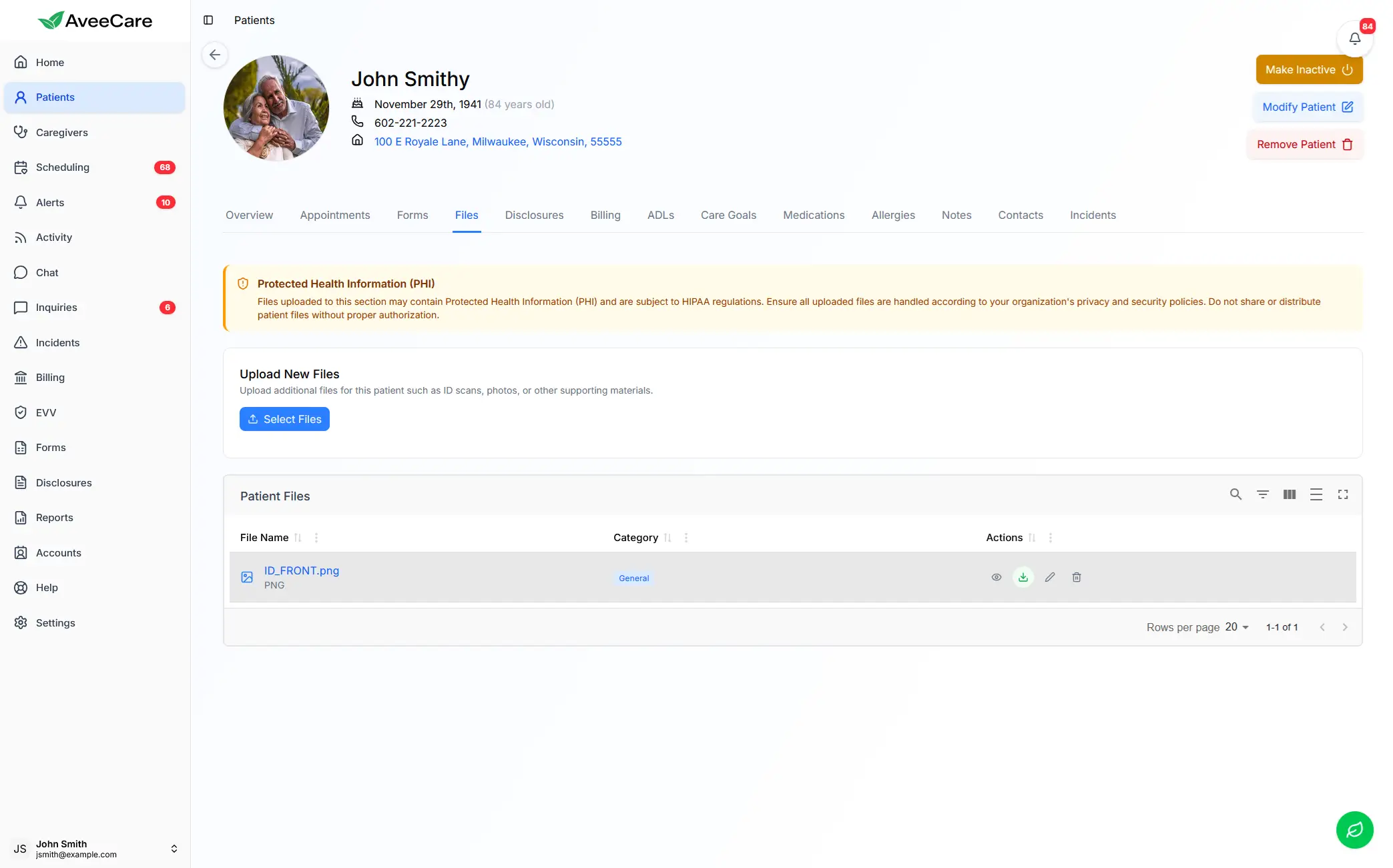
AveeCare provides everything you need to run your New Hampshire home care business, from scheduling and care plans to billing and caregiver management. Starting at just $6/client/month with no contracts, no mandatory demos, and a free trial.
Scheduling, care plans, billing, caregiver management, real-time alerts, and client documentation in one platform built for simplicity. Support for private pay, Medicare, and long-term care insurance billing across all 50 states.
Disclaimer
This guide is for informational purposes only and does not constitute legal, financial, or professional advice. While we strive to keep this information accurate and up to date, New Hampshire laws, regulations, fees, and requirements may change. Always verify current requirements directly with the relevant New Hampshire state agencies (DHHS, Secretary of State, Department of Safety, Department of Revenue Administration) before making business decisions. Consult with a qualified attorney and accountant in New Hampshire before starting your home care business. AveeCare is not affiliated with the New Hampshire Department of Health and Human Services or any New Hampshire state agency. Published April 4, 2026.