How to Start a Home Care Agency in Nevada
Your complete 2026 guide to launching a home care business in Nevada -- from DPBH licensing for both personal care and home health agencies, to navigating DHCFP Medicaid, Sandata EVV, and the Silver State's booming retiree market with no state income tax.
Published April 4, 2026 · 25 min read
TLDR -- Nevada at a Glance
Yes -- DPBH license required for BOTH types under NRS 449. Personal Care Agencies and Home Health Agencies both need DPBH/HCQC licensure.
Division of Public and Behavioral Health (DPBH), Bureau of Health Care Quality and Compliance (HCQC)
No state income tax! One of the fastest-growing states. Large retiree and snowbird population. 24/7 casino/hospitality economy.
$25,000 – $65,000 (Personal Care)
$85,000 – $200,000+ (Home Health)
3 – 6 months (Personal Care) | 5 – 10 months (Home Health)
No state income tax! Modified Business Tax (MBT) on payroll. Commerce Tax if $4M+ gross revenue. Minimum wage: $12.00/hr.
1Nevada Market Overview
Understanding the opportunity for home care agencies in the Silver State
Nevada has a population of approximately 3.2 million people and is one of the fastest-growing states in the nation, creating rapidly expanding demand for home care services. For entrepreneurs looking to start a home care agency in Nevada, the market offers a compelling combination of explosive population growth, a large retiree and snowbird community, no state income tax, and a diverse population with distinct care needs. Nevada's home care market is driven by an aging population that continues to grow as more retirees relocate to the state for its warm climate, tax advantages, and affordable housing compared to California.
The Las Vegas metropolitan area (Clark County, population ~2.3 million) dominates the state, containing approximately 75% of Nevada's total population. Las Vegas, Henderson, North Las Vegas, and surrounding suburbs are the primary market for home care services in Nevada. The metro area is home to major 55+ active adult communities including Sun City Summerlin, Sun City Anthem (Henderson), Solera at Anthem, and Siena -- each containing thousands of retiree households that represent a concentrated market for personal care and companion services.
The Reno-Sparks metropolitan area (Washoe County, population ~490,000) is Nevada's second-largest market, with its own growing retiree population and proximity to Lake Tahoe attracting seasonal residents. Carson City (~58,000), the state capital, serves central Nevada. Rural Nevada, including Elko, Nye County (Pahrump), and the vast rural interior, has limited home care providers and long distances between communities. Nevada's significant Hispanic community (approximately 29% of the population) and growing Asian and Filipino populations (particularly in Las Vegas) create demand for culturally competent, bilingual home care services. The casino and hospitality industry employs a large portion of the workforce in a 24/7 economy, creating unique scheduling dynamics -- many workers whose aging parents need care work irregular shifts themselves, increasing demand for flexible home care scheduling. For a national overview of the startup process with interactive tools, see our complete guide to starting a home care agency and our state-by-state licensing requirements.
2Home Care vs. Home Health in Nevada
Personal Care Agency vs. Home Health Agency -- both require DPBH licensure
Important distinction in Nevada: Unlike many states, Nevada requires DPBH licensure for BOTH personal care agencies and home health agencies under NRS 449. The Bureau of Health Care Quality and Compliance (HCQC) handles licensing for both types. This means even non-medical companion care and personal care agencies must go through the state licensing process, which adds time and cost to your startup but provides regulatory credibility and consumer protection.
Personal Care Agency
DPBH license required (NRS 449)
- Companion care and socialization
- Homemaker services and housekeeping
- Meal preparation and nutrition
- Personal care (bathing, dressing)
- Transportation and errands
- Respite care for family caregivers
DPBH/HCQC license required
Nevada requires licensure for personal care agencies under NRS 449.
Home Health Agency (HHA)
DPBH license required (NAC 449)
- Skilled nursing care
- Physical and occupational therapy
- Speech therapy
- Medical social services
- Home health aide services
- Wound care and IV therapy
DPBH/HCQC license required
Plus Medicare cert for Medicare billing.
Background checks for BOTH types: Nevada law requires criminal background checks through the Nevada Department of Public Safety (DPS), Records, Communications and Compliance Division for all employees of licensed healthcare facilities. Both personal care agencies and home health agencies must submit fingerprint-based background checks for all staff before they can provide care. The DPS check includes both state and federal (FBI) databases.
3Business Formation in Nevada
NV SOS registration, no income tax, MBT payroll tax, Commerce Tax, state business license
Choose Your Business Structure
Most Nevada home care agencies register as an LLC (Limited Liability Company) for liability protection and tax flexibility. Nevada is well-known as a business-friendly state with strong LLC protections, no franchise tax on LLCs, and no requirement to disclose members or managers in public filings. An LLC is the most common and recommended structure for new home care agencies in the Silver State.
Register with Nevada Secretary of State
File your Articles of Organization with the Nevada Secretary of State online through SilverFlume, the state's business portal. Nevada LLC registration costs approximately $75 for the filing plus $150 for the initial list of managers. You will also need a Nevada State Business License ($200 annually) from the Secretary of State, which is required for all businesses operating in Nevada.
Nevada Secretary of StateObtain Your EIN
Apply for a free Employer Identification Number (EIN) from the IRS at irs.gov. You need this for bank accounts, payroll, and tax filings. You can get it instantly online. This is required before you can hire employees or open a business bank account.
Register for Modified Business Tax (MBT)
Nevada has no state income tax, but employers must pay the Modified Business Tax (MBT), a quarterly payroll tax assessed on total gross wages paid to employees. The current MBT rate is 1.378% on wages exceeding $50,000 per quarter. Register with the Nevada Department of Taxation. Businesses with over $4 million in Nevada gross revenue may also owe the Commerce Tax, an annual tax based on business category.
City/County Business License
Clark County (Las Vegas area), Washoe County (Reno area), and individual cities require their own business licenses. In Clark County, apply through the Clark County Business License Department. The City of Las Vegas, Henderson, North Las Vegas, and Reno each have separate city business license requirements. Check with your specific city or county for fees and requirements in your primary service area.
Open a Business Bank Account
Open a dedicated business checking account to keep personal and business finances separate. Nevada has a strong banking sector with major national and regional banks including Nevada State Bank, Bank of Nevada, and all major national banks. You will need your EIN, Articles of Organization, Nevada State Business License, and operating agreement.
No state income tax advantage: Nevada is one of only nine states with no state income tax, which is a significant advantage for home care agency owners and employees alike. Your employees keep more of their earnings, which helps with recruitment and retention in a competitive labor market. Instead of income tax, Nevada relies on the Modified Business Tax (MBT) on payroll and the Commerce Tax on businesses with $4M+ gross revenue. For most new home care agencies, MBT will be your primary state tax obligation, and even that is relatively modest compared to state income taxes in neighboring California, Oregon, or Utah.
4Licensing Requirements (DPBH)
DPBH/HCQC licensure required for both personal care and home health agencies under NRS 449
Personal Care Agency License (DPBH/HCQC)
Nevada requires all agencies providing personal care services to obtain a Personal Care Agency license from the Division of Public and Behavioral Health (DPBH), Bureau of Health Care Quality and Compliance (HCQC). Under NRS 449, personal care agencies must meet specific standards for staff qualifications, policies and procedures, client rights, recordkeeping, and quality assurance. The HCQC conducts initial and periodic surveys to verify compliance. This licensing requirement provides consumer protection and regulatory credibility for your Nevada home care agency.
- Submit Personal Care Agency license application to DPBH/HCQC
- Develop required policies and procedures manual
- Submit DPS fingerprint-based background checks for all staff
- Pass HCQC initial inspection and compliance survey
- Maintain ongoing compliance with NRS 449 requirements
- Renew license annually with DPBH
Medicaid Provider Enrollment
If you want to provide Medicaid-funded home care services in Nevada, you must enroll as a Medicaid provider with the Division of Health Care Financing and Policy (DHCFP) under DHHS. You must first hold your DPBH Personal Care Agency or Home Health Agency license before applying for Medicaid enrollment. DHCFP processes enrollment applications and verifies compliance with all Medicaid program requirements including documentation, DPS background checks, and Sandata EVV registration.
- Obtain DPBH Personal Care Agency or Home Health Agency license first
- Submit Medicaid provider enrollment application to DHCFP
- Complete DPS background checks for all direct care workers
- Check OIG exclusion list for all employees
- Register for Sandata EVV compliance
Home Health Agency License (DPBH/HCQC)
If you plan to provide skilled nursing, physical therapy, or other medical services in Nevada, you must obtain a Home Health Agency license from DPBH/HCQC under NAC 449. This is a more rigorous licensing process with clinical documentation, staffing requirements (including a licensed RN as clinical supervisor), quality assurance standards, and ongoing survey compliance. The Home Health Agency license has stricter requirements than the Personal Care Agency license and includes clinical policy development, professional staffing ratios, and infection control protocols.
- Submit Home Health Agency license application to DPBH/HCQC
- Develop clinical policies and procedures manual
- Hire qualified clinical staff (RN director required)
- Complete DPS background checks for all staff
- Pass DPBH/HCQC initial survey inspection
- If Medicare: apply for CMS Medicare certification
5Insurance Requirements
Workers' comp required for ALL employers in Nevada
Insurance is essential for protecting your Nevada home care agency, your clients, and your caregivers. Nevada requires workers' compensation insurance for all employers with one or more employees. The Nevada Division of Industrial Relations oversees workers' compensation requirements. Coverage must be obtained through licensed insurance carriers or the employer may qualify for self-insurance. Nevada's moderate cost of living in Las Vegas and slightly higher costs in Reno translate to insurance premiums that are close to the national average for home care agencies.
General Liability Insurance
Protects your Nevada home care agency from claims of bodily injury, property damage, and personal injury. A standard policy of $1 million per occurrence and $2 million aggregate is the industry baseline. Nevada premiums typically range from $1,800 to $4,000 per year for a new agency, reflecting the state's moderate risk environment.
Professional Liability (E&O)
Covers claims arising from errors, omissions, or negligence in the care services your agency provides. This is critical for protecting against lawsuits related to caregiver actions or inactions. Typical Nevada costs range from $1,200 to $3,500 annually depending on services offered, staff count, and whether you provide skilled or non-medical services.
Workers' Compensation (Required)
Nevada requires workers' compensation insurance for ALL employers with one or more employees. The Nevada Division of Industrial Relations regulates the system. Coverage must be obtained through licensed insurance carriers or approved self-insurance programs. Home care workers face risks including lifting injuries, slips, falls, and extreme heat exposure during summer months. Budget approximately $1,800 to $5,000 annually depending on payroll size.
Surety and Fidelity Bonds
While not always legally required for personal care agencies in Nevada, surety and fidelity bonds protect clients against theft or dishonesty by your caregivers. Many families and referral partners in Las Vegas and Reno expect bonded agencies. In a market with a transient population and high property values, being bonded enhances your agency's reputation. Costs are typically $200 to $700 annually.
Commercial Auto Insurance
Important in Nevada given the distances caregivers may travel, particularly in the sprawling Las Vegas metro area and between northern and southern Nevada communities. If caregivers use personal vehicles, non-owned auto liability coverage is essential. Nevada's extreme summer heat and flash flood risks during monsoon season increase driving hazards seasonally.
Cyber Liability Insurance
As a HIPAA-covered entity handling protected health information, cyber liability insurance is increasingly important. This covers data breach expenses, notification costs, and legal liability from cybersecurity incidents. Nevada agencies handling electronic health records and billing data should strongly consider this coverage, especially given Nevada's strong consumer privacy laws.
Nevada workers' comp note: Nevada requires workers' compensation for ALL employers from the very first employee. The Nevada Division of Industrial Relations oversees the system. Failure to carry workers' comp in Nevada can result in fines up to $15,000, criminal penalties, and personal liability for workplace injuries. The State Industrial Insurance System (SIIS) was privatized, so coverage must be obtained through private insurance carriers. This should be one of the first items you address when forming your agency.
6Staffing Your Nevada Agency
$12.00/hr minimum wage, DPS background checks, DETR/JobConnect, diverse workforce, 24/7 scheduling
Staffing is one of the most critical aspects of running a home care agency in Nevada. The state's minimum wage is $12.00 per hour in 2026, a unified rate after Nevada's previous two-tier wage system ended. Nevada's economy is heavily driven by the casino and hospitality industry, which means you are competing for hourly workers against resorts, hotels, and restaurants that often offer tips and benefits. Criminal background checks through the Nevada Department of Public Safety (DPS), Records, Communications and Compliance Division are mandatory for all employees of DPBH-licensed agencies. The diverse workforce in Las Vegas and Reno, including significant Hispanic and Filipino populations, offers an opportunity to build a multilingual caregiver team.
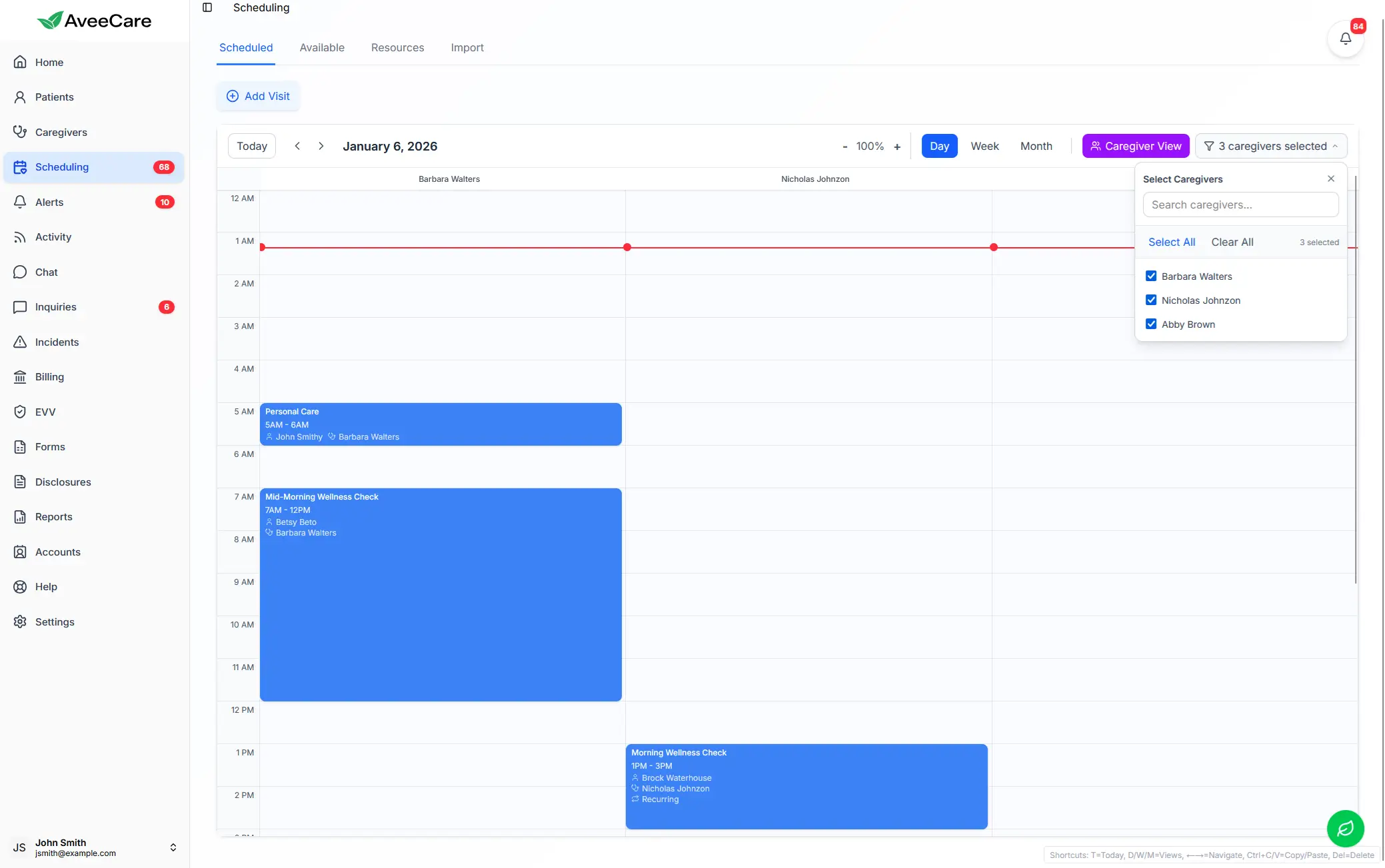
AveeCare's caregiver scheduling view -- built for managing 24/7 shift coverage across Nevada's diverse communities
DPS Background Checks
All employees of DPBH-licensed agencies must undergo fingerprint-based criminal background checks through the Nevada Department of Public Safety (DPS), Records, Communications and Compliance Division. Checks include both state and federal (FBI) databases. Processing typically takes 2 to 6 weeks. The DPS provides electronic fingerprint submission through approved LiveScan vendors located throughout Las Vegas and Reno, which can expedite processing.
Nevada DPS Records DivisionDETR JobConnect Career Centers
The Nevada Department of Employment, Training and Rehabilitation (DETR) operates JobConnect career centers throughout the state. These offices provide free recruitment services, job posting boards, applicant screening, and workforce training programs. Post your caregiver positions at JobConnect locations in Las Vegas, Henderson, North Las Vegas, Reno, Sparks, and Carson City. They connect you with job seekers including those receiving unemployment benefits who are actively looking for work.
Diverse 24/7 Workforce
Nevada's casino and hospitality economy creates a workforce accustomed to non-traditional hours, which is advantageous for home care agencies that need caregivers for evening, overnight, and weekend shifts. Many hospitality workers are bilingual (Spanish, Filipino, Mandarin) and have strong customer service skills that translate well to caregiving. Recruit from the hospitality sector, especially workers looking for more stable schedules or transitioning out of physically demanding resort jobs.
CSN and TMCC CNA Programs
The College of Southern Nevada (CSN) in Las Vegas and Truckee Meadows Community College (TMCC) in Reno offer CNA (Certified Nursing Assistant) training programs. Nevada State College and UNLV also produce healthcare graduates. Build relationships with these programs for early access to graduates. Consider sponsoring CNA training as a recruitment incentive, especially given the competitive Las Vegas labor market where hospitality jobs compete for the same hourly workers.
Wage competitiveness in Nevada: Nevada's $12.00/hour minimum wage is a floor, and competitive home care agencies typically pay $14 to $19 per hour for non-medical caregivers in Las Vegas and $14 to $18 per hour in Reno. The casino and hospitality industry offers strong competition for hourly workers, often with tips that can significantly increase total compensation. To compete effectively, offer competitive base wages, flexible scheduling (especially important for workers with hospitality backgrounds used to varied schedules), mileage reimbursement for the sprawling Las Vegas metro area, and genuine benefits like health insurance and paid time off. Nevada's no-income-tax advantage means your employees keep more of their paycheck, which you can use as a recruiting talking point versus neighboring states like California.
7Medicaid & Medicare in Nevada
DHCFP Medicaid, managed care, Sandata EVV, HCBS waivers, ADSD programs
Nevada's Medicaid program is administered by the Division of Health Care Financing and Policy (DHCFP) under the Department of Health and Human Services (DHHS). Nevada expanded Medicaid in 2017 under the Affordable Care Act, significantly increasing the number of eligible residents. The Aging and Disability Services Division (ADSD) administers additional aging-related programs and HCBS waivers. For home care agencies looking to serve Medicaid clients in Nevada, understanding DHCFP enrollment requirements, HCBS waiver programs, and Sandata EVV compliance is essential for building a sustainable payer mix.
Nevada Medicaid Provider Enrollment
To provide Medicaid-funded home care services in Nevada, you must first hold a valid DPBH license and then enroll as a provider with DHCFP. The enrollment process involves application submission, DPS background verification for all direct care workers, compliance verification, and credentialing. Nevada Medicaid uses a mix of fee-for-service and managed care delivery models. DHCFP manages service authorizations and claims processing for Medicaid beneficiaries receiving home care services.
DHCFP Division of Health Care Financing and PolicyElectronic Visit Verification (EVV) -- Sandata
Nevada uses Sandata as its EVV system for Medicaid-funded personal care and home health services, as required by the 21st Century Cures Act. All Medicaid providers delivering personal care services must use an EVV system that captures the type of service, date, start and end times, location, and identity of the individual providing and receiving the service. Providers can use Sandata's system directly or use an alternate EVV solution that integrates with the Sandata aggregator. DHCFP provides training and resources for EVV compliance.
Nevada HCBS Waivers & Programs
- Frail Elderly Waiver (home-based alternatives to nursing facility)
- Physical Disabilities Waiver
- Intellectual Disabilities Waiver
- ADSD Community Based Care programs
- Medicaid Expansion (ACA) coverage
Medicare Certification
To bill Medicare, your Nevada home health agency must first hold a DPBH Home Health Agency license, then be certified by CMS. The process involves applying through CMS, passing a federal survey, and demonstrating compliance with Medicare Conditions of Participation. Expect 3 to 6 months for the full certification process after obtaining your DPBH license. Nevada's rapidly growing senior population, particularly in Las Vegas and Henderson, makes Medicare certification a worthwhile investment for home health agencies seeking to build a sustainable payer mix in one of the nation's fastest-growing retiree markets.
8Startup Cost Estimator
Nevada-specific startup costs -- Las Vegas vs. Reno variations, DPBH licensing for both types
Business Formation
$875 – $3,600Articles of Organization with NV SOS
Required annually from NV SOS
IRS EIN is free; registered agent if needed
Clark County, Washoe County, or city-specific
Attorney review, CPA setup
DPBH Licensing (Required for Both Types)
$1,800 – $7,000HCQC application and inspection fees
Required policies for DPBH compliance
Optional consulting for survey readiness
Insurance (Annual)
$5,600 – $15,000$1M per occurrence / $2M aggregate
Errors and omissions coverage
Required for ALL employers in Nevada
Important for desert driving distances
Recommended for client trust
Office & Equipment
$2,100 – $7,200Las Vegas moderate; Reno slightly lower
Laptops, smartphones for staff
Desk, chairs, printer, supplies
Marketing & Initial Growth
$2,100 – $9,300Professional site with local SEO
Google Ads, Facebook, community outreach
Brochures, flyers, cards
Spanish translations for diverse communities
Working Capital (3-6 Months)
$7,500 – $21,000Cover payroll before revenue stabilizes
Rent, utilities, software, misc.
Estimated Total Startup Cost (Personal Care Agency -- Las Vegas Metro)
$19,975 – $63,100
Nevada's DPBH licensing requirement for personal care agencies adds cost compared to states that do not license non-medical agencies, but provides regulatory credibility. Las Vegas metro (Clark County) will have slightly higher office and marketing costs due to market size and competition. Reno/Sparks area costs are generally 5-10% lower. The major cost advantage in Nevada is the lack of state income tax, which reduces ongoing operating costs significantly compared to neighboring California. Factor in costs for bilingual marketing materials if serving Hispanic and Asian communities.
9Compliance Checklist
Track your progress across all Nevada requirements
Business Formation
0/7Licensing
0/7Insurance
0/5Staffing
0/5Medicaid & Medicare
0/3Operations
0/5Marketing
0/610Building Your Referral Network
Key referral sources across Nevada for your home care agency
Nevada's healthcare infrastructure is anchored by major hospital systems in Las Vegas and Reno, with critical access hospitals serving rural communities. The Aging and Disability Services Division (ADSD) is the key state agency for aging services, administering programs through Area Agencies on Aging across Nevada. Building relationships with discharge planners, case managers, 55+ community managers, and ADSD programs is critical for generating consistent referrals for your Nevada home care agency in this fast-growing market.
Sunrise Hospital & Medical Center
Sunrise Hospital is one of the largest acute care hospitals in Las Vegas and a major referral source for home care agencies. Their discharge planners and care coordination teams handle significant patient volume including post-surgical, cardiac, and general medical cases. Sunrise's trauma center and NICU also generate referrals for specialized home care needs. Building a relationship with Sunrise discharge planning is essential for any agency serving the Las Vegas market.
University Medical Center (UMC)
UMC is the only publicly funded hospital in Las Vegas and the region's Level I trauma center. UMC serves a diverse patient population including Medicaid recipients and uninsured patients. Their social work and discharge planning departments are key referral sources, particularly for agencies that accept Medicaid. UMC's community health programs also create referral opportunities for preventive home care services in underserved communities.
Renown Health (Reno)
Renown Health is the largest healthcare system in northern Nevada, operating Renown Regional Medical Center and multiple specialty facilities. For agencies serving the Reno-Sparks metro area, Renown is the primary referral source. Their discharge planners work closely with home care agencies to transition patients from hospital to home. Renown's extensive physician network also generates outpatient referrals for ongoing home care needs throughout Washoe County.
ADSD & Area Agencies on Aging
The Aging and Disability Services Division (ADSD) under DHHS administers programs for older Nevadans and adults with disabilities, including HCBS waivers, Older Americans Act programs, and state-funded supportive services. ADSD operates through Area Agencies on Aging that serve Clark County, Washoe County, and rural Nevada. AAAs are often the first point of contact for seniors seeking home care services and are a critical referral source.
ADSD Aging and Disability ServicesValley Health System (Las Vegas)
Valley Health System operates multiple hospitals in Las Vegas including Desert Springs Hospital, Spring Valley Hospital, Centennial Hills Hospital, Henderson Hospital, and Summerlin Hospital. Their network covers much of the Las Vegas metro area and generates substantial referral volume for home care agencies. Build relationships with discharge planners at each facility in your service area for consistent referral flow across the valley.
Nevada Home Health Care Association
The Nevada Home Health Care Association represents home health and home care providers across the state. Membership provides networking opportunities, advocacy updates, regulatory guidance, and continuing education resources. Association events connect you with referral partners, industry peers, and DPBH regulatory officials. Joining is a valuable investment for networking and staying current on Nevada home care regulatory changes and HCQC compliance updates.
11Marketing & Client Acquisition
Retiree community marketing, snowbird seasonal strategies, Hispanic outreach, 55+ partnerships, casino industry connections, fast-growing suburbs
Marketing a home care agency in Nevada requires strategies tailored to the state's unique demographics and rapid growth. The Las Vegas metro area is competitive with established agencies, but new 55+ communities and fast-growing suburbs like Henderson and North Las Vegas create fresh opportunities. Nevada's large retiree and snowbird population, significant Hispanic and Asian communities, and the casino/hospitality workforce whose parents may need care all represent distinct market segments. A successful Nevada marketing strategy blends digital outreach, 55+ community partnerships, culturally competent multilingual marketing, and seasonal snowbird campaigns.
Las Vegas 55+ Retiree Community Marketing
The Las Vegas metro area has one of the highest concentrations of 55+ active adult communities in the nation. Sun City Summerlin (over 7,800 homes), Sun City Anthem in Henderson, Solera at Anthem, Siena, and dozens of other age-restricted communities contain thousands of retiree households that represent a concentrated, high-value market for personal care and companion services. These communities have HOA boards, social clubs, and community centers where you can establish a direct presence.
Snowbird Seasonal Marketing Strategy
Nevada (especially Las Vegas and Laughlin) attracts a large snowbird population from October through April -- retirees who spend winters in Nevada and summers in northern states or Canada. These seasonal residents often need temporary home care services during their Nevada stay but do not have established care relationships. This represents a unique recurring revenue opportunity that many agencies overlook.
Hispanic & Multicultural Community Outreach
Approximately 29% of Nevada's population is Hispanic, making bilingual Spanish-English home care services essential for market coverage. Las Vegas also has significant Filipino, Chinese, and Korean communities. The casino and hospitality industry employs many immigrants whose aging parents and grandparents may need culturally competent home care services. Agencies that genuinely serve diverse communities with bilingual caregivers and culturally sensitive care will find strong demand and limited competition in these market segments.
Casino & Hospitality Industry Worker Outreach
Nevada's casino and hospitality industry employs approximately 300,000 workers in the Las Vegas area alone. Many of these workers have aging parents who need home care services, and their irregular shift schedules (evenings, nights, weekends) create demand for flexible care scheduling. Additionally, the Culinary Workers Union (Local 226) and Bartenders Union (Local 165) represent tens of thousands of workers with family care needs. This market segment responds well to convenience-focused marketing and flexible scheduling messaging.
Fast-Growing Suburbs & Reno/Tahoe Market
Henderson, North Las Vegas, and the southwest Las Vegas valley are among the fastest-growing suburban communities in the nation. These areas are building new housing developments, master-planned communities, and 55+ neighborhoods that create fresh demand for home care services with less established competition. The Reno-Sparks-Tahoe market, while smaller, offers its own growth opportunity with less competition than Las Vegas and a distinct community identity. Differentiating your Reno marketing from Las Vegas strategies is important for success in northern Nevada.
ADSD & Government Referral Programs
The Aging and Disability Services Division (ADSD) is Nevada's gateway to government-funded home care referrals. ADSD administers HCBS waivers, Older Americans Act programs, and state-funded supportive services through Area Agencies on Aging in Clark County, Washoe County, and rural Nevada. Becoming a preferred provider for ADSD programs creates a reliable referral pipeline of Medicaid and state-funded clients.
Nevada Marketing Channel Comparison
| Channel | Cost | Timeline | Best For |
|---|---|---|---|
| 55+ Community Partnerships | $ | 1-3 months | Sun City, Anthem, Solera retiree communities |
| Google Ads (Geo-Targeted) | $$ | 1-2 months | Las Vegas and Reno metro areas |
| Hispanic Media Outreach | $$ | 2-4 months | East Las Vegas, North Las Vegas Hispanic communities |
| Snowbird Seasonal Campaigns | $ | Seasonal (Oct-Apr) | Temporary residents from northern states/Canada |
| Casino Industry Worker Outreach | $ | 2-4 months | Hospitality workers with aging parents |
| ADSD / AAA Partnerships | $ | 2-4 months | Government-funded client referrals |
| Fast-Growing Suburb Digital Ads | $$ | 1-3 months | Henderson, North Las Vegas, SW valley |
Nevada marketing tip: The biggest strategic decision in Nevada is whether to focus on the competitive Las Vegas metro, the smaller but growing Reno market, or attempt both. In Las Vegas, the 55+ community market is large enough to sustain a new agency on its own if you build strong HOA and community center partnerships. The snowbird seasonal market provides recurring revenue that peaks October through April. Hispanic community outreach is underserved -- agencies that hire bilingual caregivers and market in Spanish will find strong demand with limited competition. The Reno/Tahoe market is smaller but has fewer established agencies and a growing retiree base from California transplants. For either market, digital marketing (Google Ads, Facebook) is essential given Nevada's tech-savvy, search-oriented consumer base.
12Frequently Asked Questions
Common questions about starting a home care agency in Nevada
Yes. Nevada requires licensure from the Division of Public and Behavioral Health (DPBH), Bureau of Health Care Quality and Compliance (HCQC) for BOTH personal care agencies and home health agencies. Under NRS 449 and NAC 449, agencies providing personal care services must obtain a Personal Care Agency license, and agencies providing skilled nursing or therapy services must obtain a Home Health Agency license. This differs from many states that only require licensing for skilled services. The DPBH licensing process involves application submission, background checks, facility inspection, policy review, and ongoing compliance surveys.
Starting a personal care agency in Nevada typically costs between $25,000 and $65,000, including DPBH licensing fees, NV Secretary of State business registration, insurance, DPS background checks, initial staffing, marketing, and working capital. Las Vegas will be at the higher end of cost ranges due to higher rents and labor competition, while Reno and rural Nevada communities may be slightly lower. A licensed Home Health Agency with skilled services costs significantly more, typically $85,000 to $200,000 or higher due to additional DPBH licensing requirements, clinical staffing, and Medicare certification costs. Nevada has no state income tax, which is a significant ongoing cost advantage.
Nevada requires criminal background checks for home care workers through the Nevada Department of Public Safety (DPS), Records, Communications and Compliance Division. Employers must submit fingerprint-based criminal history checks that include both state and federal (FBI) databases. Nevada law requires background checks for all employees of licensed healthcare facilities, including personal care agencies and home health agencies. The DPS background check process typically takes 2 to 6 weeks. Additionally, employers must check the Nevada State Board of Nursing registry and the OIG exclusion list for Medicaid-enrolled providers.
Nevada Medicaid is administered by the Division of Health Care Financing and Policy (DHCFP) under DHHS. Key HCBS waiver programs include the Home and Community Based Waiver for the Frail Elderly, the Waiver for Persons with Physical Disabilities, and the Waiver for Persons with Intellectual Disabilities. Nevada uses Sandata for Electronic Visit Verification (EVV) for Medicaid-funded personal care and home health services. The Aging and Disability Services Division (ADSD) administers additional programs including the Community Based Care waiver and various state-funded supportive services. Providers must enroll with Nevada Medicaid through DHCFP.
Nevada offers several unique advantages for home care agency startups. The state has NO state income tax, which significantly reduces your ongoing tax burden. Nevada is one of the fastest-growing states in the country with approximately 3.2 million residents, creating rapidly expanding demand. The Las Vegas metro area has a large retiree community with 55+ communities like Sun City Summerlin and Anthem. The casino and hospitality industry creates a 24/7 economy with diverse scheduling needs for workers whose parents may need care. Nevada also has significant Hispanic and Asian communities. However, Nevada does require DPBH licensure for personal care agencies, unlike some states that only license skilled services.
Starting a personal care agency in Nevada typically takes 3 to 6 months due to the DPBH licensing process. The timeline includes business registration with the Nevada Secretary of State, obtaining insurance, the DPBH Personal Care Agency license application and review, DPS background checks for all staff, facility inspection, and initial hiring. Enrolling as a Nevada Medicaid provider adds 2 to 4 months for DHCFP application processing. A licensed Home Health Agency typically takes 5 to 10 months or more due to more stringent DPBH licensing requirements, especially if pursuing Medicare certification.
13Sources and Resources
Official Nevada state agency links and resources
Ready to manage your Nevada home care agency?
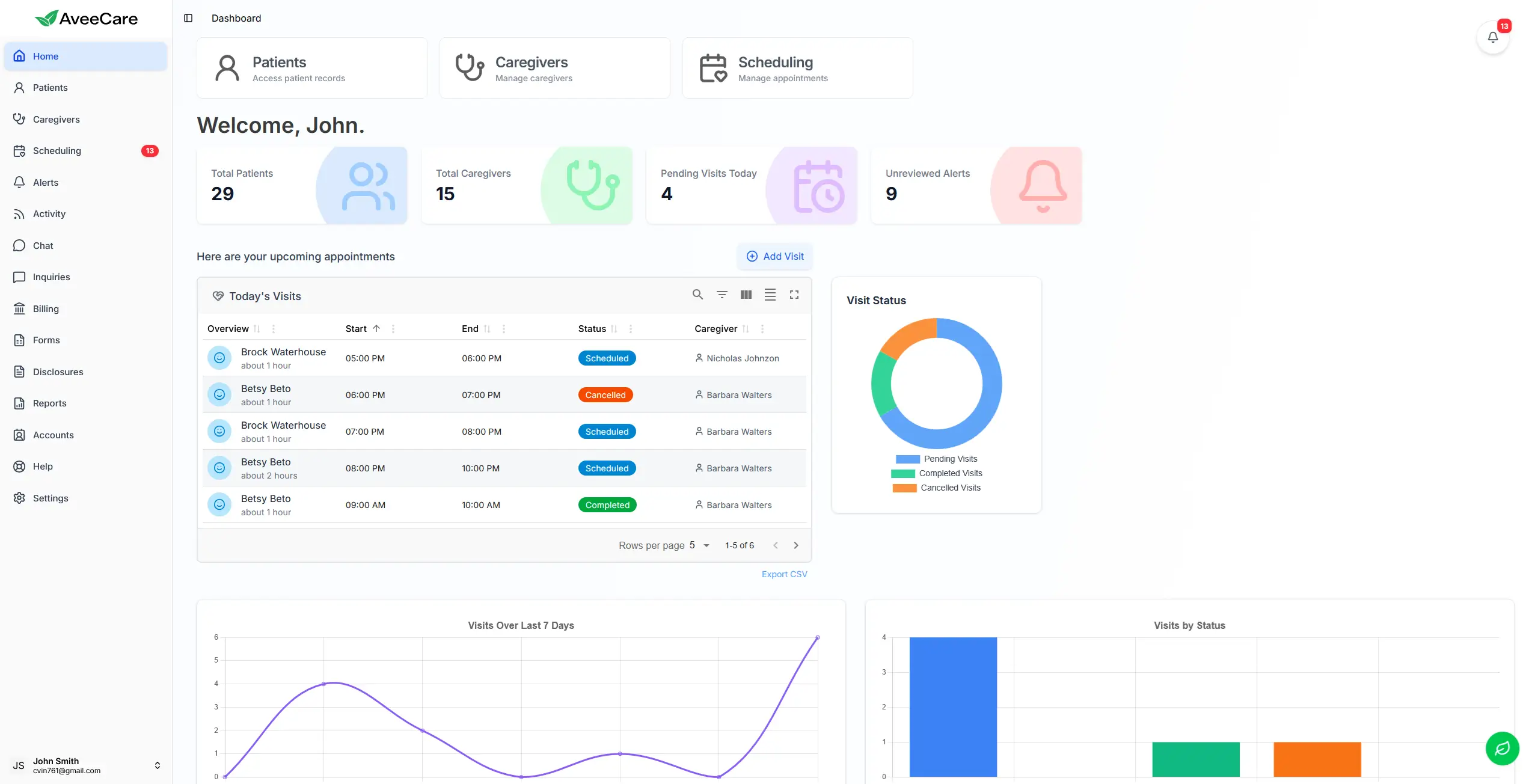
You do not need software on day one. But when you are ready, AveeCare starts at $6/client/month with no contracts, no mandatory demos, and a free trial. Scheduling, care plans, billing, caregiver management, and real-time tracking in one platform built for simplicity -- whether you serve Las Vegas, Henderson, Reno, Sparks, or communities across the Silver State.
Disclaimer
This guide is for informational purposes only and does not constitute legal, financial, or professional advice. While we strive to keep this information accurate and up to date, Nevada laws, regulations, fees, and requirements may change. Always verify current requirements directly with the relevant Nevada state agencies, including the Division of Public and Behavioral Health (DPBH), Bureau of Health Care Quality and Compliance (HCQC), Nevada Secretary of State, Nevada Department of Taxation, Nevada Department of Public Safety (DPS), the Division of Industrial Relations, and the Division of Health Care Financing and Policy (DHCFP), before making business decisions. Consult with a qualified attorney and accountant in Nevada before starting your home care business. AveeCare is not affiliated with the Nevada Division of Public and Behavioral Health or any Nevada state agency. Published April 4, 2026.