How to Start a Home Care Agency in Nebraska
Your complete 2026 guide to launching a home care business in Nebraska -- from DHHS home health licensing and no separate non-medical license, to navigating Heritage Health Medicaid, Sandata EVV, and the Cornhusker State's diverse communities.
Published April 4, 2026 · 25 min read
TLDR -- Nebraska at a Glance
No -- no separate state license required for non-medical companion/homemaker agencies. Home Health Agencies need a DHHS Licensure Unit license for skilled services.
DHHS, Division of Public Health, Licensure Unit
Only state with a unicameral legislature. Diverse immigrant communities in meatpacking towns. Sparse western NE with limited competition.
$18,000 – $50,000 (Non-Medical)
$80,000 – $190,000+ (Home Health)
1 – 3 months (Non-Medical) | 4 – 8 months (Home Health)
Progressive income tax: 2.46% – 5.84%. State sales tax: 5.5%. Workers' compensation required for all employers. Minimum wage: $12.00/hr.
1Nebraska Market Overview
Understanding the opportunity for home care agencies in the Cornhusker State
Nebraska has a population of approximately 2.0 million people with a growing elderly population that creates steady demand for home care services across the state. For entrepreneurs looking to start a home care agency in Nebraska, the market offers a compelling combination of favorable startup conditions: no separate state license requirement for non-medical agencies, a below-average cost of living, and a diverse population with distinct community needs. Nebraska is the only state in the nation with a unicameral (single-chamber) legislature, which can simplify the regulatory environment as fewer legislative bodies are involved in healthcare policy decisions.
Nebraska's population is concentrated in the eastern part of the state. The Omaha metro area (population ~950,000 including Council Bluffs, IA) is the largest market and home to major healthcare systems, corporate employers, and a diverse population. Lincoln (population ~295,000) is the state capital and home to the University of Nebraska. Grand Island (~53,000), Kearney (~34,000), and Hastings (~25,000) are mid-sized communities along the I-80 corridor in central Nebraska. Western Nebraska, including Scottsbluff, North Platte, and the Sandhills region, is very sparsely populated with vast agricultural land and limited existing home care providers.
A distinctive feature of Nebraska's demographics is the significant immigrant population in meatpacking communities. Towns like Lexington, Schuyler, South Sioux City, Madison, and Crete have large Hispanic, Somali, and Sudanese communities drawn by meatpacking industry jobs. These communities have unique home care needs including language access, cultural competency, and multigenerational family dynamics. Agencies that can serve these diverse populations have a significant competitive advantage in Nebraska's home care market. Additionally, Offutt Air Force Base near Bellevue (south of Omaha) is a major military installation that creates demand for veteran and military family home care services. For a broader look at the startup process with interactive tools, see our complete guide to starting a home care agency and our state-by-state licensing requirements.
2Home Care vs. Home Health in Nebraska
Non-medical personal care (no state license) vs. DHHS-licensed Home Health Agency
Key distinction in Nebraska: Nebraska does NOT require a separate state license for non-medical personal care, companion, or homemaker agencies. You only need standard business registration. However, if you plan to provide skilled nursing or therapy services, you must obtain a Home Health Agency license from the DHHS Division of Public Health, Licensure Unit. This is a significant advantage for entrepreneurs who want to start with non-medical services and expand to skilled services later.
Non-Medical Personal Care
No separate state license required
- Companion care and socialization
- Homemaker services and housekeeping
- Meal preparation and nutrition
- Personal care (bathing, dressing)
- Transportation and errands
- Respite care for family caregivers
Business registration only
No DHHS license required for non-medical services.
Home Health Agency (HHA)
DHHS Licensure Unit license required
- Skilled nursing care
- Physical and occupational therapy
- Speech therapy
- Medical social services
- Home health aide services
- Wound care and IV therapy
DHHS Licensure Unit license required
Plus Medicare cert for Medicare billing.
Background checks for BOTH types: Regardless of whether you operate a non-medical agency or a licensed Home Health Agency in Nebraska, you should conduct criminal background checks through the Nebraska State Patrol (NSP) Criminal Identification Division for all caregivers. For Medicaid-enrolled providers, background checks are mandatory. For non-medical private-pay agencies, they are strongly recommended and expected by families. Nebraska also maintains an adult protective services central registry that should be checked for all caregiving hires.
3Business Formation in Nebraska
Register with NE SOS, DOR, city/county -- below-average cost of living

Choose Your Business Structure
Most Nebraska home care agencies register as an LLC (Limited Liability Company) for liability protection and tax flexibility. Nebraska also allows corporations, partnerships, and sole proprietorships. An LLC is the most common and recommended structure for new home care agencies in Nebraska due to its simplicity and personal asset protection.
Register with Nebraska Secretary of State
File your Certificate of Organization with the Nebraska Secretary of State online or by mail. Nebraska LLC registration costs approximately $100 for online filing. The NE SOS Business Services portal handles entity formation, name reservations, and biennial report renewals.
Nebraska SOSObtain Your EIN
Apply for a free Employer Identification Number (EIN) from the IRS at irs.gov. You need this for bank accounts, payroll, and tax filings. You can get it instantly online.
Register with NE Department of Revenue
Nebraska has a progressive state income tax ranging from 2.46% to 5.84%. The state also has a 5.5% sales tax (though most home care services are exempt). Register with the Nebraska Department of Revenue for employer income tax withholding, unemployment insurance contributions, and sales tax if applicable.
City/County Business License or Occupation Tax
Nebraska business license requirements vary by city and county. Omaha and Lincoln require occupation tax registration for businesses operating within city limits. Smaller communities may have their own local business licensing requirements. Check with your city or county clerk for specific requirements in your service area.
Open a Business Bank Account
Open a dedicated business checking account to keep personal and business finances separate. Nebraska has several strong regional banks and credit unions including First National Bank of Omaha, Mutual of Omaha Bank, and numerous community banks across the state. You will need your EIN and formation documents.
Below-average cost of living advantage: Nebraska's cost of living is approximately 10% below the national average, which reduces startup costs for office space, staffing, and general overhead compared to coastal states. Even Omaha and Lincoln, the two most expensive markets in the state, remain significantly more affordable than cities like Denver, Chicago, or the coasts. This means your startup capital goes further in Nebraska and you can reach profitability faster. Rural Nebraska communities offer even lower operating costs, though the trade-off is a smaller client base and longer travel distances.
4Licensing Requirements (DHHS)
No state license for non-medical; DHHS Licensure Unit for home health; Medicaid enrollment
Non-Medical Personal Care -- No State License
Nebraska does not require a separate state license for agencies providing non-medical personal care, companion, homemaker, or respite services. This is a significant advantage for new entrepreneurs looking to start a home care agency in Nebraska, as it reduces startup time and cost compared to states that require licensure for non-medical agencies. You still need standard business registration with the Nebraska Secretary of State, applicable local business licenses or occupation tax registration, and appropriate insurance coverage.
- Register business with Nebraska Secretary of State
- Obtain city/county business license or occupation tax registration
- Conduct NSP background checks on all caregivers (strongly recommended)
- Check adult protective services central registry
- If Medicaid: enroll as a provider with DHHS
- Maintain HIPAA compliance if handling health information
Medicaid Provider Enrollment
If you want to provide Medicaid-funded home care services in Nebraska, you must enroll as a Medicaid provider with the DHHS Division of Medicaid and Long-Term Care, even though no separate state license is needed for non-medical services. Nebraska Medicaid is delivered through Heritage Health managed care plans, so you will also need to contract with Heritage Health managed care organizations. Enrollment involves an application process, background screenings for all direct care workers, and compliance with Medicaid program requirements including documentation and Sandata EVV.
- Submit Medicaid provider enrollment application to DHHS
- Complete NSP fingerprint-based background checks for all workers
- Check OIG exclusion list for all employees
- Contract with Heritage Health managed care organizations
- Register for Sandata EVV compliance
Home Health Agency License (DHHS Licensure Unit)
If you plan to provide skilled nursing, physical therapy, or other medical services in Nebraska, you must obtain a Home Health Agency license from the DHHS Division of Public Health, Licensure Unit. This is a more rigorous licensing process with clinical documentation, staffing requirements, quality assurance standards, and ongoing survey compliance. A licensed RN must serve as the clinical supervisor. The Licensure Unit conducts initial and periodic surveys to verify compliance with Nebraska regulations.
- Submit Home Health Agency license application to DHHS Licensure Unit
- Develop clinical policies and procedures manual
- Hire qualified clinical staff (RN director required)
- Complete NSP background checks for all staff
- Pass DHHS Licensure Unit initial survey inspection
- If Medicare: apply for CMS Medicare certification
5Insurance Requirements
Workers' comp required for ALL employers in Nebraska
Insurance is essential for protecting your Nebraska home care agency, your clients, and your caregivers. Nebraska requires workers' compensation insurance for all employers with one or more employees. Unlike some states that have minimum employee thresholds, Nebraska mandates coverage from your very first hire. The Nebraska Workers' Compensation Court oversees the system, and coverage must be obtained through licensed insurance carriers. Nebraska's relatively low cost of living translates to moderate insurance premiums compared to coastal states, helping keep startup costs manageable.
General Liability Insurance
Protects your Nebraska home care agency from claims of bodily injury, property damage, and personal injury. A standard policy of $1 million per occurrence and $2 million aggregate is the industry baseline. Nebraska premiums typically range from $1,500 to $3,500 per year for a new agency, which is below the national average.
Professional Liability (E&O)
Covers claims arising from errors, omissions, or negligence in the care services your agency provides. This is critical for protecting against lawsuits related to caregiver actions or inactions. Typical Nebraska costs range from $1,000 to $3,000 annually depending on services offered and staff count.
Workers' Compensation (Required)
Nebraska requires workers' compensation insurance for ALL employers with one or more employees. Coverage must be obtained through licensed insurance carriers regulated by the Nebraska Department of Insurance. The Nebraska Workers' Compensation Court adjudicates claims. Home care workers face risks including lifting injuries, slips, and falls in client homes. Budget approximately $1,500 to $4,000 annually depending on payroll size.
Surety and Fidelity Bonds
While not legally required for non-medical agencies in Nebraska, surety and fidelity bonds protect clients against theft or dishonesty by your caregivers. Many families and referral partners expect bonded agencies. In Nebraska's community-oriented culture, being bonded enhances your agency's reputation and trustworthiness. Costs are typically $200 to $600 annually.
Commercial Auto Insurance
Important in Nebraska given the distances caregivers may travel, particularly in rural areas and along the I-80 corridor. If caregivers use personal vehicles, non-owned auto liability coverage is essential. For agency-owned vehicles, full commercial auto coverage is required. Severe weather including ice storms, tornadoes, and blizzards increase driving risks seasonally.
Cyber Liability Insurance
As a HIPAA-covered entity handling protected health information, cyber liability insurance is increasingly important. This covers data breach expenses, notification costs, and legal liability from cybersecurity incidents. Nebraska agencies handling electronic health records and billing data should strongly consider this coverage, especially if serving diverse populations with sensitive immigration-related information.
Nebraska workers' comp note: Nebraska requires workers' compensation for ALL employers from the very first employee. The Nebraska Workers' Compensation Court oversees the system. Failure to carry workers' comp in Nebraska can result in fines, penalties, and personal liability for workplace injuries. This should be one of the first items you address when forming your agency. Nebraska does not have a state fund, so coverage must be obtained through private insurance carriers.
6Staffing Your Nebraska Agency
$12.00/hr minimum wage, NSP background checks, NE DOL career centers, diverse workforce
Staffing is one of the most critical aspects of running a home care agency in Nebraska. The state's minimum wage is $12.00 per hour in 2026, providing a baseline for caregiver compensation. Nebraska's low unemployment rate means competition for workers is significant, particularly in Omaha and Lincoln. Criminal background checks through the Nebraska State Patrol (NSP) Criminal Identification Division are essential for all caregivers. A unique advantage in Nebraska is the diverse workforce available in meatpacking communities -- bilingual and multilingual caregivers who can serve immigrant populations are in high demand and short supply across the home care industry.
NSP Background Checks
All caregivers should undergo fingerprint-based criminal background checks through the Nebraska State Patrol (NSP) Criminal Identification Division. Checks include both state and federal (FBI) databases. For Medicaid-enrolled agencies, background checks are mandatory. Nebraska also requires checking the adult protective services central registry and nurse aide registry. Processing typically takes 2 to 4 weeks, though electronic submission can speed this up.
Nebraska State PatrolNebraska DOL Career Centers
The Nebraska Department of Labor operates career centers (American Job Centers) throughout the state. These offices provide free recruitment services, job posting boards, applicant screening, and workforce training programs. Post your caregiver positions at career center locations in Omaha, Lincoln, Grand Island, Kearney, and other communities. They connect you with job seekers including those receiving unemployment benefits who are actively looking for work.
Diverse Meatpacking Town Workforce
Nebraska's meatpacking communities have created diverse populations with bilingual and multilingual workers. Towns like Lexington (primarily Hispanic), Schuyler (Hispanic and Sudanese), South Sioux City (Hispanic, Somali, Karen), and Madison offer a workforce with language skills and cultural competency that are invaluable for serving immigrant elderly populations. Recruit from these communities to build a linguistically diverse caregiver team that can serve Nebraska's changing demographics.
Community College CNA Programs
Nebraska community colleges offer CNA (Certified Nursing Assistant) training programs at affordable rates. Metro Community College (Omaha), Southeast Community College (Lincoln), Central Community College (Grand Island/Hastings/Columbus), and others produce trained caregivers. Build relationships with these programs for early access to graduates. Consider sponsoring CNA training as a recruitment incentive, especially in rural areas.
Wage competitiveness in Nebraska: Nebraska's $12.00/hour minimum wage is a floor, and competitive home care agencies typically pay $14 to $18 per hour for non-medical caregivers in Omaha and Lincoln. In Grand Island and Kearney, $13 to $16 per hour is more common. Rural Nebraska agencies may find caregivers at rates closer to minimum wage, but retention improves significantly with higher wages, mileage reimbursement, and benefits. Nebraska's low unemployment rate means you are competing with meatpacking plants, warehouses, and retail for hourly workers. Agencies that offer competitive compensation, flexible scheduling, and genuine mileage coverage will have a significant recruitment advantage in this tight labor market.
7Medicaid & Medicare in Nebraska
DHHS Medicaid, Heritage Health managed care, Sandata EVV, HCBS waivers
Nebraska's Medicaid program is administered by the DHHS Division of Medicaid and Long-Term Care and delivered through Heritage Health managed care plans. Nebraska expanded Medicaid in 2020 under the Affordable Care Act, increasing the number of eligible residents across the state. For home care agencies looking to serve Medicaid clients in Nebraska, understanding the state's Heritage Health managed care system, HCBS waiver programs, and Sandata EVV requirements is essential for building a sustainable payer mix that includes government-funded client referrals.
Nebraska Medicaid Provider Enrollment
To provide Medicaid-funded home care services in Nebraska, you must enroll as a provider with the DHHS Division of Medicaid and Long-Term Care. Because Nebraska delivers Medicaid through Heritage Health managed care plans, you will also need to contract with one or more Heritage Health managed care organizations (MCOs). The enrollment process involves application submission, NSP background verification for all direct care workers, site review, and MCO credentialing. Heritage Health MCOs manage service authorizations, claims processing, and care coordination for Medicaid beneficiaries.
DHHS Division of Medicaid and Long-Term CareElectronic Visit Verification (EVV) -- Sandata
Nebraska uses Sandata as its EVV aggregator for Medicaid-funded personal care and home health services, as required by the 21st Century Cures Act. All Medicaid providers delivering personal care services must use an EVV system that captures the type of service, date, start and end times, location, and identity of the individual providing and receiving the service. Providers can use Sandata's system directly or use an alternate EVV solution that integrates with the Sandata aggregator. Nebraska DHHS provides training and resources for EVV compliance.
Nebraska HCBS Waivers & Programs
- Aged and Disabled (A&D) Waiver
- Developmental Disabilities (DD) Waiver
- Traumatic Brain Injury (TBI) Waiver
- Heritage Health managed care delivery
- Medicaid Expansion (ACA) coverage
Medicare Certification
To bill Medicare, your Nebraska home health agency must first hold a DHHS Licensure Unit Home Health Agency license, then be certified by CMS. The process involves applying through CMS, passing a federal survey, and demonstrating compliance with Medicare Conditions of Participation. Expect 3 to 6 months for the full certification process after obtaining your DHHS license. Nebraska's aging population, particularly in rural areas with limited existing providers, makes Medicare certification a worthwhile investment for home health agencies seeking to build a sustainable payer mix.
8Startup Cost Estimator
Nebraska-specific startup costs -- below-average cost of living, moderate base costs
Business Formation
$600 – $2,700Certificate of Organization with NE SOS
IRS EIN is free; registered agent optional
Varies by location; Omaha/Lincoln may require occupation tax
Attorney review, CPA setup
Insurance (Annual)
$4,700 – $12,600$1M per occurrence / $2M aggregate
Errors and omissions coverage
Required for ALL employers in Nebraska
Important for rural service coverage
Recommended for client trust
Office & Equipment
$1,500 – $5,100Below-average rents; Omaha/Lincoln moderate
Laptops, smartphones for staff
Desk, chairs, printer, supplies
Marketing & Initial Growth
$1,800 – $7,200Professional site with local SEO
Google Ads, Facebook, community outreach
Brochures, flyers, cards
Spanish, Somali, Arabic translations
Working Capital (3-6 Months)
$6,000 – $17,000Cover payroll before revenue stabilizes
Rent, utilities, software, misc.
Estimated Total Startup Cost (Non-Medical Personal Care)
$14,600 – $44,600
Nebraska's below-average cost of living helps keep startup costs lower than coastal states. Omaha and Lincoln will be at the higher end of cost ranges due to higher rents and labor competition. Grand Island, Kearney, and rural communities will be at the lower end for office costs. If serving diverse immigrant communities, factor in costs for multilingual marketing materials and interpreter services. Consider budgeting additional funds for cultural competency training for your caregiver team.
9Compliance Checklist
Track your progress across all Nebraska requirements
Business Formation
0/6Licensing
0/6Insurance
0/5Staffing
0/5Medicaid & Medicare
0/3Operations
0/5Marketing
0/710Building Your Referral Network
Key referral sources across Nebraska for your home care agency
Nebraska's healthcare infrastructure is anchored by major hospital systems concentrated in Omaha and Lincoln, with critical access hospitals and community health centers serving the rest of the state. The State Unit on Aging within DHHS, Division of Medicaid and Long-Term Care, is a key state agency for aging services. Building relationships with discharge planners, case managers, Area Agencies on Aging, and community organizations is critical for generating consistent referrals for your Nebraska home care agency.
Nebraska Medicine
Nebraska Medicine is the primary academic medical center in the state, affiliated with the University of Nebraska Medical Center (UNMC) in Omaha. Their discharge planners and care coordination teams generate significant referral volume for home care agencies serving the Omaha metro area. Nebraska Medicine is a leading referral source for complex cases and post-surgical home care needs across eastern Nebraska.
CHI Health
CHI Health (CommonSpirit Health) operates multiple hospitals across Nebraska including facilities in Omaha, Lincoln, Grand Island, Kearney, and other communities. Their extensive network covers much of Nebraska and makes them one of the largest referral sources in the state. Build relationships with discharge planners at each CHI Health facility in your service area for consistent referral flow.
Bryan Health (Lincoln)
Bryan Health is the largest healthcare system in Lincoln and a major referral source for home care agencies serving the capital city and surrounding Lancaster County communities. Bryan Medical Center East and West campuses have active discharge planning departments that work closely with home care agencies to transition patients safely from hospital to home.
Methodist Health System (Omaha)
Methodist Health System operates Methodist Hospital, Methodist Women's Hospital, and Methodist Jennie Edmundson Hospital (Council Bluffs). As one of the major Omaha metro health systems, their discharge planners and social workers are key referral sources for home care agencies. Methodist's community health programs also create referral opportunities for preventive home care services.
State Unit on Aging / Area Agencies on Aging
The State Unit on Aging within DHHS oversees programs for older Nebraskans, including 8 Area Agencies on Aging (AAAs) that serve all 93 counties. AAAs administer Older Americans Act programs including home-delivered meals, transportation, caregiver support, and care coordination. Building relationships with AAAs is critical for connecting with seniors who need home care services, especially in rural communities where AAAs are often the first point of contact for aging services.
DHHS State Unit on AgingNebraska Association of Home Health Agencies
The Nebraska Association of Home Health Agencies represents home health and home care providers across the state. Membership provides networking opportunities, advocacy updates, regulatory guidance, and continuing education resources. Association events connect you with referral partners, industry peers, and state regulatory officials. Joining is a valuable investment for networking and staying current on Nebraska home care regulatory changes.
11Marketing & Client Acquisition
Omaha competition, rural outreach, immigrant community marketing, faith partnerships, military (Offutt AFB), digital strategies
Marketing a home care agency in Nebraska requires strategies tailored to the state's unique demographics and geography. The Omaha metro area is competitive with established agencies, requiring differentiation and strong digital presence. Rural Nebraska demands community-based, relationship-driven marketing. Nebraska's diverse immigrant communities in meatpacking towns represent an underserved market that most agencies overlook. The military community around Offutt Air Force Base offers a distinct market segment. A successful Nebraska marketing strategy blends digital outreach, community engagement, faith-based partnerships, and culturally competent immigrant community outreach.
Omaha Metro Competition Strategy
The Omaha metro area (population ~950,000) is Nebraska's largest and most competitive home care market. Established agencies have strong referral relationships with Nebraska Medicine, Methodist Health, and CHI Health. To compete, new agencies must differentiate on service quality, specialization, technology, or cultural competency. Omaha's diverse South Omaha neighborhood, growing Sudanese and Somali communities, and the suburban Bellevue and Papillion areas near Offutt AFB each present distinct marketing opportunities.
Niche Specialization
Rather than competing head-to-head with established agencies on general home care, specialize in underserved niches: multilingual care for immigrant communities, dementia and Alzheimer's care, post-surgical recovery, or veteran home care. Omaha's large and diverse population supports niche specializations that smaller markets cannot.
South Omaha Community Outreach
South Omaha has a large Hispanic community with deep roots and active community organizations. Partner with South Omaha Neighborhood Association, El Museo Latino, and Latino-serving churches. Bilingual marketing materials and bilingual caregivers are essential. Many elderly Hispanic residents prefer in-language care from caregivers who understand their cultural values around family and elder respect.
Digital Marketing and Local SEO
In Omaha and Lincoln, adult children often search online for home care agencies for aging parents. Invest heavily in Google Ads targeting "home care Omaha," "home care Lincoln," and similar terms. Build a strong Google Business Profile with reviews. Omaha is a competitive digital market, but well-targeted local SEO can generate consistent leads from families seeking care options.
Professional Referral Networking
Join the Greater Omaha Chamber of Commerce, Lincoln Chamber of Commerce, and the Nebraska Health Care Association. Attend healthcare networking events, Senior Resource Expos, and discharge planning conferences. In Omaha's business-oriented culture, professional networking generates referral relationships that sustain agencies long-term.
Immigrant Community Marketing (Hispanic, Somali, Sudanese)
Nebraska's meatpacking industry has drawn large immigrant populations to communities across the state. Lexington, Schuyler, South Sioux City, Madison, Crete, and Grand Island have significant Hispanic, Somali, and Sudanese communities. These populations are aging, and their elderly members often face unique barriers to accessing home care: language barriers, unfamiliarity with the U.S. healthcare system, cultural differences in how families approach elder care, and sometimes immigration-related fears about engaging with formal service providers. Agencies that can bridge these gaps have a massive competitive advantage in an almost entirely unserved market.
Multilingual Outreach Materials
Create intake forms, care plan documents, brochures, and website content in Spanish, Somali, and Arabic. Professional translation is essential -- machine translations of healthcare documents can create liability issues. Partner with local interpreting services for initial assessments. The investment in multilingual materials signals genuine commitment to serving diverse communities.
Community Trust Building
In immigrant communities, trust is built through relationships, not advertising. Attend community events, partner with immigrant-serving organizations like the Refugee Empowerment Center in Omaha, and work with community leaders and elders. Somali and Sudanese communities often have trusted community elders whose endorsement carries enormous weight. Building these relationships takes time but creates lasting referral channels that competitors cannot easily replicate.
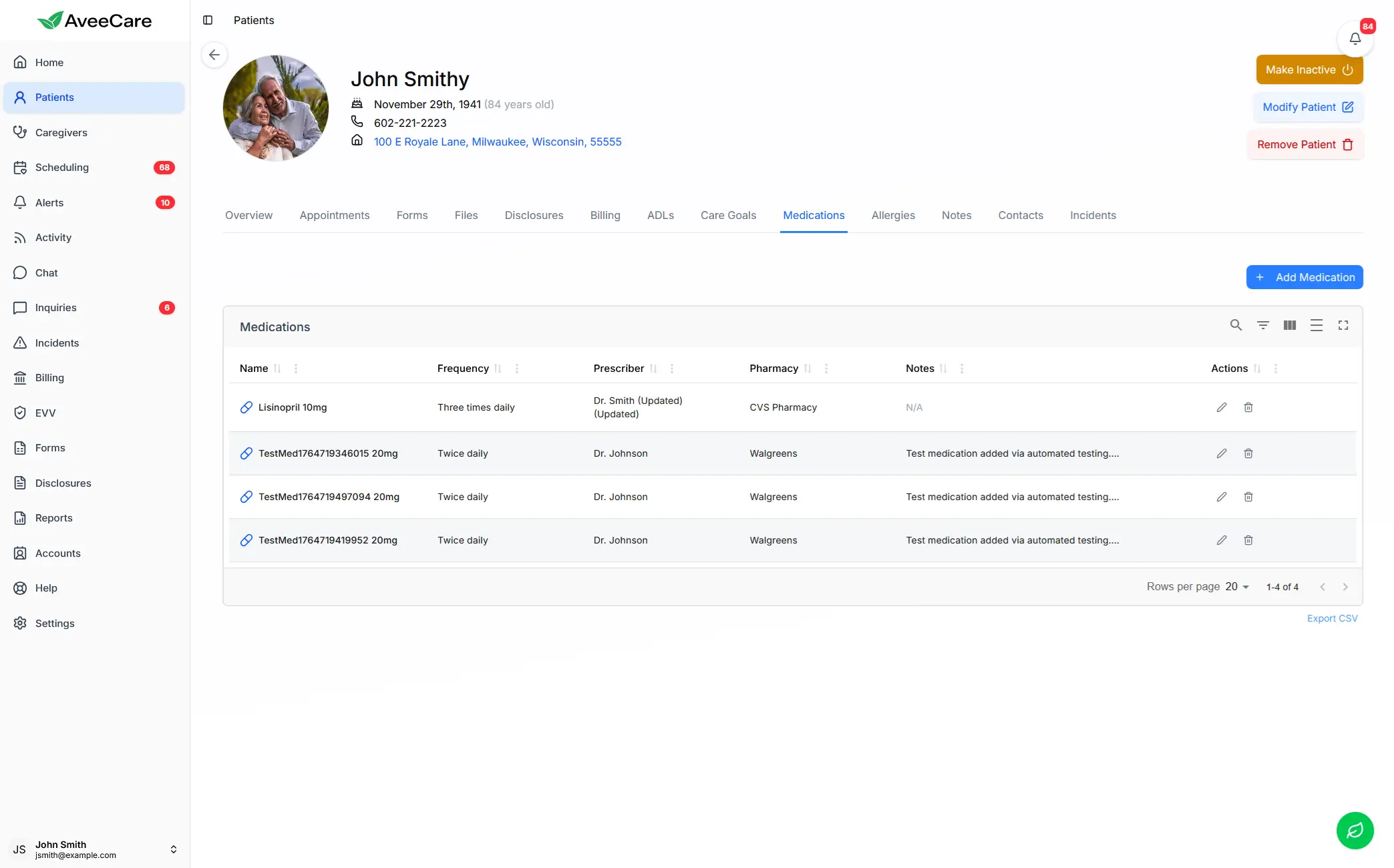
AveeCare's patient medication tracking -- manage care documentation for diverse Nebraska communities
Faith Community Partnerships
Nebraska has deep faith community roots, particularly Catholic and Lutheran churches with active senior ministries. In immigrant communities, mosques (Somali, Sudanese populations) and Hispanic Catholic parishes serve as community anchors. Offer to speak at church and mosque groups about aging-in-place, caregiver support, and home care options. Religious leaders are trusted advisors to families making care decisions. Many Nebraska faith communities have formal care ministries that can refer families to professional services when volunteer care is no longer sufficient.
Military Marketing (Offutt AFB)
Offutt Air Force Base in Bellevue (south of Omaha) is home to U.S. Strategic Command and the 55th Wing. The base and surrounding community include active-duty military families, retirees, and veterans. Connect with the VA Nebraska-Western Iowa Health Care System, veteran service organizations (VFW, American Legion, DAV), and the Nebraska Department of Veterans' Affairs. VA community care programs increasingly contract with home care agencies to serve veterans. The Bellevue and Papillion areas near Offutt AFB have a concentrated veteran population that represents a strong market opportunity.
Rural Nebraska Outreach
Western Nebraska and the Sandhills region are very sparsely populated with aging farming and ranching communities. Competition from established agencies is minimal in these areas. Partner with rural hospitals, critical access hospitals, Farm Bureau offices, and county extension offices. Small-town newspapers, co-op bulletin boards, and local radio stations remain effective marketing channels in rural Nebraska. Families in these communities value personal relationships and local reputation above all other marketing messages.
Senior Center Partnerships
Nebraska has senior centers in communities across the state, from Omaha and Lincoln to small rural towns. These centers serve as social hubs for elderly residents, providing meals, activities, and community connection through Older Americans Act programs. Partner with senior centers to offer free educational workshops about aging in place, fall prevention, and available home care services. Leave brochures, attend meal programs, and build relationships with center directors who are often the first people families call when they need care advice.
I-80 Corridor Strategy
Interstate 80 runs across Nebraska from Omaha to the Wyoming border, connecting most of the state's population centers: Omaha, Lincoln, York, Grand Island, Kearney, Lexington, North Platte, and Ogallala. An agency based along the I-80 corridor can efficiently serve multiple communities. Meatpacking towns with diverse immigrant populations cluster along I-80 and Highway 30. Consider an I-80 corridor expansion strategy that starts in one community and progressively expands to adjacent towns along the highway.
Digital Marketing for Nebraska
In Omaha and Lincoln, digital marketing is essential for reaching adult children who research home care options online. Invest in local SEO targeting city and county names, Google Ads geo-targeted to Nebraska communities, and a website that clearly communicates which areas you serve. For immigrant community outreach, consider Spanish-language Google Ads and Facebook campaigns targeting Hispanic communities. Social media is particularly effective for reaching younger family members who make care decisions for aging parents and grandparents.
Nebraska Marketing Strategy Comparison
| Strategy | Cost | Time to Results | Best For |
|---|---|---|---|
| Hospital Discharge Referrals | $ | 2-4 months | Omaha, Lincoln, Grand Island agencies |
| Immigrant Community Outreach | $$ | 3-6 months | Meatpacking towns, South Omaha |
| Church & Mosque Partnerships | $ | 1-3 months | All Nebraska communities |
| Google Ads (Geo-Targeted) | $$ | 1-2 months | Omaha and Lincoln metro areas |
| Senior Center Outreach | $ | 1-3 months | Direct connection with elderly residents |
| Veteran VA Partnerships | $ | 2-4 months | Bellevue, Papillion (Offutt AFB area) |
| Rural Farm Bureau / Extension Events | $ | 2-4 months | Western NE, Sandhills, rural communities |
| I-80 Corridor Expansion | $$ | 3-6 months | Multi-community coverage strategy |
Nebraska marketing tip: The biggest strategic decision in Nebraska is whether to focus on the competitive Omaha metro, the mid-size Lincoln market, the I-80 corridor communities, or the underserved rural and western regions. In Omaha, differentiate through specialization (multilingual care, veteran services, dementia care) and strong hospital referral relationships with Nebraska Medicine, Methodist, and CHI Health. In Lincoln, focus on Bryan Health partnerships and University of Nebraska community connections. For meatpacking communities along I-80, invest in multilingual outreach -- agencies that genuinely serve Hispanic, Somali, and Sudanese populations will find an almost uncontested market. In rural western Nebraska, community presence, Farm Bureau partnerships, and willingness to travel long distances are your primary differentiators.
12Frequently Asked Questions
Common questions about starting a home care agency in Nebraska
No. Nebraska does NOT require a separate state license for non-medical personal care, companion, or homemaker agencies. You need standard business registration with the Nebraska Secretary of State and applicable local business licenses, but there is no DHHS license requirement for non-medical services. However, if you plan to provide skilled nursing or therapy services (home health), you must obtain a Home Health Agency license from the Nebraska Department of Health and Human Services (DHHS), Division of Public Health, Licensure Unit. If you plan to accept Medicaid clients, you must enroll as a Medicaid provider with DHHS even for non-medical services.
Nebraska requires criminal background checks for home care workers through the Nebraska State Patrol (NSP) Criminal Identification Division. Employers must submit fingerprint-based criminal history checks through the NSP. The check includes both state and federal (FBI) criminal databases. For Medicaid-enrolled providers, additional screening through the Office of Inspector General (OIG) exclusion list is required. Nebraska also maintains a nurse aide registry and an adult protective services central registry that should be checked for all caregivers. The NSP background check process typically takes 2 to 4 weeks, though electronic submissions can be faster.
Starting a non-medical home care agency in Nebraska typically costs between $18,000 and $50,000, including business formation with the Secretary of State, insurance, NSP background checks, initial staffing, marketing, and working capital. Nebraska has a below-average cost of living which keeps startup costs lower than coastal states. A licensed Home Health Agency with skilled services costs significantly more, typically $80,000 to $190,000 or higher due to DHHS Home Health Agency licensing, clinical staffing requirements, and Medicare certification costs. Omaha and Lincoln will be at the higher end of cost ranges, while Grand Island, Kearney, and rural communities will be lower.
Nebraska Medicaid is administered by the DHHS Division of Medicaid and Long-Term Care and delivered through Heritage Health managed care plans. Key HCBS waiver programs include the Aged and Disabled Waiver (serving elderly and adults with physical disabilities), the Developmental Disabilities (DD) Waiver, and the Traumatic Brain Injury (TBI) Waiver. Nebraska uses Sandata for Electronic Visit Verification (EVV) for Medicaid-funded personal care and home health services as required by the 21st Century Cures Act. Providers must enroll with Nebraska Medicaid through DHHS and contract with Heritage Health managed care organizations for service delivery.
Nebraska offers several unique factors for home care agency startups. It is the only state with a unicameral (single-chamber) legislature, which can simplify the regulatory environment. The state has a below-average cost of living, no separate state license requirement for non-medical agencies, and a diverse population including significant Hispanic, Somali, and Sudanese immigrant communities in meatpacking towns like Lexington, Schuyler, and South Sioux City. The Omaha metro area offers a competitive but large market, while western Nebraska is very sparsely populated with limited competition. Offutt Air Force Base near Omaha provides a military market opportunity, and the state has a strong agricultural economy that shapes rural community dynamics.
Starting a non-medical home care agency in Nebraska typically takes 1 to 3 months since Nebraska does not require a separate state license for non-medical agencies. The timeline includes business registration with the Secretary of State, obtaining insurance, setting up NSP background check processes, and initial hiring. Enrolling as a Nebraska Medicaid provider adds 2 to 4 months for application processing and Heritage Health managed care contracting. A licensed Home Health Agency typically takes 4 to 8 months or more due to the DHHS Licensure Unit licensing process, especially if pursuing Medicare certification. In rural Nebraska, allow extra time for recruiting caregivers in areas with limited workforce availability.
13Sources and Resources
Official Nebraska state agency links and resources
Ready to manage your Nebraska home care agency?
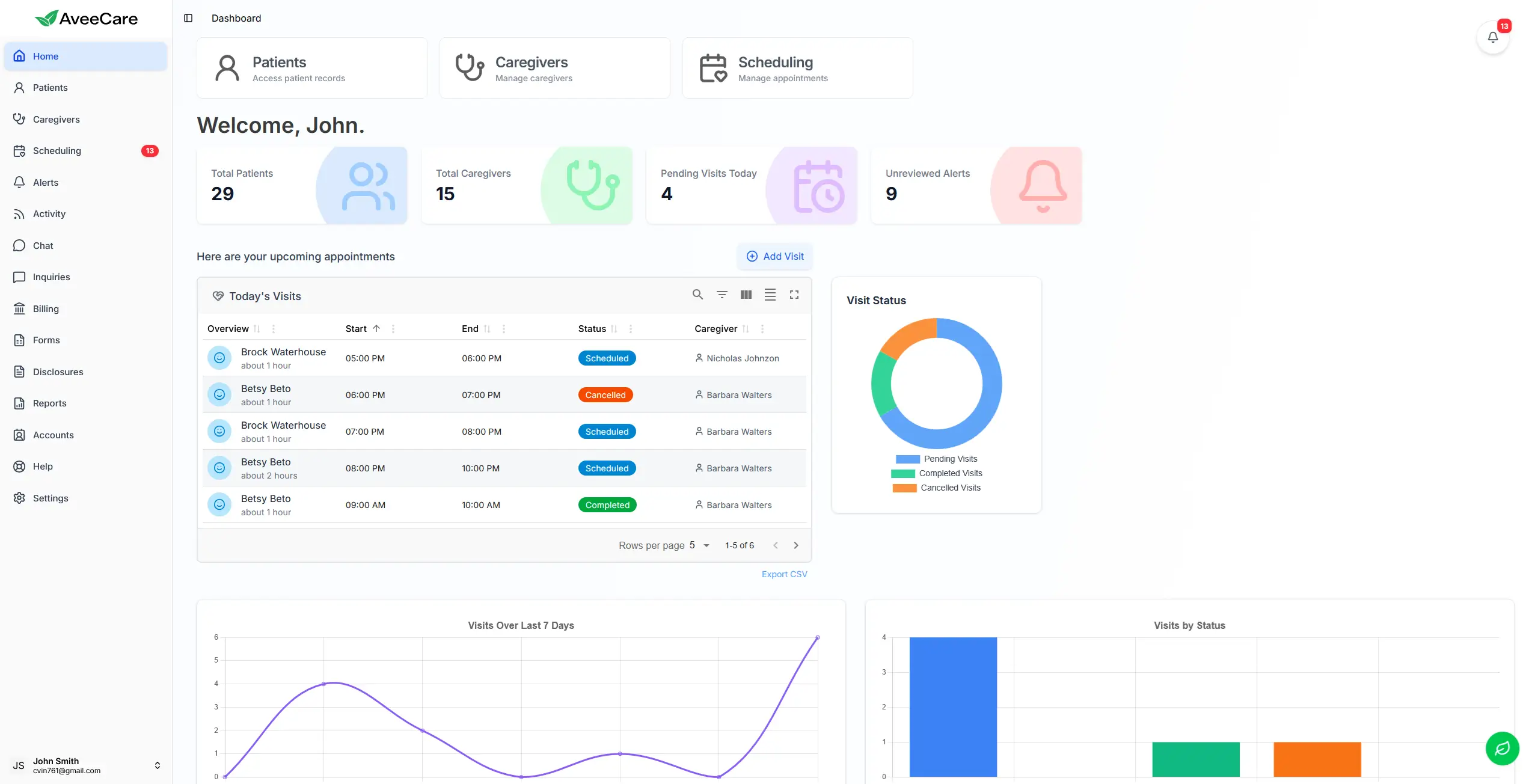
You do not need software on day one. But when you are ready, AveeCare starts at $6/client/month with no contracts, no mandatory demos, and a free trial. Scheduling, care plans, billing, caregiver management, and real-time tracking in one platform built for simplicity -- whether you serve Omaha, Lincoln, Grand Island, Kearney, or communities along the I-80 corridor across the Cornhusker State.
Disclaimer
This guide is for informational purposes only and does not constitute legal, financial, or professional advice. While we strive to keep this information accurate and up to date, Nebraska laws, regulations, fees, and requirements may change. Always verify current requirements directly with the relevant Nebraska state agencies, including the Nebraska Department of Health and Human Services (DHHS), Division of Public Health Licensure Unit, Nebraska Secretary of State, Nebraska Department of Revenue, Nebraska State Patrol (NSP), the Workers' Compensation Court, and the Division of Medicaid and Long-Term Care, before making business decisions. Consult with a qualified attorney and accountant in Nebraska before starting your home care business. AveeCare is not affiliated with the Nebraska Department of Health and Human Services or any Nebraska state agency. Published April 4, 2026.