How to Start a Home Care Agency in Montana
Your complete 2026 guide to launching a home care business in Montana -- from DPHHS/QAD home health licensing, no separate non-medical license, to navigating the vast rural distances of Big Sky Country.
Published April 4, 2026 · 25 min read
TLDR -- Montana at a Glance
No -- no separate state license required for non-medical companion/homemaker agencies. Home Health Agencies need a DPHHS QAD license for skilled services.
DPHHS, Quality Assurance Division (QAD)
4th largest state by area with only ~1.1M residents. Travel logistics and caregiver recruitment in remote areas are the primary challenges.
$20,000 – $55,000 (Non-Medical)
$85,000 – $200,000+ (Home Health)
1 – 3 months (Non-Medical) | 4 – 8 months (Home Health)
No state sales tax! Flat 4.7% income tax. Workers' compensation required for all employers.
1Montana Market Overview
Understanding the opportunity for home care agencies in Big Sky Country
Montana has a population of approximately 1.1 million people spread across the 4th largest state by area in the United States. This makes Montana one of the most sparsely populated states in the country, with an average density of just 7 people per square mile. For entrepreneurs looking to start a home care agency in Montana, this creates a unique market dynamic: genuine demand for home care services in aging rural communities combined with very limited competition from existing providers. Montana's population is aging steadily, its ranching and farming communities have deep roots and strong family values around elder care, and the state offers a favorable business climate with no state sales tax and a simplified 4.7% flat income tax.
Montana's major population centers are Billings (the largest city, ~120,000 metro), Missoula (~80,000), Great Falls (~60,000), Helena (state capital, ~34,000), and Bozeman (the fastest-growing city, ~56,000). These five cities account for a disproportionate share of Montana's population and healthcare infrastructure. Outside these hubs, Montana is characterized by small towns, ranching communities, and vast stretches of open land with limited services. The state has 7 tribal reservations -- Blackfeet, Crow, Flathead, Fort Belknap, Fort Peck, Northern Cheyenne, and Rocky Boy's -- each with unique healthcare needs and tribal health services that present partnership opportunities for home care agencies. For a national overview of the startup process, see our complete guide to starting a home care agency and our state-by-state licensing requirements.
The cost of living in Montana is moderate but rising, particularly in Bozeman and Missoula, which have seen significant population growth and real estate price increases. Rural Montana remains more affordable, but the primary cost challenge is travel -- caregivers in rural areas may drive 50 to 100+ miles between client visits. Montana's aging ranching communities, veterans population (including those near Malmstrom Air Force Base in Great Falls), and growing retiree population in communities like Whitefish and the Flathead Valley create steady demand for home care services that currently outstrips the available supply of providers.
2Home Care vs. Home Health in Montana
Non-medical personal care (no state license) vs. DPHHS-licensed Home Health Agency
Key distinction in Montana: Montana does NOT require a separate state license for non-medical personal care, companion, or homemaker agencies. You only need standard business registration. However, if you plan to provide skilled nursing or therapy services, you must obtain a Home Health Agency license from the DPHHS Quality Assurance Division (QAD). This is a significant advantage for entrepreneurs who want to start with non-medical services and add skilled services later.
Non-Medical Personal Care
No separate state license required
- Companion care and socialization
- Homemaker services and housekeeping
- Meal preparation and nutrition
- Personal care (bathing, dressing)
- Transportation and errands
- Respite care for family caregivers
Business registration only
No DPHHS license required for non-medical services.
Home Health Agency (HHA)
DPHHS QAD Home Health Agency license required
- Skilled nursing care
- Physical and occupational therapy
- Speech therapy
- Medical social services
- Home health aide services
- Wound care and IV therapy
DPHHS QAD license required
Plus Medicare cert for Medicare billing.
Background checks for BOTH types: Regardless of whether you operate a non-medical agency or a licensed Home Health Agency in Montana, you should conduct criminal background checks through the Montana Department of Justice (DOJ) for all caregivers. For Medicaid-enrolled providers, background checks are mandatory. For non-medical private-pay agencies, they are strongly recommended and expected by families.
3Business Formation in Montana
Register with MT SOS, DOR -- enjoy no sales tax!

Choose Your Business Structure
Most Montana home care agencies register as an LLC (Limited Liability Company) for liability protection and tax flexibility. Montana also allows corporations, partnerships, and sole proprietorships. An LLC is the most common and recommended structure for new home care agencies in Montana.
Register with Montana Secretary of State
File your Articles of Organization with the Montana Secretary of State online or by mail. Montana LLC registration is affordable at approximately $35 for online filing. The SOS Business Services portal handles all entity formation, name reservations, and annual report renewals.
Montana SOSObtain Your EIN
Apply for a free Employer Identification Number (EIN) from the IRS at irs.gov. You need this for bank accounts, payroll, and tax filings. You can get it instantly online.
Register with MT Department of Revenue
Montana has a flat 4.7% state income tax (recently simplified from a graduated structure). There is NO state sales tax in Montana -- one of only five states without one. Register with the Montana Department of Revenue for employer income tax withholding and unemployment insurance contributions.
City/County Business License
Montana business license requirements vary by city and county. Some cities like Billings, Missoula, and Bozeman require a local business license or permit. Check with your city or county clerk for specific requirements. Many rural Montana communities have minimal or no local business licensing requirements.
Open a Business Bank Account
Open a dedicated business checking account to keep personal and business finances separate. Montana has several regional banks and credit unions including Glacier Bancorp, Stockman Bank, and Opportunity Bank. You will need your EIN and formation documents.
No sales tax advantage: Montana is one of only five states with no state sales tax. This means your agency pays no sales tax on supplies, equipment, office furniture, or vehicles purchased in Montana. This can save a meaningful amount compared to operating in states with 6-10% sales tax rates. Combined with the simplified 4.7% flat income tax, Montana offers a relatively favorable tax environment for new home care businesses.
4Licensing Requirements (DPHHS / QAD)
No state license for non-medical; DPHHS QAD license for home health; Medicaid PAS enrollment
Non-Medical Personal Care -- No State License
Montana does not require a separate state license for agencies providing non-medical personal care, companion, homemaker, or respite services. This is a significant advantage for new entrepreneurs looking to start a home care agency in Montana, as it reduces startup time and cost compared to states that require licensure for non-medical agencies. You still need standard business registration with the Montana Secretary of State, applicable local business licenses, and appropriate insurance coverage.
- Register business with Montana Secretary of State
- Obtain city/county business license (if required locally)
- Conduct DOJ background checks on all caregivers (strongly recommended)
- If Medicaid PAS: enroll as a provider with DPHHS Medicaid
- Maintain HIPAA compliance if handling health information
Medicaid Personal Assistance Services (PAS) Enrollment
If you want to provide Personal Assistance Services (PAS) through Montana Medicaid, you must enroll as a Medicaid provider with the DPHHS Medicaid and Health Services Branch, even though no separate state license is needed for non-medical services. PAS enrollment involves an application process, background screenings for all direct care workers, and compliance with Medicaid program requirements including documentation and EVV.
- Submit Medicaid provider enrollment application to DPHHS
- Complete DOJ fingerprint-based background checks for all PAS workers
- Check OIG exclusion list for all employees
- Comply with EVV requirements for all Medicaid-funded visits
Home Health Agency License (DPHHS QAD)
If you plan to provide skilled nursing, physical therapy, or other medical services in Montana, you must obtain a Home Health Agency license from the DPHHS Quality Assurance Division (QAD). This is a more rigorous licensing process with clinical documentation, staffing requirements, quality assurance standards, and ongoing survey compliance. A licensed RN must serve as the clinical supervisor.
- Submit Home Health Agency license application to DPHHS QAD
- Develop clinical policies and procedures manual
- Hire qualified clinical staff (RN director required)
- Complete DOJ background checks for all staff
- Pass DPHHS QAD initial survey inspection
- If Medicare: apply for CMS Medicare certification
5Insurance Requirements
Workers' comp required for ALL employers in Montana -- no minimum employee threshold
Insurance is essential for protecting your Montana home care agency, your clients, and your caregivers. A critical difference in Montana is that workers' compensation insurance is required for ALL employers -- there is no minimum employee count threshold like many other states have. Montana is a monopolistic-style workers' comp state, meaning you must obtain coverage through the Montana State Fund or qualify as a self-insured employer. Auto insurance is also especially important given Montana's vast distances and challenging winter driving conditions.
General Liability Insurance
Protects your Montana home care agency from claims of bodily injury, property damage, and personal injury. A standard policy of $1 million per occurrence and $2 million aggregate is the industry baseline. Montana premiums typically range from $1,500 to $3,500 per year for a new agency.
Professional Liability (E&O)
Covers claims arising from errors, omissions, or negligence in the care services your agency provides. This is critical for protecting against lawsuits related to caregiver actions or inactions. Typical Montana costs range from $1,000 to $3,000 annually depending on services offered and staff count.
Workers' Compensation (Required)
Montana requires workers' compensation insurance for ALL employers with even one employee -- there is no minimum threshold. Coverage is primarily obtained through the Montana State Fund (montanastatefund.com). Montana uses a unique classification system for home care workers. Caregivers face risks including lifting injuries, slips, falls in client homes, and winter driving accidents.
Surety and Fidelity Bonds
While not legally required for non-medical agencies in Montana, surety and fidelity bonds protect clients against theft or dishonesty by your caregivers. Many families and referral partners expect bonded agencies, especially in small Montana communities where trust and reputation are everything. Costs are typically $200 to $600 annually.
Commercial Auto Insurance
Extremely important in Montana given the vast distances caregivers travel between clients. If caregivers use personal vehicles, non-owned auto liability coverage is essential. For agency-owned vehicles, full commercial auto coverage is required. Winter driving in Montana adds significant risk. Budget more for auto insurance than you would in a compact, urban state.
Cyber Liability Insurance
As a HIPAA-covered entity handling protected health information, cyber liability insurance is increasingly important. This covers data breach expenses, notification costs, and legal liability from cybersecurity incidents. Montana agencies handling electronic health records and billing data should strongly consider this coverage.
Montana workers' comp note: Unlike most states that have a minimum employee threshold (commonly 3-5 employees), Montana requires workers' compensation for ALL employers from the very first employee. The Montana State Fund is the primary insurer. Failure to carry workers' comp in Montana is a criminal offense. Make sure this is one of the first items you address when forming your agency.
6Staffing Your Montana Agency
~$10.55/hr minimum wage, DOJ background checks, Montana Job Service, tribal workforce programs
Staffing is the single most critical challenge for home care agencies in Montana. The state's small population, vast geography, and severe workforce shortage in rural areas make caregiver recruitment and retention an ongoing operational challenge. Montana's minimum wage is approximately $10.55 per hour in 2026 (indexed to CPI and adjusted annually). Criminal background checks through the Montana Department of Justice (DOJ) are essential for all caregivers. Creative recruitment strategies including tribal workforce programs and Montana Job Service partnerships are critical for building your team.
DOJ Background Checks
All caregivers should undergo fingerprint-based criminal background checks through the Montana Department of Justice (DOJ) Criminal Records section. Checks include both state and federal (FBI) databases. For Medicaid-enrolled agencies, background checks are mandatory. For private-pay agencies, they are strongly recommended and expected by families. Processing times can vary in rural areas -- build this into your hiring timeline.
MT DOJMontana Job Service (MJS)
Montana operates Job Service offices throughout the state as part of the Montana Department of Labor and Industry. These offices provide free recruitment services, job posting boards, applicant screening, and workforce training programs. Post your caregiver positions at Job Service locations in your service area. They are particularly valuable for reaching workers in rural Montana communities where online job boards have limited reach.
Tribal Workforce Programs
Montana has 7 tribal reservations, and several tribes operate workforce development programs that train community members for healthcare and caregiving roles. The Blackfeet, Crow, and Flathead tribes, among others, have tribal employment programs. Partnering with tribal workforce programs can help you recruit caregivers from communities that are often underserved by existing home care agencies. Cultural competency training is essential for agencies serving tribal communities.
Community College CNA Programs
Montana community colleges offer affordable CNA (Certified Nursing Assistant) training programs. Montana State University-Billings, the University of Montana, and several community colleges produce trained caregivers. Build relationships with these programs for early access to graduates. In rural areas, consider sponsoring CNA training as a recruitment incentive.
Wage competitiveness in Montana: Montana's ~$10.55/hour minimum wage is a floor, and competitive home care agencies typically pay $13 to $17 per hour for non-medical caregivers in Billings, Missoula, and Bozeman. In Great Falls and Helena, $12 to $15 per hour is more common. Rural Montana agencies may find caregivers at rates closer to minimum wage, but retention improves significantly with higher wages, mileage reimbursement, and benefits. The severe caregiver shortage in rural Montana means agencies that offer competitive compensation and genuine mileage coverage will have a significant recruitment advantage.
7Medicaid & Medicare in Montana
DPHHS Medicaid, Big Sky and SDMI waivers, EVV implementation, PAS enrollment
Montana's Medicaid program is administered by the DPHHS Medicaid and Health Services Branch. Montana expanded Medicaid under the Affordable Care Act, significantly increasing the number of eligible residents across the state. For home care agencies looking to serve Medicaid clients in Montana, understanding the state's HCBS waiver programs, PAS enrollment requirements, and EVV implementation is essential for building a sustainable business that can access government-funded client referrals in both urban and rural areas.
Montana Medicaid Provider Enrollment
To provide Medicaid-funded home care services in Montana, you must enroll as a provider with the DPHHS Medicaid and Health Services Branch. For Personal Assistance Services (PAS), providers must complete the Medicaid enrollment application, pass background screenings for all direct care workers, and agree to comply with Medicaid program requirements including documentation, billing, and EVV. The enrollment process involves application submission, background verification, and site review.
DPHHS Medicaid and Health Services BranchElectronic Visit Verification (EVV)
Under the 21st Century Cures Act, all states must implement EVV for Medicaid-funded personal care and home health services. Montana is implementing its EVV system for compliance with federal requirements. Providers must use an EVV system that captures the type of service, date, start and end times, location, and identity of the individual providing and receiving the service. Montana's vast geography makes GPS-based EVV particularly important for verifying visit locations across the state's enormous rural service areas.
Montana HCBS Waivers & Programs
- Big Sky Waiver (elderly & physical disabilities)
- SDMI Waiver (Severe Disabling Mental Illness)
- Personal Assistance Services (PAS)
- Home and Community-Based Services Program
- Medicaid Expansion (ACA) coverage
Medicare Certification
To bill Medicare, your Montana home health agency must first hold a DPHHS QAD Home Health Agency license, then be certified by CMS. The process involves applying through CMS, passing a federal survey, and demonstrating compliance with Medicare Conditions of Participation. Expect 3 to 6 months for the full certification process after obtaining your DPHHS license. Montana's aging rural population and limited existing providers make Medicare certification a worthwhile investment for home health agencies.
8Startup Cost Estimator
Montana-specific startup costs -- moderate base costs, higher travel expenses
Business Formation
$535 – $2,570Articles of Organization with MT SOS
IRS EIN is free; registered agent optional
Varies by location; some MT cities do not require one
Attorney review, CPA setup
Insurance (Annual)
$4,800 – $13,600$1M per occurrence / $2M aggregate
Errors and omissions coverage
Required for ALL employers in Montana
Critical for rural travel distances in MT
Recommended for client trust
Office & Equipment
$1,500 – $5,600Moderate rents; Bozeman/Missoula higher than rural areas
Laptops, smartphones for staff
Desk, chairs, printer, supplies
Travel & Vehicle (Montana-Specific)
$1,900 – $6,400MT agencies drive significantly more than national average
Essential for rural areas with limited cell coverage
Snow tires, emergency kits, chains for mountain passes
Marketing & Initial Growth
$1,600 – $6,400Professional site with local SEO
Google Ads, Facebook, community outreach
Brochures, flyers, cards
Working Capital (3-6 Months)
$6,000 – $17,000Cover payroll before revenue stabilizes
Rent, utilities, software, misc.
Estimated Total Startup Cost (Non-Medical Personal Care)
$16,335 – $51,570
Montana has no state sales tax, which reduces ongoing costs. However, travel and vehicle expenses are significantly higher than national averages due to the vast distances between communities. Bozeman and Missoula will be at the higher end of cost ranges due to rising real estate and labor costs. Rural Montana communities will be at the lower end for office costs but may have higher travel expenses. Factor in winter driving equipment and satellite communication devices for remote areas.
9Compliance Checklist
Track your progress across all Montana requirements
Business Formation
0/6Licensing
0/5Insurance
0/5Staffing
0/5Medicaid & Medicare
0/2Operations
0/5Marketing
0/710Building Your Referral Network
Key referral sources across Montana for your home care agency
Montana's healthcare infrastructure is anchored by a few major hospital systems concentrated in the larger cities, with critical access hospitals and rural health clinics serving the rest of the state. The Senior and Long Term Care Division (SLTCD) under DPHHS is a key state agency for aging services. Building relationships with discharge planners, case managers, tribal health services, and community organizations is critical for generating consistent referrals for your Montana home care agency.
Billings Clinic
Billings Clinic is the largest health system in Montana and the primary regional referral center for eastern Montana, northern Wyoming, and western North and South Dakota. Their discharge planners and care coordination teams generate significant referral volume for home care agencies serving the Billings metro and surrounding rural communities. Billings Clinic operates clinics and outreach facilities across a wide geographic area.
SCL Health / Intermountain Health (Montana)
SCL Health (now part of Intermountain Health) operates St. Vincent Healthcare in Billings, St. James Healthcare in Butte, and Holy Rosary Healthcare in Miles City. Their network covers much of central and eastern Montana. Care coordinators and discharge planners at these facilities are valuable referral partners for home care agencies across Montana.
St. Patrick Hospital (Missoula)
St. Patrick Hospital, part of the Providence health system, is the primary hospital serving western Montana. Located in Missoula, it is the regional referral center for the Flathead Valley, Bitterroot Valley, and surrounding rural areas. Their discharge planning and social work teams are key referral partners for home care agencies operating in western Montana.
Tribal Health Services
Montana has 7 tribal reservations, each with Indian Health Service (IHS) facilities or tribal health programs. The Blackfeet Community Hospital, Crow Agency IHS, Fort Belknap Service Unit, and others serve tribal communities that often have significant unmet home care needs. Building respectful partnerships with tribal health services can open referral channels to underserved populations. Cultural competency and tribal consultation are essential.
Senior and Long Term Care Division (SLTCD)
The SLTCD under DPHHS oversees programs for older adults and adults with disabilities in Montana, including Area Agencies on Aging (AAAs), senior services, and long-term care programs. Montana has 10 Area Agencies on Aging that serve all 56 counties. Building relationships with AAAs is critical for connecting with seniors who need home care services, especially in rural communities.
DPHHS SLTCDMontana Health Care Association
The Montana Health Care Association represents nursing facilities, assisted living facilities, and home care providers across the state. Membership provides networking opportunities, advocacy updates, regulatory guidance, and continuing education resources. MHCA events connect you with referral partners, industry peers, and state regulatory officials. Joining MHCA is a valuable investment for networking across Montana.
11Marketing & Client Acquisition
Montana-specific strategies: rural ranching outreach, tribal partnerships, veteran marketing, small-town word-of-mouth, and digital for dispersed populations
Marketing a home care agency in Montana requires strategies tailored to the state's unique geography and demographics. Montana's vast distances, small-town culture, tribal communities, ranching heritage, and dispersed population demand a fundamentally different approach than marketing in urban states. Word-of-mouth is extraordinarily powerful in Montana's tight-knit communities. Building trust through personal relationships, community involvement, and genuine service quality is the foundation of effective home care marketing in Big Sky Country.
Rural Ranching Community Outreach
Montana's identity is rooted in ranching, farming, and rural self-reliance. Elderly ranchers and their families often resist seeking outside help, viewing it as a loss of independence. Marketing your home care agency to these communities requires understanding and respecting this culture. Framing your services as supporting independence rather than replacing it is critical for success in rural Montana.
Farm Bureau and Grange Partnerships
Montana Farm Bureau and local Grange halls are community gathering points in rural Montana. Attend meetings, sponsor events, and offer free informational sessions about home care services. Ranching families trust organizations they already belong to -- a referral from the local Farm Bureau carries enormous weight in these communities.
Small-Town Newspapers and Bulletin Boards
Many rural Montana communities still rely on weekly newspapers, co-op bulletin boards, and post office notice boards for local information. A simple ad in the local weekly paper or a flyer at the feed store can reach families that digital marketing will never touch. In towns of 500 to 2,000 people, this hyper-local approach is often the most effective.
Agricultural Extension Offices
Montana State University Extension offices exist in nearly every county. They are trusted community resources, particularly for agricultural families. Partner with Extension agents to reach elderly ranchers and their families who may need home care services but do not know where to look.
Rodeo and Fair Sponsorships
County fairs and rodeos are major community events across rural Montana. Sponsoring a booth or event at the county fair gets your agency name in front of the exact demographic that needs home care services. These events draw entire multi-generational families, including the adult children who often make care decisions for aging parents.
Tribal Health Partnerships
Montana's 7 tribal reservations -- Blackfeet, Crow, Flathead, Fort Belknap, Fort Peck, Northern Cheyenne, and Rocky Boy's -- represent communities with significant unmet home care needs. Indian Health Service (IHS) facilities provide some care but are often understaffed and geographically limited. Building respectful, culturally competent partnerships with tribal health programs can open significant referral channels.
Tribal Health Board Engagement
Each tribe has a health board or health committee. Request a meeting to present your services and discuss partnership opportunities. Approach with humility and a genuine desire to serve the community, not just acquire clients. Tribal communities value long-term relationships over transactional interactions.
Cultural Competency Training
Invest in cultural competency training for all caregivers who will serve tribal communities. Understanding traditional values around elder care, family roles, and communication styles is essential. Consider hiring tribal community members as caregivers when possible -- they bring cultural knowledge that no training can fully replicate.
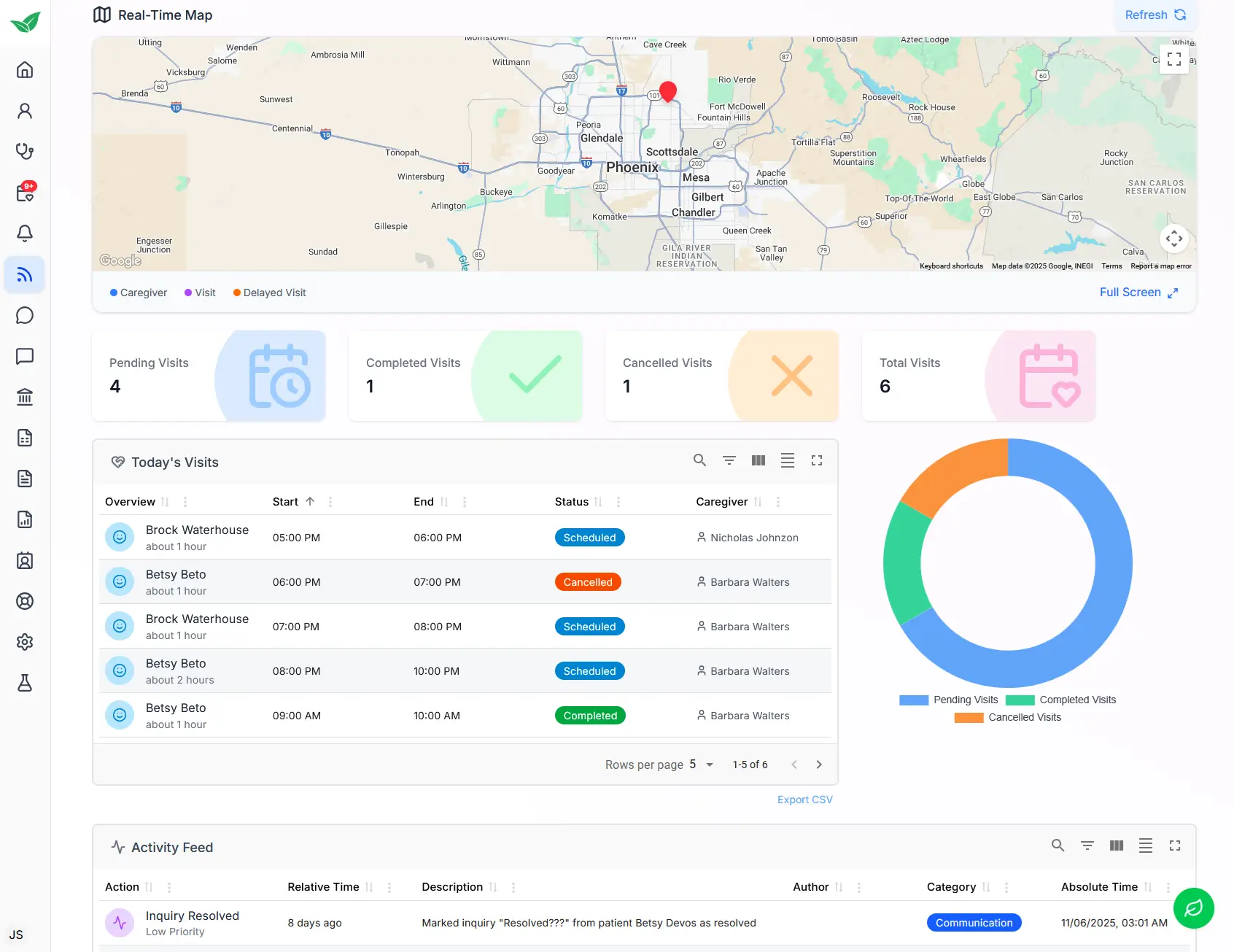
AveeCare's real-time map and alerts -- essential for managing caregivers across Montana's vast distances
Faith Community Networking
Churches are the social hub in many Montana communities, especially in rural areas. Catholic, Lutheran, and non-denominational churches with active senior ministries are ideal partners. Offer to speak at church groups about aging-in-place, caregiver support, and home care options. Pastors and parish nurses are trusted advisors to families making care decisions. Many Montana churches have formal or informal care ministries that can refer families to professional home care services when volunteer care is no longer sufficient.
Veteran Marketing (Malmstrom AFB & VA)
Montana has a high proportion of veterans per capita. Malmstrom Air Force Base in Great Falls has active-duty families and retiring military personnel. The VA Montana Health Care System has facilities in Fort Harrison (Helena), Miles City, and community-based outpatient clinics across the state. Connect with VA social workers, veteran service organizations (VFW, American Legion, DAV), and the Montana Department of Military Affairs Veterans Affairs Division. VA community care programs increasingly contract with home care agencies to serve veterans in rural areas.
Senior Center Partnerships
Montana has senior centers in most communities, even very small ones. These centers serve as social gathering points for elderly residents, providing meals, activities, and community connection. Partner with senior centers to offer free educational workshops about aging in place, fall prevention, and available home care services. Leave brochures, attend meal programs, and build relationships with center directors who are often the first people families call when they need care advice.
Digital Marketing for Dispersed Populations
While in-person marketing is vital in Montana, digital marketing reaches the adult children who often make care decisions for aging parents from out of state. Many Montana seniors have children living in Seattle, Denver, Portland, or other cities who search for home care agencies in Montana online. Invest in local SEO targeting city and county names, Google Ads geo-targeted to Montana, and a website that clearly communicates which areas you serve and the distances you are willing to travel.
Long-Distance Travel as Differentiator
In Montana, being willing and able to serve clients in remote areas is a genuine competitive advantage. Most urban-focused agencies will not drive 60+ miles to reach a rural client. If your agency builds the operational infrastructure to serve remote ranching communities -- efficient route planning, travel reimbursement, and reliable vehicles -- you can capture markets with zero competition. Families in these areas are often willing to pay premium private-pay rates because they have no other options.
Seasonal and Retiree Populations
Communities near Glacier National Park, Yellowstone, Whitefish, and the Flathead Valley attract seasonal residents and retirees who may need home care services during part of the year. Whitefish and Bigfork have growing retiree populations with significant private-pay potential. Seasonal marketing in these areas should ramp up before summer and winter seasons when part-time residents arrive. These clients often have higher incomes and prefer private-pay arrangements, making them valuable for your agency's revenue mix.
Montana Marketing Strategy Comparison
| Strategy | Cost | Time to Results | Best For |
|---|---|---|---|
| Hospital Discharge Referrals | $ | 2-4 months | Billings, Missoula, Great Falls agencies |
| Church & Faith Partnerships | $ | 1-3 months | Rural and small-town Montana |
| Tribal Health Partnerships | $ | 3-6 months | Reservation-area agencies |
| Google Ads (Geo-Targeted) | $$ | 1-2 months | Out-of-state family decision makers |
| Senior Center Outreach | $ | 1-3 months | Direct connection with elderly residents |
| Veteran VA Partnerships | $ | 2-4 months | Great Falls (Malmstrom AFB), Helena |
| Farm Bureau / Grange Events | $ | 2-4 months | Agricultural and ranching communities |
| Retiree Community Marketing | $$ | 1-3 months | Whitefish, Bigfork, Flathead Valley |
Montana marketing tip: In Montana, the biggest strategic decision is whether to focus on one population center (Billings, Missoula, or Great Falls), target a rural region, or attempt broader coverage. Starting focused and expanding is usually smarter than spreading thin across Montana's enormous geography. In Billings, build relationships with Billings Clinic and SCL Health discharge planners. In Missoula, focus on St. Patrick Hospital and the University of Montana community. In Great Falls, partner with Benefis Health System and leverage Malmstrom AFB veteran connections. In rural Montana, invest in church partnerships, senior centers, and agricultural community events. Your willingness to travel long distances is itself a marketing differentiator in Montana.
12Frequently Asked Questions
Common questions about starting a home care agency in Montana
No. Montana does NOT require a separate state license for non-medical personal care, companion, or homemaker agencies. You need standard business registration with the Montana Secretary of State and applicable local business licenses, but there is no DPHHS license requirement for non-medical services. However, if you plan to provide skilled nursing or therapy services (home health), you must obtain a Home Health Agency license from the DPHHS Quality Assurance Division (QAD). If you plan to accept Medicaid clients for Personal Assistance Services (PAS), you must enroll as a Medicaid provider with DPHHS even for non-medical services.
Montana requires criminal background checks for home care workers through the Montana Department of Justice (DOJ). Employers must submit fingerprint-based criminal history checks through the DOJ Criminal Records section. The check includes both state and federal (FBI) criminal databases. For Medicaid-enrolled providers, additional screening through the Office of Inspector General (OIG) exclusion list is required. Montana also maintains a nurse aide registry that must be checked for any certified nursing assistants. Background check processing times in Montana can vary, especially for applicants in rural areas, so agencies should build this into their hiring timeline.
Starting a non-medical home care agency in Montana typically costs between $20,000 and $55,000, including business formation with the Secretary of State, insurance, DOJ background checks, initial staffing, marketing, and working capital. Montana has no state sales tax which reduces ongoing operating costs. However, travel expenses are significantly higher than most states due to the vast distances between communities. A licensed Home Health Agency with skilled services costs significantly more, typically $85,000 to $200,000 or higher due to DPHHS Home Health Agency licensing, clinical staffing requirements, and Medicare certification costs. Bozeman and Missoula will be at the higher end of cost ranges, while smaller towns will be lower.
Montana offers several Home and Community-Based Services (HCBS) waiver programs through DPHHS Medicaid and Health Services Branch. Key programs include the Big Sky Waiver (serving elderly and adults with physical disabilities), the SDMI (Severe Disabling Mental Illness) Waiver, Personal Assistance Services (PAS) as a state plan benefit, and the Home and Community-Based Services Program. Montana expanded Medicaid under the Affordable Care Act, significantly increasing the number of eligible residents. Providers must enroll with Montana Medicaid through DPHHS. Montana is implementing Electronic Visit Verification (EVV) for Medicaid-funded personal care and home health services as required by the 21st Century Cures Act.
Montana is the 4th largest state by area but has only about 1.1 million residents, making it one of the most rural states in the country. The biggest challenges include vast travel distances between clients (some rural caregivers drive 50 to 100+ miles between visits), severe caregiver shortages in remote areas, limited internet connectivity for electronic documentation in some areas, harsh winter weather that can make travel dangerous or impossible, and the logistics of serving clients on or near the 7 tribal reservations. However, these challenges also mean very little competition in rural markets and genuine community need for home care services. Agencies that solve the rural logistics challenge with efficient scheduling, travel reimbursement, and technology-enabled documentation can build strong, defensible market positions across Big Sky Country.
Starting a non-medical home care agency in Montana typically takes 1 to 3 months since Montana does not require a separate state license for non-medical agencies. The timeline includes business registration with the Secretary of State, obtaining insurance, setting up DOJ background check processes, and initial hiring. Enrolling as a Montana Medicaid provider adds 2 to 4 months for application processing. A licensed Home Health Agency typically takes 4 to 8 months or more due to the DPHHS QAD licensing process, especially if pursuing Medicare certification. In rural Montana, allow extra time for recruiting caregivers in areas with very limited workforce availability.
13Sources and Resources
Official Montana state agency links and resources
Ready to manage your Montana home care agency?
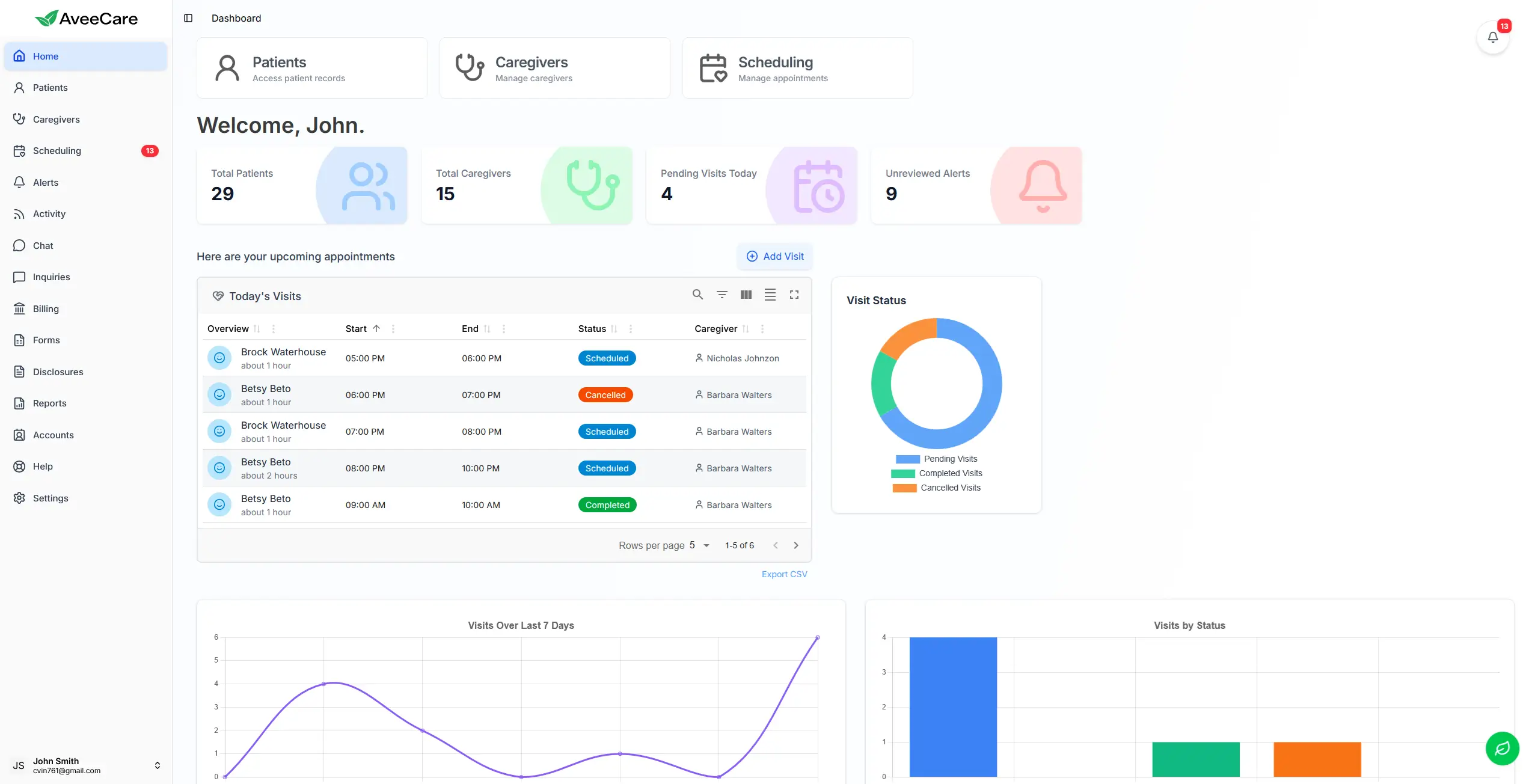
You do not need software on day one. But when you are ready, AveeCare starts at $6/client/month with no contracts, no mandatory demos, and a free trial. Scheduling, care plans, billing, caregiver management, and real-time GPS tracking in one platform built for simplicity -- whether you serve Billings, Missoula, Great Falls, the Flathead Valley, or remote ranching communities across Big Sky Country.
Disclaimer
This guide is for informational purposes only and does not constitute legal, financial, or professional advice. While we strive to keep this information accurate and up to date, Montana laws, regulations, fees, and requirements may change. Always verify current requirements directly with the relevant Montana state agencies, including the Montana Department of Public Health and Human Services (DPHHS), Quality Assurance Division (QAD), Montana Secretary of State, Montana Department of Revenue, Montana Department of Justice (DOJ), and the Senior and Long Term Care Division (SLTCD), before making business decisions. Consult with a qualified attorney and accountant in Montana before starting your home care business. AveeCare is not affiliated with the Montana Department of Public Health and Human Services or any Montana state agency. Published April 4, 2026.