How to Start a Home Care Agency in Michigan
Your complete 2026 guide to launching a home care business in the Great Lakes State. No separate state license needed for non-medical agencies, $13.73/hr minimum wage, and a 10 million-person market spanning Detroit to the Upper Peninsula.
Published April 4, 2026 · 26 min read
TLDR — Michigan at a Glance
No — for non-medical personal care/companion agencies.
Yes — LARA/BCHS Home Health Agency license for skilled services.
LARA Bureau of Community and Health Systems (BCHS) — home health only
$35,000 – $85,000 (non-medical)
$100,000 – $250,000+ (home health)
4 – 8 weeks (non-medical) | 3 – 6 months (home health)
Low barrier to entry — no state license for non-medical care, $50 LLC, large aging population across diverse metro and rural markets
1Michigan Market Overview
A large, diverse market spanning the Detroit metro, West Michigan, and underserved rural and Upper Peninsula communities
Starting a home care agency in Michigan means entering one of the largest and most diverse home care markets in the Midwest. With a population of approximately 10 million, Michigan is the 10th most populous state and home to the Detroit metropolitan area, one of the largest metros in the nation. The state offers an enormous client base of aging residents, a healthcare infrastructure anchored by world-class hospital systems, and significant demand across both densely populated urban areas and underserved rural communities. Michigan does not require a separate state license for non-medical personal care agencies, which creates a lower barrier to entrycompared to states that license both medical and non-medical home care.
Michigan home care demand is driven by powerful demographics. Approximately 18% of residents are aged 65 or older, representing nearly 1.8 million potential clients. The state experienced significant population shifts due to auto industry decline, creating economic transition communities with aging populations who stayed while younger workers left. The Upper Peninsula and many rural Lower Peninsula counties have some of the highest proportions of seniors in the state, with limited home care optionsand significant unmet demand. For a national overview of the startup process, see our complete guide to starting a home care agency and our state-by-state licensing requirements.
Regional Market Breakdown
Detroit Metro (Wayne, Oakland, Macomb)
Home to over 4.3 million residents, the Detroit tri-county area is the epicenter of Michigan home care demand. Corewell Health (formerly Beaumont), Henry Ford Health, and Ascension Michigan anchor the healthcare landscape. The market is competitive with established agencies, but demand is enormous. Diverse communities including African American neighborhoods in Detroit, Arab and Chaldean populations in Dearborn and Sterling Heights, and Hispanic communities in Southwest Detroit create strong demand for culturally competent care. Oakland County is one of the wealthiest counties in Michigan with high private-pay potential.
West Michigan (Grand Rapids, Kalamazoo)
Grand Rapids is the second-largest city in Michigan and one of the fastest-growing metros in the Midwest. Corewell Health West (formerly Spectrum Health) and Bronson Healthcare anchor the regional healthcare system. The economy is strong with diverse industries including furniture manufacturing, food processing, and medical device companies. West Michigan has a strong faith-based community culture that influences care preferences. Kalamazoo offers a growing market with moderate competition and Western Michigan University providing workforce pipeline.
Mid-Michigan (Lansing, Flint, Saginaw)
Central Michigan includes Lansing (state capital), Flint, and the Saginaw-Bay City-Midland tri-cities. Sparrow Health System and McLaren Health Care serve the region. Flint and Saginaw experienced significant economic decline from auto industry contraction, leaving aging populations with limited care options. The cost of living is very low, making profitability achievable at lower price points. Michigan State University in East Lansing creates workforce and partnership opportunities.
Upper Peninsula & Northern Michigan
The Upper Peninsula and northern Lower Peninsula represent some of the most underserved home care markets in the Midwest. With vast geographic distances, harsh winters, and aging populations, demand far exceeds supply. UP Health System and Munson Healthcare serve dispersed communities. Operating in these areas requires careful route planning, weather contingencies, and strong relationships with rural hospitals and clinics. The lack of competition can create significant opportunities for agencies willing to serve these communities.
Why Start a Home Care Agency in Michigan
2Home Care vs. Home Health in Michigan
No license for non-medical vs. LARA/BCHS license for home health — understand the difference
Michigan does NOT require a separate state license for non-medical home care agencies. Unlike states such as Illinois or California that license non-medical personal care agencies, Michigan only requires a state license from LARA/BCHS for Home Health Agencies providing skilled nursing or therapy services. Non-medical companion, homemaker, and personal care agencies can operate after completing standard business registration and obtaining required insurance. Michigan's non-medical personal care is primarily funded through the Home Help Program, administered by MDHHS.
Non-Medical Home Care
Personal care, companion, and home support services
- Activities of daily living (ADL) assistance
- Companionship and socialization
- Light housekeeping and meal preparation
- Medication reminders (not administration)
- Transportation and errands
- Respite care for family caregivers
No separate state license required
Register your business, get insurance, and start serving clients. Launch in 4-8 weeks.
Home Health Agency
Skilled nursing and therapy under physician orders
- Skilled nursing care
- Physical and occupational therapy
- Speech-language pathology
- Medication administration
- Wound care and medical procedures
- Personal care (W-2 employees)
LARA/BCHS Home Health Agency license required
Higher startup costs, clinical staffing required. Medicare certification available.
3Business Formation in Michigan
Register your home care business through LARA Corporations, MI Treasury, and local municipalities
Choose Your Business Structure
Most Michigan home care agencies register as an LLC (Limited Liability Company) for liability protection and tax flexibility. Michigan LLC filing costs only $50 with LARA, one of the lowest in the nation. Michigan has a flat individual income tax rate of 4.05%. Michigan also imposes a Corporate Income Tax (CIT) of 6% on C-Corps, making pass-through LLC structures more favorable for most new agencies.
Register with LARA Corporations Division
File your Articles of Organization (LLC) or Articles of Incorporation online or by mail through the Michigan Department of Licensing and Regulatory Affairs (LARA) Corporations Division at michigan.gov/lara. You must designate a registered agent with a Michigan address. Annual statements are required ($25/year). LARA handles both business registration and professional licensing in Michigan.
LARA Corporations DivisionObtain Your EIN
Apply for a free Employer Identification Number (EIN) from the IRS at irs.gov. You need this for bank accounts, payroll, tax filings, and any license applications. It takes minutes to obtain online.
Register with Michigan Department of Treasury
Register with the Michigan Department of Treasury (michigan.gov/treasury) for state income tax withholding. Michigan has a flat 4.05% individual income tax. Home care services are generally exempt from Michigan sales tax (6%). Register for unemployment insurance with the Michigan Unemployment Insurance Agency (UIA).
MI Dept. of TreasuryCity/County Business Licenses
Check with your local municipality for required business licenses. Detroit requires a business license and has specific zoning requirements. Many suburban communities in Oakland, Macomb, and Washtenaw counties may require home occupation permits. Grand Rapids, Kalamazoo, and Lansing have their own business registration processes. Outstate municipalities typically have simpler requirements.
Open a Business Bank Account
Open a dedicated business checking account to separate personal and business finances. You will need your EIN, Articles of Organization, and any local permits. Michigan has major banks (Comerica, Flagstar, Chemical/TCF) and strong credit union networks (Lake Michigan CU, MSUFCU, DFCU Financial) with small business services.
4Licensing Requirements
LARA/BCHS licenses Home Health Agencies only — no separate license for non-medical home care
Non-Medical Home Care — No State License Required
Michigan does not require a separate state license for agencies providing non-medical personal care, companionship, homemaking, or similar support services. This is a significant advantage over states like Illinois, California, or New York that license non-medical agencies. To start a non-medical home care agency in Michigan, you need to:
- Register your business with LARA Corporations Division
- Obtain an EIN and register with Michigan Treasury
- Purchase required insurance (general liability, professional liability, workers comp for 3+ employees)
- Run MSP ICHAT background checks on all staff
- Comply with Michigan employment laws (Earned Sick Time Act, wage and hour)
- Obtain any required local city or county business permits
Note: While no state license is required, maintaining high professional standards, thorough background checks, proper insurance, and quality training differentiates your agency and builds trust with clients and referral sources. If you plan to serve Medicaid Home Help Program clients, you must enroll as a provider through MDHHS.
Home Health Agency License — Skilled Nursing/Therapy
If you plan to provide skilled nursing, physical therapy, occupational therapy, speech therapy, or other medical services in Michigan, you must obtain a Home Health Agency (HHA) license from LARA through the Bureau of Community and Health Systems (BCHS). This is a more rigorous process with clinical staffing requirements, comprehensive policies, and on-site surveys. Requirements include:
- Submit LARA/BCHS Home Health Agency license application with required fees
- Designate a qualified administrator and director of nursing
- All staff must pass fingerprint-based background checks through MSP and FBI
- Maintain comprehensive clinical policies, quality assurance programs, and documentation
- Pass LARA/BCHS on-site survey and inspection
- Renew license and maintain ongoing compliance with Michigan Administrative Code
MSP ICHAT Background Checks
Michigan uses the Michigan State Police (MSP) Internet Criminal History Access Tool (ICHAT) for criminal background screening. ICHAT provides instant online criminal history checks for Michigan convictions at approximately $10 per search. This affordable and fast system makes it easy for Michigan home care agencies to screen employees efficiently. Additional screening recommendations include:
- MSP ICHAT online criminal history check (Michigan convictions, ~$10)
- Michigan Offender Tracking Information System (OTIS) check
- Michigan Sex Offender Registry check
- OIG (Office of Inspector General) exclusion list check
- Michigan Nurse Aide Registry check (for CNAs)
- Fingerprint-based FBI check (required for LARA-licensed Home Health Agencies)
Medicare Certification
Medicare certification is a separate process from state licensure. To bill Medicare, your Home Health Agency must first hold a LARA/BCHS license, then apply through the Centers for Medicare & Medicaid Services (CMS), pass a federal survey, and meet all Medicare Conditions of Participation. In Michigan, LARA serves as the state survey agency for CMS. With approximately 18% of Michigan residents aged 65 or older, representing nearly 1.8 million people, the Medicare-eligible population in Michigan is significant and represents a strong revenue opportunity for licensed home health agencies.
5Insurance Requirements
Workers' comp required for 3+ employees, Earned Sick Time Act compliance, and essential coverage
Michigan requires workers' compensation insurance for employers with 3 or more employees. There are also some situations where even a single employee may trigger the requirement depending on weekly work hours. The Michigan Workers' Disability Compensation Agency oversees the program. Michigan also enacted the Earned Sick Time Act (effective 2025), which requires employers to provide paid sick leave to employees. Both of these requirements add to your labor costs and must be factored into your business plan from day one.
General Liability Insurance
MANDATORYStandard $1M per occurrence / $2M aggregate coverage for bodily injury, property damage, and personal injury claims. Michigan insurance premiums are moderate compared to national averages. Budget $1,800 to $4,500 annually for a new home care agency. Essential for client contracts and credibility even though not state-mandated for non-medical agencies.
Professional Liability Insurance
MANDATORYErrors and omissions (E&O) coverage protects against claims of negligence, improper care, or failure to perform services. Essential for all home care agencies in Michigan regardless of whether you hold a LARA license. Michigan courts have moderate jury awards compared to coastal states, but adequate coverage is still critical. Budget $1,200 to $3,500 annually.
Workers' Compensation Insurance
MANDATORYMichigan requires workers' compensation insurance for employers with 3 or more employees at any time during a pay period, and in some cases even with fewer employees working 35+ hours per week for 13 or more consecutive weeks. The Michigan Workers' Disability Compensation Agency administers the program. You can purchase coverage through private insurers or the Michigan State Accident Fund. Budget $2,500 to $8,000 annually depending on payroll size and region.
Surety / Fidelity Bond & Auto Insurance
RECOMMENDEDSurety bonds protect clients against employee theft or dishonesty. While not legally required for non-medical agencies, they are strongly recommended and some Medicaid contracts may require them. Commercial auto insurance is recommended if caregivers use company vehicles or transport clients. Budget $300 to $800 for bonds and $1,200 to $2,500 for commercial auto.
6Staffing & Workforce
$13.73/hr minimum wage, MSP ICHAT checks, Earned Sick Time Act, Michigan Works!, and diverse Detroit workforce
Staffing a home care agency in Michigan requires navigating a diverse labor market that varies significantly by region. The Michigan minimum wage is approximately $13.73 per houras of 2026, with scheduled increases under the Michigan One Fair Wage law. Competitive market rates for home care aides range from $14 to $19 per hour in the Detroit metro and $13.73 to $16 per hour outstate. The Earned Sick Time Act (effective 2025) requires employers to provide paid sick leave. Michigan's workforce infrastructure includes Michigan Works!, a statewide network of employment agencies that can assist with recruitment, training, and workforce development for home care positions.
Wages & Minimum Wage
Michigan minimum wage is approximately $13.73/hr in 2026, with scheduled increases under One Fair Wage. Competitive Detroit metro rates are $14 to $19/hr for experienced aides, while outstate rates are $13.73 to $16/hr. The tipped minimum wage is being phased out. Overtime rules follow federal FLSA. Michigan labor costs are moderate compared to coastal states, giving agencies better margins, but competition for quality caregivers in the Detroit metro is strong.
MSP ICHAT Background Checks
The Michigan State Police Internet Criminal History Access Tool (ICHAT) provides instant online criminal background checks for Michigan convictions at approximately $10 per search. This is one of the fastest and most affordable background check systems in the nation. For non-medical agencies, ICHAT is the primary screening tool. For LARA-licensed Home Health Agencies, fingerprint-based FBI checks are also required. Budget $10 to $50 per employee depending on agency type.
Earned Sick Time Act
Michigan enacted the Earned Sick Time Act effective 2025, requiring employers to provide paid sick leave. Employees accrue 1 hour of earned sick time for every 30 hours worked. Small employers (fewer than 10 employees) must provide up to 40 hours of earned sick time annually, while larger employers must provide up to 72 hours. This is a new requirement that adds to labor costs and must be tracked carefully in your payroll system.
Michigan Works! Partnership
Michigan Works! is a statewide network of workforce development agencies with offices across all 83 Michigan counties. They provide free services including job posting, candidate screening, training grants, and on-the-job training subsidies. Many Michigan Works! offices have specific healthcare workforce programs. Partnering with your local Michigan Works! office can provide a steady pipeline of caregiver candidates, especially in outstate markets where traditional recruiting channels are limited.
Michigan Works!Community College CNA Programs
Michigan has an extensive community college system with CNA (Certified Nurse Aide) training programs across the state. Schools including Wayne County Community College, Macomb Community College, Grand Rapids Community College, Lansing Community College, and many others produce qualified CNAs annually. Building relationships with community college CNA program directors creates a reliable pipeline of trained caregivers. Some programs allow employers to sponsor students in exchange for employment commitments.
Diverse Detroit Workforce
The Detroit metro area has one of the most diverse workforces in the Midwest. Recruiting bilingual and multilingual caregivers (Arabic, Chaldean, Spanish, Bengali, Hmong) is a significant competitive advantage. Dearborn and surrounding areas have the largest Arab American population in the nation. Sterling Heights has a large Chaldean community. Southwest Detroit has a vibrant Hispanic community. Serving these populations with culturally competent, language-matched caregivers creates a strong market differentiator.
7Medicaid & Medicare in Michigan
MDHHS Medicaid enrollment, MI Health Link, MI Choice waiver, Home Help Program, Sandata EVV, and HCBS waivers
Michigan Medicaid is administered by the Michigan Department of Health and Human Services (MDHHS). Michigan has a large Medicaid population with approximately 2.8 million enrollees. The state operates MI Health Link, its integrated Medicare-Medicaid program, and contracts with multiple Medicaid Health Plans for managed care. Home and community-based services are funded through several waiver programs, including the MI Choice waiver, the Habilitation Supports Waiver (HSW), and the Children's Waiver Program (CWP). The Home Help Program is Michigan's primary non-medical personal care program for Medicaid recipients. Michigan uses Sandata Technologies for Electronic Visit Verification (EVV).
MDHHS Medicaid Enrollment
The Michigan Department of Health and Human Services (MDHHS) administers Michigan Medicaid. To serve Medicaid clients, your agency must enroll as a provider through MDHHS. Michigan Medicaid covers personal care services, home health services, and various HCBS waiver programs. The enrollment process includes credentialing, background checks, and compliance verification. MDHHS also oversees the Home Help Program, which is the primary Medicaid-funded personal care program in the state.
MDHHSHome Help Program
The Home Help Program is Michigan primary Medicaid-funded non-medical personal care program. It provides in-home services to individuals who need assistance with activities of daily living to remain in their homes. The program is administered through local MDHHS offices across all 83 counties. Individuals can choose their own caregivers (self-directed) or receive services through an agency. Becoming an approved Home Help agency requires MDHHS enrollment and compliance with program requirements.
MI Choice Waiver
The MI Choice waiver is Michigan primary HCBS waiver program for elderly and disabled individuals who would otherwise require nursing facility placement. MI Choice funds a wide range of services including personal care, homemaker services, respite care, adult day care, and community living supports. The waiver is managed through regional waiver agents (typically Area Agencies on Aging). Building relationships with MI Choice waiver agents is critical for agencies seeking waiver-funded referrals.
HCBS Waivers (HSW & CWP)
Beyond MI Choice, Michigan operates the Habilitation Supports Waiver (HSW) for individuals with developmental disabilities and the Children Waiver Program (CWP) for children with severe disabilities. These waivers fund personal care, respite, community living supports, and other services. Each waiver has specific provider enrollment requirements and service definitions. Contact MDHHS for current waiver availability and enrollment processes.
MI Health Link
MI Health Link is Michigan integrated Medicare-Medicaid program for dual-eligible beneficiaries. The program operates in select regions and coordinates all Medicare and Medicaid benefits through a single managed care plan. Home care services covered under MI Health Link include personal care, homemaker, and home health. Credentialing with MI Health Link plans can provide a valuable source of dual-eligible referrals, particularly in the Detroit metro where the program is most active.
Sandata EVV
Michigan uses Sandata Technologies for its Electronic Visit Verification (EVV) system. Medicaid providers delivering personal care services and home health services requiring in-home visits must comply with EVV requirements under the 21st Century Cures Act. MDHHS oversees EVV compliance. Providers can use the Sandata solution or a compatible third-party EVV vendor. AveeCare supports EVV integration for Michigan agencies.
Medicaid Health Plans
Michigan operates Medicaid managed care through multiple Medicaid Health Plans including Molina Healthcare, Priority Health, Blue Cross Complete, Meridian Health Plan, McLaren Health Plan, and UnitedHealthcare Community Plan. Home care agencies must credential with each health plan they wish to serve. Managed care contracts provide steady referral volume but may negotiate different reimbursement rates than fee-for-service Medicaid.
Medicare in Michigan
With nearly 1.8 million Michigan residents aged 65+, the Medicare-eligible population is significant. Medicare home health agencies must hold a LARA/BCHS license and CMS certification. Michigan has strong demand for Medicare home health services across both the Southeast Michigan metro and outstate regions. Rural northern Michigan and the Upper Peninsula are particularly underserved for Medicare home health, representing opportunities for new entrants.
Payer mix strategy: Michigan offers diverse payer mix opportunities. Oakland County and other affluent suburbs provide strong private pay clients. The Home Help Program and MI Choice waiver provide Medicaid-funded volume. MI Health Link serves dual-eligible populations. Medicare certification opens access to nearly 1.8 million eligible residents. Auto industry retirees with good benefits represent a unique Michigan market. A diversified payer mix across private pay, Medicaid, and Medicare is critical for long-term financial stability.
8Startup Cost Estimator
Estimated costs with interactive Detroit metro vs. outstate Michigan comparison
Select Your Region
Detroit metro costs are approximately 20% above base estimates due to higher insurance, wages, and competition.
Business Formation
Filing Articles of Organization with LARA Corporations Division online or by mail
Michigan LLCs file annual statements ($25/year) with LARA
Free registration for state tax withholding with Michigan Department of Treasury
Varies by locality; Detroit requires a business license; some cities require home occupation permits
Attorney review, CPA setup (Michigan rates are moderate)
Licensing
Michigan does not require a separate state license for non-medical personal care agencies
Required only for agencies providing skilled nursing or therapy services
Per person online criminal history check via Michigan State Police ICHAT ($10 each)
Survey prep, policies, consulting (if applicable)
Insurance (Annual)
$1M per occurrence / $2M aggregate (Michigan rates are moderate)
Errors and omissions coverage for home care services
Required for employers with 3+ employees; rates vary by region and payroll
Employee dishonesty coverage; builds client trust
Office & Equipment
Detroit metro moderate; Grand Rapids growing; outstate affordable
Laptops, smartphones, scheduling software, internet
Desk, chairs, printer, supplies
Marketing & Initial Growth
Professional site with local SEO for Michigan market
Google Ads, social media, community outreach, multilingual print materials
Brochures, flyers, community event materials (multilingual recommended for Detroit/Dearborn)
Working Capital (3-6 Months)
Michigan wages ($13.73-$19/hr market rate), payroll taxes, Earned Sick Time Act accruals
Rent, utilities, software, fuel, insurance premiums
Estimated Total (Detroit Metro)
Non-medical home care agency (add $15K-$30K for LARA Home Health Agency licensing)
These estimates are for a non-medical home care agency. Detroit metro costs include higher insurance premiums, competitive wages, and marketing expenses. Outstate Michigan is significantly more affordable across all categories, especially in Mid-Michigan and the Upper Peninsula. All estimates are for initial setup and the first 3 to 6 months of operations. Toggle between regions above to see how location affects your budget.
9Compliance Checklist
Track your progress across all Michigan requirements
Business Formation
0/7Licensing
0/8Insurance
0/4Staffing
0/6Medicaid & Medicare
0/4Operations
0/5Marketing
0/610Building Your Referral Network
Key referral sources in Michigan for your home care agency
Michigan has a well-developed healthcare ecosystem anchored by several major health systems. Building strong referral relationships with hospital discharge planners, physicians, the Aging and Adult Services Agency (AASA) under MDHHS, Area Agencies on Aging, and Medicaid Health Plans is critical for sustained growth. In Southeast Michigan, the large hospital systems dominate referral patterns. In West Michigan and outstate communities, personal relationships and community reputation drive referral success.
Corewell Health (formerly Beaumont/Spectrum)
Corewell Health is Michigan largest health system, formed from the merger of Beaumont Health and Spectrum Health. In Southeast Michigan, Corewell operates major hospitals including Beaumont Royal Oak, Beaumont Troy, and Beaumont Dearborn. In West Michigan, Corewell West (formerly Spectrum Health) operates Butterworth Hospital in Grand Rapids and hospitals across the western part of the state. Their extensive physician network and discharge planning departments are the most important referral relationships for Michigan home care agencies. Build relationships at multiple hospital locations.
Henry Ford Health
Henry Ford Health is one of Michigan most respected health systems, headquartered in Detroit. Henry Ford Hospital in Detroit, Henry Ford Macomb, Henry Ford West Bloomfield, and Henry Ford Wyandotte serve communities across Southeast Michigan. Henry Ford also operates a large employed physician network (Henry Ford Medical Group) and health plan (Health Alliance Plan/HAP). Building relationships with Henry Ford discharge planners and connecting with HAP for managed care referrals can provide significant volume.
Michigan Medicine (University of Michigan)
Michigan Medicine is the University of Michigan academic medical center in Ann Arbor, consistently ranked among the top hospitals nationally. Their complex patients often need post-discharge home care, frequently with higher acuity. Ann Arbor and Washtenaw County have an educated, affluent population with strong private pay capacity. Building referral relationships with Michigan Medicine social workers and care coordinators can yield high-value, often private-pay clients.
Ascension Michigan (formerly St. John Providence)
Ascension Michigan operates hospitals across the state including Ascension Providence Rochester, Ascension St. John Detroit, Ascension Macomb-Oakland, Ascension Borgess in Kalamazoo, and Ascension Genesys in Grand Blanc. Their community-focused mission and faith-based approach align well with home care agency partnerships. Ascension has a strong presence in suburban Detroit and mid-Michigan communities.
AASA (Aging & Adult Services Agency)
The Aging and Adult Services Agency (AASA) operates under MDHHS and oversees aging programs across the state. AASA coordinates with Michigan 16 Area Agencies on Aging (AAAs) that serve as the local point of contact for senior services. AAAs manage MI Choice waiver referrals, senior nutrition, caregiver support, and other aging services. Building strong relationships with your local AAA staff is one of the most effective ways to access publicly funded referrals and MI Choice waiver clients.
AASA under MDHHSArea Agencies on Aging (AAAs)
Michigan has 16 Area Agencies on Aging covering all 83 counties. AAAs administer MI Choice waiver services, provide information and referral, coordinate caregiver support programs, and connect seniors with community resources. Key AAAs include the Area Agency on Aging 1-B (Southeast Michigan), Senior Resources of West Michigan, NEMCSA (Northeast Michigan), and the Region 2 AAA (Upper Peninsula). Each AAA has its own provider network and contracting process.
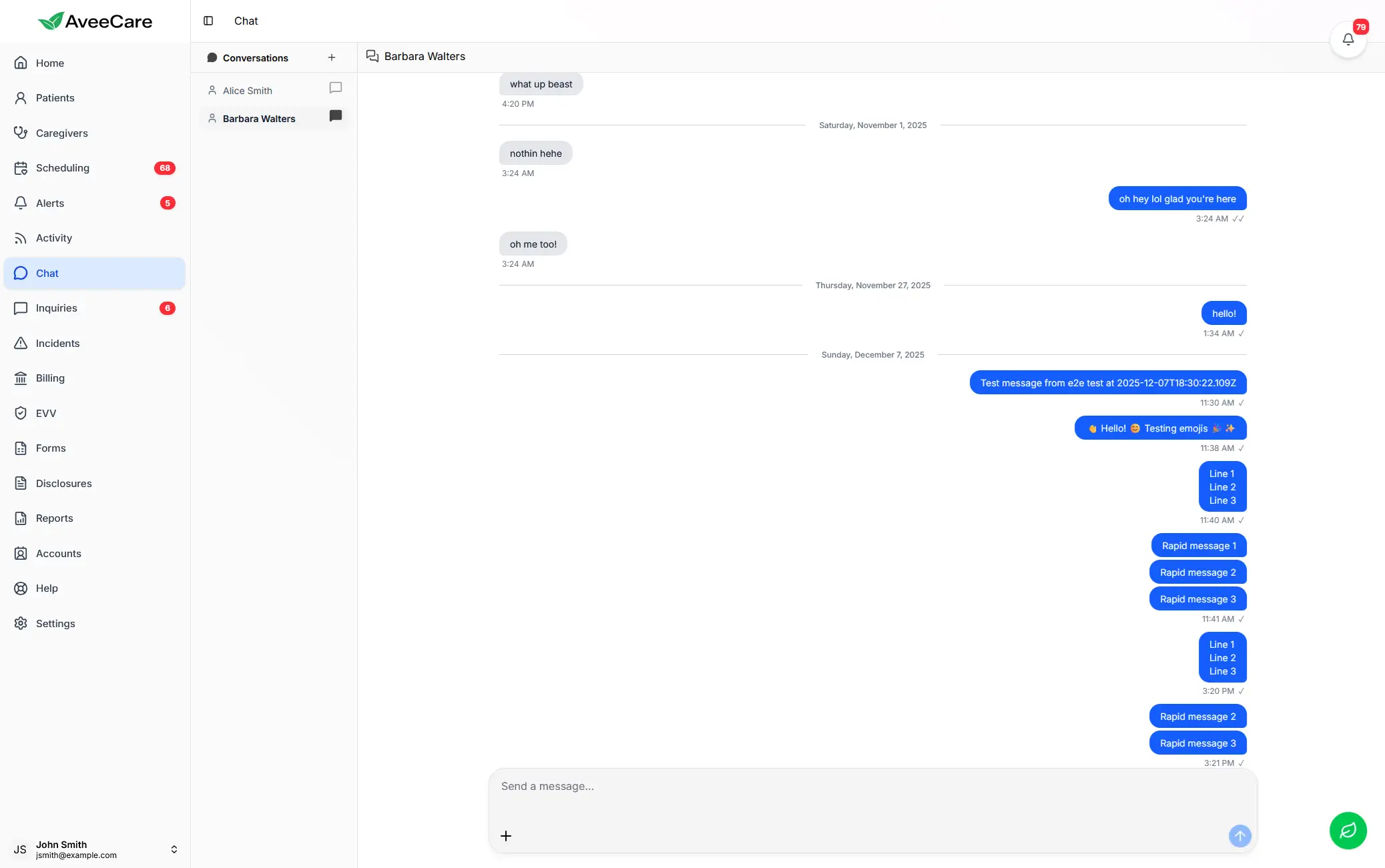
Coordinate referrals, scheduling, and caregiver communication with AveeCare's built-in messaging
Referral tip: In Southeast Michigan, hospital discharge planners work with dozens of agencies. Responsiveness is your biggest differentiator: return calls within the hour, never miss a start-of-care, and send progress updates proactively. In West Michigan and outstate communities, personal relationships matter even more. Show up in person, attend community events, and become a trusted partner at your local hospital and physician offices. In the Upper Peninsula, being one of the few reliable providers available creates natural referral momentum.
11Marketing & Client Acquisition
How to market your Michigan home care business across Detroit's diverse communities, Grand Rapids growth market, and UP/rural outreach
Marketing a home care agency in Michigan requires a regionally segmented approachthat accounts for the major differences between the Detroit metro, West Michigan, Mid-Michigan, and the Upper Peninsula. The Detroit metro is competitive with established agencies, but the enormous population and diverse communities create strong demand for agencies that can provide culturally competent, multilingual care. Grand Rapids is a growing market with strong economic fundamentals. Mid-Michigan auto industry communities have aging populations with retiree benefits. The Upper Peninsula and northern Michigan have vast unmet demand with minimal competition.
Detroit Metro Diverse Marketing
The Detroit metro is one of the most culturally diverse regions in the nation. To stand out, develop targeted marketing for specific communities: Arab American and Chaldean populations in Dearborn and Sterling Heights (Arabic and Chaldean-language materials, community organizations like ACCESS), African American communities in Detroit (churches, community health centers, Wayne State University partnerships), Hispanic communities in Southwest Detroit, and Bengali communities in Hamtramck. Hire caregivers who reflect the communities you serve. Advertise in ethnic media outlets and partner with cultural organizations.
Grand Rapids Growth Market
Grand Rapids is one of the fastest-growing metros in the Midwest with a strong economy, rising population, and increasing demand for senior services. The West Michigan market values community connections and faith-based relationships. Partner with churches, senior centers, and community organizations. Corewell Health West (formerly Spectrum Health) is the dominant health system. Grand Rapids has an entrepreneurial culture that welcomes new businesses. Focus on building a strong Google Business Profile and local SEO presence, as West Michigan families research extensively online before choosing a provider.
UP & Rural Outreach
The Upper Peninsula and northern Michigan represent some of the most underserved home care markets in the Midwest. With limited competition and vast geographic distances, agencies that can reliably serve these areas have a natural advantage. Marketing in rural communities requires a grassroots approach: attend local events, sponsor community gatherings, build relationships with rural hospitals and clinics (UP Health System, Munson Healthcare, War Memorial Hospital), and become a trusted name in small communities. One satisfied family can generate multiple referrals in tight-knit rural areas.
Auto Industry Retiree Communities
Michigan unique auto industry heritage creates a distinct market segment. Cities like Flint, Saginaw, Pontiac, and Dearborn have large populations of retired autoworkers with UAW retiree healthcare benefits. These communities have aging populations who stayed while younger workers left, creating concentrated demand for home care. Understanding retiree benefit structures and positioning your agency to serve this population can create a reliable revenue stream. Partner with UAW local unions and retiree associations for outreach.
Diverse Community Outreach (Arab/Chaldean, Hispanic, African American)
Dearborn has the largest concentration of Arab Americans in the nation. Sterling Heights has a thriving Chaldean community. Southwest Detroit is a vibrant Hispanic neighborhood. Detroit proper has deep African American heritage. Each community has unique cultural expectations around elder care, family involvement, and caregiver relationships. Hire bilingual caregivers, create translated marketing materials, partner with community organizations (ACCESS Arab American, Chaldean American Chamber, Hispanic/Latino Commission), and attend cultural events. Culturally competent care is a powerful market differentiator.
Michigan Works! Partnerships
Michigan Works! offices across all 83 counties can serve dual purposes: recruiting caregivers and marketing your services to communities. Many Michigan Works! offices host job fairs, community events, and informational sessions. Participating in these events builds visibility while also recruiting. Michigan Works! career counselors often know of families seeking home care and can make informal referrals. Some Michigan Works! offices offer on-the-job training subsidies that can offset your caregiver training costs.
Digital Marketing Strategy
Digital marketing should be region-specific. For the Detroit metro, use hyperlocal Google Ads targeting cities and zip codes. For Grand Rapids, target city names and West Michigan keywords. For outstate and rural areas, local SEO (Google Business Profile, directory listings) is critical with fewer online competitors. Facebook is extremely effective in Michigan for reaching family caregivers. Online reviews on Google carry enormous weight throughout the state. Build a professional website with clear service area information and local testimonials.
Michigan Home Health Association & Senior Center Networking
The Michigan Home Health Association provides industry networking, advocacy, and education for home care and home health agencies. Membership connects you with peers, referral partners, and regulatory updates. Additionally, Michigan has hundreds of senior centers across the state. Senior centers are gathering places where elderly residents learn about available services. Presenting at senior center events, distributing materials, and building relationships with senior center directors creates warm referral channels. Partner with physician offices near hospitals to build discharge planner and primary care referral relationships.
12Frequently Asked Questions
Common questions about starting a home care agency in Michigan
It depends on the type of services you provide. Michigan does NOT require a separate state license for non-medical personal care, companion, or homemaker agencies. This makes starting a non-medical home care agency in Michigan faster and less expensive than many states. However, if you plan to provide skilled nursing, therapy, or other medical services, you must obtain a Home Health Agency (HHA) license from LARA through the Bureau of Community and Health Systems (BCHS). Even without a state license requirement, non-medical agencies must still register their business, obtain insurance, and comply with employment laws.
Starting a non-medical home care agency in Michigan typically costs between $35,000 and $85,000. Costs vary between the Detroit metro area (higher insurance, competition, wages) and outstate Michigan (more affordable across all categories). This covers business registration with LARA Corporations, insurance including workers compensation for 3 or more employees, marketing, office space, and 3 to 6 months of working capital. Michigan LLC registration is only $50, one of the lowest in the nation. A Home Health Agency with skilled nursing costs $100,000 to $250,000 or more.
Michigan uses the Michigan State Police (MSP) Internet Criminal History Access Tool (ICHAT) for criminal background checks. ICHAT provides instant online results for Michigan convictions at approximately $10 per check. For licensed Home Health Agencies, LARA requires fingerprint-based background checks through the MSP and FBI. All agencies should also check the Michigan Offender Tracking Information System (OTIS), the Sex Offender Registry, and the OIG exclusion list. Background checks should be completed before any unsupervised client contact.
Michigan minimum wage is approximately $13.73 per hour as of 2026, with scheduled increases under the Michigan One Fair Wage law. Competitive market rates for experienced home care aides in the Detroit metro area range from $14 to $19 per hour, while outstate Michigan rates typically range from $13.73 to $16 per hour. Michigan also requires employers to provide paid sick leave under the Earned Sick Time Act, which took effect in 2025. Workers compensation insurance is required for employers with 3 or more employees.
Michigan uses Sandata Technologies for its Electronic Visit Verification (EVV) system. Michigan Medicaid providers delivering personal care services and home health services requiring in-home visits must comply with EVV requirements under the 21st Century Cures Act. MDHHS oversees EVV compliance. Providers can use the Sandata solution or a compatible third-party EVV vendor. AveeCare supports EVV integration to help Michigan agencies stay compliant.
A non-medical home care agency in Michigan can launch in as little as 4 to 8 weeks because Michigan does not require a separate state license for non-medical personal care agencies. This timeline includes business registration with LARA Corporations, obtaining insurance, establishing MSP ICHAT background check processes, and initial hiring. A licensed Home Health Agency takes 3 to 6 months or longer due to LARA/BCHS licensing requirements and potential Medicare certification.
13Sources and Resources
Official Michigan state agency links and resources
Ready to manage your Michigan home care agency?
You do not need software on day one. But when you are ready, AveeCare starts at $6/client/month with no contracts, no mandatory demos, and a free trial. Scheduling, care plans, billing, caregiver management, real-time tracking, and alerts in one platform built for simplicity. Manage your Michigan home care agency from Detroit to the Upper Peninsula and everywhere in between.
Disclaimer
This guide is for informational purposes only and does not constitute legal, financial, or professional advice. While we strive to keep this information accurate and up to date, Michigan laws, regulations, fees, and requirements may change. Always verify current requirements directly with the relevant Michigan state agencies before making business decisions. Consult with a qualified attorney and accountant in Michigan before starting your home care business. AveeCare is not affiliated with the Michigan Department of Licensing and Regulatory Affairs (LARA), the Michigan State Police, the Michigan Department of Health and Human Services (MDHHS), or any Michigan state agency. Published April 4, 2026.