How to Start a Home Care Agency in Massachusetts
Your complete 2026 guide to launching a home care business in Massachusetts, from DPH home health licensing and CORI background checks to MassHealth enrollment, PFML premiums, the EOEA elder services network, and building referral relationships with world-class Boston healthcare systems.
Published April 4, 2026 · 25 min read
TLDR — Massachusetts at a Glance
No separate license required. Non-medical home care is generally not separately licensed at the state level. DPH license required for home health (skilled services).
Department of Public Health (DPH) for home health; Executive Office of Elder Affairs (EOEA) for elder services oversight; DCJIS for CORI checks
$18,000 – $75,000 (non-medical, varies by region)
$100,000 – $250,000+ (Home Health)
2 – 4 months (non-medical) | 6 – 12 months (Home Health)
PFML active (employer + employee premiums), very high cost of living (especially Boston), world-class healthcare ecosystem, Cape Cod aging population, 5.0% flat income tax + 4% surtax on income over $1M
1Massachusetts Market Overview
Understanding the opportunity for home care agencies in the Bay State
Massachusetts has a population of approximately 7.0 million people and offers one of the most attractive markets for home care entrepreneurs in New England. The state combines a world-class healthcare ecosystem, a highly educated population, significant aging demographics, and strong private-pay potential. Starting a home care agency in Massachusetts positions you to serve a wealthy, health-conscious population with access to the best medical infrastructure in the country.
The Boston metropolitan area dominates the state's economy and healthcare landscape. Greater Boston spans Suffolk, Middlesex, Norfolk, and Essex counties, and is home to roughly 4.9 million residents. It is the undisputed healthcare capital of America, anchored by institutions like Massachusetts General Hospital, Brigham and Women's Hospital, Beth Israel Deaconess Medical Center, Dana-Farber Cancer Institute, and Tufts Medical Center. These world-class hospitals generate massive referral pipelines for home care agencies. The suburbs of Wellesley, Needham, Brookline, Newton, Lexington, and Concord are among the wealthiest communities in the Northeast, with high concentrations of affluent retirees and families who are strong private-pay home care clients. For a national overview of the startup process, see our complete guide to starting a home care agency and our state-by-state licensing requirements.
Worcester is Massachusetts' second-largest city with approximately 205,000 residents and serves as the anchor for central Massachusetts. UMass Memorial Health Care is the major health system in Worcester and provides significant referral opportunities. Springfield, the largest city in western Massachusetts, anchors a region that is economically distinct from eastern Massachusetts, with lower costs of living but also lower average incomes. Cape Cod and the Islands (Martha's Vineyard, Nantucket) have a rapidly aging population with a median age well above the state average, creating substantial demand for home care services with relatively fewer providers.
Massachusetts has a large and diverse immigrant population, particularly in the Boston metro area. Significant Brazilian, Haitian, Chinese, Russian, Portuguese, Dominican, and Salvadoran communities create both workforce opportunities and demand for culturally competent, multilingual care. The state's strong healthcare workforce infrastructure, including numerous nursing programs and community colleges, provides a solid pipeline for caregiver recruitment.
2Home Care vs. Home Health in Massachusetts
No separate non-medical license vs. DPH Home Health Agency license
Important distinction for Massachusetts: Massachusetts does NOT have a separate state license specifically for non-medical personal care agencies. Non-medical home care (companion care, homemaker services, personal care assistance) is generally not separately licensed at the state level. However, the Department of Public Health (DPH) licenses Home Health Agencies that provide skilled medical services (nursing, therapy). The Executive Office of Elder Affairs (EOEA) has oversight of elder services, and Home Care Corporations serve as intermediaries for state-funded home care programs.
Non-Medical Home Care
No separate state license required
- Personal care (bathing, dressing, grooming)
- Homemaker services and housekeeping
- Meal preparation and nutrition support
- Companion care and socialization
- Medication reminders
- Transportation and errands
Fastest path for new agencies
Register business + CORI checks + insurance. No DPH license needed.
Home Health Agency (DPH Licensed)
DPH Home Health Agency license required
- Skilled nursing care
- Physical and occupational therapy
- Speech therapy
- Medical social services
- Home health aide services
- Wound care and infusion therapy
Requires clinical staff and oversight
Plus Medicare cert for Medicare billing.
MassHealth note: If you plan to provide personal care services through MassHealth (Massachusetts Medicaid), you must enroll as a MassHealth provider with the Executive Office of Health and Human Services. MassHealth uses managed care plans and Home Care Corporations as intermediaries for many state-funded home care programs. The Executive Office of Elder Affairs (EOEA) and Aging Services Access Points (ASAPs) play critical roles in coordinating elder home care services. EVV compliance via Sandata is required for all Medicaid-funded personal care and home health services.
3Business Formation in Massachusetts
Register with the Secretary of the Commonwealth, DOR, and your city or town

Choose Your Business Structure
Most Massachusetts home care agencies register as an LLC (Limited Liability Company) for liability protection and tax flexibility. Massachusetts LLC formation costs $500 through the Secretary of the Commonwealth. You can also form a corporation, partnership, or sole proprietorship, though an LLC is recommended for the personal liability protection it provides when caregivers work in clients' homes.
Register with the Secretary of the Commonwealth
File your Certificate of Organization with the Massachusetts Secretary of the Commonwealth. You can file online through the Corporations Division portal. Massachusetts also requires an annual report filing for LLCs. The Secretary of the Commonwealth handles all business entity registrations in the state.
MA Secretary of the CommonwealthObtain Your EIN
Apply for a free Employer Identification Number (EIN) from the IRS at irs.gov. You need this for bank accounts, payroll, tax filings, and any licensing applications. You can get it instantly online.
Register with the Department of Revenue (DOR)
Register with the Massachusetts Department of Revenue for state income tax withholding. Massachusetts has a 5.0% flat income tax plus a 4% surtax on income over $1 million (the so-called "millionaire's tax" passed in 2022). Also register for state unemployment insurance through the Department of Unemployment Assistance (DUA) and for PFML contributions with the Department of Family and Medical Leave.
MA Department of RevenueCity/Town Business Certificate
Massachusetts cities and towns require a business certificate (sometimes called a DBA or "doing business as" certificate) filed with the town or city clerk. Boston, Cambridge, Worcester, Springfield, and other municipalities each have their own requirements and fee structures. Contact your city or town clerk's office for specific requirements.
Open a Business Bank Account
Open a dedicated business checking account to keep personal and business finances separate. Major banks and credit unions throughout Massachusetts are readily available. You will need your EIN, Certificate of Organization, and operating agreement.
Massachusetts cost of living warning: Massachusetts has one of the highest costs of living in the United States, particularly in the Boston metro area. Office space, professional services, insurance premiums, and employee wages are all significantly higher than national averages. The 5.0% flat income tax plus the 4% surtax on income over $1M also impacts high-earning agency owners. Factor these elevated costs into your business plan from day one. The PFML payroll contributions add another ongoing cost that many new business owners overlook.
4Licensing Requirements (DPH)
No non-medical license needed; DPH licenses Home Health Agencies for skilled services
Non-Medical Home Care (No State License)
Massachusetts does not require a separate state license for non-medical personal care agencies. This means you can start a home care agency providing companion care, homemaker services, personal care assistance, meal preparation, and transportation without obtaining a license from the Department of Public Health. However, you still have significant compliance obligations including business registration, CORI background checks via DCJIS, workers' compensation insurance, PFML contributions, HIPAA compliance, and adherence to all Massachusetts employment laws. The absence of a state license does not mean the absence of regulation.
- Register business with Secretary of the Commonwealth
- Conduct CORI background checks on all employees via DCJIS
- Obtain workers' compensation insurance (mandatory)
- Register for PFML and begin payroll contributions
- Establish HIPAA compliance policies
- Develop caregiver training and orientation program
Home Health Agency License (DPH)
If you plan to provide skilled nursing, physical therapy, or other medical services in Massachusetts, you must obtain a Home Health Agency license from the Massachusetts Department of Public Health (DPH). This is a rigorous process with extensive clinical documentation, staffing requirements, and quality assurance standards. A licensed RN must serve as the clinical supervisor. DPH conducts surveys and inspections to ensure compliance with state regulations. The application process includes a Determination of Need (DoN) review in some cases.
- Submit Home Health Agency license application to DPH
- Designate a qualified administrator with healthcare management experience
- Employ or contract with an RN for clinical supervision
- Develop all required clinical policies and procedures
- Pass DPH on-site survey and inspection
- Establish quality assurance and performance improvement program
Medicare Certification
Medicare certification is a separate process from DPH state licensure. To bill Medicare for skilled home health services, you must first hold a DPH Home Health Agency license, then apply through CMS, pass a federal survey, and demonstrate compliance with Medicare Conditions of Participation. This process typically adds 3 to 6 months beyond your state license. Massachusetts' large elderly population, particularly in communities like Cape Cod, Brookline, and Newton, makes Medicare certification a valuable investment for home health agencies.
5Insurance Requirements & MA PFML
Protect your Massachusetts home care business, including the active PFML program
General Liability
$2,000 - $6,500/yrCovers bodily injury and property damage claims. Recommended minimum: $1M per occurrence / $2M aggregate. Required by most referral partners and contracts in Massachusetts. Essential for agencies sending caregivers into clients' homes. Massachusetts premiums tend to be above the national average.
Professional Liability (E&O)
$1,400 - $5,000/yrCovers errors, omissions, and negligence claims related to the care services your agency provides. Essential protection for any home care business in Massachusetts. Massachusetts is known for a litigious legal environment, making this coverage especially important.
Workers' Compensation
$2,000 - $7,000/yrMassachusetts requires workers' compensation insurance for ALL employers. Administered by the Department of Industrial Accidents (DIA). You must have coverage before hiring your first caregiver. Failure to carry workers' comp is a criminal offense in Massachusetts and can result in significant fines and penalties.
MA PFML (Paid Family & Medical Leave)
Active - payroll contributions requiredMassachusetts Paid Family and Medical Leave (PFML) is an active, mandatory program. Both employers and employees contribute premiums through payroll deductions. The combined contribution rate is set annually by the Department of Family and Medical Leave. You must register, withhold employee contributions, and remit both employer and employee portions quarterly. This is an ongoing payroll cost that must be factored into your business plan from day one.
Surety / Fidelity Bond
$200 - $1,000/yrProtects clients against employee theft or dishonesty. Recommended for building trust with Massachusetts families. Many referral partners and affluent communities like Wellesley, Needham, and Brookline prefer working with bonded agencies.
Commercial Auto / Mileage
$900 - $2,800/yrIf caregivers use company vehicles or you reimburse mileage, commercial auto or non-owned auto liability insurance is important. Massachusetts auto insurance rates are among the highest in the nation. Consider this carefully when budgeting, especially if serving spread-out regions like Cape Cod or western MA.
Boston-area insurance consideration: Operating in the Boston metro area means higher liability exposure due to higher property values, affluent clients with greater expectations, and Massachusetts' reputation as a litigious state. Insurance premiums in the Boston area tend to be significantly higher than in western Massachusetts or Cape Cod. Consider higher coverage limits and umbrella liability policies if you serve Suffolk, Middlesex, or Norfolk counties. Massachusetts auto insurance rates are among the highest in the country, which affects mileage reimbursement and commercial auto policies.
6Staffing and Hiring in Massachusetts
CORI background checks, $15.00 minimum wage, and the Boston metro workforce
Recruiting and retaining quality caregivers is a critical challenge when starting a home care agency in Massachusetts. The state's strong economy and low unemployment rate create a highly competitive labor market, particularly in the Boston metro area where caregivers have many employment options. Massachusetts' $15.00/hour minimum wage (2026) sets a higher floor than many states, meaning you need to offer competitive wages well above this minimum to attract quality candidates in the Boston area. The state's diverse immigrant population is a significant workforce strength, with large communities of experienced caregivers from Brazilian, Haitian, Chinese, and other backgrounds.
Training Requirements
For non-medical home care agencies in Massachusetts, caregivers should receive initial orientation and training covering personal care techniques, safety protocols, infection control, emergency procedures, client communication, and HIPAA compliance. Best practices include at least 40 hours of initial training. For DPH-licensed Home Health Agencies, home health aides must complete 75 hours of training including supervised clinical practice. Massachusetts community colleges offer excellent CNA and HHA programs including Bunker Hill Community College, Massasoit Community College, Quinsigamond Community College (Worcester), Springfield Technical Community College, and Cape Cod Community College.
Background Checks (CORI)
Massachusetts uses the Criminal Offender Record Information (CORI) system, administered by the Department of Criminal Justice Information Services (DCJIS). Employers can access CORI checks through the iCORI online portal. While not every non-medical home care agency is legally required to conduct CORI checks, it is strongly recommended and considered an industry best practice. Agencies providing MassHealth-funded services must conduct background checks. You should also verify workers against the National Sex Offender Registry and the federal OIG exclusion list.
MA DCJIS (CORI Background Checks)Where to Find Caregivers in Massachusetts
State workforce development centers across Massachusetts
Bunker Hill CC, Massasoit CC, Quinsigamond CC, and more
Indeed, ZipRecruiter, CaregiverJobs
Boston metro has large Brazilian, Haitian, Chinese, Russian populations
Wages in Massachusetts
Massachusetts' minimum wage is $15.00/hour (2026). To attract and retain quality caregivers in Massachusetts' competitive labor market, most agencies pay between $17 and $24 per hour for personal care aides and $19 and $28 per hour for home health aides and CNAs. Pay rates are significantly higher in the Boston metro area (Suffolk, Middlesex, Norfolk counties) where competition for healthcare workers is fierce. Worcester and Springfield offer somewhat lower labor costs, while Cape Cod wages reflect the area's seasonal economy and high cost of living. Remember that Massachusetts' 5.0% flat income tax plus PFML contributions reduce take-home pay, so competitive gross wages are essential for retention.
Diverse workforce opportunity: The Boston metro area is one of the most ethnically diverse regions in New England. Massachusetts has large Brazilian (particularly in Framingham, Somerville, and the MetroWest area), Haitian (Mattapan, Brockton, Randolph), Chinese (Chinatown, Quincy, Malden), Russian (Brookline, Allston, Newton), Portuguese (Fall River, New Bedford), and Dominican/Salvadoran (Lawrence, Chelsea) communities. Many individuals in these communities have experience with or interest in caregiving roles. Recruiting from these communities, offering multilingual support, and providing culturally competent care are significant competitive advantages in Massachusetts.
7Medicaid and Medicare in Massachusetts
MassHealth, managed care plans, HCBS waivers, EOEA, ASAPs, and Sandata EVV
MassHealth (Massachusetts Medicaid)
MassHealth is Massachusetts' Medicaid program, administered by the Executive Office of Health and Human Services (EOHHS). MassHealth covers home care services for eligible residents through several programs including managed care plans, the Home and Community-Based Services (HCBS) waivers, and the Frail Elder Waiver. To provide MassHealth-funded home care services, you must enroll as a MassHealth provider. Massachusetts has expanded Medicaid under the Affordable Care Act and historically has one of the lowest uninsured rates in the nation, creating substantial revenue opportunities for home care agencies.
MassHealth
Massachusetts Medicaid program under EOHHS
EOEA
Executive Office of Elder Affairs administers elder services
EOEA and Aging Services Access Points (ASAPs)
The Executive Office of Elder Affairs (EOEA) is the Massachusetts state agency that oversees programs and services for older adults. EOEA administers state-funded home care programs and coordinates with Aging Services Access Points (ASAPs), which are Massachusetts' version of Area Agencies on Aging (AAAs). ASAPs serve as the primary community-based organizations that assess elder needs, coordinate services, and refer clients to home care agencies. Building strong relationships with your local ASAPs is critical for accessing publicly funded home care clients and understanding the elder services landscape in your service area. Home Care Corporations serve as intermediaries for many state-funded home care programs and can be important partners.
Executive Office of Elder Affairs (EOEA)Electronic Visit Verification (EVV)
Under the 21st Century Cures Act, all states must implement EVV for Medicaid-funded personal care and home health services. Massachusetts uses Sandata as its statewide EVV system. Providers can use Sandata directly or select a third-party EVV vendor that integrates with Sandata for data submission to the state. All MassHealth-enrolled home care providers must comply with EVV requirements to receive Medicaid reimbursement.
Massachusetts HCBS Waivers
- Frail Elder Waiver (EOEA-administered)
- MFP Community Living Waiver
- Traumatic Brain Injury (TBI) Waiver
- Adult Day Health Waiver
- Intensive Supports Waiver
- Community Living Waiver
Medicare Certification
To bill Medicare, your Massachusetts home health agency must first hold a DPH Home Health Agency license, then be certified by CMS. The process involves applying through CMS, passing a federal survey, and demonstrating compliance with Medicare Conditions of Participation. Expect 3 to 6 months for the full certification process after obtaining your DPH license. Massachusetts' large elderly population, especially on Cape Cod and in the affluent western suburbs of Boston, makes Medicare certification particularly valuable.
8Startup Cost Estimator
Massachusetts-specific costs vary significantly by region - Boston metro vs. Worcester/Springfield vs. Cape Cod/rural
Business Formation
$1,550 – $5,100Certificate of Organization with Secretary of the Commonwealth
IRS EIN is free; registered agent optional
Boston, Cambridge, Brookline, etc. business certificate
Attorney review, CPA setup (Boston-area rates)
Non-Medical Agency Setup
$800 – $3,600DCJIS iCORI registration and initial checks
Employee handbook, care plans, service agreements
Employment law, HIPAA, PFML compliance review
Insurance (Annual)
$7,900 – $19,500$1M per occurrence / $2M aggregate
Errors and omissions coverage
Required for all MA employers
Recommended for client trust
Office & Equipment
$5,750 – $13,800Very high cost in Boston/Cambridge/Brookline area
Laptops, smartphones for staff
Desk, chairs, printer, supplies
Marketing & Initial Growth
$3,900 – $12,100Professional site with local SEO
Google Ads, Facebook, community outreach (Boston market)
Brochures, flyers, cards
Working Capital (3-6 Months)
$14,000 – $34,000Cover payroll before revenue stabilizes (high MA wages)
Rent, utilities, software, PFML contributions, misc.
Estimated Total Startup Cost (Non-Medical — Boston Metro (Suffolk/Middlesex/Norfolk))
$33,900 – $88,100
Costs are estimates based on typical Massachusetts home care agency startups and vary significantly by region. Boston metro (Suffolk, Middlesex, Norfolk) has the highest costs due to elevated real estate, professional fees, and labor. Worcester and Springfield are moderate. Cape Cod has seasonal variations and western Massachusetts is generally most affordable. Factor in PFML contributions and the 5.0% flat income tax when planning your budget.
9Compliance Checklist
Track your progress across all Massachusetts requirements
Business Formation
0/7Licensing
0/5Insurance
0/5Staffing
0/6Medicaid & Medicare
0/3Operations
0/4Marketing
0/510Building Your Referral Network
Key referral sources in Massachusetts for your home care agency
In Massachusetts, most home care clients come through referrals from healthcare providers, the elder services network, and community organizations. Building strong relationships with Massachusetts' world-class health systems, the Executive Office of Elder Affairs (EOEA), and Aging Services Access Points (ASAPs) is critical for establishing a successful home care business. The referral landscape in Massachusetts is dominated by its academic medical centers, which are among the best in the world.
Mass General Brigham
Mass General Brigham (formerly Partners HealthCare) is the largest health system in New England, anchored by Massachusetts General Hospital and Brigham and Women's Hospital. Their network includes hospitals, clinics, and physician practices across eastern Massachusetts. Building relationships with their discharge planners, social workers, and care coordinators provides access to the highest-volume referral source in the state.
Beth Israel Lahey Health
Beth Israel Lahey Health operates Beth Israel Deaconess Medical Center, Lahey Hospital and Medical Center, and numerous community hospitals across Massachusetts. Their discharge planning teams are key referral partners for home care agencies, particularly for patients recovering from acute episodes who need ongoing home support in the Greater Boston and North Shore areas.
Tufts Medical Center / Tufts Medicine
Tufts Medicine includes Tufts Medical Center, MelroseWakefield Healthcare, and Lowell General Hospital. Their academic medical center in Boston and community hospitals across the region create referral opportunities for both non-medical and skilled home care services.
UMass Memorial Health Care
UMass Memorial Health Care is the largest health system in central Massachusetts, based in Worcester. Their hospitals, clinics, and physician network serve the Worcester metro area and surrounding communities. This is the dominant referral source for agencies operating in central Massachusetts, where competition is less intense than in the Boston metro area.
EOEA & Aging Services Access Points (ASAPs)
The Executive Office of Elder Affairs (EOEA) oversees programs for older adults in Massachusetts. ASAPs are the state's version of Area Agencies on Aging and serve as the primary community-based organizations that assess elder needs, coordinate services, and refer clients to home care agencies. Building relationships with your local ASAPs is critical for both publicly funded and private-pay referrals.
EOEAMassachusetts Council for Home Care Aide Services
The Massachusetts Council for Home Care Aide Services is an industry organization that represents home care aide providers in the state. Connecting with the Council provides networking opportunities, training resources, and industry advocacy. The Council can also help new agencies understand the landscape of state-funded home care programs and compliance requirements.
11Marketing & Client Acquisition
Massachusetts-specific strategies for Boston metro, Cape Cod, and beyond
Marketing a home care agency in Massachusetts requires a multi-faceted approach that accounts for the state's dramatically different regional markets. The Boston metro area is hypercompetitive with established agencies and world-class health systems. Cape Cod and the Islands have a rapidly aging population with fewer providers. Western Massachusetts offers lower competition but requires grassroots community marketing. Understanding these distinctions and tailoring your home care business marketing approach to each region is the key to building a sustainable client pipeline in Massachusetts.
Boston Metro Hypercompetitive Market
The Boston metro area is the most competitive home care market in New England. Dozens of established agencies serve Suffolk, Middlesex, Norfolk, and Essex counties. To succeed here, you need clear differentiation, strong hospital referral relationships, and a reputation for reliability and quality. The affluent western suburbs of Boston (Wellesley, Needham, Brookline, Newton, Lexington, Weston) represent the highest private-pay potential in the state.
Affluent Suburb Private-Pay Focus
Wellesley, Needham, Brookline, Newton, Lexington, Weston, and Concord are among the wealthiest communities in New England. Families in these towns are willing to pay premium rates ($30-$45+/hour) for quality caregivers. Position your agency as a premium service with highly vetted, trained staff, personalized care plans, and responsive communication.
Academic Medical Center Referrals
Mass General Hospital, Brigham and Women's, Beth Israel Deaconess, Dana-Farber, and other academic medical centers discharge patients who need home care daily. Building relationships with discharge planners, case managers, and social workers at these institutions is the single most valuable marketing activity for Boston-area agencies.
Senior Living Community Partnerships
Partner with independent living, assisted living, and continuing care retirement communities (CCRCs) across the Boston metro area. Brookhaven, NewBridge, and other senior communities regularly refer residents who need supplemental home care services. These partnerships provide steady referral streams with minimal advertising cost.
Professional Referral Networks
Estate planning attorneys, elder law firms, financial advisors, and geriatric care managers in the Boston metro area regularly advise affluent families about home care. Build relationships through networking events, educational presentations, and reciprocal referral arrangements with professionals in Back Bay, Brookline, Wellesley, and Newton.
Cape Cod & Islands Aging Market
Cape Cod (Barnstable County), Martha's Vineyard, and Nantucket have the highest median ages in Massachusetts. The region's population skews significantly older, with many retirees choosing to age in place in their Cape homes. The seasonal nature of the Cape economy creates unique staffing challenges, but the demand for home care is substantial year-round and there are fewer providers competing for clients than in the Boston metro area.
Year-Round Aging Population
Cape Cod's permanent resident population has a median age well above the state average. Many retirees who moved to the Cape for retirement now need home care services. The demand is year-round, not seasonal, as these residents live on the Cape permanently.
Seasonal Staffing Strategy
The Cape's seasonal economy means many workers leave in winter. Build a core team of year-round caregivers and develop strategies for seasonal recruitment. Partner with Cape Cod Community College for CNA training pipelines. Offer competitive year-round benefits to retain staff.
Island Logistics
Martha's Vineyard and Nantucket have extremely limited home care options due to ferry-dependent access. If you can establish a presence on either island, you may face minimal competition. Housing and transportation costs are very high, but so are the rates clients are willing to pay for reliable care.
Diverse Immigrant Community Marketing
Massachusetts' large and diverse immigrant communities represent both a caregiving workforce opportunity and a client base that needs culturally competent care. Agencies that offer multilingual caregivers and culturally sensitive services have a significant competitive advantage in the Boston metro area and gateway cities.
Brazilian Community
Framingham, Somerville, and the MetroWest area have one of the largest Brazilian populations outside Brazil. Market through Brazilian community organizations, churches, and Portuguese-language media. Offer Portuguese-speaking caregivers to serve elderly Brazilian immigrants who may have limited English.
Haitian Community
Mattapan, Brockton, and Randolph have large Haitian American populations. Haitian Creole-speaking caregivers are in high demand. Partner with Haitian community organizations, churches, and cultural centers for both recruitment and client referrals.
Chinese Community
Boston's Chinatown, Quincy, and Malden have significant Chinese American populations. Mandarin and Cantonese-speaking caregivers are valuable. Market through Chinese community organizations, temples, and Asian-language media outlets.
Russian Community
Brookline, Allston, and Newton have notable Russian-speaking populations. Russian-speaking caregivers serving elderly Russian immigrants who prefer care in their native language represent a niche with less competition than mainstream English-language care.
ASAP Relationships & HCA-MA Networking
Building relationships with Aging Services Access Points (ASAPs) and joining the Home Care Alliance of Massachusetts (HCA-MA) are essential steps for establishing credibility and generating referrals in the Massachusetts home care market.
ASAP Partnerships
ASAPs are the gatekeepers for much of the publicly funded home care in Massachusetts. Each region has designated ASAPs that assess elder needs, develop care plans, and refer clients to home care agencies. Proactively introduce your agency to your local ASAPs, attend their community events, and ensure you meet their provider standards. These relationships can generate a steady flow of clients.
Home Care Alliance of Massachusetts (HCA-MA)
The Home Care Alliance of Massachusetts is the primary industry association for home care providers in the state. HCA-MA membership provides networking opportunities, legislative advocacy, training programs, industry updates, and credibility with referral partners. Their conferences and events are valuable for building your professional network and staying current with Massachusetts home care regulations.
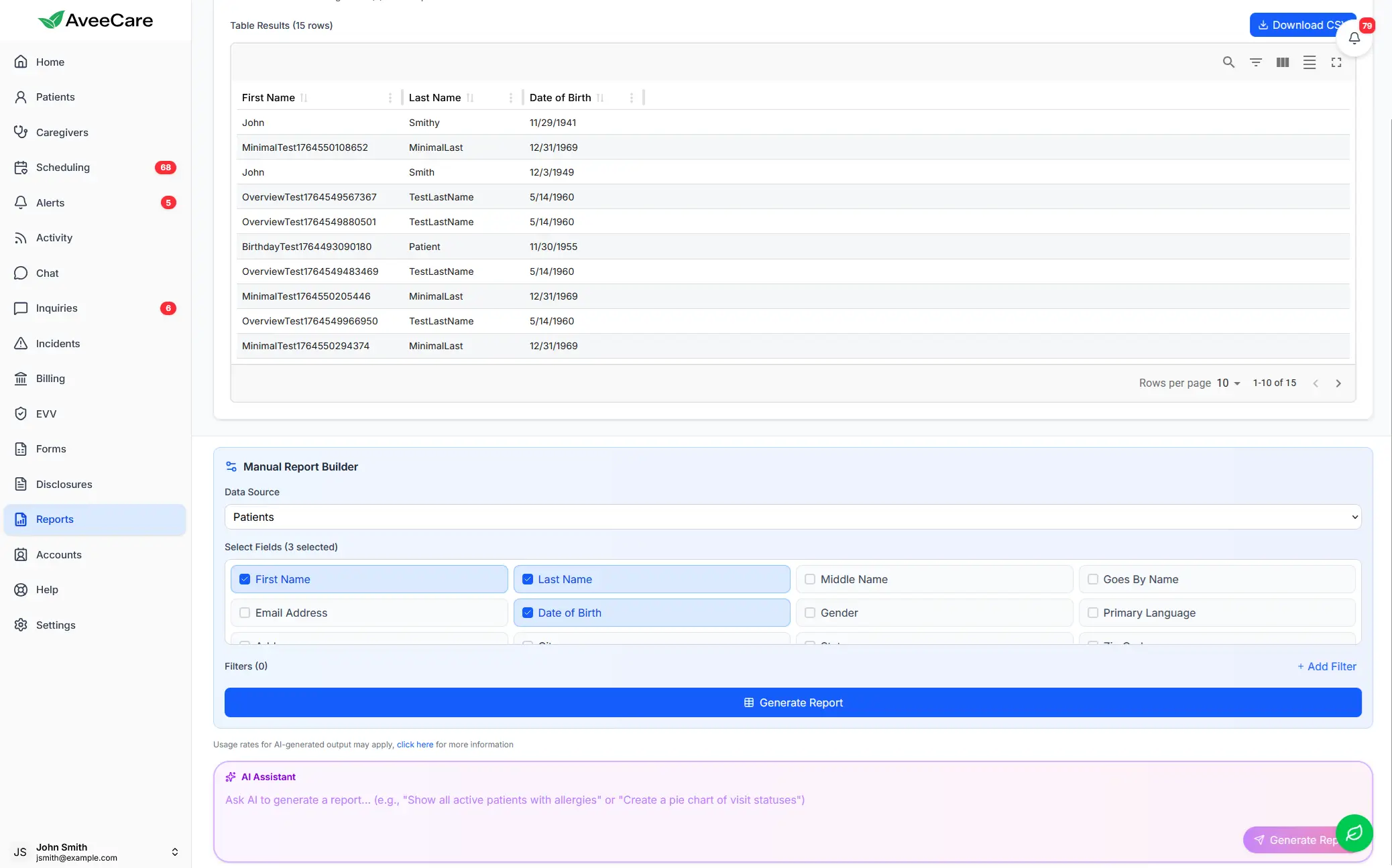
AveeCare AI reporting helps Massachusetts agencies track performance across multiple regions
Digital Marketing for Massachusetts
Massachusetts' 7.0 million residents are highly concentrated in the Boston metro area, making digital marketing extremely effective for reaching families searching for home care. The Boston-area population is tech-savvy, well-educated, and researches extensively online before making care decisions for their loved ones.
Google Business Profile
Claim and optimize your Google Business Profile for every Massachusetts service area. This is the single most important free tool for local visibility. Add photos, respond to reviews, and post updates regularly. In the competitive Boston metro, reviews and ratings are critical differentiators for home care agencies.
Google Ads (Pay-Per-Click)
Run targeted Google Ads for keywords like "home care agency Boston" or "in-home caregiver Cape Cod MA." Geo-target specific Massachusetts cities and towns. Boston-area CPC costs are among the highest in the country but conversion rates for affluent private-pay clients justify the investment.
Local SEO Strategy
Build a website with town-specific landing pages for Wellesley, Needham, Brookline, Newton, Cambridge, Worcester, Springfield, and Cape Cod towns. Optimize for local search terms. Many adult children search from out of state on behalf of aging parents in Massachusetts.
Social Media Marketing
Facebook and Instagram are effective for reaching Massachusetts families. Post caregiver spotlights, client testimonials, and educational content. Target specific Massachusetts communities. LinkedIn is particularly effective in the Boston metro for reaching professional families and corporate referral partners.
Marketing Channel Comparison for Massachusetts
| Channel | Cost | Time to Results | Best For |
|---|---|---|---|
| Google Ads | $$-$$$ | Immediate | Quick leads in Boston metro & affluent suburbs |
| SEO / Website | $-$$ | 3-6 months | Long-term organic leads; out-of-state family searches |
| Facebook/Instagram Ads | $-$$ | 1-2 weeks | Community awareness & caregiver recruiting |
| Hospital / Physician Referrals | Free | 1-3 months | Mass General, Brigham, Beth Israel, Tufts referrals |
| ASAP Partnerships | Free | 1-3 months | Publicly funded clients & elder services referrals |
| HCA-MA Networking | $ | Ongoing | Industry credibility & professional connections |
| Diverse Community Outreach | $ | 1-3 months | Brazilian, Haitian, Chinese, Russian communities |
| Cape Cod Community Marketing | Free-$ | 1-3 months | Aging population with fewer providers |
Massachusetts marketing tip: Massachusetts' world-class healthcare ecosystem is your biggest strategic advantage for referral-based growth. Mass General Brigham, Beth Israel Lahey, and Tufts Medicine discharge patients who need home care every day. Build those hospital relationships first. For private-pay clients, target the affluent western suburbs of Boston (Wellesley, Needham, Brookline, Newton) and the Cape Cod retirement communities. Leverage the state's diversity by offering multilingual caregivers. Join HCA-MA for credibility. Build ASAP relationships for publicly funded referrals. And always remember: PFML contributions, high insurance costs, and the $15 minimum wage mean your pricing must reflect Massachusetts' premium cost structure.
12Frequently Asked Questions
Common questions about starting a home care agency in Massachusetts
Massachusetts does NOT have a separate state license specifically for non-medical personal care agencies. Unlike states such as California or Maryland, there is no dedicated home care organization license at the state level for companion care, homemaker services, or personal care. However, you must register your business with the Secretary of the Commonwealth, obtain local city or town permits, conduct CORI background checks on all employees through the Department of Criminal Justice Information Services (DCJIS), and comply with all state employment laws including the Paid Family and Medical Leave (PFML) program. If you plan to provide skilled medical services such as nursing or therapy, you DO need a Home Health Agency license from the Massachusetts Department of Public Health (DPH).
Starting a non-medical home care agency in Massachusetts typically costs between $18,000 and $75,000, depending heavily on your location. The Boston metro area (Suffolk, Middlesex, Norfolk counties) has the highest costs due to elevated real estate, professional service fees, and labor rates. The Worcester and Springfield metro areas fall in the middle, while Cape Cod and rural western Massachusetts are somewhat more affordable (though Cape Cod has its own seasonal cost pressures). Costs cover business formation with the Secretary of the Commonwealth, insurance (including mandatory workers' compensation), PFML registration, CORI background checks, initial marketing, office setup, and 3 to 6 months of working capital. A licensed Home Health Agency costs significantly more, typically $100,000 to $250,000 or higher.
MassHealth is Massachusetts' Medicaid program, administered by the Executive Office of Health and Human Services (EOHHS). MassHealth covers home care services for eligible residents through several programs including managed care plans, the Home and Community-Based Services (HCBS) waivers, and the Frail Elder Waiver. The Executive Office of Elder Affairs (EOEA) administers many elder services programs that coordinate with MassHealth. To provide MassHealth-funded services, agencies must enroll as MassHealth providers, comply with EVV requirements via Sandata, and meet all applicable program standards.
CORI (Criminal Offender Record Information) checks are administered by the Massachusetts Department of Criminal Justice Information Services (DCJIS). While Massachusetts does not have a specific home care licensing law that mandates CORI checks for all non-medical agencies, it is strongly recommended and considered an industry standard. Agencies providing MassHealth-funded services are required to conduct background checks. Most Massachusetts home care agencies conduct CORI checks on all employees to protect clients and manage liability. You can access the iCORI online portal through DCJIS to conduct these checks.
Massachusetts Paid Family and Medical Leave (PFML) is an active, mandatory program that provides eligible workers with paid time off for family and medical leave. Both employers and employees contribute premiums through payroll deductions. The combined contribution rate is set annually by the Department of Family and Medical Leave. Home care agencies must withhold employee contributions and remit both employer and employee portions quarterly. This is a significant payroll cost that must be factored into your business plan, rate setting, and competitive analysis. PFML applies to virtually all Massachusetts employers and affects your cash flow planning from day one.
Starting a non-medical home care agency in Massachusetts typically takes 2 to 4 months, including time for business registration with the Secretary of the Commonwealth, insurance procurement, PFML registration, CORI check setup, and initial staffing. Because Massachusetts does not require a separate state license for non-medical personal care agencies, the timeline is shorter than in states like California or Maryland. A Home Health Agency requiring DPH licensure takes significantly longer, typically 6 to 12 months, especially if pursuing Medicare certification. Building a client base and referral network, particularly in the competitive Boston metro area, typically takes an additional 3 to 6 months after launch.
13Sources and Resources
Official Massachusetts state agency links and resources
Ready to manage your Massachusetts home care agency?
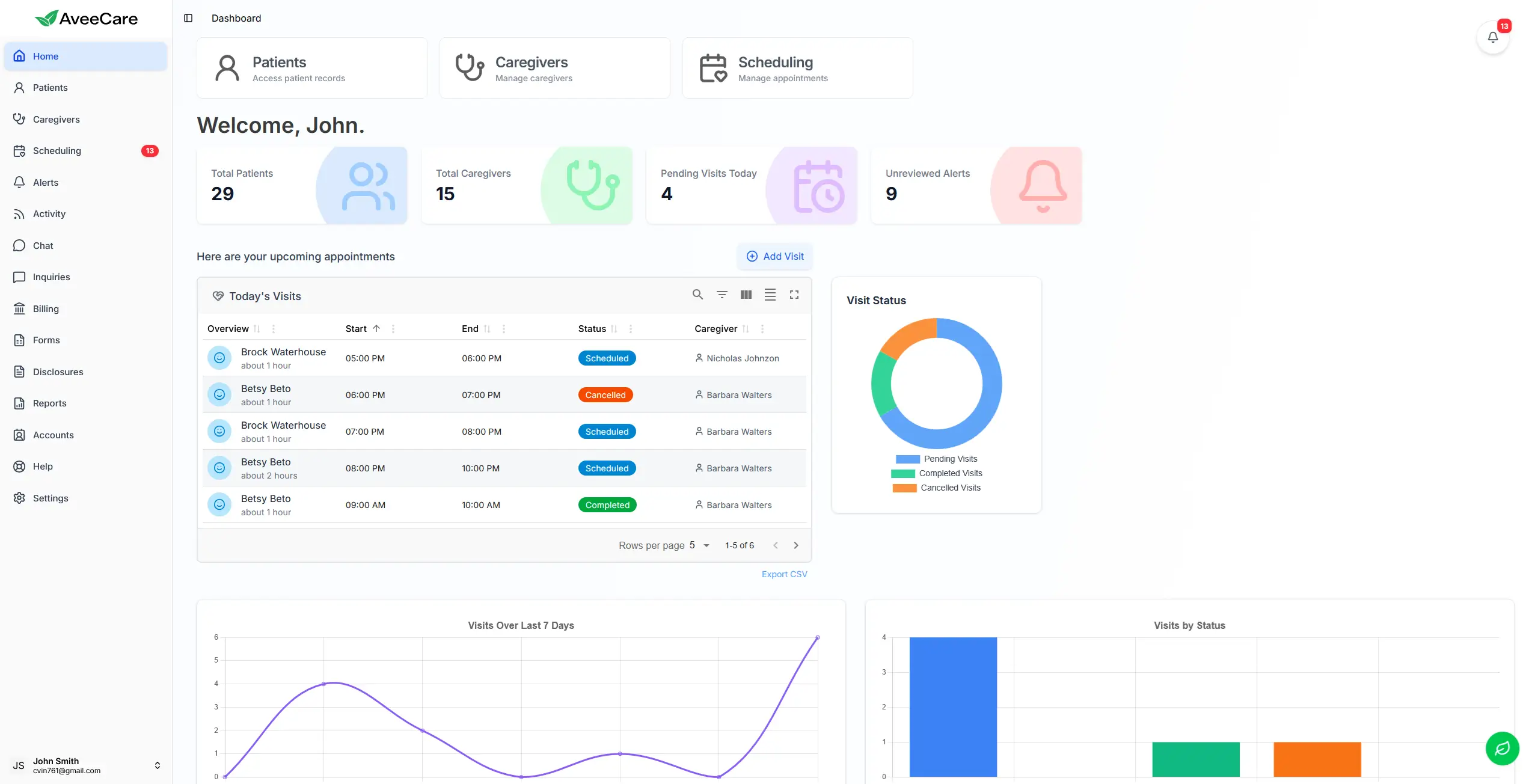
You do not need software on day one. But when you are ready, AveeCare starts at $6/client/month with no contracts, no mandatory demos, and a free trial. Scheduling, care plans, billing, caregiver management, and real-time alerts in one platform built for simplicity, whether you serve the Boston metro, Worcester, Springfield, Cape Cod, or the Berkshires.
Disclaimer
This guide is for informational purposes only and does not constitute legal, financial, or professional advice. While we strive to keep this information accurate and up to date, Massachusetts laws, regulations, fees, and requirements may change. Always verify current requirements directly with the relevant Massachusetts state agencies, including the Department of Public Health (DPH), Secretary of the Commonwealth, Department of Revenue (DOR), Department of Criminal Justice Information Services (DCJIS), MassHealth, Executive Office of Elder Affairs (EOEA), Department of Family and Medical Leave (PFML), and Department of Industrial Accidents, before making business decisions. Consult with a qualified attorney and accountant in Massachusetts before starting your home care business. AveeCare is not affiliated with the Massachusetts Department of Public Health or any Massachusetts state agency. Published April 4, 2026.