How to Start a Home Care Agency in Kansas
Your complete 2026 guide to launching a home care business in Kansas, from KDADS licensing and business formation to staffing, KanCare Medicaid, and your first clients.
Published April 4, 2026 · 25 min read
TLDR — Kansas at a Glance
No for non-medical personal care. Yes for home health (skilled) via KDADS.
Kansas Dept. for Aging and Disability Services (KDADS), Survey, Certification, and Credentialing Commission (SCCC)
$18,000 – $48,000 (Non-Medical)
$100,000 – $250,000+ (Home Health)
4 – 8 weeks (Non-Medical) | 3 – 6 months (Home Health)
1Kansas Market Overview
Understanding the opportunity for home care agencies in Kansas
Kansas has a population of approximately 2.9 million people and presents a compelling opportunity for entrepreneurs looking to start a home care agency. The state has a growing population of adults aged 65 and older, driven by the aging of the baby boomer generation across both urban centers and vast rural areas. With a cost of living below the national average, Kansas offers favorable conditions for launching a home care business with lower overhead, more affordable insurance, and competitive operating costs.
The Kansas City metro area (shared with Missouri) is the state's largest population center and most competitive home care market, with Johnson County and Wyandotte County on the Kansas side offering dense concentrations of potential clients. Wichita, the state's largest city entirely within Kansas, is the second-largest market with a growing senior population. Topeka, the state capital, offers opportunities tied to state government employees and retirees. Lawrence, Manhattan, and Salina are mid-sized markets with university-affiliated healthcare systems that generate referrals. For a national overview of the startup process, see our complete guide to starting a home care agency and our state-by-state licensing requirements.
Western Kansas is characterized by vast rural areas with very sparse populations. Counties like Hamilton, Greeley, and Wallace have fewer than 3,000 residents spread across hundreds of square miles. These communities have significant unmet need for home care services, as many aging residents live far from hospitals or assisted living facilities. Starting a home care agency that serves rural western Kansas requires creative staffing and logistics, but the lack of competition creates meaningful opportunity for agencies willing to serve these underserved areas.
2Home Care vs. Home Health in Kansas
Kansas does not license non-medical home care separately from home health
This is the most important thing to understand about Kansas. Unlike many states, Kansas does not require a separate state license for non-medical personal care agencies. KDADS licenses Home Health Agencies for skilled services, but non-medical home care (personal care, companion care, homemaker services) is generally not subject to KDADS home health licensure. This makes Kansas one of the easier states to enter the non-medical home care market.
Non-Medical Home Care
No KDADS license required
- Personal care (bathing, dressing, grooming)
- Homemaker services and light housekeeping
- Companion care and socialization
- Meal preparation and nutrition
- Medication reminders (not administration)
- Respite care for family caregivers
No state license needed
Lower startup costs. Fastest path to launch in Kansas.
Home Health Agency
KDADS/SCCC license required
- Skilled nursing care
- Physical, occupational, and speech therapy
- Wound care and injections
- Medical social services
- Home health aide services
- Medication administration
KDADS license required via SCCC
Plus Medicare certification for Medicare billing.
Medicaid attendant care note: If you plan to provide attendant care services through Kansas Medicaid HCBS waiver programs, you must enroll as a Medicaid provider even if you are a non-medical agency. Enrollment requirements include background checks, training standards, and EVV compliance through Netsmart myEVV. Contact KDHE and the KanCare MCOs for specific enrollment requirements.
3Business Formation in Kansas
Register your home care business with the state

Choose Your Business Structure
Most Kansas home care agencies register as an LLC (Limited Liability Company) for liability protection and tax flexibility. Kansas LLC formation costs $160 to $165 depending on filing method. You can also form a corporation, partnership, or sole proprietorship.
Register with Kansas Secretary of State
File your Articles of Organization with the Kansas Secretary of State online or by mail. Kansas requires an annual report ($55 for LLCs) to maintain good standing. Processing takes approximately 3 to 5 business days for online filings.
Kansas SOSObtain Your EIN
Apply for a free Employer Identification Number (EIN) from the IRS at irs.gov. You need this for bank accounts, payroll, and tax filings. You can get it instantly online.
Register for Kansas State Taxes
Register with the Kansas Department of Revenue for state income tax withholding. Kansas has a graduated income tax with rates from 3.1% to 5.7%. You will also need to register for state unemployment insurance with the Kansas Department of Labor.
Get Local Business Licenses
Contact your city and county government for local business license requirements. Requirements vary by municipality. Kansas City (KS), Wichita, Topeka, Overland Park, and Olathe each have their own business registration processes and occupational tax requirements.
Open a Business Bank Account
Open a dedicated business checking account to keep personal and business finances separate. Kansas-based banks and credit unions are readily available in all major markets. You will need your EIN and formation documents.
4Licensing Requirements (KDADS)
Kansas licensing landscape for home care and home health
Non-Medical Home Care (No State License)
Kansas does not require a state license from KDADS for non-medical home care agencies that provide personal care, companion care, homemaker services, or respite care. This is a significant advantage for entrepreneurs starting a home care agency in Kansas, as it reduces regulatory barriers and shortens the timeline to launch. However, the absence of state licensure means you must self-regulate by implementing strong policies, carrying adequate insurance, and maintaining high standards of care.
- Register your business with Kansas Secretary of State
- Carry general liability and professional liability insurance
- Obtain workers' compensation insurance (required for most employers)
- Implement background check policies for all caregivers
- Develop care plans, service agreements, and operational policies
- If Medicaid: enroll as provider with KDHE and KanCare MCOs
Home Health Agency License (KDADS/SCCC)
If you plan to provide skilled nursing, physical therapy, or other medical services in Kansas, you must obtain a Home Health Agency license from KDADS through the Survey, Certification, and Credentialing Commission (SCCC). This is a rigorous process with specific staffing, documentation, and quality assurance requirements.
- Submit application to KDADS/SCCC
- Designate a qualified administrator with healthcare management experience
- Employ or contract with an RN for clinical supervision
- Develop all required policies and procedures
- Pass KDADS on-site survey and inspection
- Establish quality assurance program
Medicare Certification
Medicare certification is a separate process from KDADS licensure. To bill Medicare for skilled home health services, you must first hold a KDADS Home Health Agency license, then apply through CMS, pass a federal survey, and demonstrate compliance with Medicare Conditions of Participation. This process typically adds 3 to 6 months beyond your state license. Given Kansas's growing elderly population, Medicare certification opens access to a substantial payer source for home health agencies serving communities from the Kansas City metro to rural western Kansas.
5Insurance Requirements
Protect your Kansas home care business
General Liability
$1,800 - $4,500/yrCovers bodily injury and property damage claims. Recommended minimum: $1M per occurrence / $2M aggregate. Required by most referral partners and contracts in Kansas. Kansas premiums tend to be below the national average.
Professional Liability (E&O)
$1,200 - $3,500/yrCovers errors, omissions, and negligence claims related to the care services your agency provides. Essential protection for any home care business in Kansas, even without a state license requirement.
Workers' Compensation
$1,800 - $4,500/yrKansas requires workers' compensation insurance for most employers. Administered by the Kansas Division of Workers Compensation within the Kansas Department of Labor. You must have coverage before hiring your first caregiver.
Surety / Fidelity Bond
$250 - $800/yrProtects clients against employee theft or dishonesty. Not required by Kansas law for non-licensed agencies, but strongly recommended. Many families and referral partners in Kansas expect bonded agencies.
Kansas workers' comp note: Kansas requires workers' compensation insurance for most employers under the Kansas Workers Compensation Act (K.S.A. 44-501 et seq.). Some exemptions exist for employers with a gross annual payroll under $20,000, but home care agencies should carry coverage from day one given the nature of the work. Kansas's below-average cost of living helps keep premiums more affordable than in many other states.
6Staffing and Hiring in Kansas
Finding and qualifying caregivers for your Kansas agency
Building a reliable team of caregivers is one of the biggest challenges when starting a home care agency in Kansas. The state faces a healthcare workforce shortage, particularly in rural western Kansas where the population is older but the labor pool is much smaller. Having strong recruitment and retention strategies from day one is essential for success in the Kansas home care market.
Training Requirements
For non-licensed personal care agencies in Kansas, there are no state-mandated training hour requirements. However, best practices include at least 40 hours of initial training covering personal care techniques, safety protocols, infection control, emergency procedures, and client communication. If you are a KDADS-licensed home health agency, home health aides must complete 75 hours of training including supervised clinical practice. Kansas community colleges like Washburn, Johnson County, and Butler offer excellent CNA programs that produce well-qualified candidates.
Background Checks (KBI)
While not state-mandated for all non-licensed agencies, background checks are strongly recommended and are required for Medicaid-enrolled providers. Background checks in Kansas are conducted through the Kansas Bureau of Investigation (KBI). Best practice is to run KBI criminal checks, check the Kansas DCF abuse/neglect registry, verify the sex offender registry, and check the federal OIG exclusion list before hiring any caregiver.
Kansas Bureau of InvestigationWhere to Find Caregivers in Kansas
State workforce development system and job board
Washburn, Johnson County CC, Butler CC, Barton CC
Indeed, ZipRecruiter, KansasWorks.com
Especially effective in Kansas's tight-knit rural communities
Wages in Kansas
Kansas follows the federal minimum wage of $7.25/hour. However, to attract and retain quality caregivers in Kansas, most agencies pay between $12 and $16 per hour for personal care aides and $14 to $20 per hour for home health aides and CNAs. Pay rates tend to be higher in the Kansas City metro (especially Johnson County and Overland Park) and Wichita. In rural western Kansas, competitive wages plus mileage reimbursement for driving between clients spread across large geographic areas are essential retention tools.
7Medicaid and Medicare in Kansas
KanCare managed care, HCBS waivers, and Netsmart EVV compliance
KanCare (Kansas Medicaid)
Kansas Medicaid operates through the KanCare managed care program, administered by the Kansas Department of Health and Environment (KDHE) in partnership with three managed care organizations (MCOs). To bill KanCare for home care services, you must enroll as a Medicaid provider through KDHE and credential with the KanCare MCOs. Kansas offers several Home and Community-Based Services (HCBS) waivers that fund attendant care and personal care for eligible recipients.
KanCare MCO 1
Aetna Better Health of Kansas
KanCare MCO 2
Sunflower Health Plan
KanCare MCO 3
United Healthcare Community Plan
Electronic Visit Verification (EVV)
Under the 21st Century Cures Act, all states must implement EVV for Medicaid-funded personal care and home health services. Kansas uses Netsmart myEVV as its statewide EVV system. Kansas operates under an open model, meaning providers can choose a third-party EVV vendor as long as it integrates with Netsmart myEVV for data submission to the state.
Kansas HCBS Waivers
- Frail Elderly (FE) Waiver
- Physical Disability (PD) Waiver
- Traumatic Brain Injury (TBI) Waiver
- Intellectual/Developmental Disability (IDD) Waiver
- Technology Assisted (TA) Waiver
- Autism Waiver
Medicare Certification
To bill Medicare, your Kansas home health agency must first hold a KDADS license, then be certified by CMS. The process involves applying through CMS, passing a federal survey, and demonstrating compliance with Medicare Conditions of Participation. Expect 3 to 6 months for the full certification process after obtaining your KDADS license. Kansas's large rural population of seniors makes Medicare certification especially valuable for home health agencies serving communities across the state.
8Startup Cost Estimator
Kansas-specific startup cost breakdown (below-average cost of living)
Business Formation
$715 – $2,370Filing with Kansas Secretary of State
IRS EIN is free; registered agent optional
Required annually with Kansas SOS
Attorney review, CPA setup
Insurance (Annual)
$5,050 – $13,300$1M per occurrence / $2M aggregate
Errors and omissions coverage
Required for most Kansas employers
Recommended for client trust
Office & Equipment
$1,850 – $6,000Kansas costs well below national average
Laptops, smartphones for staff
Desk, chairs, printer, supplies
Marketing & Initial Growth
$2,150 – $7,400Professional site with local SEO
Google Ads, Facebook, local outreach
Brochures, flyers, cards
Working Capital (3-6 Months)
$8,000 – $24,000Cover payroll before revenue stabilizes
Rent, utilities, software, misc.
Estimated Total Startup Cost (Non-Medical)
$17,765 – $53,070
Costs are estimates based on typical Kansas home care agency startups and may vary by location, scope of services, and individual circumstances. Kansas's below-average cost of living helps keep these costs lower than in many other states.
9Compliance Checklist
Track your progress across all Kansas requirements
Business Formation
0/6Licensing
0/4Insurance
0/4Staffing
0/6Medicaid & Medicare
0/3Operations
0/3Marketing
0/410Building Your Referral Network
Key referral sources in Kansas for your home care agency
In Kansas, most home care clients come through referrals from healthcare providers and community organizations rather than direct advertising. Building strong relationships with hospitals, physicians, and the Kansas aging network is critical for establishing a successful home care business. The referral landscape varies significantly between the Kansas City metro, Wichita, and rural western Kansas.
University of Kansas Health System
The University of Kansas Health System in Kansas City is the state's premier academic medical center. Connect with their discharge planners and case managers for high-volume referrals, especially for post-acute care patients transitioning home.
Ascension Via Christi (Wichita)
Ascension Via Christi operates hospitals and clinics throughout the Wichita metro and south-central Kansas. Build relationships with their social workers and patient navigators for referrals from the state's second-largest market.
Stormont Vail Health (Topeka)
Stormont Vail Health is Topeka's largest health system, serving the capital region and northeast Kansas. Their discharge planning team is a valuable referral source for home care agencies serving the Topeka area.
KDADS & Area Agencies on Aging
KDADS oversees Kansas's network of 11 Area Agencies on Aging (AAAs) that connect seniors with community-based services. These AAAs are essential referral partners in every region of Kansas, from Johnson County to rural western Kansas.
KDADSRural Critical Access Hospitals
Kansas has over 80 critical access hospitals spread across rural communities. These small hospitals regularly discharge patients who need ongoing home care. Personal visits and reliable service build lasting referral relationships in small-town Kansas.
Elder Law Attorneys & Financial Planners
Kansas attorneys specializing in elder law, estate planning, and Medicaid planning frequently advise families about home care options. These professionals can be consistent referral sources, particularly in the Kansas City metro and Wichita.
11Marketing & Client Acquisition
How to grow your home care business in Kansas
Marketing a home care agency in Kansas requires strategies tailored to the state's unique geography and culture. The Kansas City metro (shared with Missouri) demands cross-state marketing awareness, Wichita is a competitive standalone market, and rural western Kansas requires grassroots outreach. Kansas's strong agricultural heritage, faith-based communities, and military installations each present distinct marketing opportunities for home care agencies.
Kansas City Metro: Cross-State Marketing (KS/MO)
The Kansas City metro straddles the Kansas-Missouri border, with Johnson County, Wyandotte County, and Leavenworth County on the Kansas side. Marketing in this metro requires awareness that families search for care across state lines. If you are licensed only in Kansas, be clear about your service area while capturing leads from the broader KC metro audience.
Johnson County Market
Johnson County is the most affluent county in Kansas and has a large aging population with high disposable income. Overland Park, Olathe, Lenexa, and Shawnee are prime service areas. Private pay rates tend to be higher here than anywhere else in Kansas. Focus on quality-of-life messaging and premium service positioning.
Cross-Border SEO Strategy
Many families search "home care Kansas City" without specifying state. Optimize your website for both "home care Kansas City KS" and "home care Johnson County Kansas" to capture traffic from the broader KC metro. Use Google Business Profile to define your Kansas-side service area precisely.
Wyandotte County Opportunities
Wyandotte County (Kansas City, KS) has a more diverse, lower-income population than Johnson County. Medicaid/KanCare enrollment is higher here, making it attractive if you are a Medicaid-enrolled provider. Bilingual marketing materials in Spanish can help reach Hispanic families.
KC Metro Referral Networks
Build relationships with discharge planners at both Kansas-side and Missouri-side hospitals. University of Kansas Health System, AdventHealth Shawnee Mission, and Olathe Health are key Kansas-side referral sources. Many KC metro families have physicians on both sides of the state line.
Wichita Market Strategy
Wichita is the largest city entirely within Kansas and serves as the healthcare hub for south-central Kansas. The Wichita market is more self-contained than KC, which can work in your favor for building a focused brand. The city has a strong aerospace and manufacturing heritage, meaning many retirees have employer-funded healthcare benefits and private pay capacity.
Wichita Hospital Partnerships
Ascension Via Christi, Wesley Medical Center, and the University of Kansas Wichita campus are major referral sources. Build personal relationships with their case management and discharge planning teams for consistent referral flow.
Surrounding Communities
Extend your service area to Derby, Andover, Newton, El Dorado, and Hutchinson to capture demand from retirees in suburban and exurban Wichita. These communities often have fewer home care options than Wichita proper.
Rural Western Kansas & Agricultural Communities
Western Kansas is characterized by vast wheat fields, cattle ranches, and small towns spread across hundreds of miles. Many aging farmers and ranchers need home care support to continue living independently on their land. The lack of home care providers in these areas creates genuine opportunity for agencies willing to serve these underserved communities.
Agricultural Community Needs
Kansas's aging farming population has unique health needs including musculoskeletal injuries from decades of physical labor, respiratory issues from grain dust, and mobility challenges. Position your agency as understanding the specific care needs of farming families who want to age on their land rather than moving to a city.
Small-Town Reputation Building
In western Kansas towns like Dodge City, Garden City, Hays, and Liberal, your reputation is your most valuable marketing asset. Word travels fast in small communities. Deliver excellent care to one family and you can earn referrals from an entire town. Attend local events and be visible.
Mileage and Logistics
Caregivers in rural western Kansas may drive 30 to 60 miles between clients. Build mileage reimbursement and travel time into your pricing model. Consider hiring caregivers who live in the communities you serve to reduce travel costs and improve reliability.
Community Health Centers
Federally Qualified Health Centers (FQHCs) and rural health clinics are often the primary healthcare providers in western Kansas. Build relationships with these clinics as referral sources, as they serve patients who would benefit from home care support between medical visits.
Faith Community Partnerships
Kansas has a strong tradition of faith-based community support, with churches playing a central role in many communities' social networks. Partnering with local congregations is one of the most effective grassroots marketing strategies for home care agencies in Kansas.
Caregiver Workshops
Offer free caregiver education seminars at churches, covering topics like fall prevention, medication management, and recognizing signs of dementia.
Parish Nurse Programs
Many Kansas churches have parish nurse or health ministry programs. Build relationships with these programs as they frequently identify seniors who need home care services.
Community Service Groups
Partner with Lions Club, Kiwanis, VFW, and American Legion posts across Kansas for community visibility and senior outreach events.
Military Family Opportunities
Kansas is home to Fort Riley (near Manhattan/Junction City) and Fort Leavenworth (near Leavenworth/KC metro), both significant military installations. Military families and veterans present a unique market segment for home care agencies in Kansas.
Veteran Home Care Services
Many veterans at Fort Riley and Fort Leavenworth need home care as they age. The VA's Aid and Attendance benefit and Veteran-Directed Care programs can fund home care services. Becoming a VA Community Care Network provider opens access to this population.
Military Spouse Employment
Military spouses frequently seek flexible employment near installations. Caregiver positions offer the schedule flexibility that military families need. Recruit at Fort Riley and Fort Leavenworth family readiness groups and transition assistance programs.
Digital Marketing for Kansas
Kansas's population of 2.9 million is spread across 105 counties, with concentration in the KC metro and Wichita but vast stretches of rural territory. Digital marketing helps you reach families across a wide geographic area efficiently.
Google Business Profile
Claim and optimize your Google Business Profile for every Kansas service area. Add photos, respond to reviews promptly, and post regular updates. This is the single most important free marketing tool for local visibility in Wichita, Topeka, and KC-area communities.
Google Ads (Pay-Per-Click)
Run targeted Google Ads for keywords like "home care agency Wichita" or "in-home caregiver Overland Park." Geo-target specific Kansas cities and counties. Kansas CPC costs tend to be lower than coastal markets. Start with $500-1,500/month.
Local SEO Strategy
Build a website with city-specific landing pages for each Kansas market you serve. Optimize for local search terms like "home care services Topeka" and "senior care Johnson County Kansas." Many Kansas families research online before calling.
Facebook Marketing
Facebook is widely used across Kansas, especially in rural areas and among adult children making care decisions for aging parents. Post caregiver spotlights, client testimonials, and educational content. Join local Kansas community Facebook groups.
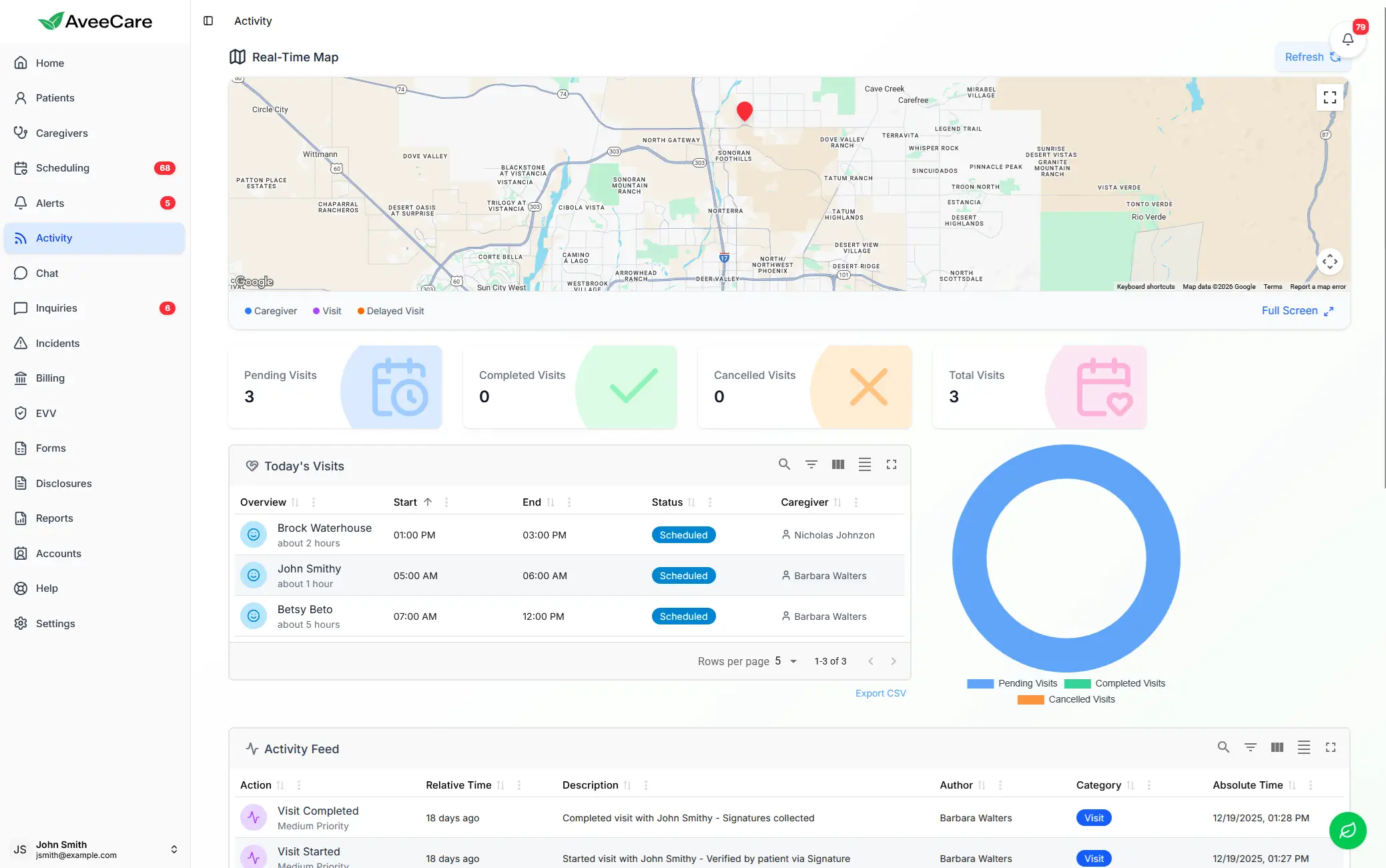
AveeCare helps Kansas home care agencies track caregiver activities and client visits in real time
Marketing Channel Comparison for Kansas
| Channel | Cost | Time to Results | Best For |
|---|---|---|---|
| Google Ads | $$ | Immediate | Quick leads in KC metro & Wichita |
| SEO / Website | $ | 3-6 months | Long-term organic leads statewide |
| Facebook Ads | $-$$ | 1-2 weeks | Rural awareness & caregiver recruiting |
| Church/Community Partnerships | Free | 1-3 months | Trust in small-town Kansas |
| Hospital / Physician Referrals | Free | 1-3 months | High-intent medical referrals |
| Military Base Outreach | Free-$ | 1-3 months | Veteran & military family clients |
| Small-Town Networking | Free | Ongoing | Rural brand awareness & trust |
Kansas marketing tip: In Kansas, relationships are everything. In the KC metro, pair strong digital marketing with hospital discharge planner outreach. In Wichita, focus on building a recognizable brand through community involvement and physician partnerships. In rural western Kansas, show up at the local coffee shop, attend church events, and sponsor high school activities. Earn trust one family at a time and let word of mouth do the rest.
12Frequently Asked Questions
Common questions about starting a home care agency in Kansas
Kansas does not require a separate state license for non-medical personal care agencies. The Kansas Department for Aging and Disability Services (KDADS) licenses Home Health Agencies that provide skilled nursing and therapy services, but non-medical home care such as personal care, companion care, and homemaker services is generally not subject to KDADS home health licensure. However, you must still register your business with the Kansas Secretary of State, carry appropriate insurance, and comply with any local ordinances.
Starting a non-medical home care agency in Kansas typically costs between $18,000 and $48,000, covering business formation, insurance, initial marketing, office setup, and 3 to 6 months of working capital. Kansas has a below-average cost of living, which makes startup expenses more manageable than in many other states. A licensed Home Health Agency with skilled services costs significantly more, typically $100,000 to $250,000 or higher due to KDADS licensing and Medicare certification requirements.
In Kansas, non-medical home care includes personal care (bathing, dressing, grooming), companion care, homemaker services, meal preparation, and medication reminders. These services do not require a KDADS home health license. Home health agencies provide skilled medical services including nursing, physical therapy, occupational therapy, and speech therapy, and must be licensed by KDADS through the Survey, Certification, and Credentialing Commission (SCCC). This is the most important distinction when deciding what kind of agency to start in Kansas.
While Kansas does not mandate background checks for all non-licensed personal care agencies, it is strongly recommended and often required by clients and referral partners. Background checks are conducted through the Kansas Bureau of Investigation (KBI). Agencies that enroll as Medicaid providers or that provide services under KanCare are required to perform background checks on all employees. Best practice is to run KBI criminal checks, check the Kansas Department for Children and Families (DCF) abuse/neglect registry, and verify the OIG exclusion list for all hires.
Kansas uses Netsmart myEVV as its statewide Electronic Visit Verification system. All Medicaid-funded personal care and home health services in Kansas must comply with EVV requirements under the 21st Century Cures Act. Kansas operates under an open model, allowing providers to use a third-party EVV vendor as long as it integrates with the Netsmart myEVV system for data submission to the state.
For a non-medical home care agency in Kansas, you can launch in as little as 4 to 8 weeks since no state license is required from KDADS. This timeline includes business formation, insurance procurement, hiring initial caregivers, and setting up operations. A licensed Home Health Agency through KDADS takes significantly longer, typically 3 to 6 months or more, especially if pursuing Medicare certification. Building a client base and referral network in Kansas typically takes an additional 3 to 6 months after launch.
Yes, but you must first enroll as a Medicaid provider through the Kansas Department of Health and Environment (KDHE) and credential with the KanCare managed care organizations (MCOs). Kansas Medicaid operates through the KanCare program with three MCOs. You must also register with Netsmart myEVV for EVV compliance. Kansas offers several HCBS waivers covering attendant care for eligible recipients, including the Frail Elderly, Physical Disability, Traumatic Brain Injury, and Intellectual/Developmental Disability waivers.
13Sources and Resources
Official Kansas state agency links and resources
Ready to manage your Kansas home care agency?
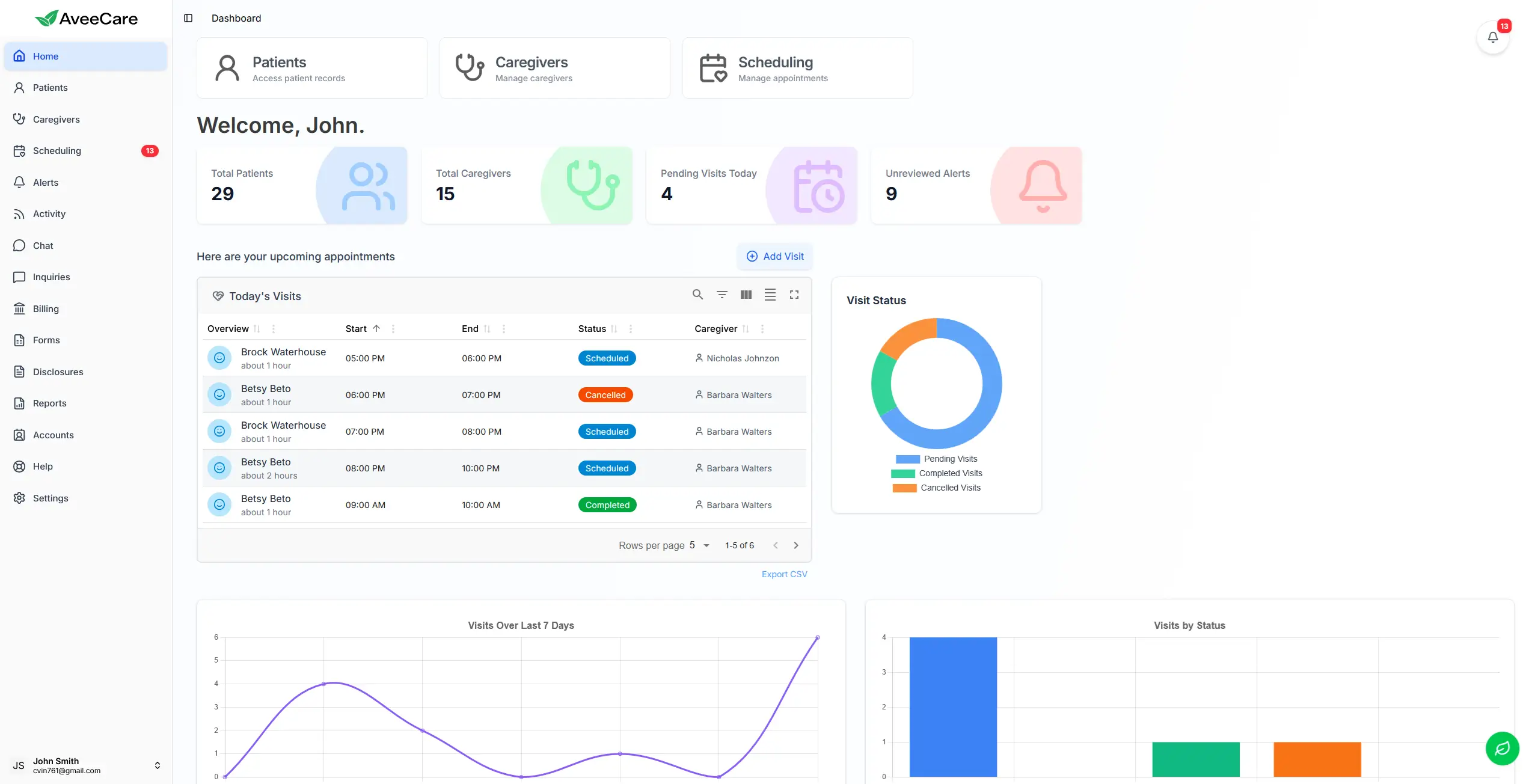
You do not need software on day one. But when you are ready, AveeCare starts at $6/client/month with no contracts, no mandatory demos, and a free trial. Scheduling, care plans, billing, caregiver management, and real-time alerts in one platform built for simplicity, whether you serve Johnson County or rural western Kansas.
Disclaimer
This guide is for informational purposes only and does not constitute legal, financial, or professional advice. While we strive to keep this information accurate and up to date, Kansas laws, regulations, fees, and requirements may change. Always verify current requirements directly with the relevant Kansas state agencies, including KDADS, KDHE, and the Kansas Secretary of State, before making business decisions. Consult with a qualified attorney and accountant in Kansas before starting your home care business. AveeCare is not affiliated with the Kansas Department for Aging and Disability Services or any Kansas state agency. Published April 4, 2026.