How to Start a Home Care Agency in Hawaii
Your complete 2026 guide to launching a home care business in the Aloha State. From DOH/OHCA licensing and the Prepaid Health Care Act to navigating Hawaii's unique island markets and high cost of living.
Published April 4, 2026 · 30 min read
TLDR — Hawaii at a Glance
Yes — DOH/OHCA Home Health Agency license (skilled) or HCBS provider certification (non-medical).
Department of Health (DOH) — Office of Health Care Assurance (OHCA)
$55,000 – $130,000 (non-medical)
$150,000 – $350,000+ (home health)
3 – 6 months (non-medical) | 6 – 12 months (home health)
Prepaid Health Care Act (mandatory health insurance for employees) + TDI (mandatory disability insurance)
1Hawaii Market Overview
A small but unique island market with a rapidly aging population and the highest cost of living in the US
Starting a home care agency in Hawaii means entering one of the most unique healthcare markets in the United States. With a population of approximately 1.44 million spread across eight main islands, Hawaii is a small market by mainland standards, but its rapidly aging population, geographic isolation, cultural diversity, and significant military presence create specialized demand for home care services that many mainland agencies cannot replicate. Hawaii has the highest cost of living in the nation (cost of living index above 190 in Honolulu), which makes starting a home care business in Hawaii significantly more expensive than most states but also means you can charge higher rates for services.
Hawaii's home care demand is driven by its rapidly aging population. Approximately 19% of Hawaii's residents are aged 65 or older, one of the highest percentages in the nation, and this figure is climbing as the state's baby boomer generation ages in place. The island of Oahu, home to about 70% of the state's population and the capital city of Honolulu, dominates the market. However, the Neighbor Islands of Maui, the Big Island (Hawaii Island), and Kauai have even higher percentages of seniors and fewer providers, creating strong opportunities for agencies willing to serve those communities. For a national overview of the startup process, see our complete guide to starting a home care agency and our state-by-state licensing requirements.
Island-by-Island Market Breakdown
Oahu (Honolulu County)
Home to about 1 million residents and the economic center of Hawaii. Honolulu, Pearl City, Kailua, and Kaneohe form the urban core. The largest concentration of healthcare facilities including Queen's Medical Center, Tripler Army Medical Center, and Kaiser Permanente Hawaii. Intense competition but the largest client base. Very high rents and operating costs. Significant military population around Pearl Harbor, Schofield Barracks, and Marine Corps Base Hawaii.
Maui County (Maui, Molokai, Lanai)
Approximately 165,000 residents with a growing retirement community drawn by the lifestyle. Maui Memorial Medical Center is the primary hospital. Molokai and Lanai are extremely underserved with very small populations. Tourism-driven economy means housing costs rival Oahu. Strong demand for culturally competent care among the Native Hawaiian and Filipino communities. Inter-island travel logistics between Maui, Molokai, and Lanai add complexity.
Hawaii Island (Big Island)
The geographically largest island with about 200,000 residents spread across Hilo (east) and Kona (west). Lower cost of living than Oahu but vast distances between communities create logistics challenges. Hilo Medical Center and Kona Community Hospital serve the population. Growing retiree population on the Kona coast. Volcanic activity (Kilauea) requires emergency preparedness planning. Strong Native Hawaiian and Japanese communities.
Kauai County
The smallest major county with about 73,000 residents. Often called the "Garden Isle." Wilcox Medical Center is the primary hospital. Very limited competition for home care services, creating opportunities for agencies willing to serve this remote market. Higher percentage of elderly residents than Oahu. Strong sense of community where word-of-mouth referrals are powerful. Agricultural and tourism-based economy.
Why Start a Home Care Agency in Hawaii
2Home Care vs. Home Health in Hawaii
HCBS provider certification vs. Home Health Agency license — two distinct paths
Hawaii regulates both types of home care. The Hawaii Department of Health (DOH) Office of Health Care Assurance (OHCA) licenses Home Health Agencies providing skilled services and certifies providers offering non-medical home and community-based services (HCBS). Understanding which pathway applies to your agency is the most important decision you will make when starting your home care business in Hawaii.
Non-Medical HCBS Provider
Personal care and home support services
- Activities of daily living (ADL) assistance
- Companionship and socialization
- Light housekeeping and meal preparation
- Medication reminders (not administration)
- Transportation and errands
- Respite care for family caregivers
DOH/OHCA HCBS provider certification required
Lower startup costs, faster certification, most common entry point.
Home Health Agency
Skilled nursing and therapy under physician orders
- Skilled nursing care
- Physical and occupational therapy
- Speech-language pathology
- Medication administration
- Wound care and medical procedures
- Personal care (W-2 employees)
DOH/OHCA Home Health Agency license required
Higher startup costs, clinical staffing required. Medicare certification available.
3Business Formation in Hawaii
Register your home care business with the Aloha State via DCCA and navigate the GET
Choose Your Business Structure
Most Hawaii home care agencies register as an LLC (Limited Liability Company) for liability protection and tax flexibility. A Hawaii LLC costs $50 to file Articles of Organization with the Department of Commerce and Consumer Affairs (DCCA). Hawaii does not have a traditional corporate income tax but imposes a General Excise Tax (GET) of 4% (4.5% on Oahu) on all gross business revenue. Individual income tax rates range from 1.4% to 11%.
Register with Hawaii DCCA
File your Articles of Organization (LLC) or Articles of Incorporation online through the DCCA Business Registration Division at cca.hawaii.gov. You must designate a registered agent with a Hawaii address. Annual reports ($15 for LLCs) are required.
Hawaii DCCAObtain Your EIN
Apply for a free Employer Identification Number (EIN) from the IRS at irs.gov. You need this for bank accounts, payroll, and tax filings. It takes minutes to obtain online.
Register for General Excise Tax (GET)
All Hawaii businesses must register for the General Excise Tax with the Hawaii Department of Taxation (tax.hawaii.gov). The GET is 4% statewide with an additional 0.5% surcharge in Honolulu County (4.5% total). Unlike a sales tax, GET applies to your gross business revenue including services. This is a critical cost factor for home care agencies in Hawaii.
Hawaii Department of TaxationCounty Business Permits
Contact your county for any required business permits. The City and County of Honolulu, Maui County, Hawaii County, and Kauai County each have their own requirements. Honolulu has the most stringent permitting. Zoning requirements may apply depending on whether you operate from a commercial office or home office.
Open a Business Bank Account
Open a dedicated business checking account to separate personal and business finances. You will need your EIN, Articles of Organization, and GET license. Hawaii has several local banks (Bank of Hawaii, First Hawaiian Bank, Central Pacific Bank) and national banks with strong small business services.
4Licensing Requirements
DOH Office of Health Care Assurance (OHCA) licenses and certifies home care providers in Hawaii
HCBS Provider Certification — DOH/OHCA
The Hawaii Department of Health (DOH), through its Office of Health Care Assurance (OHCA), certifies providers of home and community-based services (HCBS). This certification is required for agencies providing non-medical personal care, companionship, homemaking, and other support services in Hawaii. OHCA ensures that HCBS providers meet state standards for quality, safety, and staff qualifications. Requirements include:
- Submit HCBS provider certification application to DOH/OHCA
- Designate a qualified administrator responsible for daily operations
- All owners, operators, and direct care staff must pass HCJDC background checks
- Develop written policies and procedures for service delivery and quality assurance
- Maintain individualized service plans for all clients
- Comply with OHCA inspection and renewal requirements
Home Health Agency License — DOH/OHCA
If you plan to provide skilled nursing, physical therapy, occupational therapy, speech therapy, or other medical services in Hawaii, you need a Home Health Agency license from DOH/OHCA. This is a more complex licensing process with higher requirements for clinical staffing, supervision, and documentation. Home health agencies employ licensed clinicians and can pursue Medicare certificationfor federal reimbursement. Requirements include:
- Submit Home Health Agency license application to DOH/OHCA
- Designate a qualified administrator and director of nursing
- All owners, operators, and staff must pass HCJDC background checks
- Maintain comprehensive clinical policies, quality assurance programs, and documentation
- Pass DOH/OHCA on-site survey and inspection
- Renew license and maintain ongoing compliance with state regulations
HCJDC Background Checks
Hawaii requires criminal background checks for all direct care workers through the Hawaii Criminal Justice Data Center (HCJDC). This is a critical compliance requirement for both HCBS providers and Home Health Agency licensees in Hawaii.
- State criminal history check through HCJDC
- National fingerprint-based FBI check (required for Medicaid providers)
- Check against Hawaii nurse aide registry and abuse registries
- Employees with certain disqualifying convictions cannot provide direct care
- Background checks must be completed before employees begin providing services
Medicare Certification
Medicare certification is a separate process from state licensure. To bill Medicare, your Home Health Agency must first hold a DOH/OHCA license, then apply through the Centers for Medicare & Medicaid Services (CMS), pass a federal survey, and meet all Medicare Conditions of Participation. In Hawaii, DOH serves as the state survey agency for CMS. With approximately 19% of residents aged 65 or older, Hawaii's Medicare beneficiary population represents a significant revenue opportunity, especially given the high reimbursement rates that reflect Hawaii's elevated cost of living.
5Insurance Requirements
Workers' comp, TDI, AND Prepaid Health Care Act coverage — all mandatory in Hawaii
Hawaii has the most employer insurance mandates of any state. In addition to standard general and professional liability, Hawaii requires workers' compensation for ALL employers (no minimum employee threshold), Temporary Disability Insurance (TDI), and compliance with the Prepaid Health Care Act, which mandates employer-provided health insurance. These three mandatory coverages significantly increase operating costs compared to mainland states.
General Liability Insurance
MANDATORYStandard $1M per occurrence / $2M aggregate coverage for bodily injury, property damage, and personal injury claims. Hawaii premiums are 30% to 50% higher than mainland averages due to the elevated cost of living, higher construction and repair costs, and limited insurance market competition. Budget $2,500 to $6,000 annually.
Professional Liability Insurance
MANDATORYErrors and omissions (E&O) coverage protects against claims of negligence, improper care, or failure to perform services. Essential for all home care agencies in Hawaii. Budget $1,800 to $5,000 annually.
Workers' Compensation Insurance
MANDATORYHawaii requires workers' compensation insurance for ALL employers, with no minimum employee threshold. This is more stringent than most states, which typically require it only above 3 to 5 employees. Coverage applies from your very first hire. Administered through the Hawaii Department of Labor and Industrial Relations (DLIR). Budget $4,000 to $12,000 annually.
Temporary Disability Insurance (TDI)
MANDATORYTDI is MANDATORY for all Hawaii employers. It provides partial wage replacement to employees who cannot work due to non-work-related illness or injury. You can provide TDI through a private insurer, a self-insured plan, or the Hawaii TDI Division. This is unique to Hawaii among most states and adds $1,500 to $4,000 annually to your costs.
Prepaid Health Care Act Coverage
MANDATORYHawaii is the ONLY state with a Prepaid Health Care Act. You MUST provide health insurance to employees working 20 or more hours per week for four consecutive weeks. This predates the ACA and has stricter requirements. The cost varies significantly based on plan selection but budget $6,000 to $18,000+ annually depending on staff size and plan level. The Hawaii Prepaid Health Care Advisory Council oversees compliance.
Surety / Fidelity Bond & Auto Insurance
Surety bonds protect clients against employee theft or dishonesty. While not always legally required, they build client trust and some contracts may require them. Commercial auto insurance is essential if caregivers use company vehicles or drive clients. Budget $400 to $1,200 for bonds and $1,500 to $3,500 for commercial auto.
6Staffing & Workforce
$14/hr minimum wage, but competitive rates much higher; cultural competency and multilingual skills critical
Staffing a home care agency in Hawaii presents unique challenges not found in most mainland states. The limited workforce pool on each island, extremely high cost of living, and the inability to easily recruit from neighboring areas (since workers cannot commute between islands) create intense competition for caregivers. Hawaii's minimum wage is approximately $14.00 per hour in 2026, but most agencies pay $16 to $22 per hour to attract and retain quality caregivers given the cost of living. Cultural competency and multilingual abilities in Hawaiian, Japanese, Filipino (Tagalog and Ilocano), Chinese (Cantonese and Mandarin), Korean, and Samoan are highly valued and often essential for serving Hawaii's diverse elder population.
Competitive Wages Required
While the Hawaii minimum wage is $14/hr, the realistic starting wage for caregivers is $16 to $22/hr due to the extreme cost of living. Housing alone can consume 40% to 60% of a worker's income in Honolulu. Factor in the Prepaid Health Care Act and TDI costs on top of wages. Your total per-employee cost will be significantly higher than mainland agencies.
HCJDC Background Checks
All direct care workers must pass criminal background checks through the Hawaii Criminal Justice Data Center (HCJDC). This includes fingerprint-based state checks and, for Medicaid providers, national FBI checks. Background checks must be completed before employees begin providing services. Budget $50 to $120 per employee.
Cultural Competency Training
Hawaii has the most diverse population in the US, with large Asian (particularly Japanese, Filipino, and Chinese), Native Hawaiian, Pacific Islander, and mixed-race communities. Caregivers must understand cultural norms around family dynamics, food preferences, communication styles, and end-of-life practices. Multi-generational family caregiving traditions (ohana) shape how families engage with professional care services.
Multilingual Workforce
Recruiting caregivers who speak Hawaiian, Japanese, Filipino (Tagalog, Ilocano), Chinese (Cantonese, Mandarin), Korean, Samoan, or Tongan is a significant competitive advantage. Many elderly Hawaii residents are more comfortable receiving care in their native language. Bilingual caregivers command higher wages and are in especially high demand on all islands.
Island Workforce Constraints
Each island is essentially a self-contained labor market. You cannot recruit caregivers from a neighboring city or county the way you could on the mainland. Workers cannot commute between islands for daily shifts. This means you need a dedicated workforce on each island you serve. Neighbor Islands have particularly small labor pools.
Military Spouse Employment
Hawaii has a large military community, and military spouses represent an underutilized workforce for home care agencies. Many military spouses have healthcare or caregiving experience and are actively seeking employment. Partner with military family support centers at Pearl Harbor, Schofield Barracks, Marine Corps Base Hawaii, and Joint Base Pearl Harbor-Hickam for recruitment.
7Medicaid & Medicare in Hawaii
Med-QUEST Division, QUEST Integration, HCBS waivers, and EVV implementation
Hawaii Medicaid is administered by the Department of Human Services (DHS) Med-QUEST Division through the QUEST Integration managed care program. Unlike many mainland states with fee-for-service Medicaid, Hawaii operates almost entirely through managed care, meaning you will contract with managed care organizations (MCOs) to serve Medicaid beneficiaries. Home and community-based services (HCBS) waivers provide funding for personal care and support services that help seniors and individuals with disabilities remain in their homes rather than institutional settings.
Med-QUEST Division
The Med-QUEST Division of the Hawaii Department of Human Services administers the state Medicaid program. To serve Medicaid clients, your agency must enroll as a provider through Med-QUEST and contract with the QUEST Integration managed care plans. Visit medquest.hawaii.gov for current enrollment requirements, provider manuals, and fee schedules.
Med-QUEST DivisionQUEST Integration Program
QUEST Integration is Hawaii's comprehensive managed care program that covers most Medicaid beneficiaries including seniors and individuals with disabilities. Under QUEST Integration, managed care organizations (MCOs) coordinate benefits and pay providers. You will need to credential with and contract with individual MCOs to receive Medicaid referrals and reimbursement.
HCBS Waiver Programs
Hawaii offers home and community-based services waivers that fund personal care, adult day health, respite care, and other support services for eligible individuals. These waivers allow people who would otherwise require institutional care to receive services in their homes. Check with Med-QUEST and the Hawaii Executive Office on Aging for current waiver programs and eligibility requirements.
EVV Implementation
Hawaii is a later adopter of Electronic Visit Verification (EVV) under the 21st Century Cures Act. The state is working through the Med-QUEST Division to implement EVV requirements for Medicaid-funded personal care and home health services. Check with Med-QUEST for the latest timelines, approved EVV vendors, and compliance requirements. AveeCare supports EVV integration to help your agency stay compliant.
Medicare opportunity: Hawaii's Medicare reimbursement rates are adjusted for the high cost of living, meaning per-visit payments are higher than most mainland states. With nearly 1 in 5 residents aged 65 or older, the Medicare-eligible population is substantial. If your agency pursues Medicare certification, Hawaii's favorable reimbursement rates can help offset the higher operating costs of doing business in the islands.
8Startup Cost Estimator
Estimated costs reflecting Hawaii's exceptionally high cost of living (COL index 190+)
Hawaii has the highest startup costs of any state. These estimates reflect the reality of doing business in Hawaii, where office rents, insurance premiums, wages, and even office supplies (due to shipping costs) are significantly higher than mainland averages. The mandatory Prepaid Health Care Act and TDI requirements add costs that do not exist in other states.
Business Formation
Filing Articles of Organization with DCCA online
Required annually for Hawaii LLCs through DCCA
Required for all Hawaii businesses; 4% to 4.5% on gross revenue
Varies by county; Honolulu, Maui, Hawaii County, Kauai differ
Attorney review, CPA setup (Hawaii rates are higher than mainland)
Licensing
Non-medical personal care provider certification fees
If providing skilled nursing/therapy services
Per person; fingerprint-based state and national checks
Survey prep, policies, consulting (if applicable)
Insurance (Annual)
$1M per occurrence / $2M aggregate (Hawaii premiums higher)
Errors and omissions coverage
Required for ALL employers in Hawaii (no minimum employee threshold)
Mandatory for all Hawaii employers; covers non-work-related disability
Mandatory employer-provided health insurance for employees 20+ hrs/week
Employee dishonesty coverage; recommended for client trust
Office & Equipment
Honolulu extremely expensive; Neighbor Islands slightly less
Laptops, smartphones, scheduling software
Desk, chairs, printer, supplies (higher shipping costs to Hawaii)
Marketing & Initial Growth
Professional site with local SEO for Hawaii market
Google Ads, social media, community outreach, cultural events
Brochures, flyers, multilingual materials
Working Capital (3-6 Months)
HI wages ($16-$22/hr market rate), health insurance, TDI
Rent, utilities, software, fuel (gas expensive in HI), insurance
Estimated Total Range
Non-medical HCBS provider (add $10K–$25K for home health)
These estimates are for a non-medical HCBS provider starting on Oahu. Costs may be slightly lower on Neighbor Islands for office space and some insurance, but shipping costs for supplies and limited vendor options can offset savings. Honolulu is the most expensive market. All costs significantly exceed mainland averages due to Hawaii's cost of living index above 190.
9Compliance Checklist
Track your progress across all Hawaii requirements
Business Formation
0/7Licensing
0/7Insurance
0/6Staffing
0/6Medicaid & Medicare
0/4Operations
0/5Marketing
0/510Building Your Referral Network
Key referral sources in Hawaii for your home care agency
Hawaii's small, tight-knit healthcare community makes personal relationships even more important than on the mainland. The island culture values trust and personal connections, and referral sources want to know you personally before sending clients your way. Building relationships with hospitals, physicians, the Executive Office on Aging, military facilities, and community organizations is essential for growing your client base in the Aloha State.
Queen's Medical Center
Hawaii's largest and oldest hospital, located in Honolulu. Queen's is the primary trauma center for the Pacific region and has extensive discharge planning and case management departments. Their social workers and care coordinators are among the most important referral sources for home care agencies on Oahu. Building a relationship with Queen's discharge planning team should be a top priority.
Kaiser Permanente Hawaii
Kaiser operates the largest integrated health plan in Hawaii with Moanalua Medical Center and clinics across Oahu, Maui, and the Big Island. Kaiser members needing home care represent a significant client pool. Connect with Kaiser's care coordination team and social workers. Kaiser's integrated model means referrals often come through their internal system.
Tripler Army Medical Center
The largest military hospital in the Pacific, serving active-duty military, retirees, and their families. Located on Oahu near Pearl Harbor. Tripler is a critical referral source for TRICARE-eligible home care clients. Military families frequently need home care services for aging parents who have relocated to Hawaii. Connect with Tripler's patient advocacy and social work departments.
Hawaii Executive Office on Aging
The EOA (health.hawaii.gov/eoa/) oversees senior services statewide, including the Aging and Disability Resource Center (ADRC), Area Agencies on Aging, and Kupuna Care Program. Building relationships with the EOA and county-level AAAs is critical for accessing Medicaid-funded and state-funded home care referrals. The EOA is the gateway to Hawaii's publicly funded senior care system.
Executive Office on AgingNAHC Membership
Hawaii does not have a state home care association. Instead, Hawaii home care providers typically join the National Association for Home Care & Hospice (NAHC) for networking, education, advocacy, and regulatory updates. NAHC provides resources and connections that can help compensate for the lack of a state-level industry organization.
VA Pacific Islands Health Care System
The VA Pacific Islands Health Care System serves veterans across Hawaii and the Pacific territories. With tens of thousands of veterans living in Hawaii, the VA is a significant referral source for home care services. Connect with VA social workers and the VA Community Care program, which contracts with private home care agencies to serve eligible veterans.
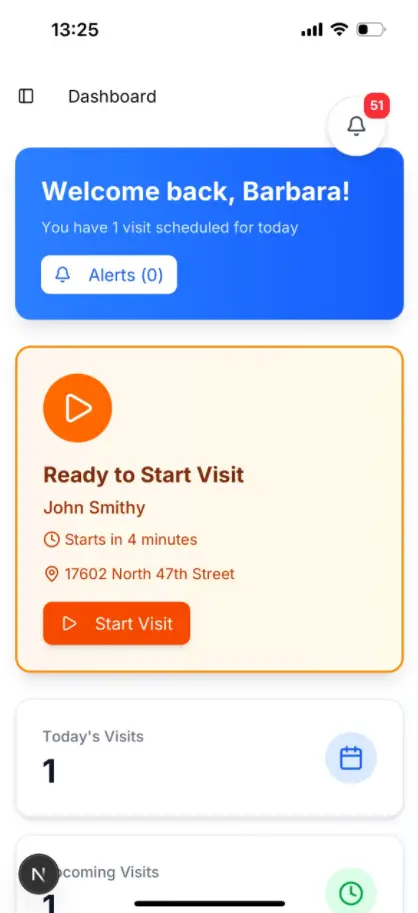
Manage your Hawaii home care agency on the go with AveeCare's mobile caregiver dashboard
Differentiation tip: In Hawaii's small, relationship-driven market, your reputation is everything. Cultural competency, multilingual staff, reliability across island-specific logistics, and deep community ties will set you apart. Hawaii's "talk story" culture means word-of-mouth referrals are more powerful here than in any mainland market. Personal relationships with discharge planners, physicians, and community leaders are your most valuable marketing assets.
11Marketing & Client Acquisition
How to market your home care business in Hawaii's unique island markets
Marketing a home care agency in Hawaii is fundamentally different from marketing on the mainland. Hawaii's island culture, tight-knit communities, and emphasis on personal relationships mean that word-of-mouth referrals, community presence, and cultural sensitivity are far more important than digital advertising alone. Each island has its own distinct character and market dynamics. What works on Oahu may not work on Maui or the Big Island. Understanding multi-generational family dynamics (ohana), the importance of "talk story" culture, and the unique needs of Hawaii's diverse populations is essential for building a successful home care business in the Aloha State.
Island-Focused Marketing
Each Hawaiian island has its own identity, media outlets, community organizations, and referral networks. Marketing on Oahu requires a different approach than Maui, the Big Island, or Kauai. Create island-specific messaging that resonates with local communities. Use local newspapers (Honolulu Star-Advertiser, Maui News, Hawaii Tribune-Herald, The Garden Island) and community radio stations. Sponsor island-specific events and community health fairs.
Military Family Outreach
Hawaii has one of the largest military populations per capita in the US. Pearl Harbor, Schofield Barracks, Marine Corps Base Hawaii, Joint Base Pearl Harbor-Hickam, and other installations create a large population eligible for TRICARE home care benefits. Partner with military family support centers, attend military spouse job fairs, and connect with the Armed Services YMCA and USO Hawaii. Military families often need care for aging parents who have relocated to be near their service member children.
Cultural Community Marketing
Hawaii's diverse population requires culturally tailored marketing. Create materials in Japanese, Filipino (Tagalog), Chinese, Korean, and Hawaiian languages. Partner with cultural organizations like the Japanese Cultural Center, Filipino Community Center, and Chinese Chamber of Commerce. Understand that in many Asian and Pacific Islander cultures, family caregiving is deeply personal, and professional home care may carry stigma. Position your services as an extension of family care, not a replacement.
Community Health Fairs & Events
Health fairs are extremely popular in Hawaii and serve as major community gathering points. Participate in events like the Hawaii State Senior Fair, county-level senior expos, church health ministries events, and cultural festival health booths. These events allow face-to-face relationship building that is essential in Hawaii's culture. Bring multilingual staff and culturally appropriate materials.
Word-of-Mouth & Talk Story Culture
Hawaii is a "small town" culture where everyone knows everyone. A single bad experience can damage your reputation across an entire island. Conversely, excellent care and genuine relationships generate powerful word-of-mouth referrals. Encourage satisfied families to share their experiences. Attend community events, volunteer, and become a known, trusted face in your community. "Talk story" (casual conversation) is how business gets done in Hawaii.
Multi-Generational Family Dynamics
Hawaii has strong multi-generational family (ohana) traditions where grandparents, parents, and children often live together or nearby. Marketing to adult children who are primary decision-makers requires understanding that they may feel guilt about seeking professional care. Position your agency as supporting the entire ohana, helping family caregivers avoid burnout while ensuring kupuna (elders) receive the best possible care in their homes.
Tourism-Adjacent Elder Care
Hawaii's tourism industry creates a unique niche: part-time residents ("snowbirds") who spend winters in Hawaii and need temporary home care services. Retirees from the mainland who vacation in Hawaii for extended periods may need personal care or companion services. This seasonal demand can supplement your regular client base. Market through resort concierges, long-term rental communities, and retirement lifestyle publications.
Digital Marketing & Local SEO
While relationships drive most referrals in Hawaii, a strong online presence is still important. Optimize for island-specific search terms ("home care Maui," "caregiver services Kailua-Kona"). Maintain active Google Business Profiles for each island location. Use social media (Facebook is dominant in Hawaii) to share community involvement, caregiver spotlights, and cultural content. Online reviews carry significant weight in Hawaii's small market.
12Frequently Asked Questions
Common questions about starting a home care agency in Hawaii
Yes. Hawaii requires licensing through the Department of Health (DOH) Office of Health Care Assurance (OHCA) for home health agencies providing skilled services. Non-medical personal care agencies providing home and community-based services must obtain provider certification through OHCA. All direct care staff must pass background checks through the Hawaii Criminal Justice Data Center (HCJDC). Hawaii is one of the more heavily regulated states for home care providers.
Starting a non-medical home care agency in Hawaii typically costs between $55,000 and $130,000, significantly higher than most states due to Hawaii having the highest cost of living in the United States (cost of living index above 190 in Honolulu). This covers DCCA business registration, DOH/OHCA licensing, insurance (including mandatory TDI and Prepaid Health Care Act compliance), marketing, office space, and 3 to 6 months of working capital. A licensed home health agency with skilled nursing costs $150,000 to $350,000 or more.
Hawaii is the only state in the nation with a Prepaid Health Care Act, which requires employers to provide health insurance to employees who work 20 or more hours per week for four consecutive weeks. As a home care agency owner, you must provide qualifying health insurance coverage to your caregivers, which significantly increases labor costs compared to other states. The Hawaii Prepaid Health Care Advisory Council oversees compliance, and failure to comply can result in penalties.
Yes. Temporary Disability Insurance (TDI) is mandatory for all Hawaii employers. TDI provides partial wage replacement to employees who cannot work due to non-work-related illness or injury. Employers must provide TDI coverage through a private insurance carrier, a self-insured plan, or the Hawaii Temporary Disability Insurance Division. This is in addition to workers compensation insurance for work-related injuries. TDI adds to the overall cost of operating a home care business in Hawaii.
Hawaii is a later adopter of Electronic Visit Verification (EVV) under the 21st Century Cures Act and is still implementing its EVV system through the Med-QUEST Division of the Department of Human Services. Providers should check with Med-QUEST for the latest EVV requirements, approved vendors, and implementation timelines. Hawaii Medicaid is administered through the QUEST Integration managed care program.
A non-medical personal care agency in Hawaii typically takes 3 to 6 months to launch, covering DCCA business registration, DOH/OHCA licensing or certification, background checks, insurance, TDI and Prepaid Health Care Act setup, and initial hiring. A fully licensed Home Health Agency takes 6 to 12 months or longer. Hawaii does not have a traditional state corporate income tax but imposes a General Excise Tax (GET) of 4% to 4.5% on all business gross revenue, plus individual income tax rates from 1.4% to 11%.
13Sources and Resources
Official Hawaii state agency links and resources
Ready to manage your Hawaii home care agency?
You do not need software on day one. But when you are ready, AveeCare starts at $6/client/month with no contracts, no mandatory demos, and a free trial. Scheduling, care plans, billing, caregiver management, real-time tracking, and alerts in one platform built for simplicity. Manage your Hawaii home care agency from any island in the Aloha State.
Disclaimer
This guide is for informational purposes only and does not constitute legal, financial, or professional advice. While we strive to keep this information accurate and up to date, Hawaii laws, regulations, fees, and requirements may change. Always verify current requirements directly with the relevant Hawaii state agencies before making business decisions. Consult with a qualified attorney and accountant in Hawaii before starting your home care business. AveeCare is not affiliated with the Hawaii Department of Health, the Hawaii Criminal Justice Data Center, the Hawaii DCCA, or any Hawaii state agency. Published April 4, 2026.