Home Care Workforce Shortage: Causes, Data & Actionable Solutions
The caregiver shortage affects every home care agency in America. With turnover exceeding 65% and demand projected to grow 21% by 2033, agencies need actionable strategies to recruit, retain, and operate efficiently with limited staff.
In This Guide
The Home Care Workforce Shortage in 2026: By the Numbers
The home care workforce shortage has reached critical levels in 2026. The Bureau of Labor Statistics projects that the United States will need approximately 4.7 million home health and personal care aides by 2033 - an increase of 820,000 positions from 2023 levels. This 21% growth rate makes home care one of the fastest-growing occupational categories in the country, yet the caregiver staffing crisis shows no sign of easing.
The current caregiver shortage is not just a pipeline problem. The home care industry faces a compounding challenge: even as demand surges, the workforce is shrinking relative to need. Annual turnover rates exceeding 65% mean agencies must constantly recruit just to maintain current staffing levels. Some regions report vacancy rates above 25%, leaving clients without adequate care and agencies unable to accept new referrals. Our caregiver retention strategies guide and staffing and recruitment guide cover tactical solutions agencies are using to address both sides of this equation.
The home care staffing crisis has real consequences for patient outcomes. Research from the Government Accountability Office (GAO) found that staffing shortages are associated with increased emergency department visits, higher hospitalization rates, and reduced quality of life for home care recipients. For agencies, the financial impact includes lost revenue from turned-away clients, increased overtime costs, and the continuous expense of recruiting and training replacements.

Root Causes of the Caregiver Shortage
Understanding the root causes of caregiver recruitment challenges is essential for developing effective solutions. The home care workforce shortage is driven by six interconnected factors.
Low Wages Relative to Job Demands
The national median wage for home health and personal care aides is $16.78/hr - barely above retail and fast-food wages in many markets. When adjusted for the physical demands, emotional labor, and driving requirements of caregiving, the compensation gap becomes even more significant. Only 30% of caregivers receive employer-sponsored health insurance, and benefits like PTO and retirement plans remain uncommon.
Surging Demand from an Aging Population
The 65+ population is projected to grow by 30% over the next decade, from approximately 58 million in 2023 to 76 million by 2035. The 85+ population - the demographic most likely to need home care - will grow even faster at 35%. This demographic wave creates demand that outpaces any realistic increase in the caregiver supply pipeline.
Competition from Other Industries
Retail, hospitality, warehouse, and food service employers now routinely offer $15-$20/hr starting wages with more predictable schedules, no driving requirements, and often better benefits. Caregiving requires certification, background checks, and significant emotional investment - yet compensation is often comparable to jobs with far fewer requirements.
Physical and Emotional Demands
Home caregiving is physically demanding (lifting, transferring, extended time on feet) and emotionally taxing (end-of-life care, client decline, family dynamics). Workplace injury rates for home care workers are higher than the national average. Burnout and compassion fatigue drive many experienced caregivers out of the field entirely.
Limited Career Advancement
Many caregivers see limited career paths within home care. Without clear progression opportunities (title advancement, pay tiers, supervisory tracks), experienced workers seek growth in hospital, clinic, or nursing home settings that offer more structured career ladders.
Inadequate Training and Support
New caregivers often feel unprepared for the realities of home care. When onboarding is rushed and ongoing support is minimal, early turnover spikes. Studies show that 30-day turnover accounts for 25-35% of all caregiver departures, indicating that the first weeks of employment are a critical retention window.
Regional Breakdown of the Caregiver Staffing Crisis
The home care workforce shortage varies significantly by region. While every state faces challenges, the severity depends on local demographics, wage levels, cost of living, and competing employment opportunities.
Northeast
HighHigh demand from aging population combined with high cost of living. States like New York and Massachusetts see caregiver wages compressed against high housing costs. Vacancy rates: 18-28%.
Southeast
Moderate-HighRapidly growing retiree population, particularly in Florida, Georgia, and the Carolinas. Lower wages but also lower cost of living. Rural areas face acute shortages. Vacancy rates: 15-22%.
Midwest
ModerateLower cost of living helps caregiver wages stretch further. Rural communities face the deepest shortages due to long drive times and limited candidate pools. Vacancy rates: 12-20%.
West
HighExtreme cost of living in California, Washington, and Oregon. Despite higher nominal wages, purchasing power is often lower than Midwest counterparts. Vacancy rates: 20-30%.
Southwest
Moderate-HighRapidly growing elderly population in Arizona, Nevada, and Texas. Bilingual caregiver demand adds complexity. Extreme heat creates additional occupational health challenges. Vacancy rates: 16-24%.
Rural Areas (Nationwide)
CriticalRural communities face the most severe shortages regardless of region. Limited candidate pools, long drive times between clients, lower reimbursement rates, and fewer training programs compound the challenge. Vacancy rates: 25-40%.
Workforce Shortage Impact Calculator
Enter your agency details below to see the projected financial impact of the caregiver shortage on your organization, including turnover costs, overtime expenses, and staffing gap projections.
Caregiver Recruitment Strategies That Work
Addressing the caregiver shortage starts with smarter recruitment. These evidence-based caregiver recruitment strategies can help agencies build their workforce pipeline even in a tight labor market.
Employee Referral Programs
High ImpactReferred candidates have 45% higher retention rates and are hired 55% faster. Offer $500-$1,500 bonuses paid in stages (50% at hire, 50% at 90 days). Current employees are your best recruiters because they realistically preview the job.
Partnership with Training Programs
High ImpactBuild relationships with local CNA and HHA training programs, community colleges, and vocational schools. Offer to host clinical rotations, provide guest speakers, or sponsor scholarships. First-hire agreements give you access to graduates before they hit the open market.
Streamlined Hiring Process
High ImpactIn a shortage market, speed wins. Agencies that make offers within 24-48 hours of application see 3x higher acceptance rates than those with week-long processes. Implement same-day interviews and conditional offers pending background check completion.
Competitive Compensation Positioning
High ImpactPosition your wages at or above the 60th percentile for your market. Even $0.50-$1.00/hr above the median can make a significant difference in application volume. Factor in total compensation including benefits, PTO, and schedule flexibility.
Strong Employer Brand
Medium ImpactMaintain positive reviews on Indeed, Glassdoor, and Google. Actively respond to all reviews. Share employee testimonials and "day in the life" content on social media. Candidates research employers before applying.
Targeted Digital Recruitment
Medium ImpactUse geo-targeted social media ads and job board postings. Highlight your unique value propositions (flexible scheduling, supportive management, career growth). Video job postings featuring real caregivers significantly outperform text-only listings.
Retention Strategies: Keeping the Caregivers You Have
While recruitment fills immediate gaps, retention is the sustainable solution to the home care workforce shortage. Reducing turnover from 65% to 45% has the same net staffing effect as increasing recruitment by 30%, but at a fraction of the cost. Here are the most effective retention strategies supported by industry data.
Structured Onboarding (First 90 Days)
- Assign a mentor/buddy to every new hire
- Weekly check-ins during the first month
- Gradual caseload introduction (start easy)
- Clear 30/60/90-day milestone expectations
- Early identification of struggling new hires
Meaningful Recognition
- Monthly Caregiver of the Month program
- Real-time praise via team messaging
- Client feedback sharing with caregivers
- Milestone celebrations (1-year, 3-year, 5-year)
- Peer-to-peer recognition systems
Schedule Flexibility
- Allow caregivers input on their schedules
- Accommodate school, childcare, and second jobs
- Offer shift-swapping capabilities
- Provide advance notice of schedule changes
- Minimize split shifts and long commutes
Career Development
- Create formal career ladders (Caregiver I/II/III)
- Fund continuing education and certification
- Offer LPN/RN bridge program partnerships
- Provide specialty training (dementia, hospice)
- Promote from within for office/supervisory roles
Supportive Management
- Train supervisors in supportive leadership
- Maintain manageable caseloads
- Respond promptly to caregiver concerns
- Regular one-on-one meetings (not just reviews)
- Advocate for caregivers with difficult clients
Benefits and Compensation
- Annual wage reviews against market rates
- Health insurance (even partial contributions)
- Paid time off (start accruing from day 1)
- Mileage reimbursement at or above IRS rates
- Retention bonuses at key tenure milestones
Technology Solutions for Understaffed Home Care Agencies
When you cannot hire enough caregivers, technology helps you do more with less. Smart home care software reduces administrative burden, optimizes scheduling efficiency, and improves the caregiver experience - all of which directly address the workforce shortage from different angles.
Smart Scheduling Optimization
Save 5-10 hrs/week per coordinator
AI-powered scheduling matches caregivers to clients based on skills, location, availability, and preferences. Reduces drive time, minimizes gaps, and optimizes utilization.
Mobile-First Caregiver Tools
Reduce caregiver frustration by 40%
Intuitive mobile apps that caregivers actually want to use. Easy clock-in, navigation, care documentation, and instant communication - without complex training.
Automated Onboarding Workflows
Cut onboarding time by 50%
Digital document collection, automated compliance tracking, and self-guided orientation modules get new hires working faster.
Real-Time Communication
Eliminate phone tag entirely
Built-in messaging, shift notifications, and schedule updates keep the team connected without relying on personal phones and text chains.
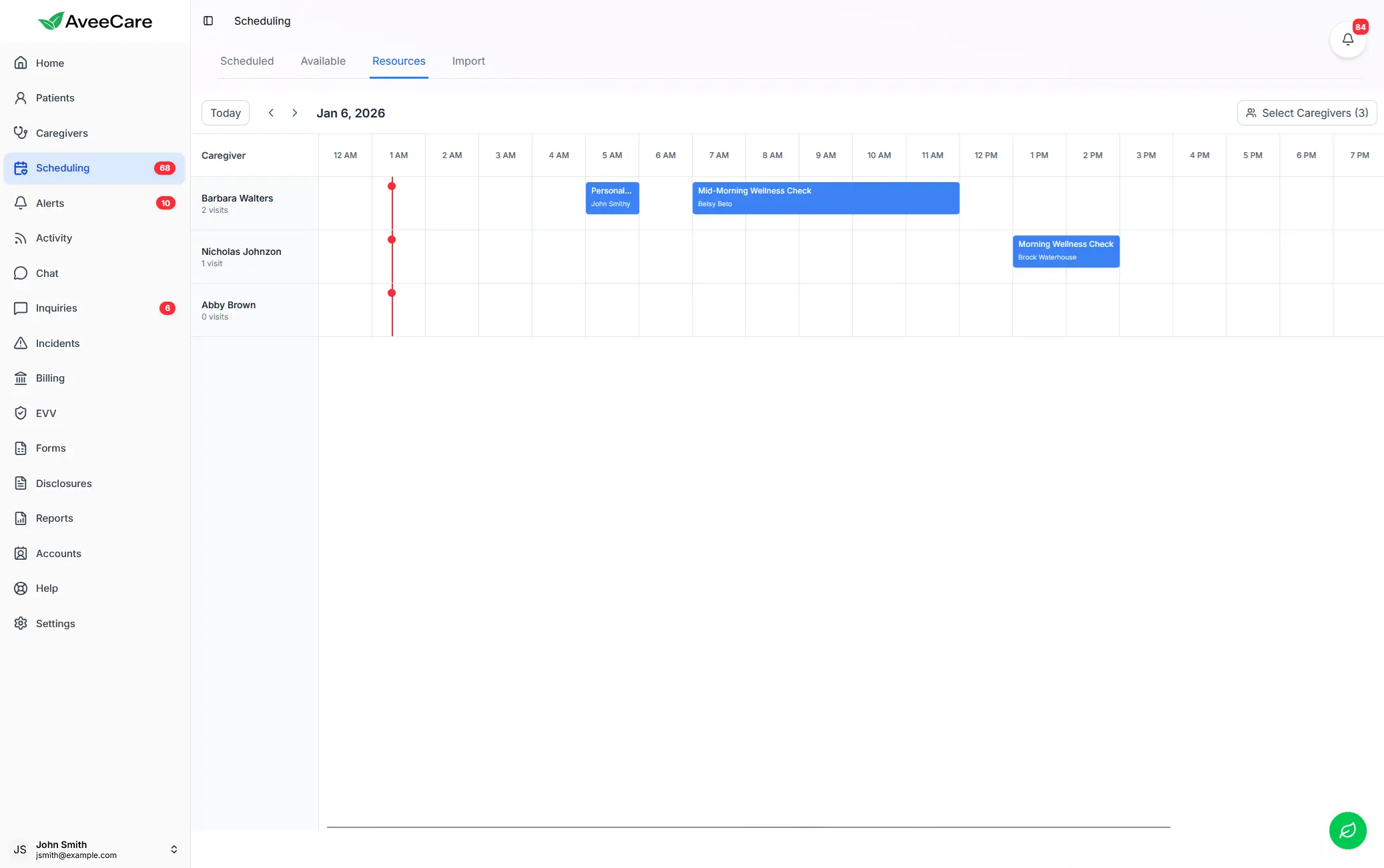
AveeCare's resource allocation view helps agencies visualize staffing levels and optimize caregiver utilization.
Policy Landscape: State & Federal Efforts
Policymakers at both the federal and state level are taking steps to address the home care workforce shortage, though progress varies significantly by jurisdiction. Understanding the policy landscape helps agencies anticipate changes and take advantage of available resources.
Federal Initiatives
- $150 billion allocated for HCBS through infrastructure framework
- CMS proposed minimum staffing standards for home care
- DOL overtime rule changes affecting caregiver classification
- Medicare reimbursement rate increases for home health
- Expanded visa programs for healthcare workers under consideration
- Workforce Innovation and Opportunity Act (WIOA) funding for caregiver training
State-Level Actions
- 14 states enacted caregiver wage pass-through requirements
- 8 states created caregiver training scholarship programs
- 21 states raised minimum wage affecting caregiver pay floors
- Multiple states expanded Medicaid reimbursement rates
- State-funded caregiver recruitment marketing campaigns
- Licensing requirement reforms to reduce entry barriers
90-Day Action Plan for Small Agencies
You do not need a large budget or HR department to fight the caregiver shortage. Here is a practical 90-day plan that any home care agency can implement immediately.
Days 1-30: Foundation
- Audit your current wages against local market rates (use BLS data and job postings)
- Launch an employee referral bonus program ($500-$1,000)
- Implement weekly check-ins for all caregivers in their first 90 days
- Streamline your hiring process to under 48 hours from application to offer
- Start a simple monthly recognition program (Caregiver of the Month)
Days 31-60: Optimization
- Evaluate your scheduling process - are you minimizing drive time and maximizing utilization?
- Survey caregivers anonymously about satisfaction, concerns, and improvement suggestions
- Partner with at least one local CNA/HHA training program
- Review and improve your job postings based on what is working in your market
- Implement schedule flexibility for your highest-performing caregivers
Days 61-90: Scale
- Analyze turnover data: when and why are caregivers leaving?
- Create a formal career ladder (Caregiver I, II, III with wage tiers)
- Evaluate technology solutions that reduce administrative burden
- Set 6-month and 12-month targets for turnover reduction
- Build a continuous improvement cycle: measure, adjust, repeat quarterly
Frequently Asked Questions About the Caregiver Shortage
The Bureau of Labor Statistics projects that the U.S. will need approximately 4.7 million home health and personal care aides by 2033, an increase of nearly 820,000 positions from 2023 levels. The home care industry currently faces annual turnover exceeding 65%, with vacancy rates averaging 15-25% across agencies. The shortage is projected to worsen as the 65+ population grows by 30% over the next decade.
The caregiver shortage stems from low wages (national median of $16.78/hr), lack of benefits (only 30% receive employer-sponsored health insurance), physically and emotionally demanding work, an aging population creating surging demand, competition from retail and hospitality sectors, limited career advancement, and inadequate training and support systems.
Replacing a single caregiver costs $2,500 to $5,500 when accounting for advertising, interviewing, background checks, training, overtime coverage, and lost productivity. For a 50-caregiver agency with 65% annual turnover, that equals $81,000-$178,750 in annual turnover costs. Agencies with turnover below 40% report 22% higher profitability.
The most effective strategies include employee referral programs (45% higher retention rates), partnering with local CNA/HHA training programs, offering sign-on bonuses ($500-$2,000), competitive wage positioning (at or above the 60th percentile), same-day hiring processes, and maintaining a strong employer brand with positive job site reviews.
Technology helps understaffed agencies operate more efficiently through automated scheduling (saving 5-10 hours per coordinator per week), mobile-first tools that reduce frustration, streamlined onboarding, real-time communication, and AI-powered scheduling that optimizes utilization and reduces overtime costs.
The federal government allocated $150 billion for home and community-based services. CMS has proposed minimum staffing requirements. At the state level, 14 states have enacted caregiver wage pass-through requirements, 8 states created training scholarship programs, and several states expanded Medicaid reimbursement rates specifically to fund caregiver wage increases.
Sources & References
- Bureau of Labor Statistics - Occupational Outlook: Home Health and Personal Care Aides
- PHI - Direct Care Workers in the United States
- GAO - HHS Should Assess the Workforce Needs of Key Providers
- CMS - Home Health Prospective Payment System
- U.S. Census Bureau - Aging Population Projections
- Home Care Pulse - Annual Home Care Benchmarking Study
Do More with Less Through Smart Technology
AveeCare helps understaffed agencies operate efficiently through smart scheduling, automated workflows, and caregiver-friendly mobile tools that reduce administrative burden and improve retention.
Disclaimer: This guide is provided for informational purposes only and does not constitute legal, regulatory, HR, or business advice. Statistics and projections cited are drawn from publicly available government and industry sources as of April 2026 and may not reflect the most current data. Workforce shortage impacts vary by region, market conditions, and individual agency circumstances. The calculator results are estimates based on industry averages and should not be relied upon for financial planning. Consult with employment attorneys, HR professionals, and business advisors for guidance specific to your agency.