Home Care Profit Margins
Understanding home care profit margins is essential for building a sustainable agency. This guide covers industry benchmarks, cost structures, and provides interactive tools to calculate your margins and plan improvements to home care agency profitability. For guidance on setting rates that protect your margins, see our home care rate setting guide.
Home Care Profit Margin Benchmarks by Payer Type
Home care profit margins vary significantly by payer source. Private pay agencies typically achieve the highest margins because they control their own bill rates, while Medicaid-dependent agencies face the tightest margins due to fixed reimbursement rates. Understanding these benchmarks is the first step to improving home care agency profitability. Our billing guide covers the payer-specific workflows that affect how quickly revenue converts to cash.
| Payer Type | Gross Margin | Net Margin |
|---|---|---|
| Private Pay Home Care | 30-45% | 12-20% |
| Medicare Home Health | 25-40% | 8-15% |
| Medicaid/Waiver | 15-30% | 5-12% |
| LTC Insurance | 28-42% | 10-18% |
Industry Median Net Margin
The median net profit margin across all home care agency types, according to NAHC benchmarking data. Top performers exceed 20%.
Labor Cost as % of Revenue
Total labor costs (wages, taxes, workers comp, benefits) consume 55-70% of a home care agency's revenue, making workforce management the top driver of home care profit margins.
Target Bill-to-Pay Ratio
Healthy home care agencies maintain a minimum bill-to-pay ratio of 1.4:1. Below this level, overhead costs often push the agency into unprofitable territory.
Cost per Turnover
Each caregiver replacement costs $2,500-$5,000 in direct and indirect costs, making turnover one of the biggest threats to home care business profit.
Target Utilization Rate
Top-performing agencies achieve 85%+ caregiver utilization (billable hours / available hours). The industry average is closer to 75%, leaving significant margin improvement opportunity.
Target Days in AR
Best-practice agencies collect receivables in 25-35 days. Industry average is 40-55 days. Faster collections directly improve cash flow and reduce write-offs.
Turning Revenue into Sustainable Home Care Business Profit
Home care profitability is not just about growing revenue. It is about managing the cost structure, optimizing operations, and building systems that scale efficiently. The agencies with the strongest home care profit margins are those that invest in technology and process improvement.

Profit Margin Calculator
Enter your agency's annual revenue, direct labor costs, and overhead to calculate your gross and net home care profit margins. Compare your results against industry benchmarks.
Wages, payroll taxes, WC, benefits
Admin, office, marketing, technology, etc.
Gross Profit Margin
Above Average45.8%
Gross Profit: $550,000
Industry range: 25-45%
Net Profit Margin
Above Average16.7%
Net Profit: $200,000
Industry median: 9.7%
Home Care Cost Structure Breakdown
Understanding where every dollar goes is essential for improving home care profit margins. This breakdown shows the typical expense allocation for a home care agency operating at industry-average efficiency.
Direct caregiver hourly pay for billable and non-billable hours
Employer FICA, FUTA, SUTA on all employee wages
Workers compensation insurance premiums (NCCI code 8835)
Health insurance, PTO, retirement contributions for eligible staff
Office staff salaries, rent, utilities, office supplies, phone
General liability, professional liability, cyber, auto insurance
Home care software, EVV system, communication tools, IT support
Digital marketing, advertising, referral programs, networking events
Job postings, hiring platforms, onboarding costs, background checks
Legal, accounting, licensing fees, continuing education, travel
Remaining profit margin: 12% of revenue. This represents the net profit before taxes for a typical home care agency.
Tracking Profitability with Analytics
Improving home care profit margins requires data-driven decision making. Modern home care software provides the financial reporting, analytics, and custom report builders that help agency owners identify exactly where margin improvement opportunities exist.
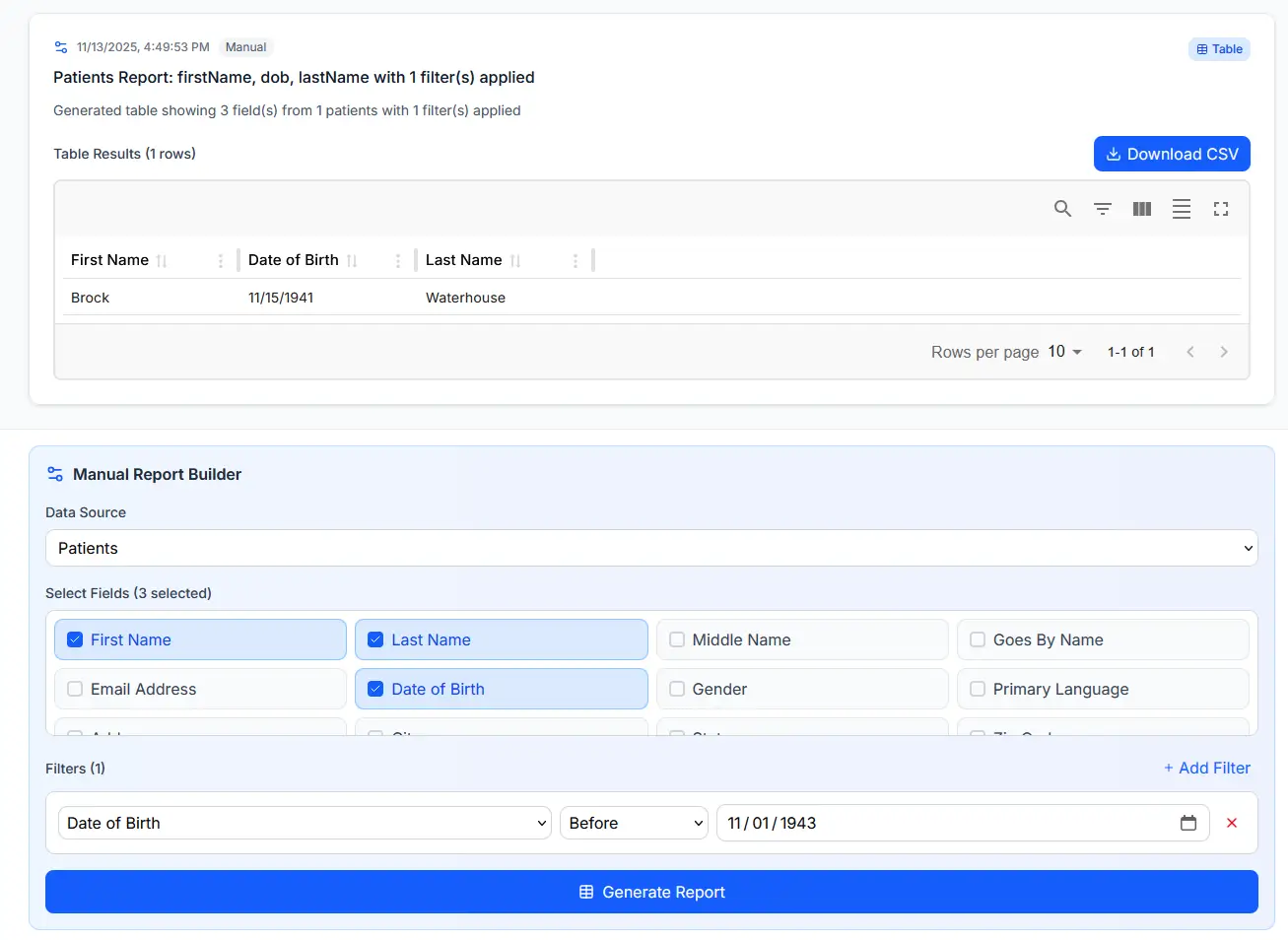
Strategies to Improve Home Care Profit Margins
These are the highest-impact strategies for improving home care agency profitability, ranked by potential margin improvement. Most agencies can achieve 5-10 percentage points of margin improvement by implementing 3-4 of these strategies simultaneously.
Optimize Scheduling Efficiency
3-5% margin improvementReduce unbillable travel time, minimize gaps between visits, and increase caregiver utilization from the industry average of 75% to 85%+.
Reduce Caregiver Turnover
2-4% margin improvementEach caregiver replacement costs $2,500-$5,000 in recruitment, training, and lost productivity. Reducing turnover from 65% to 40% saves significant money.
Improve Billing Speed & Accuracy
2-3% margin improvementFaster billing reduces days in accounts receivable. Cleaner claims reduce denial rates. Both improve cash flow and reduce write-offs.
Optimize Payer Mix
3-8% margin improvementShifting payer mix toward higher-margin services has the largest single impact on profitability. Target 40-60% private pay for optimal margins.
Control Overtime Costs
1-3% margin improvementOvertime at 1.5x pay rate destroys margins. Even 5% of hours at overtime represents 2.5% margin erosion on labor costs.
Leverage Technology for Admin Efficiency
1-3% margin improvementManual administrative processes consume 15-25% of office staff time. Automation can cut this in half, reducing overhead without cutting quality.
Margin Improvement Scenario Planner
Adjust the sliders below to model how different operational improvements could affect your home care profit margins. See the combined impact on your bottom line based on the revenue you entered in the calculator above.
Increase utilization, reduce travel gaps
Lower recruitment and training costs
Faster collections, fewer denials
Higher-margin payer sources
Current Net Margin
16.7%
Projected Net Margin
16.7%
+0.0 pts
Additional Annual Profit
$0
Scaling Profitably: Growth Without Margin Erosion
Growing revenue is only valuable if you maintain or improve your home care profit margins as you scale. Many agencies experience margin compression as they grow because overhead increases faster than revenue. Here is how to avoid that trap and maintain strong home care agency profitability at every stage.
Maintain Bill-to-Pay Ratio as You Grow
As you hire more caregivers and compete for talent, there is pressure to increase pay without raising rates. Track your bill-to-pay ratio monthly and adjust rates proactively to maintain the 1.4:1 minimum.
Automate Before You Hire Admin Staff
Every $50K admin hire adds overhead. Before adding staff, evaluate whether technology can handle the workload. Modern home care software can support 50-100 caregivers with minimal admin staff.
Expand Services, Not Just Hours
Adding higher-margin service lines (specialized dementia care, post-surgical care, live-in care) can increase revenue per client without proportional cost increases.
Geographic Clustering
Expand in concentric circles from your current service area rather than taking clients far away. Clustered clients reduce travel time and increase billable hours per caregiver per day.
Negotiate Volume Discounts
As you grow, negotiate better rates on workers comp, general liability, and other insurance. Agencies with 50+ caregivers can often secure 10-20% lower premiums through volume and experience rating.
Invest in Retention Over Recruitment
The cost of replacing a caregiver ($2,500-$5,000) far exceeds the cost of retaining one. As you scale, every percentage point reduction in turnover directly improves your home care business profit.
Track Profitability by Payer Source
Not all revenue is created equal. Build reports that show margin by payer source and by client. This lets you make informed decisions about which contracts to pursue and which to renegotiate or exit.
Set Margin Targets Before Budgeting
Start your annual budget with a target net margin (e.g., 15%), then back into allowable costs. Too many agencies set budgets based on projected expenses and accept whatever margin is left.
Red Flags for Declining Home Care Profit Margins
Watch for these warning signs that indicate margin erosion in your home care business. Early detection and intervention can prevent a profitable agency from slipping into the red.
Gross margin below 25%
Indicates bill rates are too low relative to pay rates, or excessive unbillable hours are dragging down effective margins.
Action: Review bill-to-pay ratio (target 1.4:1 minimum). Increase rates or reduce non-billable labor costs.
Net margin below 5%
The agency is barely covering overhead. Any disruption (client loss, rate decrease, regulatory fine) could push the business into the red.
Action: Conduct a comprehensive expense audit. Identify the top 3 cost categories exceeding industry benchmarks and create reduction plans.
Overtime exceeding 8% of total hours
Excessive overtime signals scheduling inefficiency, understaffing, or poor workforce management. It compounds labor costs rapidly.
Action: Implement overtime tracking dashboards. Set hard caps on weekly hours per caregiver. Hire additional part-time staff.
Days in AR exceeding 45
Slow collections tie up cash and indicate billing process issues. Industry best practice is 25-35 days in accounts receivable.
Action: Automate claim submission within 24 hours. Follow up on unpaid claims at 15, 30, and 45 days. Address denial root causes.
Caregiver turnover above 70%
Higher-than-average turnover creates a constant drain of recruitment and training costs, eating directly into margins.
Action: Survey departing caregivers to identify root causes. Benchmark wages locally. Implement retention bonuses and recognition programs.
Client utilization below 70%
If caregivers are only billing 70% of available hours, 30% of labor capacity is being paid for but not generating revenue.
Action: Optimize scheduling to minimize gaps. Increase marketing to fill unfilled caregiver hours. Reduce no-show rates with confirmation systems.
Frequently Asked Questions
Common questions about home care profit margins, profitability, and financial benchmarks.
The average net profit margin for home care agencies ranges from 8% to 20%, with significant variation by payer mix and agency type. Private pay home care agencies typically achieve 20-35% gross margins and 12-20% net margins. Medicare-certified agencies average 8-15% net margins. The industry median net profit margin is approximately 9.7% according to NAHC benchmarking data.
Key strategies to improve home care profit margins include optimizing scheduling efficiency to reduce unbillable hours (target 85%+ utilization), reducing caregiver turnover (each replacement costs $2,500-$5,000), improving billing speed and reducing claim denials, adjusting payer mix toward higher-margin services, implementing technology to reduce administrative overhead, and reviewing overhead costs quarterly.
Caregiver wages and related costs typically account for 55-70% of total revenue. Direct wages alone represent 45-55% of revenue, with payroll taxes adding 8-10%, workers comp adding 3-6%, and benefits adding 2-5%. Agencies that keep total labor costs below 60% while maintaining competitive wages generally achieve the strongest home care profit margins.
Revenue per billable hour varies by payer source. For private pay, the national average bill rate is $28-$35 per hour, with higher rates in metro areas. A healthy bill-to-pay ratio is at least 1.4:1 (e.g., billing $30/hour with a pay rate of $18-$21/hour). This spread needs to cover all overhead and still leave a net profit of 10-20%.
The biggest threats include rising caregiver wages without corresponding rate increases, high caregiver turnover (industry average 65%), overtime costs from poor scheduling, slow billing and high claim denial rates, regulatory compliance costs, increasing insurance premiums, and client cancellations. Agencies without modern technology for scheduling and billing are most vulnerable to margin erosion.
Payer mix is one of the most significant factors in home care agency profitability. Private pay clients generate the highest margins (20-35% gross) because agencies set their own rates. Medicare provides moderate margins (10-18% gross) but requires clinical staff. Medicaid offers the lowest margins (5-12% gross) due to fixed rates. The most profitable agencies maintain 40-60% private pay.
Sources & References
National Association for Home Care & Hospice
Industry financial benchmarks, profit margin surveys, and operational metrics for home care agencies.
PHI (Paraprofessional Healthcare Institute)
Workforce data, wage analysis, and staffing cost research for home care and home health industries.
Centers for Medicare & Medicaid Services
Medicare home health cost reports, reimbursement data, and financial performance metrics for certified agencies.
U.S. Small Business Administration
Small business profitability guides, financial management resources, and benchmark data.
Activated Insights (Home Care Pulse)
Annual benchmarking studies with home care profit margin data, turnover costs, and operational efficiency metrics.
Bureau of Labor Statistics
Home health aide and personal care aide wage data, employment statistics, and labor cost projections.
Improve Your Margins with AveeCare
AveeCare helps home care agencies improve profitability through scheduling optimization, automated billing, real-time analytics, and streamlined operations. Agencies on AveeCare report saving 10-15 hours of admin time per week and reducing billing errors by 80%. Transparent pricing, no long-term contracts, and a free interactive demo.
Disclaimer
Financial benchmarks, profit margin data, and cost structure information in this guide are compiled from publicly available sources including NAHC, PHI, CMS cost reports, Home Care Pulse (Activated Insights), and BLS data. Actual margins vary by agency size, geography, payer mix, and operational efficiency.
The interactive tools on this page generate estimates for informational and planning purposes only. They do not constitute financial or business advice. Always consult with a CPA and financial advisor with home care industry experience before making business decisions based on margin analysis.
Last updated: April 2026. AveeCare reviews and updates content annually.