Alzheimer's & Dementia Home Care: A Comprehensive Caregiver Guide
An evidence-based Alzheimer's home care guide covering dementia stages, communication techniques, behavioral management strategies, and safety planning. Practical resources for caring for dementia patients at home with confidence and compassion.
Published April 3, 2026 · 22 min read
Understanding Alzheimer's Disease
Alzheimer's disease is the most common form of dementia, accounting for 60-80% of all dementia cases. It is a progressive, irreversible brain disorder that slowly destroys memory, thinking skills, and the ability to carry out simple tasks. According to the Alzheimer's Association, an estimated 6.9 million Americans aged 65 and older are living with Alzheimer's dementia in 2024, and this number is projected to reach 13.8 million by 2060.
For the millions of family caregivers providing Alzheimer's home care, understanding the disease's progression is essential for planning appropriate care and maintaining quality of life. Caring for dementia patients at home presents unique challenges that evolve as the disease advances through its stages. Our companion dementia care guide covers the broader landscape of cognitive conditions beyond Alzheimer's.
This Alzheimer's caregiver guide provides evidence-based strategies for managing every aspect of dementia care at home, from communication techniques to behavioral management, fall prevention, and caregiver self-care. Whether you are a family caregiver or a home care professional, these resources will help you provide compassionate, effective care.

Alzheimer's Disease Stage Progression
Click each stage to explore the symptoms, care needs, and ADL impact at different points in the Alzheimer's disease journey. Understanding these stages helps caregivers anticipate and plan for evolving care requirements.
Early-Stage Alzheimer's
Typical duration: 2-4 years
Common Symptoms
- Forgetting recently learned information
- Difficulty planning or solving problems
- Trouble completing familiar tasks
- Confusion with time or place
- Word-finding difficulty in conversations
- Misplacing things and losing ability to retrace steps
- Withdrawal from social activities
Care Needs
- Medication reminders and management
- Assistance with complex IADLs (finances, transportation)
- Companion care and social engagement
- Safety monitoring and fall prevention
- Help organizing and planning daily activities
ADL Impact
Most basic ADLs intact. IADL deficits appear first, especially in finances, medication management, and meal preparation.
Communication Techniques for Dementia Care
Effective communication is one of the most important skills in Alzheimer's home care. As the disease progresses, the person's ability to express thoughts and understand language declines. These evidence-based techniques help maintain connection and reduce frustration for both the caregiver and the person with dementia.
Approach & Environment
- Approach from the front at eye level
- Reduce background noise before speaking
- Make eye contact and use the person's name
- Ensure good lighting so they can see your face
How to Speak
- Use short, simple sentences with one idea
- Speak slowly and clearly in a warm tone
- Repeat and rephrase rather than raising volume
- Allow 30-60 seconds for a response before repeating
Questions & Choices
- Ask yes/no questions instead of open-ended
- Offer only 2 choices at a time
- Use visual cues alongside verbal instructions
- Avoid "Don't you remember?" or quizzing
Nonverbal Communication
- Use gentle touch for reassurance
- Maintain a calm, pleasant facial expression
- Point to or demonstrate what you mean
- Mirror their emotions to show understanding
Behavioral Management Strategy Finder
Select a challenging behavior below to get evidence-based response strategies. These approaches are recommended by the Alzheimer's Association and based on person-centered dementia care research.
Select a behavior above to view management strategies
Alzheimer's Home Safety Checklist
Check off items as you complete safety modifications. A safe home environment is critical for caring for dementia patients at home and preventing accidents.
Kitchen0/6
Bathroom0/6
General Home0/8
Bedroom0/6
Nutrition, Activities & Engagement
Proper nutrition and meaningful activities are essential components of Alzheimer's home care. As the disease progresses, eating challenges increase and engagement strategies must be adapted to preserve quality of life.
Nutrition Challenges
- Serve meals at the same time daily to establish routine
- Offer finger foods if utensil use becomes difficult
- Use contrasting plate colors to help food visibility
- Limit choices to 2 items to reduce confusion
- Monitor weight weekly for unintentional loss
- Ensure adequate hydration (may forget to drink)
- Create a calm, distraction-free dining environment
- Allow enough time for meals (30-45 minutes)
Meaningful Activities
- Play familiar music from their era (music therapy)
- Look through old photo albums together
- Simple gardening or sorting tasks
- Folding towels or other familiar household tasks
- Gentle exercise or short walks with supervision
- Art activities (painting, coloring, clay)
- Pet therapy or visits from gentle animals
- Reading aloud or listening to audiobooks
Caregiver Support & Self-Care
Alzheimer's caregivers provide an average of 30+ hours of care per week and are at significantly higher risk of depression, anxiety, and physical health problems. An Alzheimer's caregiver guide would be incomplete without addressing the needs of the caregivers themselves.
Recognize Warning Signs
Watch for feeling overwhelmed, chronic fatigue, sleep problems, withdrawing from friends, neglecting your own health, increased irritability, and feeling hopeless. These are signs of caregiver burnout.
Seek Respite Care
Regular breaks are not optional — they are essential. Use adult day programs, in-home respite, or residential respite services. Even a few hours a week makes a significant difference.
Join a Support Group
Connect with other Alzheimer's caregivers through the Alzheimer's Association (1-800-272-3900), local support groups, or online communities. Shared experience reduces isolation.
Maintain Your Health
Keep your own medical appointments, exercise regularly, eat well, and get adequate sleep. You cannot provide good care if you are physically and emotionally depleted.
Legal & Financial Planning
Early legal and financial planning is critical for Alzheimer's patients and families. As the disease progresses, the person will lose the legal capacity to make decisions, so documents must be prepared while they can still participate.
Durable Power of Attorney
Designates someone to make financial and legal decisions when the person can no longer do so. Must be executed while the person still has legal capacity.
Healthcare Power of Attorney
Appoints someone to make medical decisions on behalf of the person. Should include preferences for life-sustaining treatment and end-of-life care.
Living Will / Advance Directive
Documents the person's wishes regarding medical treatment, including resuscitation, feeding tubes, and hospice care preferences.
Long-Term Care Insurance Review
If a policy exists, review the benefit triggers (usually inability to perform 2+ ADLs). File claims early, as many policies have waiting periods.
Medicaid Planning
Consult an elder law attorney about Medicaid eligibility for home care services. Each state has different income and asset limits for Home and Community-Based Services waivers.
Frequently Asked Questions
Common questions about Alzheimer's home care and dementia caregiving.
Early signs include getting lost in familiar places, difficulty managing finances or paying bills, repeating questions frequently, poor judgment in daily decisions, neglecting personal hygiene, forgetting to take medications or taking them incorrectly, leaving the stove on, and withdrawal from social activities. When a person needs reminders or hands-on help with 2 or more activities of daily living, professional home care should be considered.
Sundowning affects up to 66% of Alzheimer's patients. Management strategies include maintaining a consistent daily routine, increasing daytime light exposure (especially morning bright light therapy), limiting caffeine and sugar after noon, scheduling demanding activities in the morning, reducing evening stimulation, closing curtains before dark, playing calming music, and ensuring adequate daytime activity. Severe sundowning may warrant a physician consultation about melatonin or medication review.
The early (mild) stage lasts 2-4 years with largely preserved independence but memory lapses. The middle (moderate) stage is the longest at 2-10 years with increasing daily activity difficulty, behavioral changes, and wandering. The late (severe) stage lasts 1-3 years with near-total dependence. Total disease course averages 4-8 years from diagnosis but can last up to 20 years.
Approach from the front, make eye contact, use short simple sentences with one idea at a time, speak slowly in a warm tone, ask yes/no questions, allow extra response time, use visual cues and gestures, avoid arguing or correcting, refer to people by name, minimize background noise, and focus on feelings rather than facts. As disease progresses, nonverbal communication through gentle touch and facial expressions becomes critical.
Essential modifications include door alarms and wander-prevention locks, removing throw rugs, installing grab bars in bathrooms, setting water heater below 120 degrees, removing stove knobs or installing auto shut-off, locking away medications and cleaning supplies, nightlights in hallways, removing mirrors if they cause confusion, labeling rooms with pictures, and securing firearms. Modifications should evolve as the disease progresses.
Sources & References
Authoritative sources cited in this Alzheimer's caregiver guide.
Comprehensive annual report on Alzheimer's prevalence, mortality, caregiving, and costs in the United States.
NIH resource on Alzheimer's stages, symptoms, diagnosis, and treatment options.
CDC overview of dementia types, risk factors, caregiving, and public health data.
Evidence-based communication strategies for dementia caregivers.
Landmark Lancet Commission report on dementia risk factors, prevention, and care interventions.
Room-by-room home safety guide from NIH for Alzheimer's patients and caregivers.
Manage Alzheimer's Care Plans with AveeCare
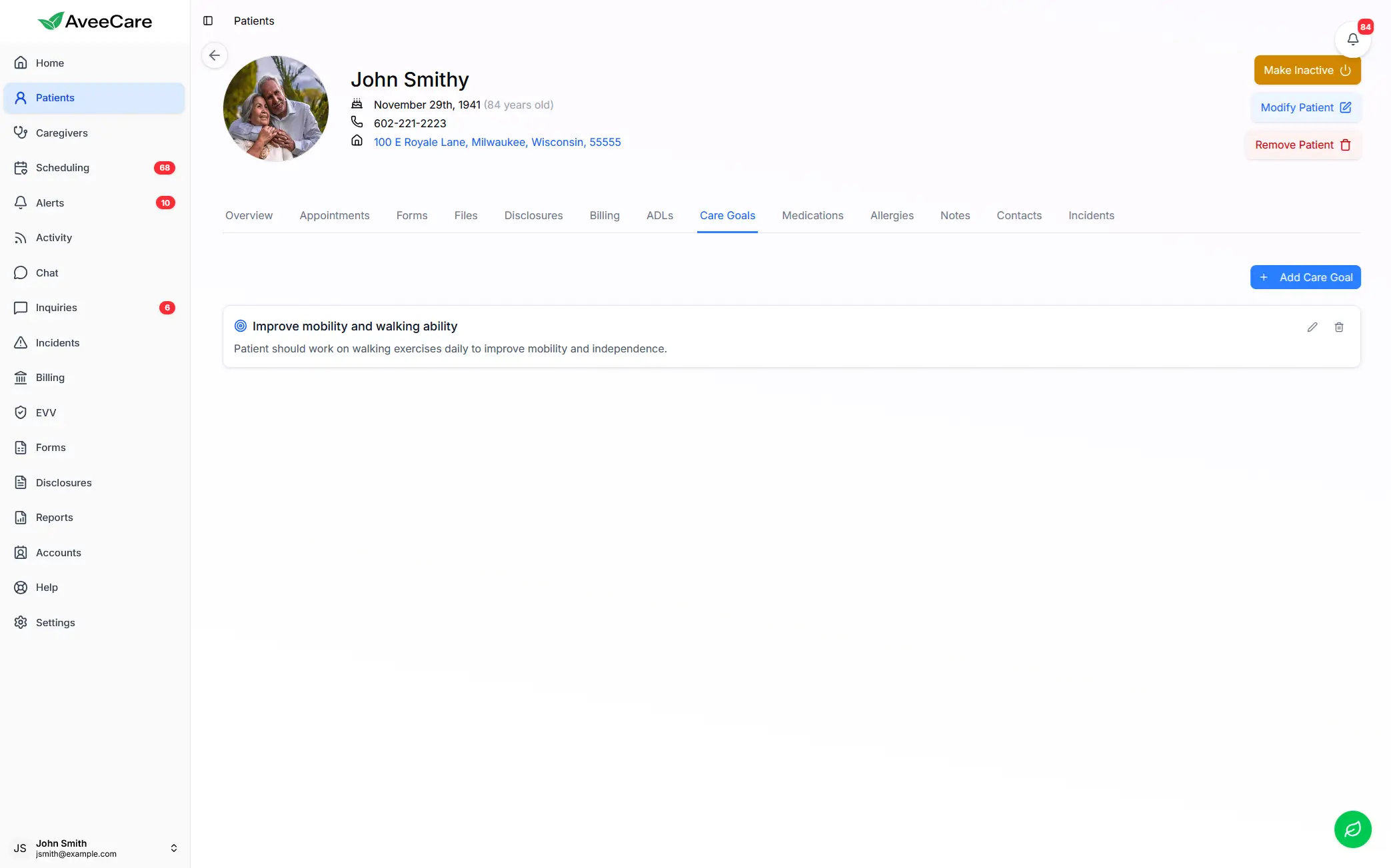
AveeCare's home care software includes care goal tracking, behavioral documentation, caregiver communication tools, and scheduling features designed for the unique demands of dementia care at home. Track ADL changes, coordinate care teams, and keep families informed — all in one platform.
Disclaimer
This guide is provided for informational and educational purposes only and does not constitute medical advice. Alzheimer's disease and dementia care should be managed under the guidance of qualified healthcare professionals, including physicians, neurologists, and geriatric specialists. Every person with dementia is unique, and care strategies should be individualized. If you are experiencing a medical emergency or if the person you are caring for is in immediate danger, call 911. For 24/7 Alzheimer's support, contact the Alzheimer's Association Helpline at 1-800-272-3900.