How to Start a Home Care Agency in Arkansas
Your complete 2026 guide to launching a home care business in Arkansas, from ADH and DHS licensing to navigating the Natural State's growing Medicaid market.
Published April 3, 2026 · 25 min read
TLDR — Arkansas at a Glance
Yes — ADH for home health; DHS for personal care.
AR Department of Health (ADH) and AR DHS Division of Provider Services
$25,000 – $55,000 (non-medical)
$80,000 – $200,000+ (home health)
2 – 4 months (non-medical) | 4 – 8 months (home health)
89.6 index (well below national average)
1Arkansas Market Overview
Understanding the opportunity for home care agencies in the Natural State
Arkansas has a population of approximately 3.0 million people with a rapidly aging demographic that makes it one of the strongest markets in the Southeast for starting a home care agency. Roughly 17.4% of Arkansas residents are 65 or older, well above the national average, and that percentage continues to climb as the state's rural population ages in place. Arkansas home care agencies benefit from low operating costs, a significant Medicaid-funded home care market, and strong demand in underserved rural communities throughout the state.
Arkansas is a Medicaid expansion state under the Arkansas Works program (formerly the Private Option), which has broadened healthcare access for low-income residents and created a larger pool of Medicaid-eligible clients for home care services. The state's cost of living index of 89.6 means operating costs are roughly 10% below the national average, allowing agencies to stretch their startup capital further while still earning competitive reimbursement rates through Medicaid and private pay. For a national overview of the startup process, see our complete guide to starting a home care agency and our state-by-state licensing requirements.
Major population centers like Little Rock, Fayetteville, Fort Smith, Springdale, and Jonesboro offer the largest client bases, but Arkansas's 75 counties include many rural areas with significant unmet home care needs. The Northwest Arkansas corridor (Fayetteville-Springdale-Rogers) is one of the fastest-growing metro areas in the country, creating new demand. Meanwhile, the Delta region in eastern Arkansas has some of the highest poverty rates and most limited healthcare access in the nation, representing a significant opportunity for agencies willing to serve underserved communities.
Why Start a Home Care Agency in Arkansas
2Home Care vs. Home Health in Arkansas
A critical distinction that determines your licensing path
This is the most important decision you will make. In Arkansas, home health agencies are licensed by the Arkansas Department of Health (ADH), while non-medical personal care providers are licensed through the Arkansas Department of Human Services (DHS). Understanding the difference determines your licensing path, staffing requirements, startup costs, and services you can legally provide.
Non-Medical Home Care
- Personal care (bathing, dressing, grooming)
- Companion care and socialization
- Meal preparation and light housekeeping
- Medication reminders (not administration)
- Transportation and errands
- Respite care for family members
DHS Personal Care license required
Through Division of Provider Services and Quality Assurance.
Home Health (Skilled)
- Skilled nursing care
- Physical, occupational, and speech therapy
- Wound care and injections
- Medical social services
- Home health aide services
- Medication administration
ADH Home Health Agency license required
Plus Medicare certification for Medicare billing.
3Business Formation in Arkansas
Register your home care business with the state
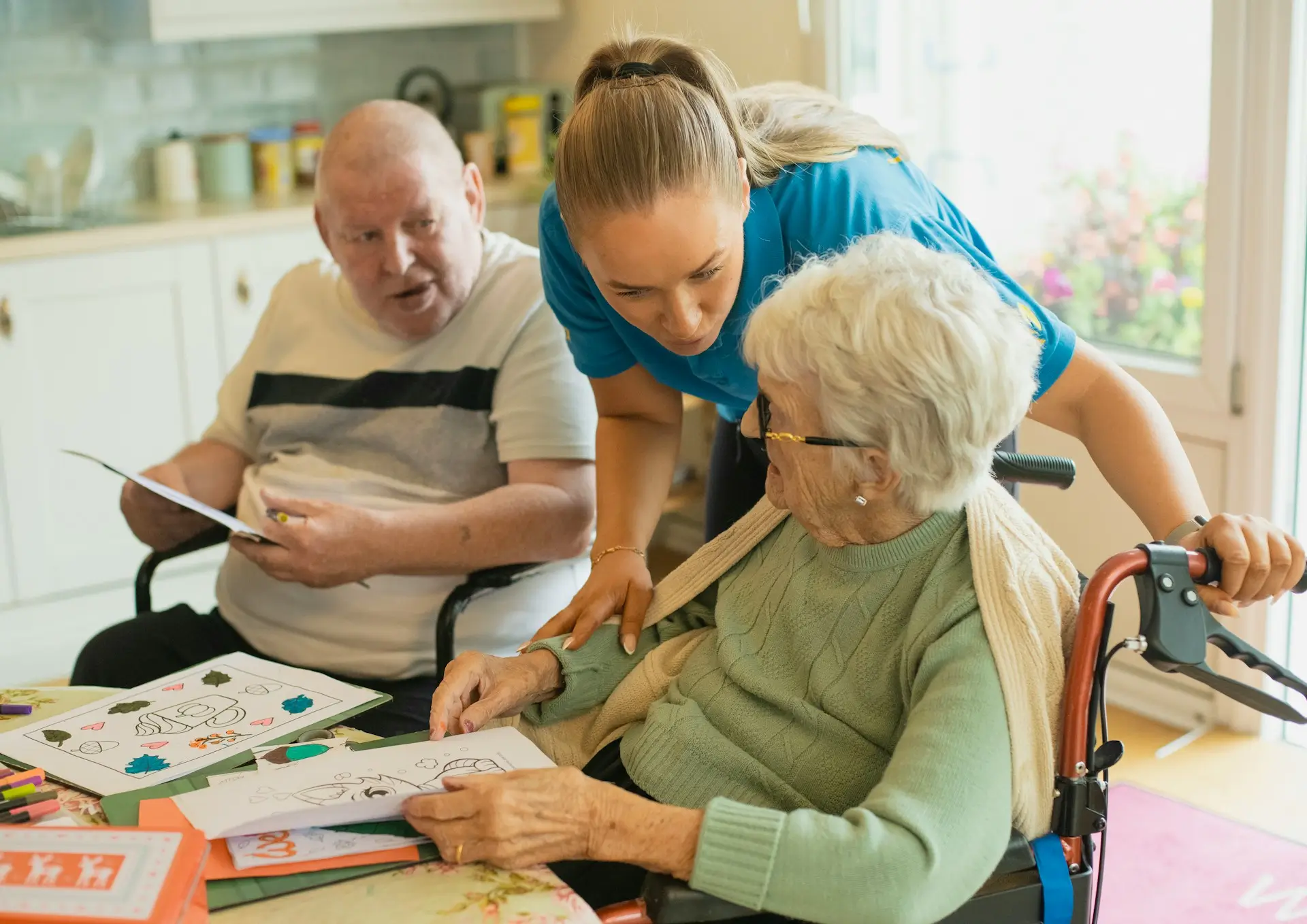
Cost advantage: Arkansas has one of the lowest costs of living in the nation (89.6 index), meaning your startup dollars go roughly 10% further than the national average. Office space, insurance premiums, and labor costs are all below typical rates, making Arkansas an accessible state for first-time home care business owners.
Choose Your Business Structure
Most home care agencies in Arkansas register as an LLC (Limited Liability Company) for liability protection and flexibility. An Arkansas LLC costs just $45 to file online, one of the most affordable in the country. You can also form a corporation or sole proprietorship, though an LLC offers the best balance of protection and simplicity.
Register with the Secretary of State
File your formation documents with the Arkansas Secretary of State online through sos.arkansas.gov. Processing is typically fast, often completed within 1 to 3 business days for online filings.
Arkansas Secretary of StateObtain Your EIN
Apply for a free Employer Identification Number (EIN) from the IRS at irs.gov. You need this for bank accounts, payroll, and tax filings. It takes minutes to obtain online.
Register for Arkansas Franchise Tax
All Arkansas LLCs and corporations must pay an annual franchise tax. LLCs pay a flat $150 per year. Register through the Arkansas Department of Finance and Administration (DFA) to stay in good standing.
AR Department of Finance & AdministrationCheck City/County Requirements
Some Arkansas cities and counties require additional business licenses or permits. Little Rock, Fayetteville, Fort Smith, and other municipalities have their own requirements. Contact your city clerk or county office to confirm what is needed in your area.
Open a Business Bank Account
Open a dedicated business checking account to separate personal and business finances. Arkansas-based banks and credit unions can assist. You will need your EIN and formation documents.
4Licensing Requirements
Arkansas has separate licensing paths for home health and personal care
Non-Medical Personal Care (DHS Provider)
To operate a non-medical personal care agency in Arkansas, you must be licensed as a Personal Care provider through the Arkansas Department of Human Services (DHS), Division of Provider Services and Quality Assurance. This licensing process ensures that personal care agencies meet state standards for client safety and service quality. The process includes:
- Submit Personal Care provider application to DHS
- Complete provider enrollment and credentialing
- Background checks for all staff through Arkansas State Police
- Maintain all required policies, procedures, and documentation
- Pass initial and ongoing compliance reviews
Home Health Agencies (Skilled Services)
If you plan to provide skilled nursing, physical therapy, or other medical services, you must obtain a Home Health Agency license from the Arkansas Department of Health (ADH). ADH regulates all home health agencies operating in Arkansas under the state's health facility licensing rules. This is a more rigorous process than DHS personal care licensing and involves:
- Submit Home Health Agency license application to ADH
- Pass an on-site survey/inspection by ADH surveyors
- Designate a qualified administrator and clinical director
- Employ or contract with an RN for clinical supervision
- Maintain all required policies, quality assurance programs, and documentation
Medicare Certification
Medicare certification is a separate process from state licensure. To bill Medicare, you must apply through the Centers for Medicare & Medicaid Services (CMS), pass a federal survey, and meet all Medicare Conditions of Participation. This process typically adds 3 to 6 months beyond your state license. In Arkansas, the survey process runs through the ADH, which serves as the state survey agency for CMS. Medicare certification is particularly valuable in Arkansas given the state's aging population and the prevalence of Medicare beneficiaries in rural communities.
Nursing oversight: The Arkansas State Board of Nursing oversees all licensed nursing practice in the state. If your home health agency employs or contracts with RNs, LPNs, or CNAs, ensure they maintain current Arkansas nursing licenses. The Board of Nursing also sets standards for CNA training programs relevant to home health aide certification.
5Insurance Requirements
Protect your Arkansas home care business
General Liability
$2,000 - $5,000/yrCovers bodily injury and property damage claims. Recommended minimum: $1M per occurrence / $2M aggregate. Arkansas premiums are typically below the national average due to the lower cost of living and relatively low litigation rates.
Professional Liability (E&O)
$1,500 - $4,000/yrCovers errors, omissions, and negligence claims related to care services. Essential for any home care business in Arkansas, protecting against claims of inadequate care or supervision.
Workers' Compensation
$1,500 - $6,000/yrRequired by Arkansas law for employers with 3 or more employees. The Arkansas Workers' Compensation Commission administers the program. Premiums in Arkansas are competitive relative to other states.
Surety / Fidelity Bond
$300 - $1,000/yrProtects clients against employee theft or dishonesty. Not required by Arkansas law, but strongly recommended and expected by many clients and referral partners.
Workers' comp threshold: 3 employees. Arkansas requires workers' compensation insurance for employers with 3 or more employees. Even if you start with fewer than 3, plan to secure coverage early because you will likely cross the threshold quickly as you hire caregivers. The Arkansas Workers' Compensation Commission handles compliance and claims at awcc.state.ar.us.
6Staffing and Hiring in Arkansas
Finding and qualifying caregivers in the Natural State
Recruiting caregivers in Arkansas benefits from the state's lower cost of living and a workforce that values stable employment. Arkansas's minimum wage of $11.00 per hour applies to all employers with 4 or more employees. While home care wages in Arkansas are below the national average, the lower cost of living means these wages offer reasonable purchasing power. Building relationships with local CNA training programs and Arkansas Workforce Centers is an effective strategy for sourcing qualified caregivers.
Training & CNA Requirements
Arkansas requires that Certified Nurse Aides (CNAs) complete an approved training program (minimum 75 hours) and pass a competency exam administered through the Arkansas CNA Registry. For home health aides working under a licensed agency, federal requirements mandate 75 hours of training including 16 hours of supervised clinical practice. Non-medical personal care aides should receive thorough initial training covering ADLs, safety protocols, and infection control.
Background Checks
Arkansas requires background checks for caregivers working in licensed agencies. These are conducted through the Arkansas State Police, which includes fingerprint-based criminal history checks through both state and FBI databases. You must also verify against the OIG exclusion list and the Arkansas Adult and Long-Term Care Facility Abuse Registry before hiring any caregiver.
Arkansas State PoliceWhere to Find Caregivers in Arkansas
State workforce development offices across all 75 counties
University of Arkansas system, community colleges, career tech centers
Indeed, local Facebook groups, church and community networks
Wages in Arkansas
Arkansas's minimum wage is $11.00/hour (applies to employers with 4+ employees). To attract quality caregivers in Arkansas, most agencies pay between $12 and $16 per hour for personal care aides and $15 to $21 per hour for home health aides and CNAs. Pay rates in Little Rock and Northwest Arkansas tend toward the higher end due to more competition for workers, while rural areas may accept rates closer to the minimum.
Arkansas follows federal overtime rules: Overtime at 1.5x the regular rate is required after 40 hours per week. There is no daily overtime requirement in Arkansas. Home care agencies should carefully track hours across all client shifts to ensure compliance.
7Medicaid and Medicare in Arkansas
Government payer programs, EVV, and HCBS waivers
Arkansas Medicaid
Arkansas Medicaid is administered by the Department of Human Services (DHS). To bill Medicaid for home care services, you must enroll as a Medicaid provider through DHS. Arkansas is a Medicaid expansion state under the Arkansas Works program (formerly the Private Option), which expanded Medicaid eligibility and created a substantial pool of Medicaid-eligible home care clients. Arkansas Medicaid serves over 900,000 residents, making it a major payer source for home care agencies. The state operates several important HCBS waiver programs that fund personal care and home health services.
Arkansas Department of Human ServicesElectronic Visit Verification (EVV)
Under the 21st Century Cures Act, all states must implement EVV for Medicaid-funded personal care and home health services. Arkansas uses AuthentiCare by Fiserv as its state-selected EVV vendor, which is provided free of charge to Medicaid providers. Arkansas operates an open/hybrid model, meaning providers may use alternative EVV systems as long as they meet state integration requirements and can exchange data with AuthentiCare.
Division of Aging, Adult, and Behavioral Health Services (DAABHS)
The Division of Aging, Adult, and Behavioral Health Services (DAABHS) under DHS is the primary state agency overseeing services for older Arkansans and adults with disabilities. DAABHS administers the ElderChoices program and coordinates with Area Agencies on Aging across the state. Building relationships with DAABHS and the local AAAs is essential for receiving Medicaid-funded client referrals and understanding the waiver landscape in your service area.
DAABHS — Arkansas DHSHCBS Waivers in Arkansas
- ARChoices (elderly and physically disabled adults)
- ElderChoices (community services for seniors)
- Developmental Disabilities Services (DDS) Waiver
- Arkansas Works (Medicaid expansion coverage)
Medicare Certification
To bill Medicare, your home health agency must be certified by CMS. Arkansas has a significant population of Medicare beneficiaries, particularly in rural areas where seniors rely on Medicare-funded home health services. Expect 3 to 6 months for the certification process after obtaining your ADH state license. The ADH serves as the state survey agency for CMS in Arkansas.
8Startup Cost Estimator
Arkansas-specific startup cost breakdown (below national average)
Arkansas advantage: All cost estimates below reflect Arkansas's 89.6 cost of living index. Expect to pay 10-15% less than the national average for insurance, office space, supplies, and payroll, making Arkansas one of the most affordable states to start a home care agency.
Business Formation
$545 – $2,495Online filing with Secretary of State
Can serve as your own registered agent
IRS EIN is free; state tax registrations minimal
Varies by municipality; some areas do not require one
Attorney review, CPA setup (lower AR rates)
Licensing
$5,700 – $16,500License application and processing fee
For non-medical personal care providers
Survey prep, policies, consulting
Insurance (Annual)
$5,300 – $16,000$1M per occurrence / $2M aggregate
Errors and omissions coverage
Required for employers with 3+ employees
Recommended for client trust
Office & Equipment
$2,600 – $8,000Low AR rents; home office possible initially
Laptops, smartphones, scheduling software
Desk, chairs, printer, supplies
Marketing & Initial Growth
$2,450 – $8,500Professional site with local SEO
Google Ads, Facebook, community outreach
Brochures, flyers, cards
Working Capital (3-6 Months)
$11,000 – $30,000Competitive wages in AR ($12-$16/hr avg)
Rent, utilities, software, fuel costs
Estimated Total Startup Cost (All Categories)
$27,595 – $81,495
Costs are estimates based on typical Arkansas home care agency startups and may vary by location within the state. Little Rock and Northwest Arkansas tend toward the higher end; rural areas in the Delta and south Arkansas are generally more affordable.
9Compliance Checklist
Track your progress across all Arkansas requirements
Business Formation
0/6Licensing
0/5Insurance
0/4Staffing
0/5Medicaid & Medicare
0/2Operations
0/4Marketing
0/410Building Your Referral Network
Key referral sources in Arkansas for your home care agency
In Arkansas, strong referral relationships are critical for building your client base. The state's tight-knit communities, especially in rural areas, rely heavily on word of mouth and trusted local networks. Connecting with hospitals, Area Agencies on Aging, and the Division of Aging, Adult, and Behavioral Health Services (DAABHS) is essential for steady referrals.
Arkansas Hospitals & Health Systems
Major hospitals like UAMS Medical Center in Little Rock, CHI St. Vincent, Baptist Health, and Washington Regional in Northwest Arkansas have active discharge planning departments. Connect with their case managers to receive referrals for patients transitioning home after hospitalizations.
Area Agencies on Aging (AAAs)
Arkansas has 8 Area Agencies on Aging that serve as local hubs connecting seniors with home care resources. These AAAs manage ElderChoices referrals and are your primary pathway to Medicaid-funded personal care clients across the state.
DAABHS (Division of Aging, Adult & Behavioral Health Services)
The state-level agency under DHS that oversees aging services, adult protective services, and behavioral health. DAABHS coordinates with AAAs and manages the ElderChoices program. Building a relationship with DAABHS opens doors to statewide referral networks.
DAABHSPhysicians and Primary Care Clinics
Arkansas has many rural primary care clinics, Federally Qualified Health Centers (FQHCs), and physician offices. Building referral relationships with local doctors, especially geriatricians and family medicine practitioners, creates a steady stream of private pay and Medicare clients.
Faith-Based Organizations
Churches and faith communities play a significant role in Arkansas communities, particularly in rural areas. Partner with local churches, senior ministries, and community organizations to connect with families seeking home care services for elderly members.
Senior Centers and Community Organizations
Arkansas operates senior centers in communities across the state. These centers serve as gathering places for older adults and are excellent locations for outreach, education, and building referral relationships with seniors and their families.
11Marketing & Client Acquisition
How to advertise your home care business and attract clients in Arkansas
Marketing a home care agency in Arkansas relies heavily on trust-based relationships and community engagement. In a state where small-town reputation and word of mouth carry tremendous weight, your personal presence in the community matters as much as your digital footprint. Rural church networks, local physicians, and community health workers are powerful channels for reaching families who need care but may not be actively searching online. Combine these grassroots efforts with a solid digital presence to cover both urban and rural markets across the Natural State.
Digital Marketing Strategies
Google Business Profile
Claim and optimize your Google Business Profile for Little Rock, Fayetteville, Fort Smith, Jonesboro, and every community you serve. In smaller Arkansas markets, having a well-maintained profile with photos and reviews gives you a significant edge over competitors who neglect their online presence.
Google Ads (Pay-Per-Click)
Arkansas has lower competition for home care keywords compared to larger states, making Google Ads very cost-effective. Target keywords like "home care Little Rock AR" or "senior care Fayetteville Arkansas." Start with $400-1,000/month and scale based on results.
Search Engine Optimization (SEO)
Build a website with pages targeting each Arkansas community you serve. Optimize for local terms like "home care services Hot Springs AR" and "in-home caregiver Conway Arkansas." Blog about topics relevant to Arkansas families, such as rural aging resources and ElderChoices program navigation.
Facebook Marketing
Facebook is the most-used social platform in Arkansas, especially in rural communities. Post regularly about caregiver tips, community involvement, and client success stories. Join and engage in local community Facebook groups for Pulaski County, Washington County, and other service areas.
Community Outreach & Grassroots Marketing
Rural Church Networks
Arkansas has a strong faith-based culture, and churches are the social hub of many rural communities. Partner with local churches to offer free caregiver education workshops, health awareness events, or senior wellness programs. Pastors and church leaders are trusted voices who can recommend your services to families in need.
Arkansas Division of Aging & Adult Services
Build a relationship with the Division of Aging, Adult, and Behavioral Health Services (DAABHS) and the 8 Area Agencies on Aging across Arkansas. These organizations connect seniors with home care resources and are key referral channels, especially for ElderChoices and Medicaid-funded services.
Community Health Workers
Arkansas has a growing network of community health workers (CHWs) who serve as trusted liaisons between healthcare systems and underserved populations. Building relationships with CHWs, especially in rural and minority communities, can open doors to families who need home care but are not connected to formal healthcare channels.
Small-Town Reputation Building
In Arkansas small towns, your reputation is everything. Sponsor local events, volunteer at senior centers, participate in chamber of commerce meetings, and show up at community gatherings. Being a visible, trusted member of the community is the most effective long-term marketing strategy in rural Arkansas.
Healthcare Referral Relationships
Building referral relationships with healthcare providers across Arkansas is essential for both non-medical personal care and skilled home health client acquisition.
Hospital Discharge Planners
Visit discharge planning departments at UAMS Medical Center, CHI St. Vincent, Baptist Health, and Washington Regional regularly. Provide brochures, quick-reference sheets, and ensure they know your service areas and specialties.
Rural Health Clinics & FQHCs
Arkansas has many Federally Qualified Health Centers and rural health clinics serving underserved communities. Physicians at these clinics frequently recommend home care to elderly patients and can be consistent referral sources.
Skilled Nursing Facilities
Patients discharged from SNFs and rehab centers across Arkansas often need ongoing home care support. Build relationships with social workers and discharge coordinators at these facilities.
Home Health & Hospice Cross-Referrals
Non-medical personal care agencies can partner with home health and hospice agencies for mutual referrals. A patient may need skilled nursing visits plus personal care assistance, creating opportunities for collaboration.
Online Reputation Management
Even in Arkansas's relationship-driven markets, families increasingly check online reviews before choosing a home care provider. Manage your reputation on these platforms:
Google Reviews
In smaller Arkansas markets, even 10-20 strong reviews can make you the top-rated agency. Ask every satisfied family for a review.
Caring.com
Create a detailed profile with your service areas, specialties, and photos. Families researching care options often find agencies through Caring.com.
Facebook Reviews
Facebook reviews matter heavily in Arkansas, where many families discover local businesses through social media. Maintain an active presence and encourage reviews.
Marketing Channel Comparison
| Channel | Cost | Time to Results | Best For |
|---|---|---|---|
| Google Ads | $-$$ | Immediate | Cost-effective leads in low-competition markets |
| SEO / Website | $ | 3-6 months | Long-term organic visibility |
| Facebook Marketing | $ | 1-2 weeks | Community engagement & brand awareness |
| Church Partnerships | Free | 1-3 months | Rural community trust & word-of-mouth |
| Hospital Referrals | Free | 1-3 months | Medical and post-acute referrals |
| Community Health Workers | Free | 2-4 months | Reaching underserved rural populations |
Arkansas marketing tip: In Arkansas, relationships trump advertising. Focus first on building genuine connections with churches, physicians, and community leaders in your service area. A strong Google Business Profile and Facebook presence will support your grassroots efforts, but nothing replaces showing up in person and being a trusted member of the community.
12Competition and Market Analysis
How to research the Arkansas home care market
The Arkansas home care market has moderate competition in metro areas like Little Rock and Northwest Arkansas, but many rural counties remain significantly underserved. Conducting thorough market research before launching your home care business in Arkansas will help you identify the strongest opportunities and position your agency for success.
ADH Licensed Provider Lists
The Arkansas Department of Health maintains directories of licensed home health agencies. Review these lists to understand how many agencies operate in your target area and identify service coverage gaps, especially in rural counties.
Medicare Home Health Compare
CMS publishes quality ratings and service data for all Medicare-certified home health agencies. Use this to identify gaps in service quality and underserved areas in Arkansas where your agency could differentiate.
County Demographics
Study the age demographics, income levels, and population density of your target counties using U.S. Census data. Focus on Arkansas's 75 counties to find areas with high percentages of seniors and limited existing home care options.
Underserved Area Mapping
The Delta region in eastern Arkansas, the Ouachita Mountains, and many rural communities in southern Arkansas have extremely limited home care access. Agencies willing to serve these areas face minimal competition and strong Medicaid demand.
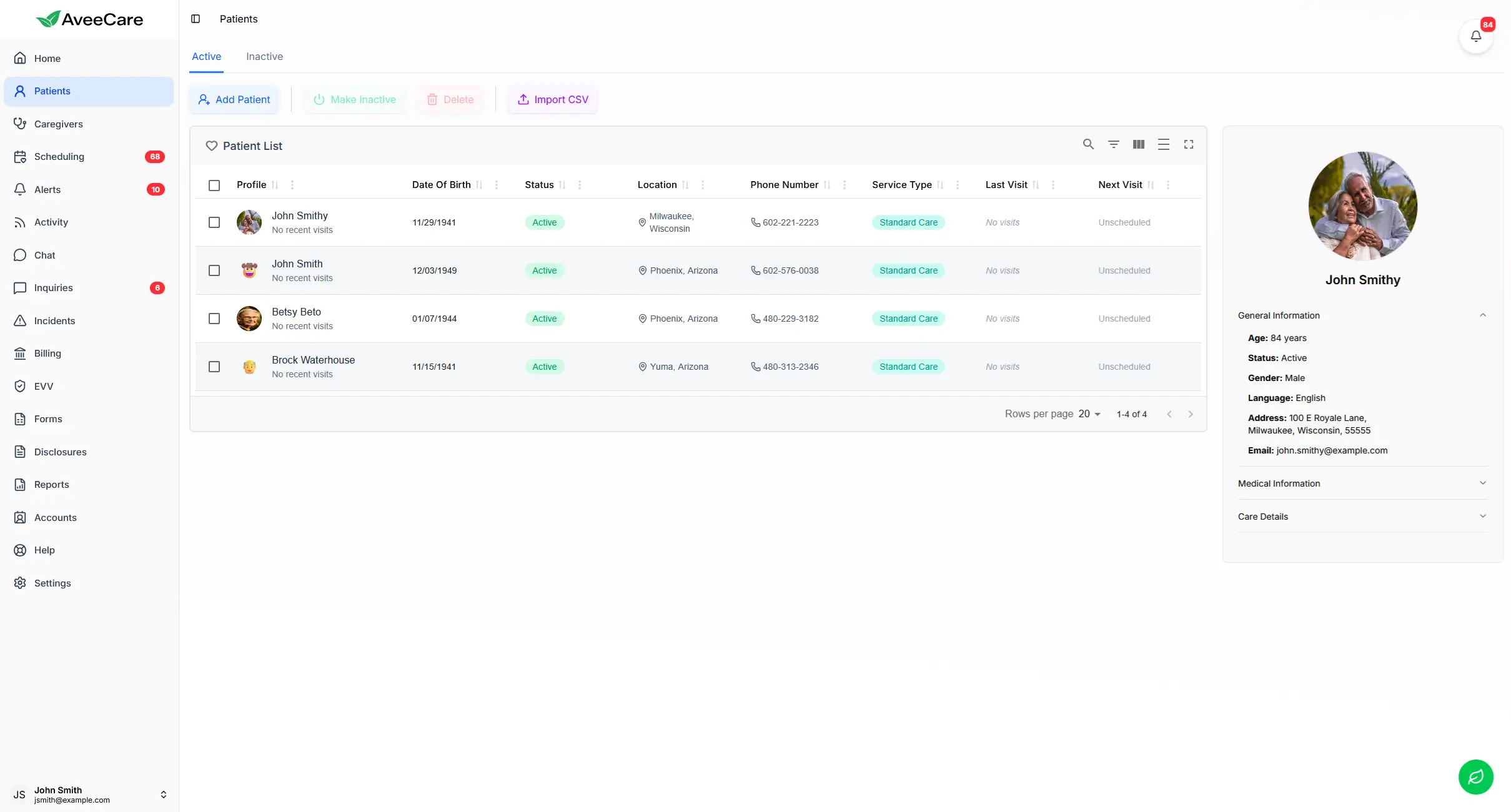
Efficient patient management is essential for growing your Arkansas home care agency
Differentiation tip: In Arkansas, reliability and community relationships are your biggest differentiators. Rural communities value agencies that are locally owned, responsive, and willing to serve areas that larger agencies overlook. Technology-driven scheduling, real-time visit tracking, and efficient client management can help your Arkansas home care agency stand out while keeping overhead low.
13Frequently Asked Questions
Common questions about starting a home care agency in Arkansas
It depends on the services you provide. If you plan to offer skilled home health services (nursing, therapy), you must obtain a Home Health Agency license from the Arkansas Department of Health (ADH). For non-medical personal care services, you need to be licensed as a Personal Care provider through the Arkansas Department of Human Services (DHS), Division of Provider Services and Quality Assurance. You also need to register your business with the Arkansas Secretary of State and obtain an EIN from the IRS.
Starting a non-medical home care agency in Arkansas typically costs between $25,000 and $55,000, which is below the national average thanks to the state's low cost of living (89.6 index). This covers business formation, licensing, insurance, marketing, office setup, and 3 to 6 months of working capital. A licensed home health agency with skilled nursing services costs $80,000 to $200,000 or more, depending on your service area and the scope of your Medicare certification preparation.
Home care (non-medical personal care) includes companion care, assistance with activities of daily living (ADLs), meal preparation, light housekeeping, and transportation. Providers must be licensed through DHS. Home health involves skilled medical services such as nursing, physical therapy, and occupational therapy, and requires a Home Health Agency license from the Arkansas Department of Health (ADH). Medicare certification is needed to bill Medicare for skilled services.
Yes. Arkansas requires background checks for caregivers working in licensed home care and home health agencies. Background checks are conducted through the Arkansas State Police, which includes fingerprint-based criminal history checks through state and federal (FBI) databases. Providers must also check the OIG exclusion list and the Arkansas Adult and Long-Term Care Facility Abuse Registry before hiring caregivers.
Arkansas uses AuthentiCare by Fiserv as its state-selected Electronic Visit Verification (EVV) vendor, which is provided free of charge to Medicaid providers. Under the 21st Century Cures Act, EVV is required for all Medicaid-funded personal care and home health services. Arkansas operates an open/hybrid model, meaning providers may use alternative EVV systems as long as they meet state integration requirements and data exchange standards.
Arkansas offers several HCBS Medicaid waivers covering home care services. The primary ones are ARChoices (for elderly and physically disabled adults, the largest waiver), ElderChoices (community-based services for seniors), and the Developmental Disabilities Services (DDS) waiver. Arkansas is a Medicaid expansion state under Arkansas Works, which broadened eligibility. The Division of Aging, Adult, and Behavioral Health Services (DAABHS) under DHS oversees many of these programs.
A non-medical personal care agency in Arkansas typically takes 2 to 4 months to become operational, including the DHS provider licensing process, business formation, and background check processing. A licensed home health agency through ADH takes 4 to 8 months or longer due to the application review, on-site survey, and potential Medicare certification timeline. Having all documentation prepared in advance can help expedite the process.
14Sources and Resources
Official Arkansas state agency links and resources
Ready to manage your Arkansas home care agency?
You do not need software on day one. But when you are ready, AveeCare starts at $6/client/month with no contracts, no mandatory demos, and a free trial. Scheduling, care plans, billing, caregiver management, real-time tracking, and alerts in one platform built for simplicity, even across Arkansas's rural communities.
Disclaimer
This guide is for informational purposes only and does not constitute legal, financial, or professional advice. While we strive to keep this information accurate and up to date, Arkansas laws, regulations, fees, and requirements may change. Always verify current requirements directly with the relevant Arkansas state agencies before making business decisions. Consult with a qualified attorney and accountant in Arkansas before starting your home care business. AveeCare is not affiliated with the Arkansas Department of Health, the Arkansas Department of Human Services, or any Arkansas state agency. Published April 3, 2026.