How to Start a Home Care Agency in Alabama
Your complete 2026 guide to launching a home care business in Alabama, from business formation and licensing to staffing and your first clients.
Published April 3, 2026 · 25 min read
TLDR — Alabama at a Glance
No for non-medical personal care. Yes for home health (skilled nursing/therapy).
Alabama Department of Public Health (ADPH)
$30,000 – $65,000 (non-medical)
$100,000 – $250,000+ (home health)
4 – 8 weeks (non-medical) | 3 – 6 months (home health)
1Alabama Market Overview
Understanding the opportunity for home care agencies in Alabama
Alabama has a population of approximately 5.1 million people, and the state is experiencing the same demographic shift seen nationwide: the population is aging rapidly. Nearly 18% of Alabama residents are 65 or older, slightly above the national average, which creates a growing demand for home care services across the state. Starting a home care agency in Alabama positions you to serve this expanding market.
Alabama's home care market is growing steadily, driven by seniors who prefer to age in place rather than move to assisted living facilities. The state's relatively lower cost of living compared to national averages means startup costs for a home care business in Alabama can be more manageable. Rural communities in particular are underserved, with many areas lacking adequate access to home care services. Major metro areas such as Birmingham, Huntsville, Mobile, and Montgomery also present strong opportunities for new agencies entering the Alabama home care market. For a national overview of the startup process, see our complete guide to starting a home care agency and our state-by-state licensing requirements.
Alabama is one of the few states that does not require a state license for non-medical personal care agencies, making it one of the more accessible states for entrepreneurs looking to start a home care business. This lower regulatory barrier allows you to launch faster and focus on building your client base and delivering quality care.
2Home Care vs. Home Health in Alabama
A critical distinction that determines your licensing path
This is the most important decision you will make. Understanding the difference between home care (non-medical) and home health (skilled medical) in Alabama determines your licensing requirements, startup costs, and the services you can legally provide.
Non-Medical Home Care
- Personal care (bathing, dressing, grooming)
- Companion care and socialization
- Meal preparation and light housekeeping
- Medication reminders (not administration)
- Transportation and errands
- Respite care for family members
No Alabama state license required
General business license only. Faster to launch.
Home Health (Skilled)
- Skilled nursing care
- Physical, occupational, and speech therapy
- Wound care and injections
- Medical social services
- Home health aide services
- Medication administration
ADPH license required
Plus Medicare certification for Medicare billing.
3Business Formation in Alabama
Register your home care business with the state

Choose Your Business Structure
Most home care agencies in Alabama register as an LLC (Limited Liability Company) for liability protection and tax flexibility. You can also form a corporation or sole proprietorship. An LLC costs approximately $200 to file in Alabama.
Register with the Secretary of State
File your formation documents with the Alabama Secretary of State online or by mail. Visit sos.alabama.gov to file. Processing typically takes 5 to 10 business days.
Alabama SOSObtain Your EIN
Apply for a free Employer Identification Number (EIN) from the IRS at irs.gov. You need this for bank accounts, payroll, and tax filings. It takes minutes to obtain online.
Register for Alabama State Taxes
Register with the Alabama Department of Revenue through My Alabama Taxes (myalabamataxes.alabama.gov). You will need to register for business privilege tax and withholding tax if you have employees.
Get Local Business Licenses
Contact your city and county government offices for local business license requirements. Fees vary by municipality but typically range from $50 to $300 annually. Birmingham, Montgomery, Huntsville, and Mobile each have their own requirements.
Open a Business Bank Account
Open a dedicated business checking account to keep personal and business finances separate. Alabama-based banks and credit unions can help. You will need your EIN and formation documents.
4Licensing Requirements
What you need depends on the type of services you provide
Non-Medical Personal Care Agencies
Alabama is one of the few states that does not require a state-level license to operate a non-medical personal care or companion care agency. This makes Alabama one of the most accessible states for starting a home care business. You only need:
- Business registration with the Alabama Secretary of State
- Local city/county business license
- EIN from the IRS
- General liability and professional liability insurance (recommended)
Voluntary accreditation: While not required, pursuing accreditation through organizations like the Joint Commission or ACHC can boost your credibility and make it easier to secure contracts with referral partners.
Home Health Agencies (Skilled Services)
If you plan to provide skilled nursing, physical therapy, or other medical services, you must obtain a Home Health Agency license from the Alabama Department of Public Health (ADPH), specifically through the Bureau of Health Provider Standards.
- Submit application to ADPH Bureau of Health Provider Standards
- Pass an on-site survey/inspection
- Designate a qualified administrator (1+ year healthcare supervisory experience)
- Employ or contract with an RN for clinical supervision
- Maintain all required policies, procedures, and documentation
Medicare Certification
Medicare certification is a separate process from ADPH licensure. To bill Medicare, you must apply through the Centers for Medicare & Medicaid Services (CMS), pass a federal survey, and meet all Medicare Conditions of Participation. This process typically adds 3 to 6 months beyond your state license and requires significant preparation, including detailed policies, quality assurance programs, and an initial patient load. Many home health agencies in Alabama pursue Medicare certification because it opens access to a large payer source for skilled services.
5Insurance Requirements
Protect your Alabama home care business
General Liability
$2,000 - $5,000/yrCovers bodily injury and property damage claims. Recommended minimum: $1M per occurrence / $2M aggregate. Required by most referral partners and contracts.
Professional Liability (E&O)
$1,500 - $4,000/yrCovers errors, omissions, and negligence claims related to the care services your agency provides. Essential protection for any home care business in Alabama.
Workers' Compensation
$2,000 - $6,000/yrRequired by Alabama law for businesses with 5 or more employees. Covers medical expenses and lost wages for on-the-job injuries. Administered by the Alabama Department of Labor.
Surety / Fidelity Bond
$300 - $1,000/yrProtects clients against employee theft or dishonesty. Not required by Alabama law, but strongly recommended. Many clients and referral partners expect it.
Alabama workers' comp note: Alabama law requires workers' compensation insurance for employers with 5 or more employees (Code of Alabama, Section 25-5-1 et seq.). Even if you start with fewer than 5, consider purchasing it early for protection and to streamline growth.
6Staffing and Hiring in Alabama
Finding and qualifying caregivers for your agency
Building a reliable team of caregivers is one of the most important aspects of starting a home care agency in Alabama. The state's home care workforce faces the same shortage challenges seen nationwide, so having strong recruitment and retention strategies is essential.
Training Requirements
Alabama does not have state-mandated training hour requirements for non-medical personal care aides. However, best practices include providing at least 40 hours of initial training covering personal care techniques, safety protocols, infection control, emergency procedures, and client communication. For home health aides working under an ADPH-licensed agency, federal requirements mandate 75 hours of training including 16 hours of supervised clinical practice.
Background Checks
While Alabama does not require background checks for non-medical caregivers at the state level, they are strongly recommended and considered an industry standard. Background checks can be obtained through the Alabama Law Enforcement Agency (ALEA). Criminal history checks, sex offender registry checks, and OIG exclusion list verification should be conducted for every caregiver before hire.
Alabama Law Enforcement AgencyWhere to Find Caregivers in Alabama
Community colleges across all 67 counties
Indeed, ZipRecruiter, local Facebook groups
Employee referral bonuses are highly effective
Wages in Alabama
Alabama does not have a state minimum wage law, so the federal minimum wage of $7.25/hour applies. However, to attract and retain quality caregivers in the competitive Alabama home care market, most agencies pay between $10 and $15 per hour for personal care aides and $15 to $22 per hour for home health aides and CNAs. Pay rates are typically higher in metro areas like Birmingham and Huntsville.
7Medicaid and Medicare in Alabama
Government payer programs and EVV compliance
Alabama Medicaid Agency
The Alabama Medicaid Agency administers the state's Medicaid program, which serves over 1 million Alabamians. To bill Medicaid for home care services, you must enroll as a Medicaid provider. Alabama offers several Home and Community-Based Services (HCBS) waivers that cover personal care, homemaker services, and skilled home health for eligible recipients.
Alabama Medicaid AgencyElectronic Visit Verification (EVV)
Under the 21st Century Cures Act, all states must implement EVV for Medicaid-funded personal care and home health services. Alabama uses HHAeXchange as its statewide EVV aggregator. Alabama has transitioned from a closed EVV model to an open model, which means providers can choose a third-party EVV vendor of their choice as long as it integrates with HHAeXchange.
HCBS Waivers in Alabama
- Elderly & Disabled Waiver
- Alabama Community Transition (ACT) Waiver
- Intellectual Disabilities Waiver
- Technology Assisted (TA) Waiver
Medicare Certification
To bill Medicare, your home health agency must be certified by CMS. The process involves applying through CMS, passing a federal survey, demonstrating compliance with Medicare Conditions of Participation, and accepting Medicare reimbursement rates. Expect 3 to 6 months for the full certification process after obtaining your ADPH license.
8Startup Cost Estimator
Alabama-specific startup cost breakdown
Business Formation
$750 – $2,686Filing with Secretary of State
IRS EIN is free; registered agent optional
Varies by city and county
Attorney review, CPA setup
Insurance (Annual)
$5,800 – $16,000$1M per occurrence / $2M aggregate
Errors and omissions coverage
Required for 5+ employees in Alabama
Recommended for client trust
Office & Equipment
$2,600 – $8,000Small office or co-working space
Laptops, smartphones for staff
Desk, chairs, printer, supplies
Marketing & Initial Growth
$2,700 – $8,500Professional site with local SEO
Google Ads, Facebook, local outreach
Brochures, flyers, cards
Working Capital (3-6 Months)
$11,000 – $33,000Cover payroll before revenue stabilizes
Rent, utilities, software, misc.
Estimated Total Startup Cost (Non-Medical)
$22,850 – $68,186
Costs are estimates based on typical Alabama home care agency startups and may vary by location, scope of services, and individual circumstances.
9Compliance Checklist
Track your progress across all Alabama requirements
Business Formation
0/6Licensing
0/4Insurance
0/4Staffing
0/5Medicaid & Medicare
0/2Operations
0/3Marketing
0/410Building Your Referral Network
Key referral sources in Alabama for your home care agency
In Alabama, most home care clients come through referrals rather than direct advertising. Building strong relationships with hospitals, physicians, and community organizations is critical for a successful home care business in Alabama.
Hospitals & Health Systems
Connect with discharge planners at major Alabama hospitals including UAB Hospital (Birmingham), Huntsville Hospital, USA Health (Mobile), Baptist Health (Montgomery), and regional medical centers. Discharge planners are your most valuable referral source.
Physician Practices
Build relationships with primary care physicians, geriatricians, and specialists who treat elderly patients across Alabama. Office visits and leave-behind materials are effective outreach methods.
Area Agencies on Aging
Alabama has 13 Area Agencies on Aging that serve as key referral hubs for senior services. The Alabama Aging Network (AlabamaAgeLine) connects seniors with community resources.
AlabamaAgeLineSenior Centers & Faith Communities
Partner with local senior centers, churches, and community organizations throughout Alabama. These community touchpoints reach families who may need home care services but are not yet connected to formal healthcare channels.
Skilled Nursing & Rehab Facilities
Patients discharged from skilled nursing facilities and rehab centers in Alabama often need ongoing home care. Build relationships with facility social workers and case managers.
Elder Law Attorneys & Financial Planners
Attorneys specializing in elder law, estate planning, and Medicaid planning in Alabama often advise families on home care options. These professionals can be consistent referral sources.
11Marketing & Client Acquisition
How to advertise your home care business and attract clients in Alabama
Marketing a home care agency in Alabama requires a blend of digital strategies and grassroots community outreach. Alabama's strong word-of-mouth culture means personal relationships and reputation carry enormous weight, but a solid online presence is increasingly essential as families research care options on their phones and computers. Whether you are pursuing non-medical personal care clients or skilled home health patients, a multi-channel approach will help you build a steady pipeline of referrals.
Digital Marketing Strategies
Google Business Profile
Claim and optimize your Google Business Profile for every service area in Alabama. Add photos, respond to reviews promptly, and post regular updates. This is the single most important free marketing tool for local home care visibility in Birmingham, Huntsville, Mobile, and Montgomery.
Google Ads (Pay-Per-Click)
Run targeted Google Ads campaigns for keywords like "home care agency Birmingham AL" or "in-home caregiver Huntsville." Geo-target specific Alabama cities and counties. Start with a modest budget of $500-1,500/month and track cost-per-lead carefully.
Search Engine Optimization (SEO)
Build a website with city-specific landing pages for each Alabama market you serve. Optimize for local search terms like "home care services Mobile Alabama" and "senior care Montgomery AL." Publish helpful blog content about aging-in-place topics relevant to Alabama families.
Social Media Marketing
Facebook is the dominant social platform in Alabama, especially among adult children making care decisions for aging parents. Post caregiver spotlights, client testimonials (with permission), and educational content. Join local community Facebook groups in your service areas.
Community Outreach & Grassroots Marketing
Faith-Based Community Partnerships
Alabama has a deeply rooted faith-based culture. Partner with churches, synagogues, and other congregations to offer free caregiver education seminars, health screenings, or senior wellness workshops. Many Alabama families turn to their pastor or church community first when seeking care recommendations.
Senior Centers & Community Events
Attend and sponsor events at senior centers throughout Alabama. The Alabama Department of Senior Services oversees a network of senior centers statewide. Host informational sessions, health fairs, or caregiver appreciation events to build brand awareness.
Alabama Home Care Association
Join the Alabama Home Care Association for networking, advocacy, and industry connections. Membership gives you access to conferences, legislative updates, and a built-in network of professionals who can refer clients and share best practices.
Alabama Hospital Association
Build relationships through the Alabama Hospital Association network. Attend industry events and connect with discharge planners and case managers at hospitals across the state to establish your agency as a trusted post-discharge care partner.
Healthcare Referral Relationships
For both non-medical personal care and skilled home health services, building relationships with healthcare providers across Alabama is critical for sustainable client acquisition.
Hospital Discharge Planners
Visit discharge planning departments at UAB Hospital, Huntsville Hospital, USA Health in Mobile, and Baptist Health in Montgomery regularly. Provide brochures, business cards, and quick-reference sheets about your services.
Primary Care Physicians
Schedule brief introductory meetings with geriatricians and family medicine physicians in your service area. Physicians who treat elderly patients frequently recommend home care services to their patients and families.
Skilled Nursing & Rehab Facilities
Patients discharged from SNFs and rehab centers often need ongoing home care. Build relationships with social workers and case managers at these facilities across Alabama.
Home Health & Hospice Agencies
Non-medical home care agencies can partner with home health and hospice agencies for mutual referrals. Home health agencies may refer patients who need personal care but not skilled services, and vice versa.
Online Reputation Management
In Alabama's tight-knit communities, your online reputation is an extension of your word-of-mouth presence. Actively manage your reviews on these platforms:
Google Reviews
Ask satisfied families to leave a review. Respond professionally to every review, positive or negative.
Caring.com
Create a detailed agency profile. Caring.com is a top directory families use when researching home care options.
Yelp & BBB
Claim your Yelp listing and maintain your Better Business Bureau profile. Alabama families value BBB accreditation.
Marketing Channel Comparison
| Channel | Cost | Time to Results | Best For |
|---|---|---|---|
| Google Ads | $$ | Immediate | Quick lead generation |
| SEO / Website | $ | 3-6 months | Long-term organic leads |
| Facebook Ads | $-$$ | 1-2 weeks | Brand awareness & caregiver recruiting |
| Church Partnerships | Free | 1-3 months | Community trust & word-of-mouth |
| Hospital Referrals | Free | 1-3 months | High-intent medical referrals |
| Caring.com Listing | $-$$ | 1-2 months | Families actively searching for care |
Alabama marketing tip: Word of mouth is king in Alabama. Every satisfied client family, every positive interaction with a discharge planner, and every church presentation builds your reputation. Invest in Google Business Profile and reviews first, then layer on paid advertising as your budget grows.
12Competition and Market Analysis
How to research the Alabama home care market
Before launching your home care agency in Alabama, conduct thorough market research to understand the competitive landscape in your target service area. Here are practical ways to research the Alabama home care market:
ADPH Provider Directories
The Alabama Department of Public Health maintains directories of licensed home health agencies. Review these to understand how many agencies operate in your target area.
Medicare Home Health Compare
CMS publishes quality ratings and service data for all Medicare-certified home health agencies. Use this to identify gaps in service quality in your area.
County Demographics
Study the age demographics, income levels, and population density of your target counties using U.S. Census data. Alabama's 67 counties vary significantly in need and competition.
Service Area Mapping
Identify underserved areas, particularly rural communities in Alabama where home care access is limited. Rural areas often have less competition and strong demand for home care services.
Differentiation tip: Focus on what makes your home care agency unique. In Alabama, many clients choose agencies based on reliability, caregiver quality, and responsiveness rather than just price. Offering technology-driven scheduling, real-time visit tracking, and transparent communication can set your Alabama home care business apart from established providers.
13Frequently Asked Questions
Common questions about starting a home care agency in Alabama
Alabama does not require a state license for non-medical personal care agencies. You will need a general business license from your city or county, an EIN from the IRS, and registration with the Alabama Secretary of State. However, if you plan to provide skilled nursing, therapy, or other medical services, you must obtain a Home Health Agency license from the Alabama Department of Public Health (ADPH).
Starting a non-medical home care agency in Alabama typically costs between $30,000 and $65,000, covering business formation, insurance, initial marketing, office setup, and 3 to 6 months of working capital. A licensed home health agency with skilled nursing services will cost significantly more due to the ADPH licensing process and Medicare certification requirements, typically $100,000 to $250,000 or higher.
Home care (non-medical personal care) includes companion care, assistance with activities of daily living (ADLs), meal preparation, light housekeeping, and transportation. No state license is required. Home health involves skilled medical services such as nursing, physical therapy, and occupational therapy, and requires a Home Health Agency license from the Alabama Department of Public Health. Medicare certification is also needed to bill Medicare.
Alabama does not mandate caregiver background checks at the state level for non-medical personal care agencies. However, it is strongly recommended and considered an industry best practice. Background checks are available through the Alabama Law Enforcement Agency (ALEA). Agencies providing Medicaid-funded services or seeking Medicare certification must conduct background checks as a federal requirement.
Alabama uses HHAeXchange as its statewide Electronic Visit Verification (EVV) aggregator. Alabama now operates under an open EVV model, meaning providers can choose a third-party EVV vendor as long as it integrates with HHAeXchange. EVV is required for all Medicaid-funded personal care and home health services under the 21st Century Cures Act.
A non-medical personal care agency in Alabama can be operational in 4 to 8 weeks since no state health license is required. A licensed home health agency takes 3 to 6 months or longer due to the ADPH application review, on-site survey, and potential Medicare certification timeline. Building a client base and referral network typically takes an additional 3 to 6 months.
Yes, but you must first enroll as a Medicaid provider with the Alabama Medicaid Agency. You will also need to register with HHAeXchange for Electronic Visit Verification. Alabama offers several Home and Community-Based Services (HCBS) waivers that cover personal care and home health services for eligible recipients.
14Sources and Resources
Official Alabama state agency links and resources
Ready to manage your Alabama home care agency?
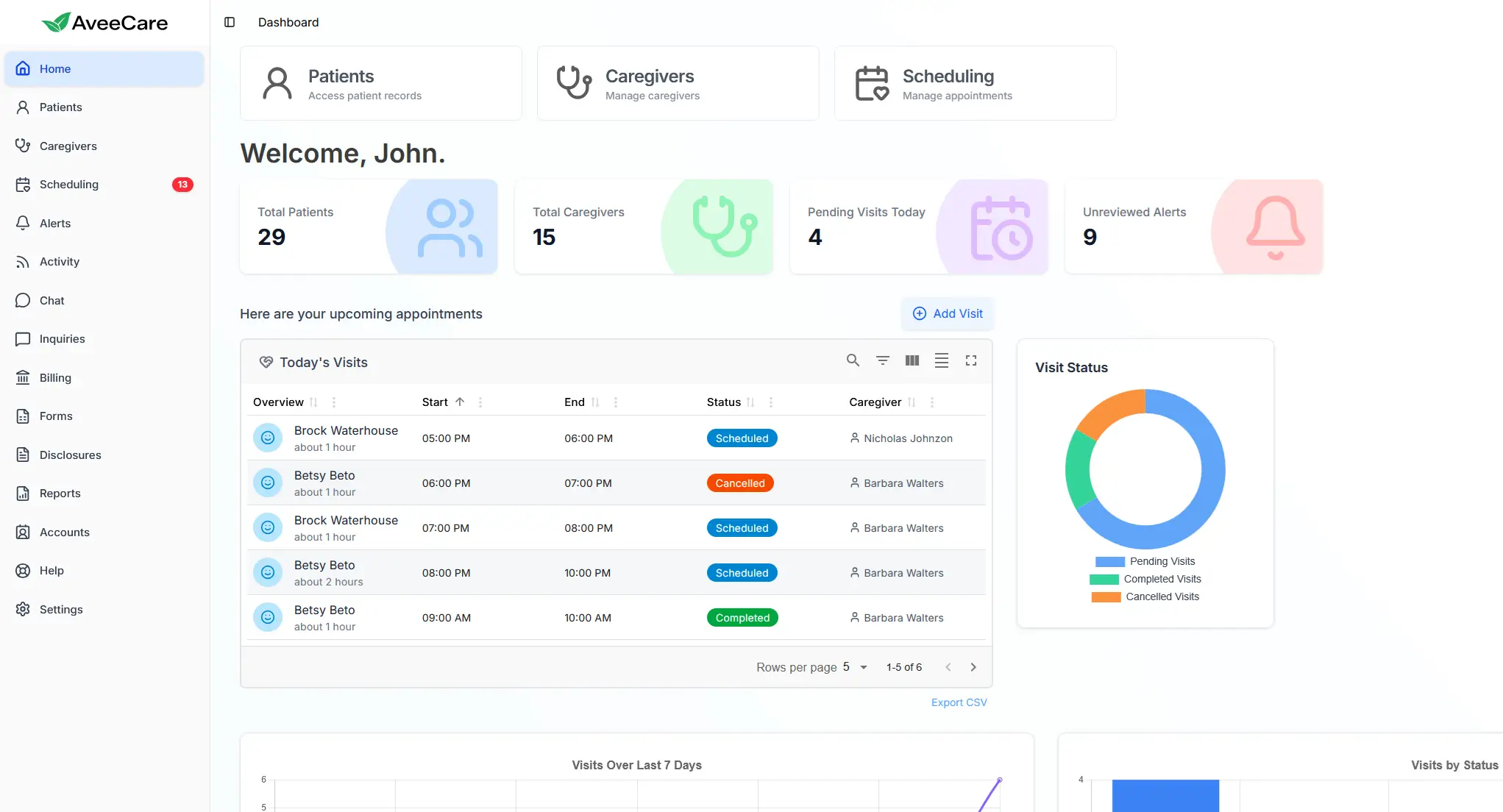
You do not need software on day one. But when you are ready, AveeCare starts at $6/client/month with no contracts, no mandatory demos, and a free trial. Scheduling, care plans, billing, caregiver management, and real-time alerts in one platform built for simplicity.
Disclaimer
This guide is for informational purposes only and does not constitute legal, financial, or professional advice. While we strive to keep this information accurate and up to date, Alabama laws, regulations, fees, and requirements may change. Always verify current requirements directly with the relevant Alabama state agencies before making business decisions. Consult with a qualified attorney and accountant in Alabama before starting your home care business. AveeCare is not affiliated with the Alabama Department of Public Health or any Alabama state agency. Published April 3, 2026.