Remote Patient Monitoring for Home Care: Technology, Implementation & ROI
Remote patient monitoring transforms home care by enabling continuous health tracking, early intervention, and reduced hospitalizations. This guide covers RPM devices, Medicare reimbursement, implementation strategies, and ROI projections for home care agencies. RPM pairs naturally with telehealth -- see our telehealth in home care guide for the virtual visit side.
Published April 3, 2026 · 18 min read
What is Remote Patient Monitoring?
Remote patient monitoring (RPM) uses connected medical devices to collect patient health data outside of traditional healthcare settings and transmit it electronically to providers for assessment. In home care, RPM enables continuous monitoring of chronic conditions between caregiver visits, catching health changes early before they become emergencies.
The RPM home care market has grown dramatically since CMS expanded Medicare reimbursement for remote monitoring services. According to the AMA, RPM adoption among physicians increased from 13% in 2018 to over 38% in 2025. For home health agencies specifically, RPM represents both a clinical improvement tool and a significant revenue opportunity, with Medicare reimbursing $120-$220 per patient per month for qualifying RPM services.
The evidence base for RPM is strong. A CMS Innovation Center study demonstrated 25-40% reductions in hospital readmissions for heart failure patients using home health remote monitoring, while a Veterans Health Administration study showed RPM reduced bed days of care by 25% and hospital admissions by 19%. For home care agencies, these outcomes translate to better patient satisfaction, stronger referral relationships, and lower costs across the care continuum.
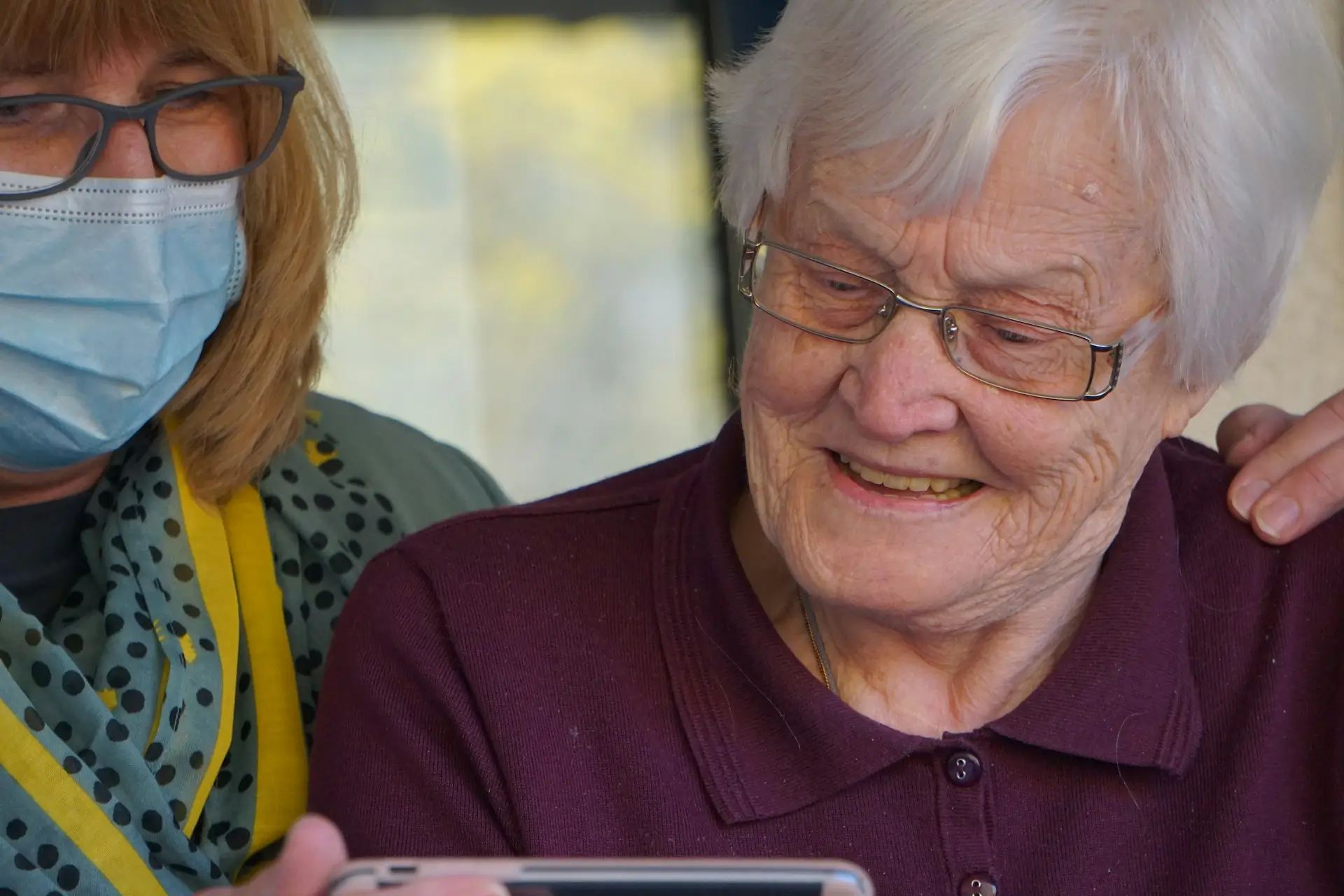
Remote patient monitoring devices are designed to be simple enough for elderly patients to use independently at home with minimal training.
RPM Device Comparison
Filter and compare remote patient monitoring devices by category and condition. Each device listing includes costs, connectivity options, data collected, and FDA clearance status. For a broader look at aging-in-place technology beyond RPM, check out our elderly care technology guide.
Blood Pressure Monitor
CardiovascularConditions
Connectivity
Bluetooth/Cellular
Data Collected
Systolic/diastolic BP, pulse rate
Pulse Oximeter
RespiratoryConditions
Connectivity
Bluetooth
Data Collected
SpO2, pulse rate
Blood Glucose Monitor
MetabolicConditions
Connectivity
Bluetooth/NFC
Data Collected
Blood glucose levels, trends
Digital Weight Scale
CardiovascularConditions
Connectivity
Bluetooth/Wi-Fi
Data Collected
Weight, BMI, trends
Continuous Glucose Monitor (CGM)
MetabolicConditions
Connectivity
Bluetooth/Cellular
Data Collected
Continuous glucose readings every 5 min
Digital Thermometer
GeneralConditions
Connectivity
Bluetooth
Data Collected
Body temperature
Wearable Activity Tracker
GeneralConditions
Connectivity
Bluetooth/Wi-Fi
Data Collected
Steps, activity, sleep, heart rate
ECG/EKG Monitor
CardiovascularConditions
Connectivity
Bluetooth/Cellular
Data Collected
Heart rhythm, rate, irregularities
Spirometer
RespiratoryConditions
Connectivity
Bluetooth
Data Collected
FEV1, FVC, peak flow
Medication Dispenser (Smart)
MedicationConditions
Connectivity
Cellular/Wi-Fi
Data Collected
Adherence tracking, missed doses
Medicare RPM Reimbursement Codes
Medicare reimburses for RPM services under several CPT codes. Understanding the requirements for each code is essential for proper RPM Medicare reimbursement and compliance.
CPT 99453
Remote patient monitoring initial setup and patient education
Once per patient
Requirements: Covers initial device setup, education on device use, and enrollment
CPT 99454
Remote patient monitoring device supply and daily data transmission
Per 30-day period
Requirements: Requires at least 16 days of data transmission in the 30-day period
CPT 99457
Remote physiologic monitoring treatment management, first 20 min
Per calendar month
Requirements: Clinical staff time reviewing data and managing treatment. Must include interactive communication with patient or caregiver
CPT 99458
Remote physiologic monitoring treatment management, each additional 20 min
Per calendar month
Requirements: Additional time beyond the first 20 minutes. Can be billed multiple times per month
CPT 99091
Collection and interpretation of patient physiologic data, 30+ min
Per 30-day period
Requirements: Physician/qualified healthcare professional interpretation. Cannot be billed same month as 99457
Key Medicare RPM Billing Requirements
- Devices must be FDA-cleared medical devices (consumer wearables like Fitbit do not qualify)
- Data must be digitally transmitted (patient self-reported data does not count)
- CPT 99454 requires at least 16 days of data in a 30-day period
- CPT 99457 requires interactive communication with the patient or caregiver (not just data review)
- Both new and established patients can receive RPM services
- RPM can be ordered by a physician, NP, PA, or clinical nurse specialist
- Patient consent must be documented before starting RPM services
RPM ROI Calculator
Model the financial return on your remote patient monitoring investment. Adjust patient volume, costs, and readmission rates to see projected revenue, savings, and break-even timeline.
Annual Medicare Revenue
Annual Total Cost (Year 1)
Avoided Readmissions/Year
First Year ROI
Net Annual Return
+$34,250
Readmission Savings
$45,000
Break-Even
9 months
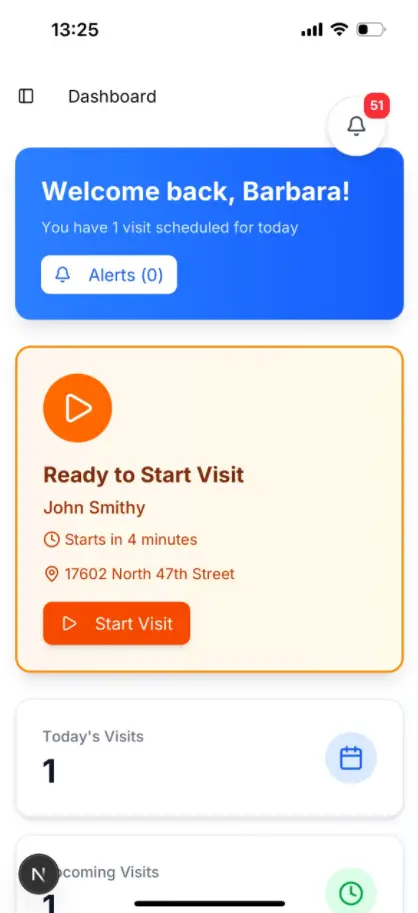
Mobile Monitoring Dashboard
View patient vitals and alerts from anywhere with mobile-first monitoring tools
RPM Implementation Roadmap
A phased approach to implementing remote patient monitoring in your home care agency. Most agencies can launch a pilot within 60-90 days and scale to full implementation within 6 months.
Assessment & Planning (Weeks 1-4)
- Assess patient population to identify RPM candidates (chronic conditions, high readmission risk)
- Evaluate RPM platforms and select vendor (integration, cost, support)
- Develop clinical protocols: alert thresholds, escalation procedures, documentation workflows
- Create financial model: projected costs, Medicare billing setup, ROI projections
- Designate RPM program coordinator and clinical lead
Pilot Program (Weeks 5-12)
- Train clinical staff on device setup, data interpretation, and patient education
- Enroll 10-20 pilot patients with informed consent
- Set up and distribute devices to pilot patients with in-home education
- Begin daily data monitoring and refine alert thresholds
- Submit initial Medicare RPM claims and validate billing processes
Scale & Optimize (Months 4-6)
- Evaluate pilot results: patient outcomes, staff workload, revenue, readmission impact
- Refine protocols based on pilot learnings
- Scale enrollment to target patient population
- Establish ongoing training program for new staff
- Develop reporting dashboards for clinical and financial metrics
RPM Implementation Readiness Assessment
Evaluate whether your home care agency is ready to launch a remote patient monitoring program. Answer 10 yes/no questions across key readiness dimensions.
Do you have at least 20 patients with chronic conditions suitable for RPM?
Patient PopulationDo you have clinical staff (RN or above) available to review daily RPM data?
StaffingDo most of your patients have reliable internet or cellular connectivity at home?
TechnologyDoes your current EHR/care management software support integration with RPM platforms?
TechnologyDo you have a billing infrastructure to submit Medicare RPM claims (CPT 99453-99458)?
BillingCan your agency invest $10,000-$50,000 in initial RPM setup costs?
FinancialDo you have protocols for responding to abnormal RPM readings within 4 hours?
ClinicalIs your leadership committed to a 6-month RPM implementation timeline?
LeadershipDo you have processes for patient consent and education on RPM devices?
ComplianceCan your staff train patients on device setup and troubleshooting?
TrainingFuture Trends: AI and Predictive Analytics in RPM
The next generation of remote monitoring for elderly and chronic disease patients is being shaped by artificial intelligence and predictive analytics.
AI-Powered Anomaly Detection
Machine learning algorithms that learn individual patient baselines and automatically flag readings that deviate from their personal norms, not just population averages. This reduces false alerts by 60-70%.
Predictive Deterioration Models
AI models that analyze trends across multiple vital signs to predict health deterioration 24-72 hours before it becomes clinically apparent, enabling proactive rather than reactive care.
Next-Gen Wearables
FDA-cleared smartwatches with clinical-grade sensors for continuous blood pressure, blood oxygen, temperature, and ECG monitoring. Single devices replacing multiple separate monitors.
Voice-Activated Monitoring
Smart speakers and voice assistants that conduct daily health check-ins, collect subjective symptom data, and remind patients to take readings. Reduces technology barriers for elderly patients.
Frequently Asked Questions
Remote patient monitoring (RPM) in home care uses connected medical devices to collect and transmit patient health data from their home to healthcare providers for review and action. Common RPM devices include blood pressure monitors, pulse oximeters, glucometers, weight scales, and wearable activity trackers. Data is transmitted via Bluetooth or cellular connection to a monitoring platform where clinicians review readings and intervene when values fall outside normal ranges.
Yes, Medicare reimburses for RPM under several CPT codes. CPT 99453 covers initial setup ($19-21). CPT 99454 covers device supply and daily transmission ($55-69 per 30 days, requiring 16+ days of data). CPT 99457 covers the first 20 minutes of clinical monitoring ($48-51/month). CPT 99458 covers each additional 20 minutes ($38-42). As of 2026, devices must be FDA-cleared and data must be digitally transmitted.
RPM is most effective for chronic conditions requiring regular vital sign monitoring: congestive heart failure (daily weight and BP), hypertension (regular BP tracking), diabetes (blood glucose monitoring), COPD and asthma (pulse oximetry), chronic kidney disease (weight and BP), and post-surgical recovery. Studies show RPM reduces hospital readmissions by 25-40% for heart failure patients.
Per-patient device costs range from $100-500 for basic kits to $500-2,000 for comprehensive kits with cellular hubs. Monthly platform fees run $30-100 per patient. Clinical monitoring staffing costs average $15-25 per patient per month. Initial setup including training typically runs $10,000-50,000 for a mid-size agency. Medicare reimbursement of $120-220 per patient per month can make RPM revenue-positive within 3-6 months.
RPM data is protected health information (PHI) under HIPAA. Key considerations include encrypting all data transmission, obtaining informed consent, establishing data retention policies, verifying vendor BAAs, implementing access controls, and having breach notification protocols. Patients must understand they can opt out at any time.
Start by assessing your patient population for chronic conditions suitable for monitoring. Select an RPM platform and devices that integrate with your software. Develop clinical protocols for alert thresholds and escalation. Train clinical staff on devices and data interpretation. Begin with a pilot of 10-20 patients, then scale. Establish Medicare billing processes. Most agencies can launch a pilot within 60-90 days.
Data Sources
Centers for Medicare & Medicaid Services
RPM billing guidelines (CPT 99453-99458), Medicare reimbursement rates, Innovation Center studies on remote monitoring outcomes.
American Medical Association
RPM implementation guide, Digital Medicine Alliance resources, physician adoption surveys, and CPT code development documentation.
CMS Innovation Center
Alternative payment model results, remote monitoring pilot studies, and value-based care transition data for home health agencies.
Food and Drug Administration
Medical device clearance database, digital health device guidance, and Software as a Medical Device (SaMD) regulations.
Technology-Forward Home Care with AveeCare
AveeCare's home care software provides the operational foundation for technology-forward agencies. Real-time alerts, mobile caregiver dashboards, and cloud-based patient management integrate seamlessly with your care delivery workflows.
- Real-time alerts and monitoring dashboards for proactive care management
- Mobile-first caregiver app with offline capability for field documentation
- Cloud-based patient records accessible securely from any device
- AI-powered scheduling and caregiver-client matching
- HIPAA-compliant platform built on AWS with enterprise-grade security
Sources & Disclaimer
Statistics, reimbursement rates, and clinical data in this guide are compiled from CMS, AMA, CMS Innovation Center, and FDA publications. Medicare reimbursement rates are approximate and may vary by geographic location and MAC jurisdiction. CPT codes and billing requirements are subject to annual updates by CMS.
The ROI calculator provides estimates for educational purposes and does not constitute financial advice. Actual results will vary based on patient population, payer mix, device selection, and operational efficiency. Consult qualified billing and compliance professionals when implementing RPM services.
Last updated: April 2026. AveeCare reviews and updates resource guides annually.