Long-Term Care Insurance Billing for Home Care: Complete Guide
Long-term care insurance billing is one of the most complex payer relationships for home care agencies to manage. This guide walks you through every step of the LTCI home care claims process with interactive tools, from policy verification to payment reconciliation.

Understanding Long-Term Care Insurance for Home Care
Long-term care insurance (LTCI) is a private insurance product that covers the costs of long-term care services, including home care, assisted living, and nursing home care. For home care agencies, LTCI billing represents a valuable revenue stream, but it requires understanding each carrier's unique requirements, claims processes, and documentation standards.
Approximately 7.5 million Americans hold active long-term care insurance policies. While new LTCI policy sales have declined since their peak in the early 2000s, the existing policyholder base is now aging into their care years, creating growing demand for home care services paid by LTC insurance. Agencies that master the long-term care insurance claims process can tap into this reliable payer source with solid margins. For a broader overview of billing across all payer types, our home care billing guide covers the fundamentals.
Key Industry Stat
The average LTCI policy pays a daily benefit of $150-$200 for home care, with benefit periods of 3-5 years. Total lifetime benefits can range from $150,000 to over $500,000 per policyholder, making LTCI clients some of the longest and most valuable relationships for home care agencies.
Benefit Triggers: When LTCI Starts Paying
Before a long-term care insurance policy pays any benefits, the policyholder must meet specific benefit triggers. Understanding these triggers is essential for LTCI home care billing because improperly documented triggers account for 12% of claim denials.
ADL-Based Trigger
Inability to perform 2 or more of the 6 Activities of Daily Living without substantial human assistance:
Cognitive Impairment Trigger
Severe cognitive impairment requiring substantial supervision to protect the person from threats to health and safety:
- Alzheimer's disease or other dementia
- Inability to make safe decisions
- Requires supervision for safety
- Certified by licensed healthcare professional
LTCI Claims Process: Step-by-Step
Click each step to see detailed actions and tips for the long-term care insurance claims process.
Policy Verification
1-3 business daysConfirm the LTCI policy is active, identify the carrier, and determine benefit details before accepting the client.
Key Actions:
- Call the carrier claims department
- Request a copy of the policy declarations page
- Confirm the policy has not lapsed
- Identify the plan administrator or care coordinator
Pro Tips
- Always verify directly with the carrier, not just the family
- Ask for the policy number, group number (if applicable), and claims mailing address
- Document the name of the representative you spoke with and the date
Common LTCI Denial Reasons & Fixes
Click any denial reason to see the recommended fix and prevention strategy for your LTC insurance billing.
LTCI Benefit Verification Checklist
Use this checklist before accepting any long-term care insurance client. Check off items as you complete them.
Policy Information
Benefit Details
Provider Requirements
Clinical Documentation
Claims Submission Setup
Top LTCI Carriers for Home Care Agencies
Genworth Financial
Market share: ~15%
Largest LTCI carrier by policies in force. Generally straightforward claims process. Accepts electronic submissions.
Mutual of Omaha
Market share: ~12%
Growing market share. Known for responsive claims department. Good online portal for providers.
Northwestern Mutual
Market share: ~10%
Higher benefit amounts on average. May require their own nurse assessment for benefit trigger verification.
New York Life
Market share: ~8%
Stopped selling new policies but has large existing book. Legacy policies may have different benefit structures.
Lincoln Financial
Market share: ~7%
Moderate claims volume. Requires detailed documentation. Paper-heavy process for some legacy policies.
Transamerica
Market share: ~6%
Acquired several smaller carriers. Policy terms can vary significantly depending on the original issuing company.
Coordinating LTCI with Other Payers
Many LTCI home care clients have multiple funding sources. Understanding how to coordinate long-term care insurance billing with Medicare, Medicaid, and private pay prevents billing conflicts and maximizes revenue. For agencies also billing commercial health insurance, our insurance billing guide details payer-specific requirements and claim submission workflows.
LTCI + Medicare
Medicare covers skilled home health services while LTCI covers personal care. These are typically non-overlapping:
- Bill Medicare for skilled nursing and therapy visits
- Bill LTCI for personal care and homemaker services
- Document service distinctions clearly in visit notes
- Never double-bill for the same service
LTCI + Medicaid
If a client has both Medicaid and LTCI, coordination rules vary by state and carrier:
- LTCI is typically primary payer for covered services
- Medicaid may cover services beyond LTCI benefit limits
- Some states require LTCI benefits to be applied first
- Check state-specific coordination rules before billing
Elimination Period Revenue Strategies
The elimination period is a critical phase for LTC insurance billing. During this 30-180 day window, the LTCI policy does not pay but care is being provided. Here are strategies to manage revenue during this period:
Bill as private pay during elimination
Clearly communicate to the client and family that they are responsible for payment until the elimination period is satisfied. Set up a payment plan if needed.
Track elimination days meticulously
Know whether the policy counts calendar days or service days. Create a tracking spreadsheet and set an alert for when benefits activate. Missing the activation date costs revenue.
Begin claims paperwork early
Submit your plan of care, provider credentials, and initial documentation during the elimination period so claims can be processed immediately once benefits start.
Coordinate with family on benefit activation
Keep the family informed about elimination period progress. Some families reduce services to save money during this period, which can delay calendar-day counting.
Consider bridge funding
If the client qualifies for VA Aid & Attendance or state-funded programs, these may help cover costs during the LTCI elimination period.
Documentation Best Practices for LTCI Claims
Proper documentation is the single most important factor in preventing long-term care insurance claims denials. Here are the essential documentation standards:
Detailed visit notes
Every visit must include date, start/end times, specific services rendered, ADLs assisted with, client condition observations, and caregiver signature. Generic entries like "provided personal care" are insufficient.
Caregiver credentials
Maintain current copies of caregiver certifications, training certificates, background checks, and any carrier-required credentials. Submit these with your initial claim package.
Plan of care updates
Document any changes in the client's condition or service needs. Submit updated plans of care to the carrier before changing services to avoid retroactive denials.
Physician orders
Keep physician orders and certifications current. Most carriers require recertification of benefit triggers every 6-12 months. Set calendar reminders to obtain these proactively.
Communication logs
Document all interactions with the carrier including dates, representative names, reference numbers, and outcomes. This creates an audit trail for dispute resolution.
Negotiating Rates with LTCI Carriers
Unlike Medicare and Medicaid, LTCI reimbursement rates are not set by the government. Agencies have the opportunity to negotiate rates with carriers. Keep these tips in mind:
- Know your costs: Calculate your fully loaded cost per hour before negotiating
- Research market rates: Understand what other agencies in your area charge LTCI carriers
- Leverage volume: If you have multiple LTCI clients with the same carrier, negotiate as a bulk provider
- Request annual rate reviews: Build rate escalation clauses into provider agreements
- Highlight your value: Low turnover, specialized training, and quality metrics strengthen your position
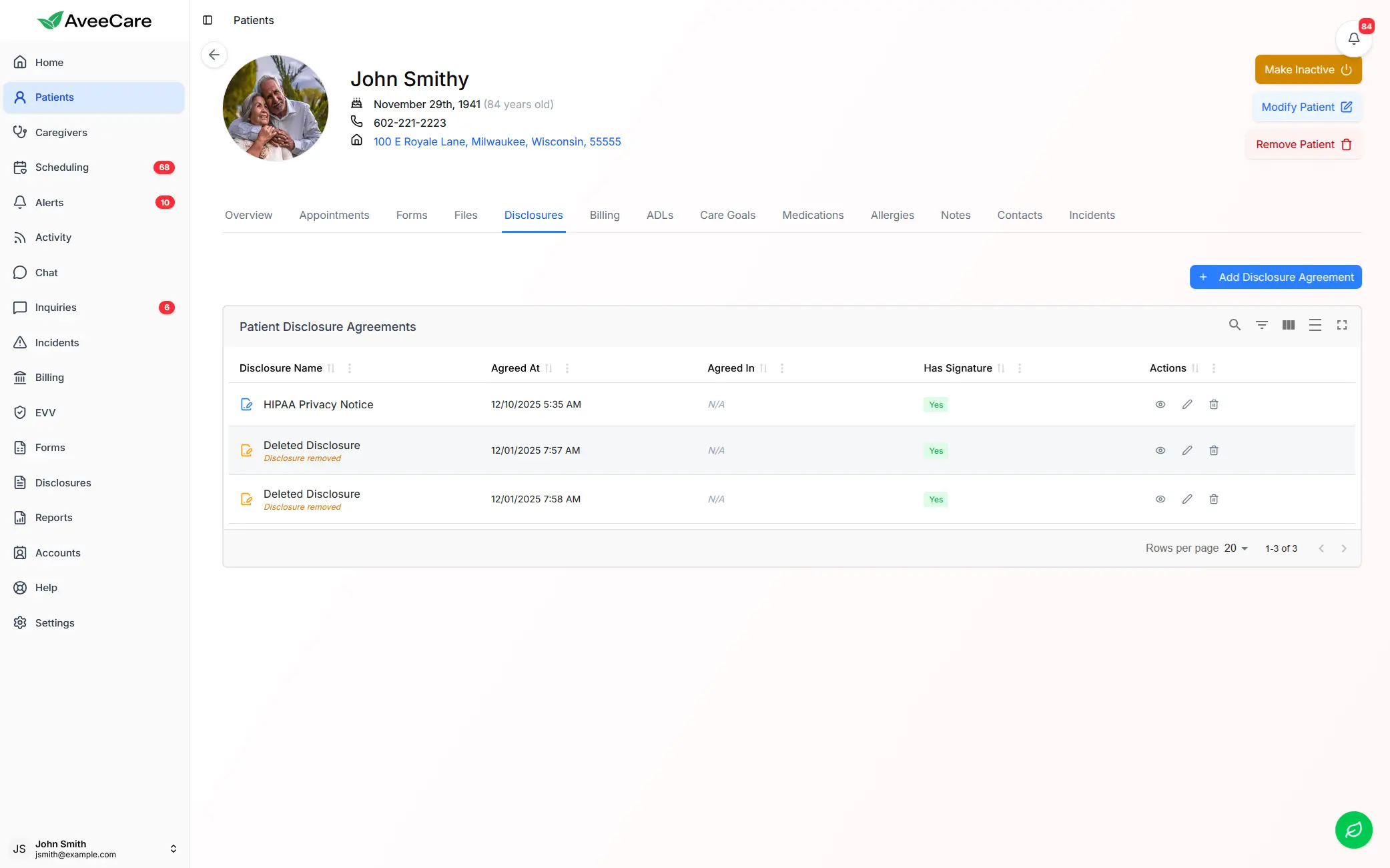
AveeCare's documentation management helps agencies maintain the detailed records required for LTCI billing.
Frequently Asked Questions
Benefit triggers are the conditions that must be met before a long-term care insurance policy begins paying benefits. The two most common triggers are: inability to perform at least 2 of 6 Activities of Daily Living (ADLs) -- bathing, dressing, toileting, transferring, continence, and eating -- without substantial assistance for at least 90 days, and severe cognitive impairment requiring substantial supervision. Most policies require a licensed healthcare professional to certify that the policyholder meets these triggers.
An elimination period is the waiting period between when a policyholder qualifies for benefits and when the insurance company starts paying. It works similarly to a deductible but is measured in days rather than dollars. Common elimination periods are 30, 60, 90, or 180 days. During this time, the policyholder must pay for care out of pocket. Some policies count only days when paid care is received, while others count calendar days from the date of benefit trigger qualification.
The LTCI claims process typically involves: verifying the policy is active and benefits have been triggered, obtaining a plan of care signed by the physician, confirming the agency meets the carrier provider requirements, submitting an initial claim with the plan of care, provider credentials, and proof of licensure, and submitting ongoing claims with detailed visit logs, caregiver credentials, and itemized invoices at the carrier required frequency (usually monthly). Most LTCI carriers accept claims via mail, fax, or online portals.
The most common LTCI claim denial reasons include: incomplete or missing documentation (35% of denials), services not matching the approved plan of care (20%), provider not meeting carrier requirements such as licensure or bonding (15%), benefit triggers not properly certified (12%), elimination period not yet satisfied (8%), policy lapsed due to non-payment of premiums (5%), and services exceeding the daily or monthly benefit maximum (5%). Many of these denials are preventable with proper verification before starting services.
Payment timelines for LTCI claims vary significantly by carrier. On average, initial claims take 30-60 days to process after all required documentation is submitted. Subsequent recurring claims typically process in 14-30 days. Some carriers offer electronic payment options that can reduce payment times by 5-10 days. Agencies should follow up on unpaid claims at 30 days and formally appeal at 45-60 days.
Sources & References
- NAIC — Long-Term Care Insurance Model Regulation
- American Association for Long-Term Care Insurance (AALTCI) — Industry Data
- CMS — Medicare and Long-Term Care
- National Association of Insurance Commissioners — Consumer Resources
- Administration for Community Living — Long-Term Care Planning
- U.S. Department of Health & Human Services — Long-Term Care Information
Important Disclaimer: Long-term care insurance policies, carrier requirements, and claims processes vary significantly. The information in this guide reflects general industry practices as of 2026 and may not apply to every carrier or policy. Always verify specific requirements directly with the LTCI carrier before submitting claims. This guide is for informational purposes only and does not constitute legal, financial, or insurance advice.
Simplify LTCI Billing with Integrated Documentation
AveeCare helps home care agencies manage documentation, track authorizations, and generate the detailed visit logs that LTCI carriers require for clean claim submissions.