Cultural Competency in Home Care: Training, Practices & Patient Outcomes
Culturally sensitive care improves patient outcomes, reduces health disparities, and strengthens caregiver-patient relationships. This guide provides interactive tools and evidence-based practices for building cultural competency in your home care agency.
Published April 3, 2026 · 17 min read
Why Cultural Competency Matters in Home Care
The United States is one of the most culturally diverse nations in the world, and that diversity is growing. According to the U.S. Census Bureau, over 40% of the population identifies as a racial or ethnic minority, and more than 67 million people speak a language other than English at home. For home care agencies, cultural competency is not optional; it is a clinical and business imperative.
Home care is uniquely personal. Caregivers enter patients' homes, prepare their food, assist with intimate personal care, and interact with their families. Cultural misunderstandings in this environment can erode trust, reduce adherence to care plans, and lead to poor outcomes. The CDC reports that racial and ethnic minorities experience higher rates of chronic disease, disability, and premature death, and that culturally incompetent care contributes to these disparities.
Research published in the Journal of General Internal Medicine demonstrates that culturally concordant care improves medication adherence by 30-40% and reduces hospital readmissions by up to 25%. For diverse patient care in home care settings, agencies that invest in cultural competency training see higher patient satisfaction scores, better health outcomes, and stronger caregiver retention among diverse staff. To structure cultural competency into your onboarding program, review our caregiver training requirements guide, and to measure how cultural alignment affects client experience, explore our patient satisfaction improvement resource.

Effective cross-cultural communication is the foundation of culturally competent home care delivery.
National CLAS Standards
The HHS Office of Minority Health developed 15 National Standards for Culturally and Linguistically Appropriate Services (CLAS). These standards provide a framework that every home care agency should adopt.
Principal Standard
- Provide effective, equitable, understandable, and respectful quality care and services responsive to diverse cultural health beliefs, preferred languages, health literacy, and communication needs
Governance, Leadership & Workforce
- Advance and sustain organizational governance and leadership that promotes CLAS
- Recruit, promote, and support a culturally and linguistically diverse workforce
- Educate and train governance, leadership, and workforce in CLAS policies
Communication & Language Assistance
- Offer language assistance at no cost, in a timely manner, during all hours of operation
- Inform individuals of the availability of language assistance in their preferred language
- Ensure the competence of individuals providing language assistance
- Provide easy-to-understand materials and signage in commonly encountered languages
Engagement, Continuous Improvement & Accountability
- Establish culturally and linguistically appropriate goals, policies, and management accountability
- Conduct organizational self-assessments of CLAS-related activities
- Collect and maintain accurate demographic data for service planning
- Conduct regular assessments of community health assets and needs
- Partner with the community to design and implement CLAS activities
- Create conflict and grievance resolution processes that are culturally appropriate
- Communicate the organization's progress in implementing CLAS to all stakeholders
Cultural Competency Self-Assessment
Rate your agency across 10 dimensions of cultural competency in home care. Receive a competency level rating and identify priority improvement areas for delivering culturally sensitive care.
Leadership Commitment
Does leadership prioritize cultural competency in the agency mission, budget, and strategic planning?
Workforce Diversity
Does your workforce reflect the cultural and linguistic diversity of the communities you serve?
Staff Training
Do all staff receive regular cultural competency training including implicit bias, CLAS standards, and cultural practices?
Language Access
Do you provide qualified interpreter services and translated materials for patients with limited English proficiency?
Culturally Adapted Care Plans
Do care plans document and accommodate cultural preferences for diet, prayer, family involvement, and communication?
Community Engagement
Do you actively engage with diverse community organizations, faith-based groups, and cultural associations?
Data Collection
Do you collect and analyze race, ethnicity, language, and cultural preference data for quality improvement?
Complaint Resolution
Do you have processes to identify and address cultural misunderstandings or discrimination complaints?
Dietary & Religious Accommodation
Can your caregivers accommodate dietary restrictions and religious practices during care delivery?
Outcome Measurement
Do you track patient satisfaction and health outcomes by demographic groups to identify disparities?
Cultural Considerations Quick Reference
Select a cultural group to view general considerations for dietary, spiritual, communication, family, and end-of-life preferences. Use these as starting points for cultural awareness in caregiving, not as rigid rules.
Select a cultural group to view general considerations. These are broad guidelines, not stereotypes. Always ask individual patients about their specific preferences.
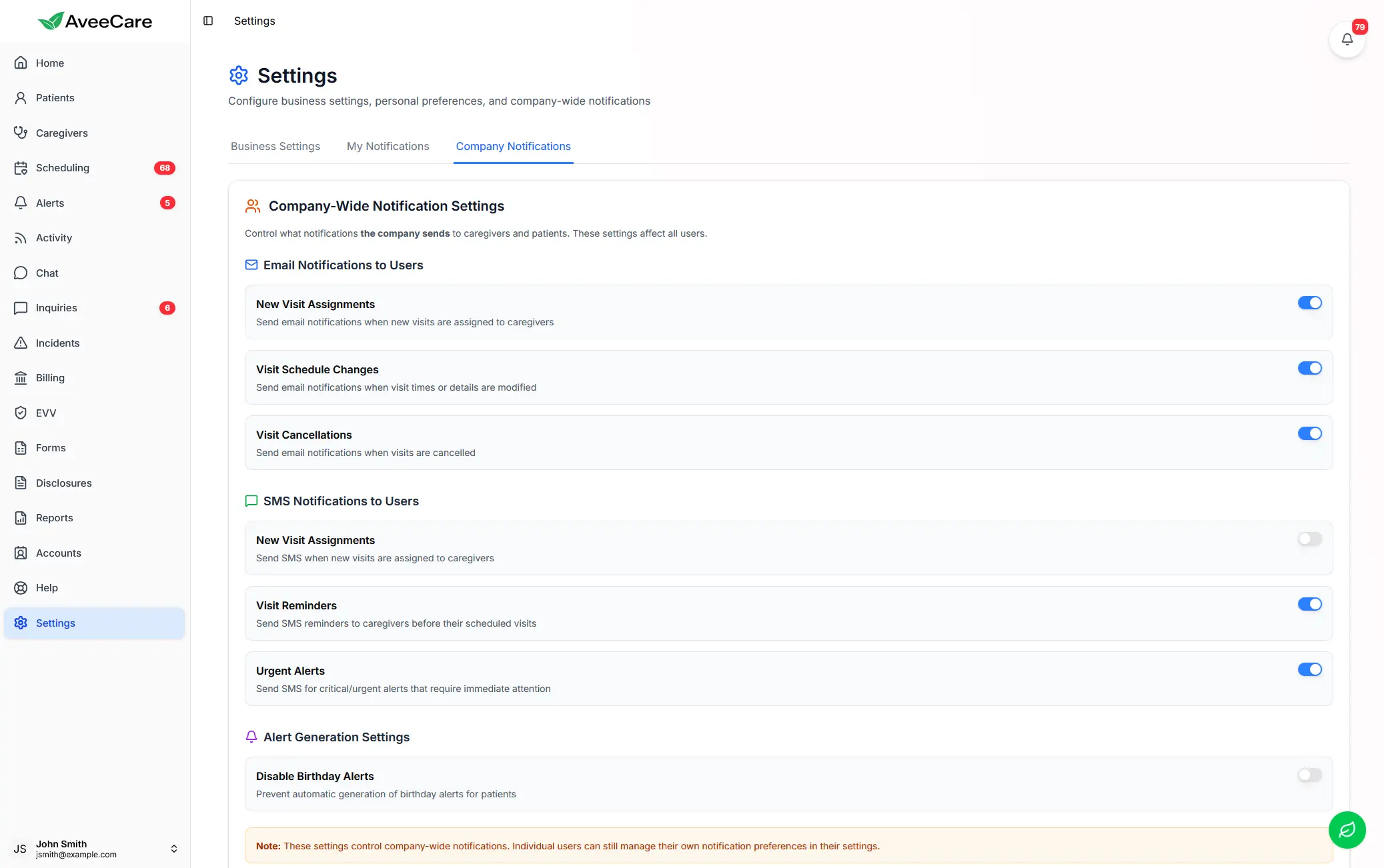
Customizable Settings for Diverse Patient Needs
Configure notifications, preferences, and care settings to accommodate cultural requirements
Language Access Compliance Checklist
Under Title VI of the Civil Rights Act, home care agencies receiving federal funds must provide meaningful language access. Check off each item your agency has implemented to assess your compliance.
Compliance Progress
0 of 12 items completed
Policy
Services
Documents
Training
Staffing
Compliance
Data
Quality
Cultural Competency Training Framework
A phased approach to building cultural awareness in caregiving across your agency. Each phase builds on the previous one.
Foundation (New Hire Orientation)
- Introduction to cultural humility and the difference between cultural awareness and competency
- Implicit bias recognition and strategies to mitigate bias in care delivery
- Overview of CLAS standards and why culturally sensitive care matters for patient outcomes
- Language access procedures: how to access interpreter services and translated materials
- Documenting cultural preferences in patient intake and care plans
Applied Skills (First 90 Days)
- Community-specific cultural practices relevant to your service area demographics
- Working effectively with medical interpreters (do's and don'ts)
- Dietary and religious accommodations in meal preparation and care routines
- Communication styles across cultures: direct vs. indirect, eye contact, personal space
- Scenario-based role-playing exercises with culturally diverse patient situations
Ongoing Education (Annual)
- Advanced topics: end-of-life cultural practices, health literacy, LGBTQ+ cultural considerations
- Case study reviews from actual patient situations (anonymized)
- Updated demographic data and emerging cultural populations in service area
- Review of patient satisfaction data by demographic group to identify disparities
- Guest speakers from community cultural organizations
Addressing Health Disparities Through Home Care
Home care agencies are uniquely positioned to reduce health disparities by delivering culturally competent, community-based care. Here is what the data shows about disparities and how culturally sensitive care helps.
Black Americans are 2.5x more likely to be uninsured than White Americans
Source: KFF Health Coverage Data
Of Hispanic adults report difficulty communicating with healthcare providers
Source: CDC National Health Interview Survey
Of Asian Americans report avoiding care due to language barriers
Source: National Academy of Medicine
Higher diabetes prevalence in Native American populations
Source: IHS Indian Health Disparities Report
Frequently Asked Questions
Cultural competency in home care is the ability of caregivers and agencies to effectively deliver services that meet the social, cultural, and linguistic needs of patients from diverse backgrounds. It involves understanding how cultural factors such as language, religion, dietary practices, family dynamics, health beliefs, and communication styles affect care preferences and outcomes. Culturally competent care goes beyond awareness to include adapting care plans and systematic practices.
The National Standards for Culturally and Linguistically Appropriate Services (CLAS) are 15 standards developed by the HHS Office of Minority Health. They provide a framework for healthcare organizations to deliver culturally and linguistically appropriate services. The Principal Standard calls for providing effective, equitable, understandable, and respectful quality care. The standards cover governance and leadership, communication and language assistance, and continuous improvement.
Yes, under Title VI of the Civil Rights Act of 1964, any organization receiving federal financial assistance (including Medicare and Medicaid payments) must provide meaningful access to services for individuals with limited English proficiency (LEP). This means home care agencies billing Medicare or Medicaid are legally required to offer language assistance at no cost to the patient.
Research shows culturally competent care improves patient outcomes in multiple ways: 30-40% improvement in medication adherence when care is delivered in the patient preferred language, 25% reduction in hospital readmissions for culturally matched care teams, higher patient satisfaction scores, and better chronic disease management. The CDC reports that addressing cultural barriers reduces health disparities.
Effective training should include initial orientation covering cultural awareness, implicit bias, and CLAS standards; ongoing education on specific cultural practices common in the service area; language access procedures; religious and dietary accommodation protocols; communication styles across cultures; end-of-life cultural practices; and documentation of cultural preferences. Agencies should provide at least 4-8 hours initially and 2-4 hours of annual continuing education.
Data Sources
Office of Minority Health, HHS
National CLAS Standards, Think Cultural Health resources, and health equity data for healthcare organizations.
Civil Rights Act of 1964
Federal language access requirements for organizations receiving federal financial assistance, including Medicare and Medicaid providers.
Centers for Disease Control and Prevention
Health equity and health disparities data, National Health Interview Survey, and cultural competency resources.
The Joint Commission
Cultural competency accreditation standards, patient communication requirements, and healthcare equity certification.
Support Diverse Patient Populations with AveeCare
AveeCare's home care software helps agencies deliver culturally competent care with customizable care plans, built-in communication tools, and flexible settings that adapt to diverse patient needs.
- Customizable care plans that document cultural preferences and dietary needs
- HIPAA-compliant messaging for communicating with multilingual families
- Flexible notification and scheduling settings to accommodate cultural practices
- Patient intake forms that capture language, cultural, and religious preferences
- Cloud-based access serving agencies across all 50 states
Sources & Disclaimer
Statistics and standards in this guide are compiled from publicly available data published by the HHS Office of Minority Health, CDC, U.S. Census Bureau, and the Joint Commission. Cultural considerations are general guidelines and should not be applied as stereotypes to individual patients.
This guide is for educational purposes and does not constitute legal or clinical advice. Always ask individual patients about their personal cultural, dietary, and spiritual preferences. Consult legal counsel for specific Title VI compliance requirements.
Last updated: April 2026. AveeCare reviews and updates resource guides annually.