OSHA Compliance for Home Care Agencies
OSHA home care compliance protects your caregivers and your agency. This guide covers every caregiver safety regulation your agency must follow, from Bloodborne Pathogens to workplace violence prevention, with interactive compliance checklists, hazard assessment tools, and training trackers. Understanding OSHA requirements for home health agencies is essential for legal compliance and employee safety.
Does OSHA Apply to Home Care?
Yes. The Occupational Safety and Health Act of 1970 applies to all employers with employees, and OSHA has explicitly confirmed that home care agencies fall under its jurisdiction. While OSHA cannot directly regulate a client's home (it is not the employer's premises), the agency as the employer is responsible for recognizing hazards, training employees to handle them, and providing necessary protective equipment. Home care workplace safety is ultimately the agency's legal obligation. OSHA compliance works hand-in-hand with your workers' compensation program and broader caregiver safety and risk management strategy.
Maximum OSHA penalty per serious violation (2026 adjusted)
Maximum penalty per willful or repeat violation
Home health worker injury rate vs. general private industry average (BLS)
The General Duty Clause
The General Duty Clause, Section 5(a)(1) of the OSH Act, requires that each employer “furnish to each of his employees employment and a place of employment which are free from recognized hazards that are causing or are likely to cause death or serious physical harm.” For home care, this is particularly important because many specific OSHA standards were written for fixed workplaces, not client homes. The General Duty Clause fills the gap by requiring agencies to address hazards even when no specific OSHA standard applies.
Key Point for Home Care
OSHA can cite home care agencies under the General Duty Clause for hazards such as workplace violence, unsafe patient handling practices, and environmental hazards in client homes—even though there is no specific OSHA standard for these hazards. The agency's defense is demonstrating that it identified the hazard, trained employees to recognize and avoid it, and provided the means to mitigate it.
Bloodborne Pathogens Standard
The Bloodborne Pathogens (BBP) standard is the most commonly cited OSHA regulation in home care. It applies to every employee who has reasonably anticipated occupational exposure to blood or other potentially infectious materials. For personal care aides who assist with bathing, toileting, or wound care, this is virtually every shift. Compliance with this caregiver safety regulation requires a written Exposure Control Plan, annual training, Hepatitis B vaccination, and proper PPE.
Written Exposure Control Plan
Must identify all job classifications with exposure risk, describe the methods the agency uses to comply (engineering controls, work practices, PPE), and be reviewed and updated annually.
Hepatitis B Vaccination
Must be offered free of charge to all employees with occupational exposure within 10 working days of assignment. Employees who decline must sign a declination form.
Universal Precautions
All blood and OPIM must be treated as if known to be infectious. Caregivers must use PPE whenever there is potential for exposure.
Annual Training
Training must occur at hire and at least annually. Must cover: BBP overview, Exposure Control Plan, recognition of exposure situations, PPE use, and post-exposure procedures.
Post-Exposure Follow-Up
After any exposure incident, the employer must provide a confidential medical evaluation and follow-up at no cost. Includes testing, prophylaxis, and counseling.
Hazard Communication Standard (HazCom/GHS)
Caregivers routinely use cleaning products, disinfectants, and personal care chemicals in client homes. The Hazard Communication Standard requires agencies to maintain an inventory of hazardous chemicals employees may encounter, keep Safety Data Sheets (SDS) accessible, and train workers on chemical hazards. In home care, this is complicated by the fact that caregivers may encounter unlabeled or unfamiliar products in client homes.
Best Practice for Home Care
Supply your caregivers with agency-provided cleaning products that have known SDS. This eliminates the risk of caregivers using unknown chemicals in client homes. Train caregivers to never use client-supplied cleaning products unless the SDS is available and the product is on the agency's approved list. This simple policy dramatically reduces HazCom compliance risk.
PPE Requirements for Home Care
Under OSHA requirements for home health, agencies must conduct a hazard assessment for each care scenario, select appropriate PPE, provide it at no cost to employees, and train workers on proper use, maintenance, and disposal. The home care setting requires portable, disposable PPE that caregivers can carry to each client visit.
Disposable Gloves
When: Any contact with blood, bodily fluids, mucous membranes, or non-intact skin
Latex-free options must be available for allergies. Change between tasks and clients.
Gowns/Aprons
When: Activities with risk of splashing or soiling clothing with blood or bodily fluids
Disposable preferred. Cloth gowns must be laundered by the agency, not the employee.
Face Masks
When: Caring for clients with respiratory infections or when aerosolizing procedures occur
N95 respirators require fit testing. Surgical masks for most routine respiratory precautions.
Eye Protection
When: Procedures with splash risk to the eyes
Safety glasses or face shields. Prescription glasses alone are not adequate eye protection.
Sharps Containers
When: Whenever needles, lancets, or other sharps are present
Provide portable sharps containers. Never recap needles. Dispose of full containers properly.
Hand Hygiene Supplies
When: Before and after every client contact, after removing gloves
Provide both soap and alcohol-based hand sanitizer (at least 60% alcohol).
Ergonomics & Safe Patient Handling
Musculoskeletal injuries from patient lifting and transferring are the most common injury type in home care. BLS data shows that nursing assistants and home health aides have among the highest rates of musculoskeletal disorders of any occupation. NIOSH recommends a safe patient handling program that eliminates manual lifting whenever possible and uses mechanical aids for transfers. This is a critical area of home care workplace safety.

Never manually lift more than 35 pounds of a patient's body weight
NIOSH guideline. Any transfer exceeding this threshold requires mechanical assistance or a two-person assist.
Conduct mobility assessments for every patient
Determine the patient's weight, balance, cognitive status, and cooperation level before each transfer activity.
Provide training on proper body mechanics
Train caregivers on wide base of support, bending at the knees, keeping the load close to the body, and avoiding twisting during lifts.
Provide mechanical lifting aids when indicated
Hoyer lifts, slide boards, gait belts, and turning sheets should be available for patients who require them.
Allow caregivers to refuse unsafe transfers
Caregivers must not be penalized for refusing to perform a transfer they believe is unsafe without proper equipment or assistance.
Workplace Violence Prevention
Healthcare workers are five times more likely to experience workplace violence than workers in other industries (BLS). Home care workers face unique risks because they work alone in private homes. OSHA does not have a specific workplace violence standard, but agencies can be cited under the General Duty Clause for failing to address recognized violence hazards. Caregiver safety regulations require agencies to assess violence risk, train staff on de-escalation, and have clear procedures for reporting threats.
Pre-Visit Risk Assessment
Evaluate each client home for violence risk factors: history of aggression, substance abuse, weapons in the home, hostile household members. Flag high-risk homes in the care plan.
De-Escalation Training
Train all caregivers to recognize early warning signs of escalating aggression and to use verbal de-escalation techniques. Include specific scenarios relevant to home care settings.
Buddy System for High-Risk Visits
Assign two caregivers to homes identified as high violence risk. Provide check-in protocols where caregivers text or call a supervisor upon arrival and departure.
Zero-Tolerance Policy
Establish and communicate a clear policy that threats, intimidation, or physical violence toward caregivers will not be tolerated and may result in termination of services.
Driving Safety for Home Care Workers
Home care workers drive extensively between client homes, making motor vehicle incidents a significant occupational risk. While OSHA does not have a specific driving standard, the General Duty Clause applies to driving hazards. Agencies should implement a comprehensive fleet safety or personal vehicle use policy that includes driver qualification checks, distracted driving prohibitions, and inclement weather protocols.
Verify valid driver's license and insurance at hire and annually
Maintain copies of licenses and proof of insurance. Run motor vehicle record checks at hire.
Prohibit cell phone use while driving (including hands-free)
Distracted driving is the leading cause of caregiver vehicle accidents. Implement a strict no-phone-while-driving policy.
Allow schedule flexibility in severe weather
Permit caregivers to delay travel or reschedule visits during hazardous road conditions without penalty.
Reimburse mileage at IRS standard rate
The 2026 IRS mileage rate is $0.70/mile. Adequate reimbursement ensures caregivers maintain their vehicles properly.
Maintain realistic schedules with adequate travel time
Back-to-back scheduling without travel time between clients forces caregivers to rush, increasing accident risk.
OSHA Compliance Checklist
Track your agency's compliance with all major OSHA standards applicable to home care. Check off each item as you verify compliance. This checklist covers Bloodborne Pathogens, Hazard Communication, PPE, ergonomics, workplace violence, and recordkeeping requirements.
OSHA Compliance Progress
0/28 (0%)Bloodborne Pathogens (29 CFR 1910.1030)
0/6Hazard Communication (29 CFR 1910.1200)
0/4Personal Protective Equipment (29 CFR 1910.132)
0/4Ergonomics & Safe Patient Handling
0/4Workplace Violence Prevention
0/5Recordkeeping (29 CFR 1904)
0/5Home Environment Hazard Assessment
Assess each client's home for safety hazards before assigning caregivers. Mark each item as Safe or Hazard. Hazard items will display recommended mitigation actions. This tool should be completed during the initial home assessment and updated whenever conditions change.
Home Environment Assessment
Fall Hazards
Loose rugs, cluttered walkways, or uneven flooring
HighPoor lighting in hallways, stairs, or bathrooms
MediumMissing or unstable handrails on stairs
HighBiological Hazards
Exposure to blood, bodily fluids, or contaminated sharps
HighActive pest infestation (bedbugs, roaches, rodents)
MediumChemical Hazards
Cleaning products without labels or SDS available
MediumErgonomic Hazards
Patient requires two-person assist but only one caregiver assigned
HighNo mechanical lifting aids for bariatric or immobile patients
HighViolence/Threat
Unsecured firearms or weapons visible in the home
HighAggressive pets that cannot be contained during visits
MediumFire/Electrical
Non-functional smoke detectors or blocked fire exits
HighOverloaded electrical outlets or damaged cords
MediumOSHA Training Requirement Tracker
Track completion of all OSHA-required training for your caregiver safety regulations compliance. Check off each training as it is completed. This tracker covers all mandatory and recommended safety trainings for home care workers.
Training Completion Tracker
OSHA Recordkeeping Requirements
Home care agencies with more than 10 employees must maintain OSHA injury and illness records. The most common recordable injuries in home care include back injuries from patient handling, needlestick injuries, slip and fall injuries at client homes, workplace violence injuries, and motor vehicle accidents during work travel.
OSHA Inspection Preparedness
OSHA inspections of home care agencies are typically triggered by employee complaints, reported injuries, or targeted industry enforcement initiatives. Knowing your rights during an inspection and being prepared can significantly influence the outcome.
Step 1: Know Your Rights
You have the right to require a warrant for OSHA to enter your premises (though this may delay but not prevent inspection). You have the right to have a representative present. You have the right to document everything the inspector does and says.
Step 2: Designate a Point Person
Assign one person to handle all OSHA interactions. This person should know where all safety documents are stored and be trained on inspection protocols. Never let an OSHA inspector interview employees without a manager present.
Step 3: Maintain an Inspection-Ready File
Keep the following accessible at all times: Exposure Control Plan, Hazard Communication Program, OSHA 300 Log, training records with sign-in sheets, PPE hazard assessments, and workplace violence prevention program.
Step 4: Respond Promptly to Citations
If cited, you have 15 working days to contest. Prepare a corrective action response even if you plan to contest. Demonstrate good faith by fixing cited hazards immediately.
Frequently Asked Questions
Yes, OSHA applies to all home care agencies with employees. Under the OSH Act of 1970, employers must provide a workplace free from recognized hazards. This extends to home care settings. While OSHA cannot regulate the client's home directly, the agency as the employer is responsible for identifying hazards, training workers, and providing protective equipment. Agencies with 10 or fewer employees are exempt from routine recordkeeping but not from safety standards.
Required OSHA training includes: Bloodborne Pathogens training at hire and annually; Hazard Communication training on chemicals and cleaning agents; PPE training on selection, use, and disposal; fire safety and emergency action plans; and ergonomics training for safe patient handling. Agencies should also provide training on workplace violence prevention, infection control, and driving safety.
The OSHA 300 Log records work-related injuries, illnesses, and fatalities. Home care agencies with more than 10 employees must maintain one. It must be kept for five years and the 300A Summary must be posted February 1 through April 30 each year. Agencies with 250+ employees must also submit data electronically. Common recordable incidents include back injuries, needlesticks, slips and falls, and workplace violence injuries.
Yes, and in many cases the agency should refuse. Under OSHA, employers must provide a safe workplace. Common hazards warranting refusal include aggressive unsecured pets, hoarding blocking exits, unsecured weapons, active pest infestations, structural dangers, and threats of violence. The agency should document the hazard, notify the client in writing, and suspend services until resolved.
Under OSHA 29 CFR 1910.132, agencies must provide at no cost: disposable gloves for bodily fluid contact, gowns or aprons for splash risk, face masks and eye protection when appropriate, sharps containers, hand sanitizer, and lifting belts or transfer aids. The agency must assess each care situation, train workers on proper use, and maintain adequate supply.
Sources & References
Occupational Safety and Health Administration
Home healthcare page, 29 CFR standards for BBP, HazCom, PPE, and recordkeeping. Enforcement data and penalty adjustments.
National Institute for Occupational Safety and Health
Safe patient handling guidelines, home healthcare worker safety resources, and musculoskeletal disorder prevention research.
Bureau of Labor Statistics
Injury and illness data for home health and personal care aides (SOII), workplace violence statistics, and fatal injury census.
Code of Federal Regulations Title 29
Full text of OSHA standards: 1910.1030 (BBP), 1910.1200 (HazCom), 1910.132 (PPE), 1904 (Recordkeeping), 1910.38 (Emergency Plans).
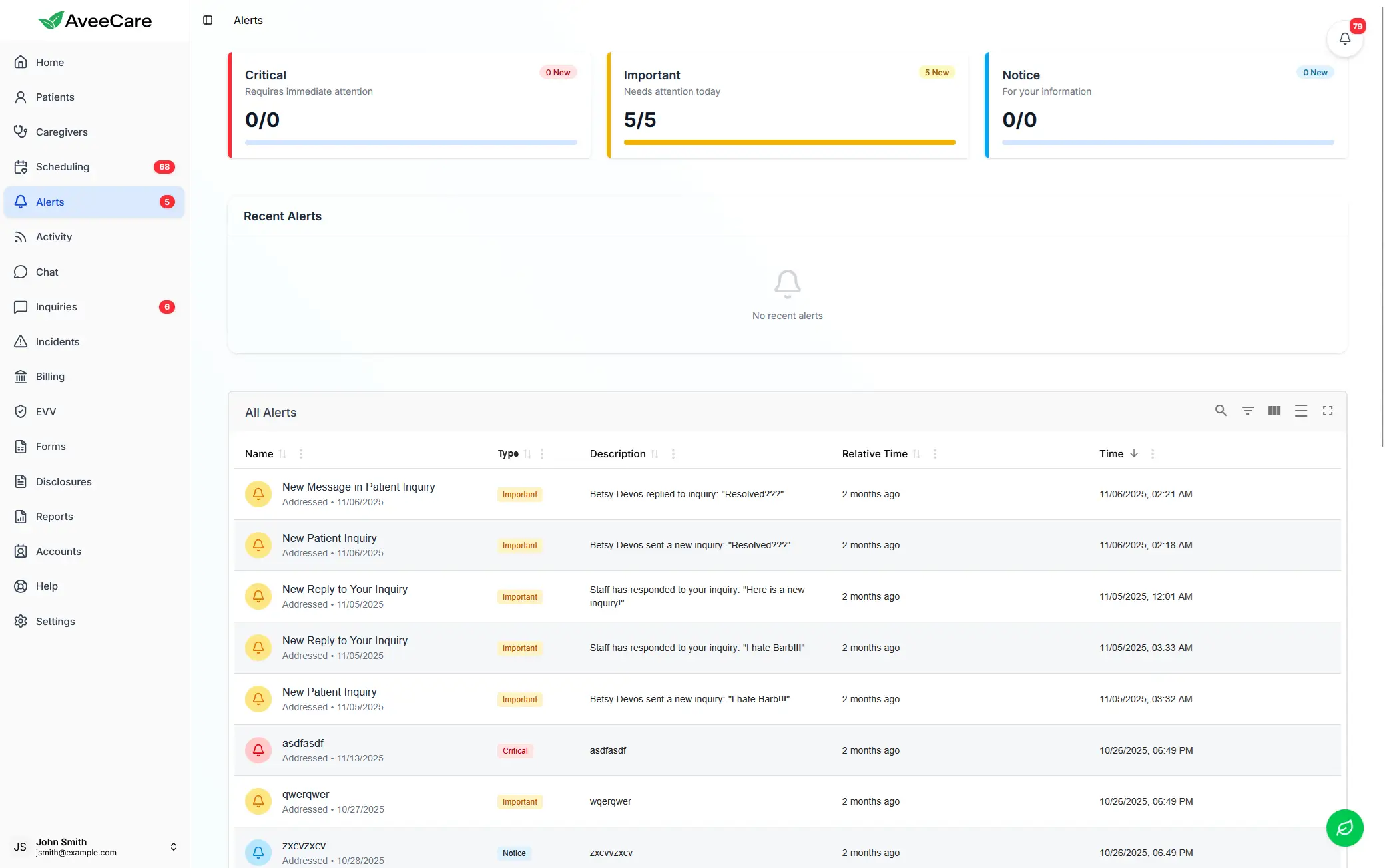
Keep Caregivers Safe with Real-Time Alerts
AveeCare's real-time alert system, home hazard documentation tools, and training tracking features help your agency maintain OSHA compliance and protect your caregivers. Document hazards, track training, and monitor safety metrics all in one platform.
Sources & Disclaimer
Information in this guide is compiled from OSHA standards (29 CFR Parts 1904, 1910), NIOSH safe patient handling guidelines, BLS injury and illness survey data, and OSHA enforcement and penalty data. Specific penalty amounts are subject to annual adjustment.
This guide is provided for informational and educational purposes only. It does not constitute legal or safety compliance advice. Home care agencies should consult with qualified safety professionals, OSHA consultation services, and legal counsel for specific compliance guidance.
Last updated: April 2026. AveeCare reviews and updates safety compliance information annually.