Home Care Incident Reporting
Effective incident reporting in home care protects patients, reduces liability, and drives quality improvement. It is closely tied to your agency's safety and risk management program and should be reviewed as part of every compliance audit cycle. This guide covers incident classification, reporting timelines, home care incident documentation requirements, investigation procedures, and root cause analysis with interactive tools to build your agency's incident management system.
What Constitutes an Incident in Home Care
An incident in home care is any event that causes or has the potential to cause harm to a patient, caregiver, or visitor. Incident reporting in home care is both a regulatory requirement and a critical quality improvement tool. The Agency for Healthcare Research and Quality (AHRQ) emphasizes that comprehensive incident reporting is the foundation of patient safety in all healthcare settings, including home-based care.
Home care agencies must establish clear definitions of what constitutes a reportable incident, train all staff to recognize reportable events, and create a culture where reporting is encouraged rather than punished. Underreporting is the single greatest barrier to effective incident management in home care.
Ratio of near misses to adverse events (AHRQ research)
Of home care incidents are falls, making them the most common incident type
Typical state-mandated reporting window for serious incidents
Incident Classification: Near Miss, Adverse Event, Sentinel Event
Proper classification determines reporting requirements, investigation depth, and corrective action urgency. Understanding these categories is essential for effective home care incident documentation and response.
Near Miss (Good Catch)
An event that could have caused harm but was caught before reaching the patient. Example: caregiver notices wrong medication label before administering. No harm occurred, but the hazard was present.
Required Action
Document internally. Analyze for systemic risk. No external reporting required.
Adverse Event
An event that results in actual harm to the patient, ranging from minor injury to serious harm. Examples: fall with bruising, medication error causing side effects, skin breakdown.
Required Action
Document immediately. Notify supervisor, family, physician. State reporting required for most types.
Sentinel Event
An unexpected event resulting in death, serious physical or psychological injury, or the risk thereof. Examples: unexpected death, abuse allegation, severe medication error requiring hospitalization.
Required Action
IMMEDIATE reporting to administrator, legal, and state. Full investigation within 24 hours. Root cause analysis mandatory.
Incident Classification Tool
Select an incident type to instantly see its classification level, reporting timeline, who must be notified internally and externally, and whether state reporting is required. This tool covers the most common home care incident report form scenarios.
Select Incident Type
Reporting Timelines by Incident Severity
| Severity | Internal Report | Written Report | State Report |
|---|---|---|---|
| Sentinel Event | Immediate | Within 4 hours | Same day |
| Adverse (Serious) | Immediate | Within 24 hours | 24-48 hours |
| Adverse (Minor) | Same shift | Within 24-48 hours | Varies by state |
| Near Miss | Within 24 hours | Within 48-72 hours | Not required |
Home Care Incident Documentation Requirements
Proper home care incident documentation is critical for regulatory compliance, legal protection, and quality improvement. Every incident report must contain specific elements to be considered complete and defensible. Following these documentation standards ensures your home care incident report form meets both state and federal requirements.
Date, time, and exact location
Record the precise date, time discovered (not time reported), and specific location within the home.
Client identification
Full name, date of birth, and any relevant diagnoses or risk factors.
Caregiver identification
Name and credential of the caregiver present or who discovered the incident.
Objective description of events
Factual, chronological account. Use "observed" and "stated" language. Avoid conclusions or blame.
Immediate actions taken
First aid, emergency services called, client repositioned, physician notified, etc.
Injury assessment
Visible injuries, client complaints, vital signs if taken, changes in condition.
Witness information
Names and contact information for anyone who witnessed or has knowledge of the incident.
Notification log
Who was notified, when, and by what method (phone, in person, email).
Contributing factors
Environmental conditions, equipment, medications, staffing, or other factors that may have contributed.
Signatures and dates
Signature of the person completing the report, supervisor review signature, and dates of each.
Incident Report Form Template
This fillable incident report template demonstrates the essential fields for proper home care incident documentation. Use it as a reference when developing or evaluating your agency's incident reporting system.
Incident Report Form
0% CompleteThis is a template preview. In production, incident reports should be submitted through your agency's incident management system. Include supporting documentation such as photos, medication records, and environmental assessments.
The Incident Investigation Process
Investigation is not about assigning blame. It is about understanding what happened, why it happened, and how to prevent recurrence. Effective incident management in home care requires a structured, non-punitive investigation process that focuses on systemic improvement.
Step 1: Secure Safety & Preserve Evidence
Ensure the patient is safe and receiving any needed medical attention. Preserve the scene if possible. Take photos of environmental conditions, equipment positions, and any relevant factors before they are altered.
Step 2: Gather Initial Facts (Within 24 Hours)
Interview the caregiver, patient (if able), and any witnesses separately. Collect objective facts: who, what, when, where. Review the care plan, medication records, and recent visit notes for context.
Step 3: Review Contributing Factors
Examine environmental hazards, equipment functionality, staffing levels, caregiver training, care plan adequacy, and medication interactions. Look for systemic factors, not just individual actions.
Step 4: Conduct Root Cause Analysis
Use the 5 Whys method or fishbone (Ishikawa) diagram to identify the root cause. Go beyond the proximate cause to find the systemic failure that allowed the incident to occur.
Step 5: Develop Corrective Action Plan
Create specific, measurable corrective actions that address the root cause. Assign responsible parties and deadlines. Include both immediate fixes and long-term systemic changes.
Step 6: Monitor & Follow Up
Track the implementation of corrective actions at 30, 60, and 90 days. Verify effectiveness through re-auditing. Document all follow-up activities.
Root Cause Analysis Framework
Use the 5 Whys technique to drill down from the surface problem to the root cause. Enter your incident problem statement and work through each “why” to identify the systemic failure that needs to be addressed.
5 Whys Analysis
Start with the problem statement, then ask “why” five times to drill down to the root cause. Each answer should explain why the previous answer occurred.
Building Effective Corrective Action Plans
A corrective action plan (CAP) must go beyond “staff will be retrained.” Effective CAPs address the root cause with specific, measurable, time-bound actions that create systemic change. Every CAP should follow the SMART framework.
Specific
Clearly define what will be done, by whom, and how. "Implement daily medication verification checklist" is specific; "improve medication management" is not.
Measurable
Define success metrics. "Reduce medication errors to zero for 90 consecutive days" can be measured. "Reduce errors" cannot.
Assigned
Name the specific person responsible for implementation and the person responsible for monitoring. Accountability requires named individuals.
Time-Bound
Set implementation and completion deadlines. "Within 30 days" is time-bound. "As soon as possible" is not. Include follow-up review dates.
Creating a Culture of Reporting
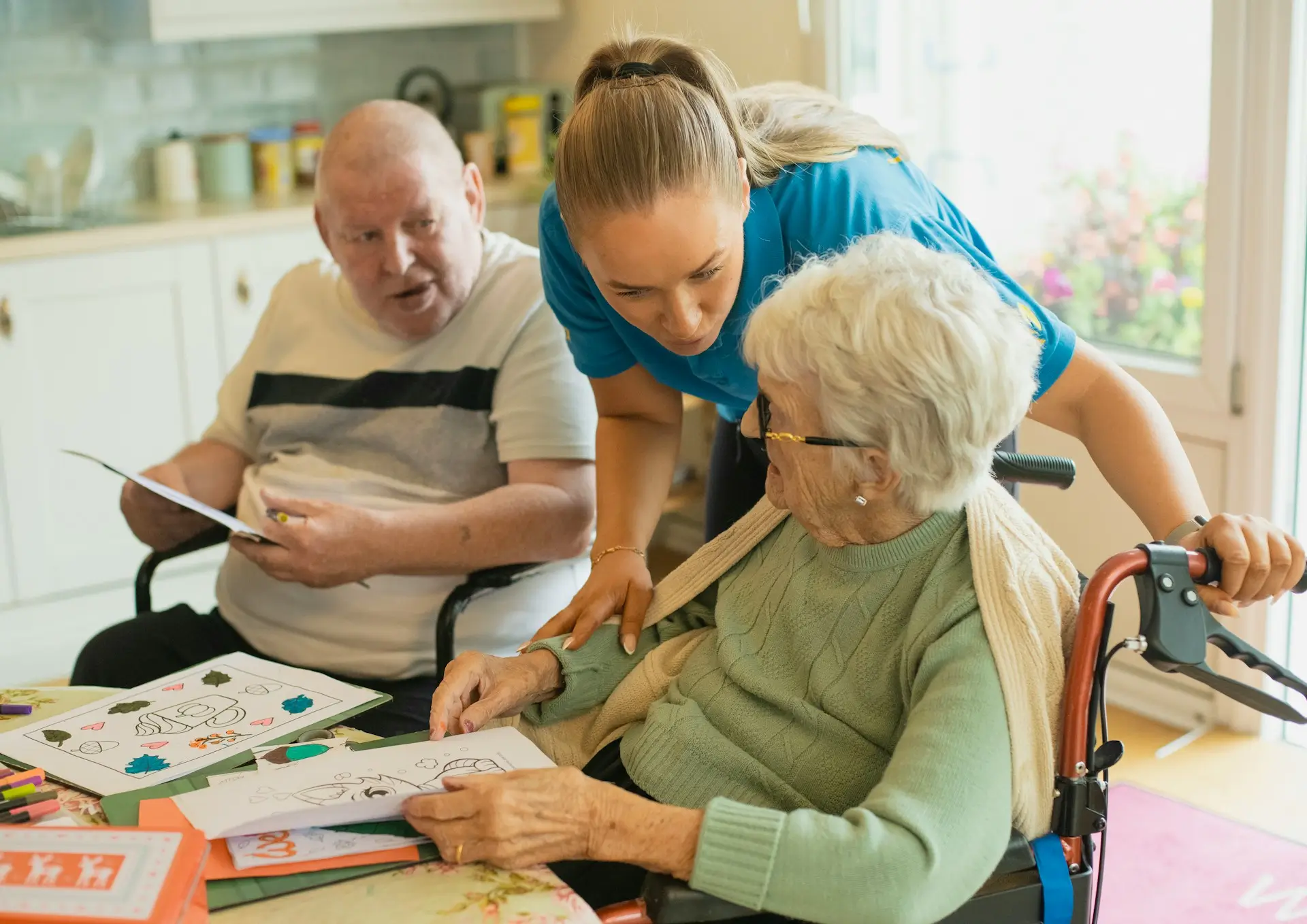
The biggest barrier to effective incident management in home care is underreporting. Caregivers fear blame, termination, or negative consequences. Creating a just culture where reporting is expected, valued, and non-punitive is essential for patient safety.
Make reporting easy and accessible
Provide mobile-friendly reporting tools so caregivers can file reports in the field immediately. Complicated paper forms discourage reporting.
Adopt a non-punitive (just culture) approach
Distinguish between human error, at-risk behavior, and reckless behavior. Only reckless behavior warrants disciplinary action. Human errors should be treated as learning opportunities.
Recognize and reward reporting
Publicly acknowledge caregivers who report near misses or incidents promptly. Frame reporting as professional excellence, not failure.
Share learnings organization-wide
De-identify incident details and share lessons learned with all staff through regular safety briefings. Show how reported incidents led to improvements.
Lead by example
Management must model transparency by openly discussing incidents, acknowledging system failures, and demonstrating commitment to improvement.
Incident Trend Analysis
Individual incident reports reveal specific problems; trend analysis reveals systemic patterns. Reviewing incident data monthly and quarterly allows agencies to identify recurring hazards, time-of-day patterns, location hotspots, and caregiver training gaps before they result in serious harm.
Incident Rate per 1,000 Patient Days
Target: < 5 incidents
Total incidents divided by patient days, multiplied by 1,000. The primary benchmark for incident frequency.
Near Miss to Adverse Event Ratio
Target: 10:1 or higher
A healthy ratio indicates robust near miss reporting. A ratio below 3:1 suggests severe underreporting of near misses.
Time from Incident to Report
Target: < 4 hours average
Measures how quickly incidents are being reported. Delays indicate barriers to reporting.
Repeat Incident Rate
Target: < 5%
Percentage of incidents that are similar to a prior incident at the same client. High rates indicate ineffective corrective actions.
Technology in Incident Management
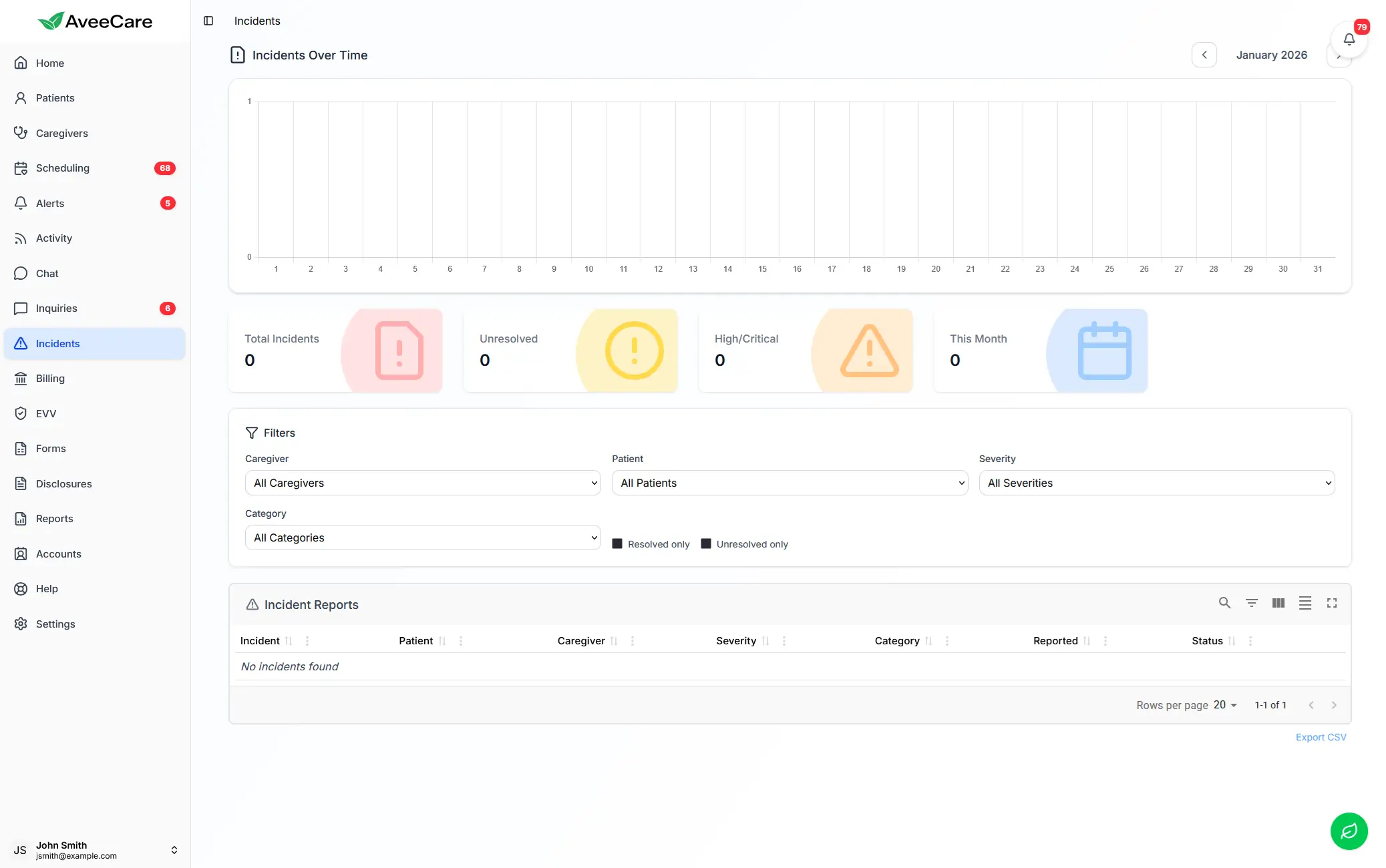
Modern home care software transforms incident management from paper-based forms to real-time digital systems. The right technology makes reporting faster, investigation more thorough, and trend analysis automatic.
Mobile Incident Reporting
Caregivers file reports from their phone immediately at the point of care. Photo attachments, GPS location, and timestamp are captured automatically.
Automated Alerts & Escalation
Real-time alerts notify supervisors and administrators based on incident severity. Sentinel events trigger immediate multi-person notification chains.
Investigation Workflow
Guided investigation templates ensure all required elements are documented. Root cause analysis tools structure the investigation process.
Analytics & Dashboards
Automatic trend analysis identifies patterns by incident type, client, caregiver, time of day, and location. Dashboard reports support QAPI programs and accreditation.
Frequently Asked Questions
Reportable incidents include falls (with or without injury), medication errors, skin breakdown, allegations of abuse or neglect, theft of patient property, elopement, unexpected hospitalizations, injuries during care, burns, choking incidents, and any event resulting in death. Most states require reporting within 24-72 hours depending on severity.
Timelines vary by severity and state. Generally: immediate reporting (2-4 hours) for abuse allegations, deaths, and sentinel events; 24-hour reporting for serious injuries and medication errors; 48-72 hours for other reportable incidents. Internally, staff should notify a supervisor immediately upon discovery.
A near miss is an event that could have caused harm but did not, either by chance or timely intervention. An adverse event actually results in harm. AHRQ research shows approximately 300 near misses for every adverse event, making near miss reporting essential for prevention.
Follow a structured process: secure the scene and ensure safety; gather facts within 24 hours; preserve evidence; conduct root cause analysis using the 5 Whys or fishbone diagram; develop corrective action plans; implement changes with assigned responsibilities; and monitor effectiveness at 30, 60, and 90 days.
Incident reports can be discoverable in litigation. Agencies should stick to objective facts, avoid opinions or admissions of fault, use separate privileged QI documents for root cause analysis, and consult legal counsel about state peer review protections. Train staff to document factually without editorializing.
Sources & References
Centers for Medicare & Medicaid Services
Incident reporting guidance, Conditions of Participation requirements, and home health agency survey protocols.
Agency for Healthcare Research and Quality
Patient safety resources, near miss research, root cause analysis tools, and healthcare quality improvement frameworks.
The Joint Commission
Sentinel event policy, patient safety event taxonomy, and root cause analysis requirements for accredited organizations.
State Departments of Health
State-specific incident reporting requirements, timelines, mandatory reporting forms, and complaint investigation procedures.
Streamline Incident Reporting
AveeCare's built-in incident reporting system lets caregivers file reports from their phone in minutes. Automated alerts, investigation workflows, and trend analytics help your agency prevent incidents before they happen.
Sources & Disclaimer
Information in this guide is compiled from CMS guidance, AHRQ patient safety resources, Joint Commission sentinel event policies, and state health department reporting requirements. Specific reporting timelines and requirements vary by state.
This guide is provided for informational and educational purposes only. It does not constitute legal or compliance advice. Home care agencies should consult with qualified legal counsel and their state licensing agency for specific incident reporting requirements.
Last updated: April 2026. AveeCare reviews and updates compliance information annually.