Home Care Client Intake Process
A well-structured home care intake process is the foundation of quality care delivery. This guide walks through every step of client onboarding with interactive tools to help your home care agency build a consistent, compliant intake workflow.
Why the Home Care Intake Process Matters
The client intake process is the first impression a home care agency makes. Agencies with a standardized home care assessment process report 35% higher client retention rates and 50% fewer care plan revisions within the first 30 days of service.
Higher Client Retention
Agencies with a standardized home care intake process retain clients significantly longer than those using ad-hoc approaches, according to NAHC benchmarking data.
Average Intake Timeline
A thorough client intake in home care takes 3 to 7 business days from initial inquiry to first service visit. Digital tools can reduce this to 1-3 days.
Paperwork Reduction
Digital home care intake forms reduce paperwork volume by up to 70% and eliminate manual data entry errors that plague paper-based processes.
Fewer Care Plan Revisions
Thorough initial home care assessments lead to more accurate care plans that require half as many revisions in the first month of service.
Cost of Billing Errors
Skipping insurance verification during the home care client onboarding process leads to unpaid claims averaging $2,000-$5,000 per case.
Critical Retention Window
Client satisfaction measured at 90 days is the strongest predictor of long-term retention. A strong intake process directly impacts this window.
Building Trust from the First Visit
The in-home assessment is more than a checklist exercise. It is the moment when a home care agency builds trust with the client and their family by demonstrating competence, empathy, and professionalism. Every element of the home care client onboarding process should reinforce that the agency is the right choice. To turn intake findings into structured, audit-ready records, explore our care plan documentation guide, and for understanding the broader paperwork requirements your agency must meet, see our home care documentation requirements resource.

Interactive Home Care Intake Checklist
Use this step-by-step home care intake process checklist to track progress through the client onboarding workflow. Check off tasks as you complete them during the home care assessment.
Initial Inquiry & Pre-Screening
15-30 minutesFirst point of contact when a potential client or family member reaches out. This phone call determines whether the agency can meet the client's needs and if they are a good fit for services.
Insurance & Payer Verification
30-60 minutesVerify the client's insurance coverage, benefits, and authorization requirements before the in-home visit to prevent billing issues later.
In-Home Assessment Visit
1-2 hoursA registered nurse or experienced care coordinator visits the client's home to conduct a comprehensive evaluation of care needs, home environment, and safety risks.
Medical History & Medication Review
30-45 minutesThorough review of the client's medical records, diagnoses, medications, allergies, and physician contacts to ensure safe care delivery.
Care Plan Development
45-90 minutesCreate a personalized care plan based on assessment findings that outlines specific services, goals, caregiver instructions, and monitoring protocols.
Service Agreement & Consents
30-45 minutesExecute all required legal documents including the service agreement, HIPAA authorization, consent for care, and any state-mandated disclosures.
Caregiver Matching & Orientation
30-60 minutesMatch the client with an appropriate caregiver based on skills, personality, availability, and client preferences, then orient the caregiver to the care plan.
Digital Intake Forms in Practice
Modern home care software replaces paper intake forms with digital workflows that capture client information accurately and sync it across the care team in real time. Below is an example of a digital home care intake form designed to streamline the client onboarding process.
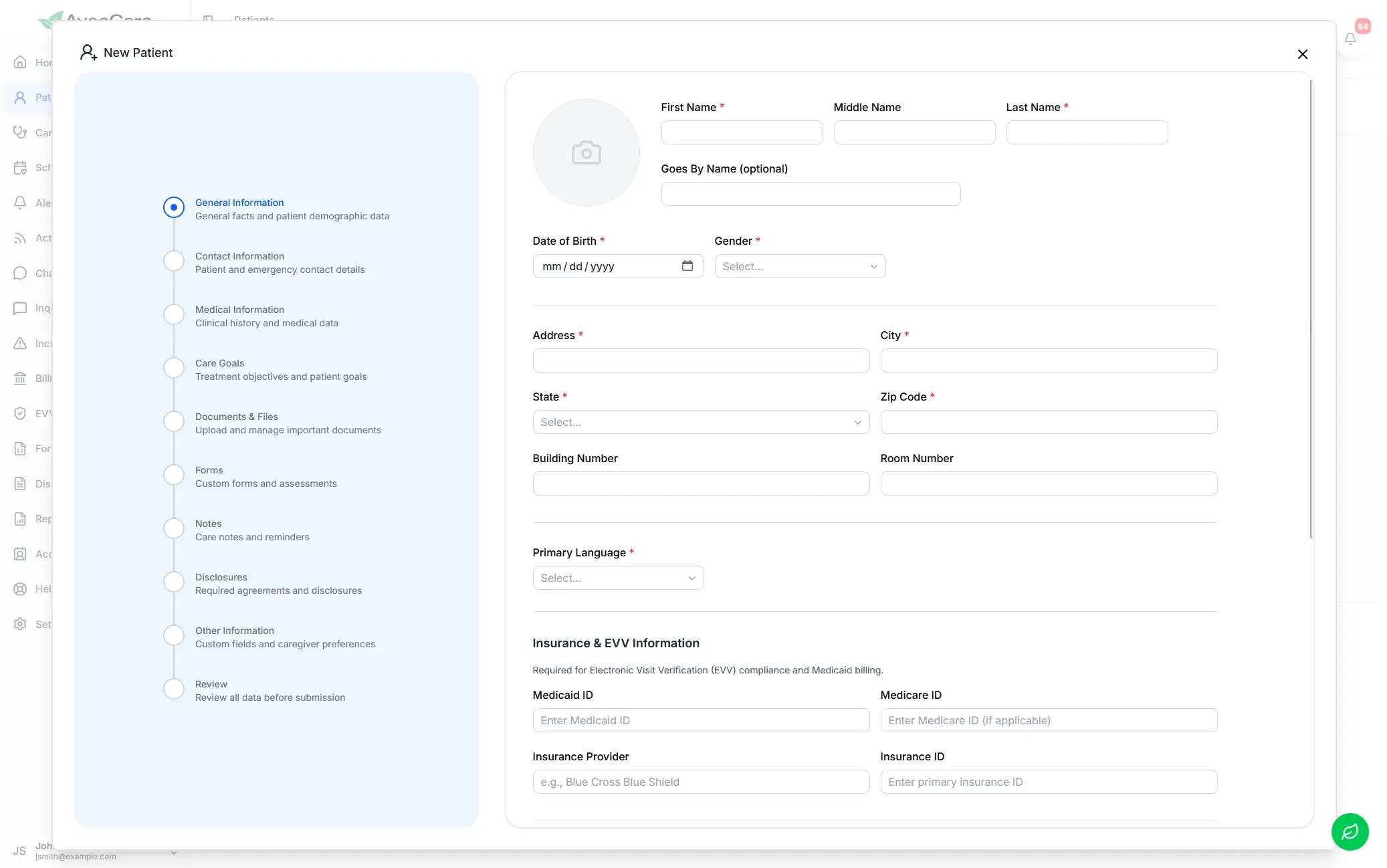
Digital intake form builder
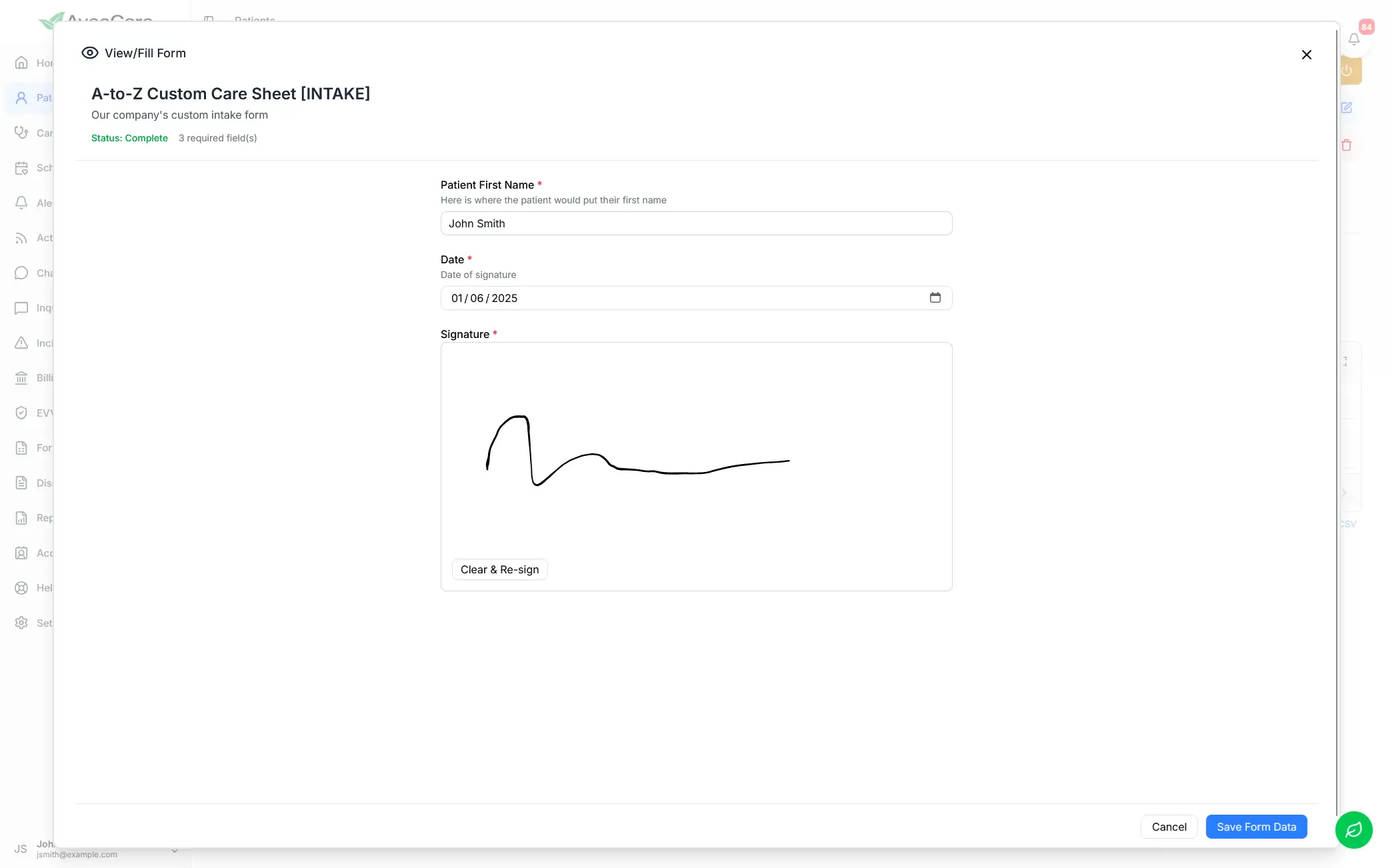
Completed client intake form
Sample Home Care Intake Form Sections
Toggle between sections of a comprehensive home care intake form. Use this as a template to build your own intake documentation and ensure your home care assessment covers every required area.
Client Demographics
ADL Assessment Scoring Tool
Use this interactive ADL assessment tool to score a client's functional independence. Based on the Katz Index of Independence, each activity is scored as independent (1) or dependent (0). The total score indicates the level of assistance needed during home care client onboarding.
Bathing
Ability to wash oneself in the shower or bath
Dressing
Ability to select and put on clothing
Toileting
Ability to use the toilet independently
Transferring
Ability to move between bed, chair, and standing
Continence
Ability to control bladder and bowel functions
Feeding
Ability to feed oneself once food is prepared
Katz Index Score
6/6
Care Level
Independent
Full Assistance
Significant Help
Moderate Help
Independent
Home Safety Assessment in the Intake Process
The home safety assessment is a critical component of every home care intake process. Falls are the leading cause of injury for both home care clients and caregivers, and a thorough safety evaluation during the initial assessment can prevent accidents and reduce workers compensation claims.
Bathroom
- No grab bars
- Slippery surfaces
- High tub walls
- Poor lighting
Kitchen
- Unsecured stove knobs
- Expired food
- Unreachable cabinets
- Sharp utensils
Bedroom
- Low bed height
- Clutter on floor
- Inadequate lighting
- No phone nearby
Stairs & Halls
- Missing handrails
- Loose carpet
- Poor lighting
- Narrow passages
Entrance
- Uneven surfaces
- No ramp if needed
- Poorly lit path
- Loose steps
General
- Smoke detectors
- CO detectors
- Fire extinguisher
- Emergency numbers posted
Technology That Transforms the Home Care Intake Process
Modern home care software replaces paper-heavy intake workflows with digital tools that save time, reduce errors, and improve the overall home care client onboarding experience. Here is what technology-enabled intake looks like in practice.
Digital Form Builder
Create custom intake forms with drag-and-drop fields. Forms auto-save and sync across devices so assessors can complete them on a tablet during the in-home visit.
Electronic Signatures
Capture legally binding e-signatures for service agreements, HIPAA notices, and consent forms right on a mobile device during the assessment visit.
Automated Workflows
Set up automated task sequences that trigger notifications, assign follow-ups, and move clients through each stage of the intake process without manual tracking.
Real-Time Syncing
Data entered by the field assessor is immediately available to office staff. No waiting for paper forms to be delivered, scanned, and manually entered.
Built-In Assessment Tools
Standardized ADL, IADL, and cognitive assessments are built into the software with automatic scoring and care level recommendations.
Care Plan Generation
Assessment results automatically populate the initial care plan with recommended services, frequencies, and caregiver instructions based on scoring.
Common Mistakes in the Home Care Intake Process
Even experienced agencies make these home care assessment mistakes. Avoiding them can significantly improve client retention, reduce liability, and streamline operations.
Rushing the assessment to start billing faster
Incomplete care plans lead to caregiver confusion, client dissatisfaction, and potential safety incidents. Agencies that rush intake see 40% higher complaint rates.
Fix: Allocate a minimum of 90 minutes for the in-home assessment. Use a standardized checklist to ensure nothing is missed.
Using paper-based intake forms
Paper forms lead to illegible handwriting, data entry errors, lost documents, and delayed care start. Agencies report spending 3-5 extra hours per intake on paper-based processes.
Fix: Implement digital intake forms with a home care software platform that syncs data in real time between field assessors and the office.
Not verifying insurance before starting services
Starting care without verified coverage can result in unpaid claims, write-offs averaging $2,000-$5,000 per case, and billing disputes with clients.
Fix: Make insurance verification a mandatory step before the in-home visit. Use automated eligibility checking tools when available.
Skipping the home safety assessment
Unidentified hazards put both clients and caregivers at risk. Falls are the leading cause of injury in home care, and unsafe environments increase workers comp claims.
Fix: Use a standardized 12-point home safety checklist during every initial assessment visit.
Failing to document client preferences
Clients who feel their preferences are ignored are 3x more likely to switch agencies within 90 days. Preference mismatches are a top driver of client turnover.
Fix: Include a dedicated preferences section covering caregiver gender, language, scheduling, meal preferences, and personal care routines.
Not involving family members in intake
Family members are often the decision-makers and primary communicators. Excluding them leads to miscommunication and unrealistic expectations about services.
Fix: Invite family members or responsible parties to attend the in-home assessment. Document their concerns and expectations separately from the client's.
Best Practices for Home Care Client Onboarding
Follow these best practices to ensure your home care intake process is efficient, compliant, and client-centered.
Standardize Everything
Use the same intake forms, checklists, and assessment tools for every client. Consistency reduces errors and ensures compliance across your home care agency.
Respond Within 2 Hours
Speed of response is the top factor in converting inquiries. Agencies that return calls within 2 hours close 60% more clients than those who wait 24 hours.
Train Your Assessors
Ensure every staff member who conducts in-home assessments is trained on the same process, scoring criteria, and documentation standards.
Follow Up After Start of Care
Call the client and family within 48 hours of the first visit. Early follow-up catches problems before they become complaints and shows you care about quality.
Use Digital Tools
Replace paper intake forms with home care software that offers digital form builders, e-signatures, and automated workflows. This reduces intake time by 50-70%.
Document Client Preferences
Go beyond clinical needs. Record food preferences, daily routines, hobbies, caregiver gender preferences, and communication style to match caregivers effectively.
Frequently Asked Questions
Common questions about the home care intake process, client assessment, and onboarding best practices.
The home care client intake process is a structured series of steps that agencies use to evaluate, onboard, and begin serving new clients. It typically includes an initial phone screening, in-home assessment visit, medical history review, ADL (Activities of Daily Living) evaluation, home safety assessment, service agreement execution, insurance verification, and care plan development. A thorough home care intake process ensures the agency can meet the client's needs and sets the foundation for quality care.
The full home care intake process typically takes 3 to 7 business days from initial contact to the start of services. The initial phone screening takes 15-30 minutes, the in-home assessment visit takes 1-2 hours, and administrative tasks like insurance verification and care plan development take 1-3 additional business days. Urgent or expedited intakes for hospital discharge patients can sometimes be completed in 24-48 hours.
Essential home care intake forms include a client information and demographics form, medical history questionnaire, medication list, ADL assessment form, home safety checklist, emergency contact form, HIPAA authorization and privacy notice, service agreement or contract, insurance information and authorization, consent for care, advance directive documentation, and physician orders (if applicable). Many states have additional required forms for licensing compliance.
An ADL (Activities of Daily Living) assessment evaluates a client's ability to perform basic self-care tasks independently. The six standard ADLs are bathing, dressing, toileting, transferring (mobility), continence, and feeding. Instrumental ADLs (IADLs) include meal preparation, housekeeping, laundry, transportation, medication management, and financial management. ADL assessments use standardized scoring scales like the Katz Index or Barthel Index to quantify care needs and determine the appropriate level of service.
Technology streamlines the home care intake process by enabling digital form completion (reducing paperwork by up to 70%), automated insurance verification, electronic signature capture, standardized assessment scoring, real-time data syncing between field staff and the office, and automated care plan generation based on assessment results. Home care software platforms provide built-in intake form builders, customizable assessment templates, and workflow automation that can reduce intake time from days to hours.
Common home care intake mistakes include rushing through assessments to start billing faster, using paper-based forms that lead to data entry errors, not verifying insurance coverage before starting services, skipping the home safety assessment, failing to document client preferences and goals, not obtaining all required signatures and consents, inadequate medication reconciliation, not involving family members in the assessment, and failing to set clear expectations about services, schedules, and costs upfront.
Sources & References
National Association for Home Care & Hospice
Industry standards for home care intake processes, assessment protocols, and client onboarding best practices.
Centers for Medicare & Medicaid Services
Conditions of Participation (CoPs) for home health agencies, assessment requirements (OASIS), and compliance standards.
Katz Index of Independence in ADL
Standardized ADL assessment tool widely used in home care for evaluating functional status and determining care levels.
State Home Care Licensing Regulations
State-specific requirements for client intake documentation, assessment timelines, and mandatory forms.
PHI (Paraprofessional Healthcare Institute)
Workforce data, caregiver training standards, and best practice guidelines for person-centered care approaches.
Home Care Association of America
Industry benchmarking data for client acquisition, retention rates, and operational metrics in home care.
Streamline Your Intake Process with AveeCare
AveeCare's home care software includes a built-in digital intake form builder, customizable assessment templates, electronic signature capture, and automated care plan generation. Replace your paper-based intake workflow with a system that saves hours per client and reduces errors. Transparent pricing, no long-term contracts, and a free interactive demo.
Disclaimer
This guide provides general information about the home care intake process compiled from publicly available sources including NAHC, CMS Conditions of Participation, state licensing regulations, and industry benchmarking data. Requirements vary by state, agency type, and payer source.
The interactive tools on this page are for educational and planning purposes only. They do not constitute medical, legal, or regulatory advice. Always consult with qualified professionals and verify your state's specific home care licensing requirements before implementing intake procedures.
Last updated: April 2026. AveeCare reviews and updates content annually.