Home Care Accounting & Bookkeeping: Financial Management Guide
Strong home care accounting practices are the foundation of a profitable agency. This guide covers everything from building your chart of accounts to monthly close procedures, with interactive tools for home care bookkeeping and home care financial management.

Home Care Accounting Fundamentals
Home care agency accounting has unique characteristics that set it apart from other industries. Revenue arrives from multiple payer sources on different timelines, payroll is the largest expense category (typically 55-65% of revenue), and regulatory compliance adds layers of complexity. Whether you handle your own home care bookkeeping or work with an accountant, understanding these fundamentals is critical.
The three pillars of effective home care financial management are: accurate revenue recognition across all payer types, tight payroll cost controls, and disciplined accounts receivable management. Agencies that master all three consistently outperform their peers in profitability and cash flow stability. For a deeper look at how billing workflows feed into your accounting processes, see our comprehensive billing guide for home care agencies.
Cash vs. Accrual Accounting for Home Care
Cash Basis
Revenue recorded when cash is received. Expenses recorded when paid.
- Simpler to maintain
- Easy to track actual cash flow
- Distorts profitability when payers lag
- Not suitable for insurance billing agencies
Best for: Small, private-pay-only agencies under $1M revenue
Accrual Basis (Recommended)
Revenue recorded when earned. Expenses recorded when incurred.
- Accurate financial picture
- Matches revenue to the period earned
- Required by many lenders and investors
- Supports multi-payer billing analysis
Best for: Most home care agencies, especially those billing insurance
Chart of Accounts Builder for Home Care
Toggle accounts on or off to build a customized chart of accounts for your home care agency accounting. Recommended accounts are pre-selected.
Monthly Close Checklist
Track your progress through the monthly close process. A disciplined monthly close is essential for reliable home care bookkeeping.
Bank & Cash Reconciliation
Revenue & Accounts Receivable
Payroll & Employee Costs
Expenses & Accounts Payable
Financial Review
Financial Health Scorecard
Enter your agency's financial metrics to see how you compare against home care accounting benchmarks.
Excellent
Your financial metrics indicate strong agency health.
Payroll Accounting for Home Care Agencies
Payroll is the largest expense for any home care agency, typically representing 55-65% of total revenue. Accurate payroll home care accounting is essential for profitability and compliance.
Employer Payroll Taxes
- Social Security: 6.2% (up to wage base)
- Medicare: 1.45% (no cap)
- FUTA: 0.6% (first $7,000)
- SUTA: Varies by state (0.5-5.4%)
Key Compliance Dates
- Form 941: Quarterly (Apr 30, Jul 31, Oct 31, Jan 31)
- Payroll tax deposits: Semi-weekly or monthly
- W-2s: January 31 annually
- Form 940 (FUTA): January 31 annually
FLSA Overtime Rules
- Time-and-a-half after 40 hours/week
- Live-in caregivers may be exempt
- Travel time between clients is compensable
- Training time is compensable
Common Payroll Mistakes
- Misclassifying W-2 employees as 1099
- Not tracking all compensable hours
- Missing payroll tax deposit deadlines
- Incorrect overtime calculations
Tax Obligations for Home Care Agencies
Home care agencies face multiple tax obligations at the federal, state, and local levels:
Federal
- Income tax (corporate or pass-through)
- Payroll taxes (941 quarterly)
- FUTA (annual)
- Form 1099s for contractors
State & Local
- State income tax (varies by state)
- SUTA/unemployment insurance
- State disability insurance (some states)
- Business license/privilege tax
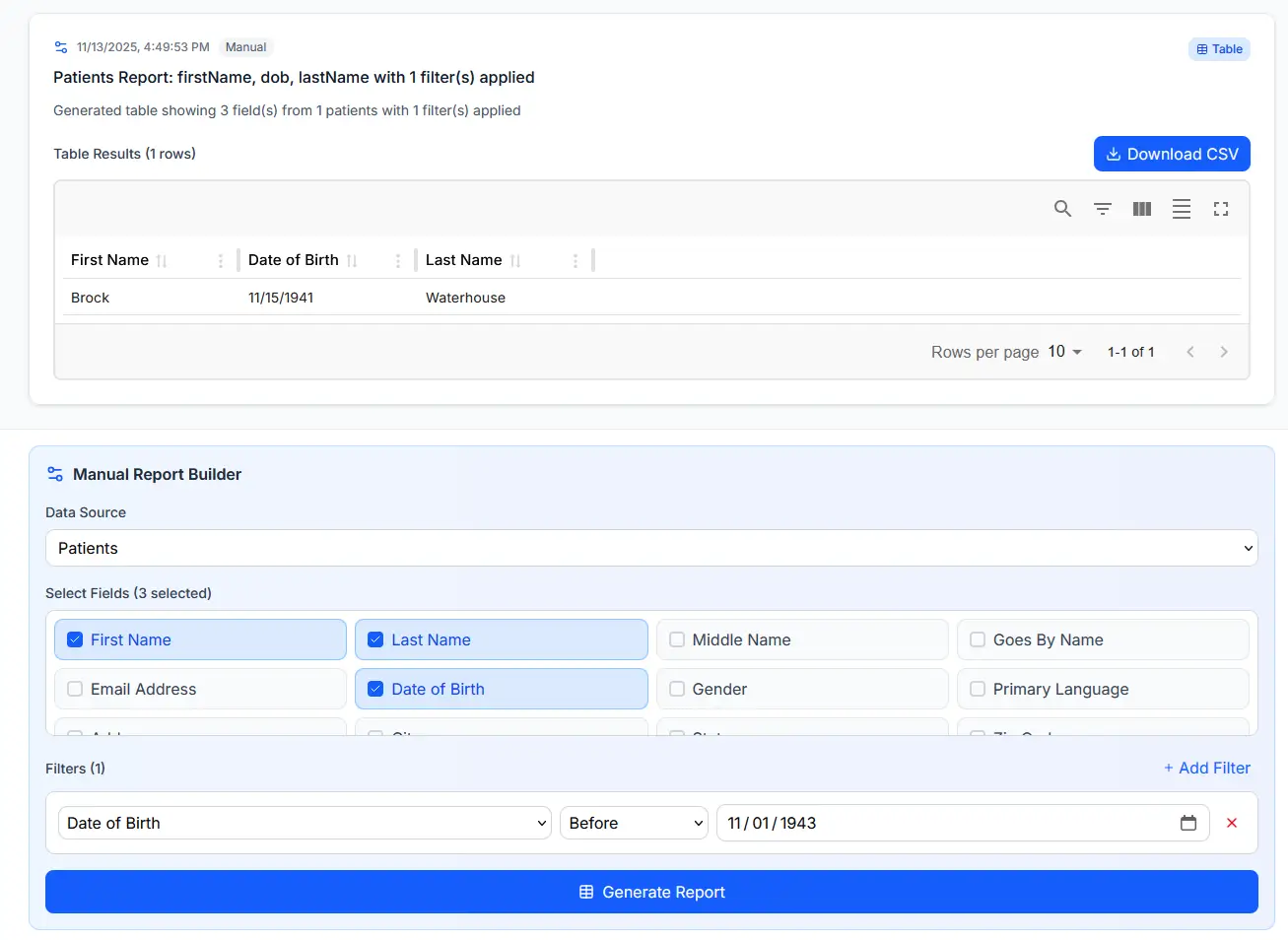
AveeCare's reporting tools help agencies generate the financial data needed for accurate bookkeeping.
Essential Financial KPIs for Home Care Agencies
Track these key performance indicators monthly to stay on top of your home care financial management:
Gross Profit Margin
35-45%Revenue minus cost of services divided by revenue. Below 35% signals unsustainable pricing or labor costs.
Net Profit Margin
8-15%Bottom-line profitability after all expenses. Industry average is around 10-12% for well-managed agencies.
Revenue per Billable Hour
$28-42Total revenue divided by total billable hours. Varies by payer mix and geography.
Days in A/R
Under 45Average days to collect payment. Private pay should be under 10; insurance under 45.
Payroll-to-Revenue
55-65%Total payroll cost as a percentage of revenue. Above 65% squeezes margins; below 55% may indicate understaffing.
Client Acquisition Cost
VariesTotal marketing spend divided by new clients acquired. Track by referral source and payer type.
Accounts Receivable Management for Home Care
Accounts receivable (A/R) management is one of the most critical aspects of home care accounting. With multiple payer sources on different payment timelines, agencies must actively manage their A/R to maintain healthy cash flow. Our guide to cash flow management for home care provides interactive forecasting tools to help you model the impact of A/R timelines on your reserves.
Segment A/R by payer type
Track accounts receivable separately for private pay, Medicare, Medicaid, and LTCI. Each payer has different payment patterns, and mixing them obscures problems. Private pay A/R should be under 10 days; insurance under 45 days.
Run aging reports weekly
Review your A/R aging report every week, not just monthly. Identify claims that cross the 30-day mark immediately and follow up. The older a receivable gets, the less likely it is to be collected.
Implement a collections workflow
Create a standard follow-up process: first notice at 30 days, phone call at 45 days, final notice at 60 days, and collections consideration at 90+ days. Automate reminders where possible.
Verify eligibility before every service
The single best way to reduce A/R problems is to verify insurance eligibility before providing services. Real-time verification catches terminated coverage, exhausted benefits, and authorization issues before they become receivables problems.
Write off bad debt promptly
Do not let uncollectable receivables inflate your books. Establish a policy for writing off bad debt (typically at 120-180 days). Keeping old receivables on the books distorts your financial picture.
Choosing an Accountant for Your Home Care Agency
Finding the right accountant is a critical home care financial management decision. Here are the key factors to consider:
Healthcare experience
Prioritize CPAs with healthcare or home care clients. They understand revenue recognition for insurance claims, payroll complexities, and compliance requirements that general accountants may miss.
Multi-state capability
If you operate in multiple states or have caregivers crossing state lines, your accountant needs experience with multi-state payroll tax, nexus rules, and varying state requirements.
Software compatibility
Choose an accountant who works with your accounting software and can integrate with your home care management platform for seamless data flow.
Proactive tax planning
The best accountants do not just file taxes. They meet with you quarterly to review financials, identify tax-saving opportunities, and plan for upcoming obligations.
Frequently Asked Questions
Most home care agencies benefit from accrual accounting because it provides a more accurate picture of financial health by recording revenue when earned and expenses when incurred, regardless of when cash changes hands. This is especially important for agencies billing insurance or government payers where payment delays of 30-90 days are common. Cash basis accounting may be simpler for very small private-pay-only agencies, but the IRS requires accrual accounting if your agency has inventory or exceeds $29 million in gross receipts (2026 threshold).
The most critical financial KPIs for home care agencies include: gross profit margin (target: 35-45%), net profit margin (target: 8-15%), revenue per billable hour ($28-42 depending on payer mix), days in accounts receivable (target: under 45 days), payroll-to-revenue ratio (target: 55-65%), client acquisition cost, caregiver turnover cost, and cash runway in months. Tracking these monthly helps identify financial trends before they become problems.
Home care payroll accounting requires careful tracking of hourly wages, overtime (time-and-a-half after 40 hours under FLSA), live-in caregiver special rules, mileage reimbursements, employer payroll taxes (Social Security 6.2%, Medicare 1.45%, FUTA, SUTA), workers compensation premiums, and any benefits. Agencies must file Form 941 quarterly, deposit payroll taxes semi-weekly or monthly depending on liability, and issue W-2s annually.
A home care chart of accounts should include revenue accounts broken down by payer type (private pay, Medicare, Medicaid, LTCI), cost of services accounts (caregiver wages, payroll taxes, workers comp, mileage), operating expense accounts (rent, insurance, marketing, software, office supplies), and balance sheet accounts (cash, accounts receivable by payer, payroll liabilities, accrued expenses). Use the interactive builder above to customize your chart of accounts.
Home care agencies should reconcile bank accounts monthly at minimum, with a full monthly close process completed within 15 business days of month-end. Payroll should be reconciled every pay period. Accounts receivable aging should be reviewed weekly to catch overdue payments early. Quarterly, agencies should prepare financial statements, file payroll tax returns (Form 941), and review budget-to-actual variances.
Small home care agencies can handle day-to-day bookkeeping with accounting software, but should engage a CPA for tax preparation, annual financial review, and strategic tax planning. As agencies grow beyond 20-30 caregivers, a dedicated bookkeeper becomes essential. A CPA familiar with healthcare or home care is valuable for navigating industry-specific issues like revenue recognition for insurance claims and multi-state tax obligations.
Sources & References
- IRS — Small Business and Self-Employed Tax Center
- IRS — Publication 15 (Employer Tax Guide)
- SBA — Manage Your Finances
- AICPA — Healthcare Industry Resources
- IRS — Form 941 Employer Quarterly Tax Return
- Department of Labor — FLSA Overtime Requirements
Important Disclaimer: Tax laws, payroll requirements, and accounting standards change frequently. The information in this guide reflects general practices as of 2026 and may not apply to your specific situation. Always consult with a qualified CPA or tax professional before making financial decisions. This guide is for informational purposes only and does not constitute tax, legal, or financial advice.
Simplify Home Care Accounting with Integrated Billing & Reports
AveeCare integrates billing, payroll data, and financial reporting into one platform, giving home care agencies the financial visibility they need without juggling multiple systems.